Natural Selection ACP Review
Presentation
•
Biology
•
9th Grade
•
Medium
+6
Standards-aligned
SAZID CHOUDHURY
Used 12+ times
FREE Resource
12 Slides • 15 Questions
1
Natural Selection
2
Descent with Modification and Common Descent
● Offspring descent with modifications from their
parents
● Differences found in offspring are partially due to
random mutations
● All living things are related
3
Multiple Choice
4
Multiple Choice
Which best describes the role of mutations in natural selection?
Mutations help an organism to better survive in their environment
An organism may acquire a helpful mutation by interacting with the environment
A mutation may result in a beneficial trait that makes an organism more likely to survive and reproduce
Organisms with certain traits are more likely to win competitions for mutations
5
Charles Darwin (1809-1882)
● Naturalist/explorer
● Came up with the concept of NATURAL
SELECTION
● Noticed that island species were unique to their island
but similar to their mainland
● Darwin believed that similarities could be best
explained through common descent
● Island species were specially adapted for island life
6
Multiple Choice
Charles Darwin observed that finches of different species on the Galápagos Islands have many similar physical characteristics, this supports the hypothesis that these finches
are twins
acquired traits through use and disuse.
all eat the same type of food.
descended from a common ancestor.
7
Selective (artificial) Selection
● Farmers select for certain “desirable” traits to be
continued onto the next generation
● Small selection of traits over many years/ long period
of time will accumulate and create a “new” variation,
traits, or adaptations for that species (plant, animal,
living organism)
● “New” species will emerge(over time) with those specific
traits that are best suited for that environment
8
Natural Selection
● Parents will randomly produce a variety of offspring
(only some will survive)
● Nature by being hard to live in “decides”/SELECTS
which organisms live or die
● Organisms that survive will reproduce and pass on those
beneficial traits (adaptations) onto the next generation
● “Survival of the fittest” (the most “fit” survive and
reproduce)
9
Multiple Choice
A large population of rock pocket mice with various fur colors lives in a designated area. Soon after a volcanic eruption, the number of mice with dark-colored fur in the population increased. Which statement BEST describes the reason for the change in fur color?
Mutations for dark-colored fur were passed down within the somatic cells, resulting in more mice with dark-colored fur.
Mice with light-colored fur selected mutations that allowed their fur to become darker
The fitness of mice with dark-colored fur increased, so they became more abundant.
Mice with light-colored fur began feeding in the daytime to stimulate the release of a pigment for dark-colored fur.
10
Multiple Choice
11
Multiple Choice
12
Natural Selection Definition
The process by which random evolutionary changes are
selected for by nature in a consistent, orderly, non-random
way
13
Adaptations are ALWAYS good !!!= SURVIVAL
14
Multiple Choice
15
Multiple Choice
The white cattail is a hybrid species of plant that is a result of the cross between the broad-leaved cattail and the narrow-leaved cattail. Over time, the white cattail has established itself in the wetlands of Midwestern states. Which of these explains the success of the white cattail?
Favorable genes from parental generations provide advantageous characteristics to the hybrid species.
Hybridization produces offspring traits that allow different species to survive in extreme environments.
Inherited traits passed on from parental generations make hybrid species more susceptible to disease.
Hybrid species display more adaptations due to their reduced genetic diversity.
16
Multiple Choice
Organisms of the same species can no longer interbreed therefore creating two species.
Gene Pool
Genetic Drift
Gene Frequency
Speciation
17
Multiple Choice
A student compares two different species of fox as shown in the table.The student wants to explain why the two species are so different even though they have a common ancestor. Which statement BEST explains the differences between the two species?
Different environments led to different adaptations
The same environment led to different adaptations
Each species developed the same adaptations to different environments
Each species migrated to environments that matched their adaptations
18
Types of Natural Selection
● Disruptive
● Stabilizing
● Directional
19
Disruptive Selection
● Extreme variations of the traits are selected for (by nature)
● The “average” or “moderate” traits are selected against
Extreme Trait
Extreme Trait
Red line- Before the selection
Blue line- AFTER the selection
20
Stabilizing Selection
● Opposite of disruptive selection. Favors
(nature)the middle traits
Red line- Before the selection
Blue line- AFTER the selection
21
Directional Selection
● One of the extreme traits is selected for, moving
the population toward that phenotype
Red line- Before the selection
Blue line- AFTER the selection
Extreme Trait
22
Multiple Choice
Average phenotypes are favored in the environment, while extremes have lower survival rates.
seasonal selection
distruptive selection
directional selection
stabilizing selection
23
Multiple Choice
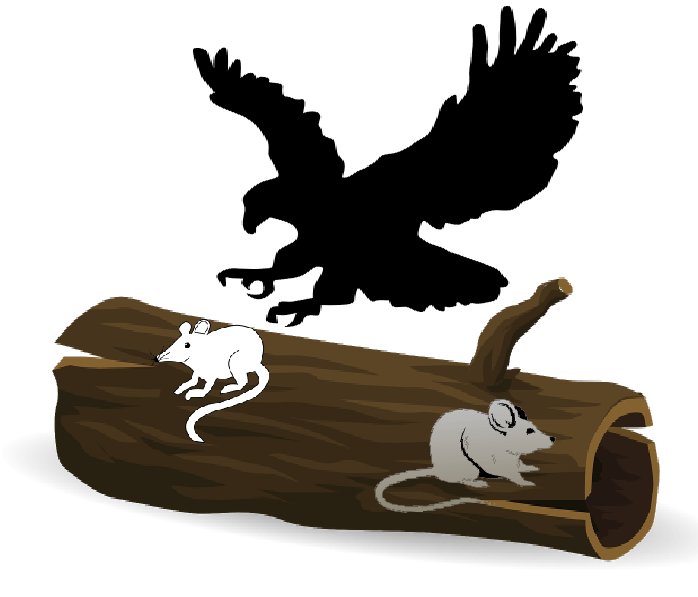
Over the years, white mice became extinct and darker mice survived. This is
stabilizing selection
directional selection
disruptive selection
due to exercise
24
Multiple Choice
25
Multiple Choice
26
Last thing…
27
Multiple Choice
Punctuated equilibrium is a theory of evolution that suggests species experience long periods of stability, interrupted by short, rapid changes. Which of the following statements best describes punctuated equilibrium?
Evolution occurs slowly and steadily over time, with small changes happening continuously.
Species remain unchanged for millions of years and then undergo sudden, rapid changes in a short period.
Evolution happens rapidly in a continuous, smooth process.
Species evolve due to the gradual accumulation of mutations over time, without any long periods of stability.
Natural Selection
Show answer
Auto Play
Slide 1 / 27
SLIDE

Similar Resources on Wayground
22 questions
G6D: Cellular Transport
Presentation
•
10th Grade
20 questions
Properties of Matter
Presentation
•
9th Grade
20 questions
Physical Geography: East Asia
Presentation
•
9th Grade
20 questions
DNA Review
Presentation
•
9th Grade
19 questions
6A: Components of DNA and DNA Replication
Presentation
•
9th Grade
20 questions
Photosynthesis
Presentation
•
9th - 10th Grade
18 questions
Biogeochemical Cycles
Presentation
•
9th Grade
17 questions
Protists
Presentation
•
9th Grade
Popular Resources on Wayground
16 questions
Grade 3 Simulation Assessment 2
Quiz
•
3rd Grade
19 questions
HCS Grade 5 Simulation Assessment_1 2526sy
Quiz
•
5th Grade
10 questions
Cinco de Mayo Trivia Questions
Interactive video
•
3rd - 5th Grade
17 questions
HCS Grade 4 Simulation Assessment_2 2526sy
Quiz
•
4th Grade
24 questions
HCS Grade 5 Simulation Assessment_2 2526sy
Quiz
•
5th Grade
13 questions
Cinco de mayo
Interactive video
•
6th - 8th Grade
20 questions
Math Review
Quiz
•
3rd Grade
30 questions
GVMS House Trivia 2026
Quiz
•
6th - 8th Grade
Discover more resources for Biology
210 questions
Unit 1 - 4 AP Bio Review
Quiz
•
9th - 12th Grade
35 questions
Biology EOC Review
Quiz
•
9th Grade
16 questions
AP Biology: Unit 1 Review (CED)
Quiz
•
9th - 12th Grade
50 questions
Biology EOC Review
Quiz
•
9th Grade
20 questions
AP Biology: Unit 3 Review (CED)
Quiz
•
9th - 12th Grade
21 questions
AP Biology: Unit 6 Review (CED)
Quiz
•
9th - 12th Grade
14 questions
AP Biology: Unit 4 Review (CED)
Quiz
•
9th - 12th Grade
20 questions
Food Chains and Food Webs
Quiz
•
7th - 12th Grade