
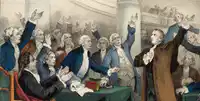
American Revolution Lesson

Presentation
•
History
•
5th Grade
•
Practice Problem
•
Easy

Cheri Niedholdt-Bedard
Used 3+ times
FREE Resource
24 Slides • 18 Questions
1


The American Revolution
Grade 5- Unit 3- SOL VS.5a-d
2

SOL VS.5a-d Vocabulary
American Revolution-
led to the establishment of the United States
fought for colonial Independence from Great Britain
Declaration of Independence-
List reasons for Independence from England
Laid out ideas for self-government
and power to govern belongs to the people and not a king

3
SOL VS.5a-d Vocabulary
Declaration of Independence and the Unalienable Rights
Stated all men are created equal
All people have 3 unalienable Rights of Life, Liberty, and the Pursuit of Happiness
4
Fill in the Blanks
The Revolutionary War was fought between the 13 colonies and _____ ______.
(Two words--All caps)
5
Multiple Select
The Declaration of Independence laid out...
reasons to stay under British rule
ideas for self-government
reasons for independence from British rule
ideas for rule under Parliament
6
Multiple Select
Three Unalienable Rights
Pursuit of Wealth
Liberty
Property
Pursuit of Happiness
Life
7


SOL VS.5a-d Vocabulary
Parliament- the national
lawmaking council of Great
Britain
Assembly- a lawmaking
group of people gathered
together for a meeting
8


SOL VS.5a-d Vocabulary
Authority- the power or right to give
orders, make decisions, and enforce
obedience
Govern- conduct the policy, actions,
and affairs of a state, organization, or
people
9
Match
Match the following
Parliament
General Assembly
Declaration of Independence
British law-making body
Virginia's law-making body
Document stating colonial independence
British law-making body
Virginia's law-making body
Document stating colonial independence
10
SOL VS.5a-d Vocabulary
Patriot
Supported independence from Great Britain
Fought in the Continental Army
Loyalists
Neutral
Stayed loyal to the crown
Fought in the British Army
Did not choose sides
Did not fight in the war


11
Categorize
Did not choose sides
Wanted to stay under British rule
Wanted independence from Great Britain
Fought in the British Army
Fought with the Continental Army
Did not fight in the war
Did not support either side
Supported British policies
Encouraged loyalty to the Crown
Supported the American Revolution
Believed in self-governance
Organize these options into the right categories
12


VS.5a notes
The French & Indian War
❖
In the 1750’s & 1760’s France &
England fought over control of the
Americanland west of the British
colonies. This war was called the
French & Indian War. The two sides
were: - French & their American
Indian alliesversus -British, the
Colonists, and their American Indian
allies.
VS
13
After many years of fighting, the British won the war.
However, the war caused the British & the Colonists to get mad at each
other for two main reasons:
VS.5a notes
1. GreatBritaintold the Coloniststhat they couldn’t live in the western
land that they had won in the war. The colonists thought this wasn’t
fair!
2. Since the war had cost the British a lot of money, the British
Parliament(the group that made laws) decided to raise taxes on the
colonists to pay off some of their debt.
14


The colonists and the British Parliament disagreedover many things in
the time period before the Revolutionary War. Two big disagreements were over taxes and who had legal authority (the right to govern).
VS.5a notes
15


VS.5a notes
British Parliament Believed
●It had legal authority in the
colonies.
●It had the right to tax the
colonies
Colonists Believed
●Their local assemblies had
legalauthority
●They should not be taxed
because they had no
representation in Parliament.
16
Categorize
Believed they had legal authority over the colonies
Believed they had the right to tax the colonies
Believed local assemblies had legal authority
Believed taxes were unfair due to lack of representation
Match the following
17


Many colonists began to speak out
against Great Britain. A Virginia colonist
named, Patrick Henry, talked about how
unfair “taxation without representation”
was. In his famous speech in a church in
Richmond in 1775, Patrick Henry said,
“...give me libertyor give me death,”
inspiring patriots from other colonies.
VS.5a notes
Many colonists began to speak out
18
The DeclarationofIndependence was approved by
the Continental Congress on July4, 1776 and sent to the king.
The Declaration of Independence was:
●Written by ThomasJefferson
●States that authorityto govern belongs to the
people rather than to kings
●All people are created equal and have rights to
life, liberty, and the pursuit of happiness.
VS.5a notes
19
Match
Match the cause with the best effect
Great Britain went to war with France and its The Native American allies
Parliament needed to raise money
Colonists did not have representation in Parliament
Colonists wanted to be free from England
Great Britain spent a lot of money
Parliament put taxes on the colonies
Colonist thought they shouldn't be taxed
Declaration of Independence was written
Great Britain spent a lot of money
Parliament put taxes on the colonies
Colonist thought they shouldn't be taxed
Declaration of Independence was written
20
Dropdown
21
Drag and Drop
22
Match
Match the following
First General Assembly met in Virginia
Declaration of Independance
Burgess met separately as House of Burgesses
Capital moved to Williamsburg
1619
1776
1640s
1699
1619
1776
1640s
1699
23
Not Everyone felt the same about going to war against Great Britain.
Patriots believed in colonial
independence from Great Britain.
Virginia patriots served in the Continental Army under the command of George Washington.
Loyalists did support independence from Great Britain. The felt that the colonies should stay under the rule of England. Loyalists would have fought in the British army.
Neutralists did not take sides in the revolution.
VS.5b notes
24
Categorize
Wanted to stay under English rule
Did not choose a side to support
Wanted freedom from British rule
Fought for the British army
Did not fight in an army
Fought in the Continental Army
Organize these options into the right categories
25


The people of Virginia
made significant
contributions during
the Revolutionary War.
American Indians,
whites, enslaved
African Americans,
and free African
Americans all played a
role.
VS.5b notes
26
➢
Women took on more responsibilities to support the war effort.
➢
Some enslavedAfrican Americans fought with the British for a
better chance of freedom.
➢
Some free African Americans fought in the war. They fought on both sides. They hoped to earn new rights and opportunities
➢
Many American Indians stayed neutral, but some fought alongside the Virginia patriots and others with the British. Many Native People just wanted to protect their lands and ways of life.
VS.5b notes
27
Match
Match the following
Free Africans
Women
Native Americans
Enslaved Africans
Hoped for more rights and opportunities
Took on more responsibilities
Hoped to protect their lands
Hoped to gain freedom
Hoped for more rights and opportunities
Took on more responsibilities
Hoped to protect their lands
Hoped to gain freedom
28
VS.5b notes
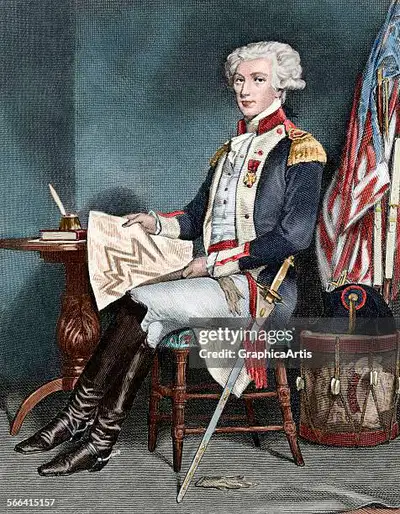
Marquis de Lafayette
French Nobleman
Joined the Continental Army
Pressured the King of France to help the Continental Army.
Played a huge role helping General Washington beat the British at Yorktown
29
VS.5b notes
Patrick Henry


Give me Liberty,
or give death!
Patrick Henry inspired people to become patriots and join the fight for freedom from Great Britain.
30

VS.5b notes
GeorgeWashington
military
ContinentalArmy
leadership
"Father of our Country"
George Washington was a model of leadership for future presidents.
31

VS.5b notes
JamesLafayette
Virginia
spy
freedom
many years
32

VS.5b notes
ThomasJefferson
Declarationof
Independence
political
independence
Life
Liberty
Pursuit of Happiness
All Men Are
Created Equal
33
Categorize
French
Enslaved
Wrote Declaration of Independence
Leader of the Continental Army
Got the French Army to send supplies to help the Continental Army
Was a spy for the Continental Army
Wrote a document that laid out reasons for freedom from England
Model for future presidents
Organize these options into the right categories
34

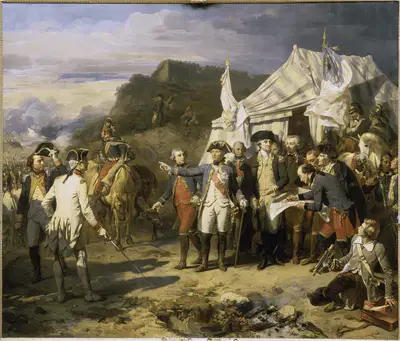
American Victory at
Yorktown
In 1781, a large force of British
troops were led by Lord
Cornwallis at Yorktown,
Virginia.
The Continental army was led
by General George
Washington.
VS.5c notes
Where is Yorktown located?
35
●The American victory at Yorktownresulted in the
surrender of the Britisharmy. This helped lead to an
end of the war.
●This victory did not end the war, but it was the last
significant military battle involving Britishforces and
the Continental army.
●The war officially ended with the TreatyofParisin
1783.
VS.5c notes
Who was the commander
of the Continental Army?
36
Fill in the Blanks

The Battle of Yorktown took place in
37
Fill in the Blanks
The Revolutionary War ended with the Treaty of
38
Match
Match the following
1775
1776
1780
1781
1783
Revolutionary War Began
The Declaration of Independence
Capital moved to Richmond
Battle of Yorktown
Treaty of Paris signed
Revolutionary War Began
The Declaration of Independence
Capital moved to Richmond
Battle of Yorktown
Treaty of Paris signed
39
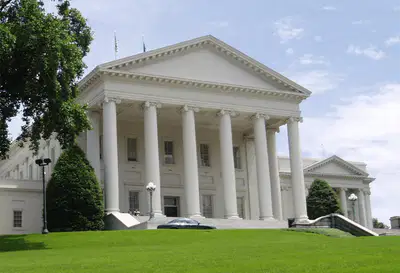
VS.5d notes
Capital Moves- Williamsburg to Richmond
The first capital of Virginia was Jamestown. This is where the settlers
established the first permanent English settlement in 1607.
Then, in 1699 the capital was moved from Jamestown to Williamsburg.
In 1780, Virginia’s capital was moved a final time to Richmondand it is still
the capital today.
40
Reorder
Reorder the following from the first capital to the current capital.
Jamestown
Williamsburg
Richmond
41
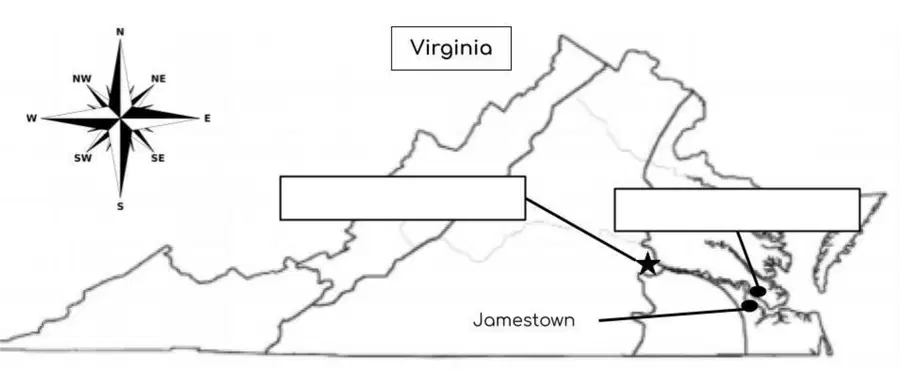
There were a variety of factors that caused the capital to move:
●The population was moving westward for more opportunities.
●Richmond was a more central location.
●The move increased the distance from the sea and possible attack by
the British.
Richmond is still the capital of Virginia today.
Richmond
Williamsburg
42
Categorize
Jamestown had unhealthy living conditions
Williamsburg was a well established town
Fire destroyed many buildings
Population had moved westward
It was a more central location
Less chance of British attack
Organize these options into the right categories
The American Revolution
Grade 5- Unit 3- SOL VS.5a-d
Show answer
Auto Play
Slide 1 / 42
SLIDE
Similar Resources on Wayground

38 questions
Black History Month - Hidden Figures
Presentation
•
5th Grade
39 questions
Matter
Presentation
•
5th Grade
38 questions
How do we observe objects in space?
Presentation
•
5th Grade
34 questions
Volume of a Right Rectangular Prism Study Guide
Presentation
•
5th Grade
34 questions
Egyptian Hieroglyphics
Presentation
•
5th - 6th Grade
36 questions
Forms of Energy
Presentation
•
5th Grade
38 questions
Physical and Chemical Changes [S5P1BC]
Presentation
•
5th Grade
37 questions
Classifying Triangles
Presentation
•
4th - 5th Grade
Popular Resources on Wayground
10 questions
How much do you know about our Portrait of an Eagle?

Quiz
•
10th Grade
10 questions
Fast Food Slogans
Quiz
•
6th - 8th Grade
21 questions
Continents and Oceans
Quiz
•
6th Grade
20 questions
Parts of Speech
Quiz
•
5th Grade
16 questions
Subject & Predicate
Quiz
•
5th Grade
25 questions
Multiplication Facts
Quiz
•
5th Grade
12 questions
Map Skills
Quiz
•
3rd Grade
22 questions
Continents and Oceans
Quiz
•
5th Grade
Discover more resources for History
20 questions
13 Colonies
Quiz
•
5th - 6th Grade
15 questions
DCE 5th Grade Geography and the Five Themes Fast and Curious
Quiz
•
5th Grade
7 questions
Age of Exploration

Interactive video
•
5th Grade
16 questions
Spell the 13 Colonies Map
Quiz
•
5th Grade
25 questions
States and Capitals
Presentation
•
4th - 5th Grade