

Security 1.1

Presentation
•
Computers
•
9th - 12th Grade
•
Practice Problem
•
Easy

Sarah Hess
Used 3+ times
FREE Resource
13 Slides • 13 Questions
1
1 - Defense in Depth
2

Core framework for information security
Three essential pillars:
Confidentiality
Integrity
Availability
Guides organizational security policies and practices
CIA TRIAD
3
Multiple Choice
What does CIA stand for in cybersecurity?
4
Multiple Choice
The CIA Triangle is primarily used for:
Information security
5

Restricts access to authorized users only
Protected through:
Authentication systems (MFA)
Encryption methods
Access permissions (Least Privledge)
MFA: What you have, what you know, what you are
Businesses use labeling like privileged, top-secret, internal use only
Confidentiality
6
Multiple Choice
Which is NOT a method of maintaining confidentiality?
Public posting online
7
Multiple Choice
Confidentiality protects against:
Unauthorized access
Data corruption
System crashes
Power outages
8

-Ensures that data remains accurate and unaltered during storage or transfer.
-Can be maintained through auditing and encryption.
-Digital signatures and headers are used to ensure integrity
Integrity
9
Multiple Choice
What is an example of failed integrity in the CIA triad?
10
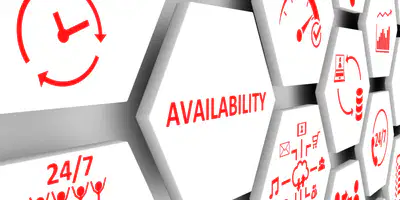
-Data is available when needed
-Possible threats
-Cyber Attacks
-Natural Disasters
-Hardware Failure
-Techniques: Redundancy, fault tolerance, backups
Availability
11
Multiple Choice
What is not a threat to data availability?
12
Multiple Choice
Which of the following enhances availability?
Fault tolerance
13

Repudiation: Rejection of an event of idea
Non-repudiation: to prove that someone did something even if they say they didn't
-Authenticaton
-Logging
-Security cameras
Non-repudiation
14
Multiple Choice
What is non-repudiation?
A security measure that prevents an entity from denying the authenticity of their actions.
15

Any potential danger to information or systems
Examples: Malware, phishing, insider threats
Threats
16
Any potential danger to information or systems
Examples: Malware, phishing, insider threats, 0 day attacks
Vulnerability
17

Likelihood that a threat will exploit a vulnerability
Risk = Threat × Vulnerability × Impact
Register can include category, probability, impact, threshold, cost,
and contingency plan
Risk includes cost, scope and time
Contingency plans in case of reality
Risk
18
Multiple Choice
A threat can be defined as:
A potential cause of an security incident.
19
Multiple Choice
A vulnerability is:
20
Multiple Choice
What formula represents risk?
Risk = Exposure - Control x Vulnerability
Risk = Cost + Time x Impact
Risk = Threat x Vulnerability x Impact
21
Limiting user access to only what is necessary
Reduces risk and attack surface
Principle of Least Privilege
22

The sum of all points where an attacker can try to enter a system
Includes IoT devices, software interfaces
Attack Surface
23

IoT devices often lack robust security measures
Key risks: Lack of updates, default credentials
IoT
24
Multiple Choice
What is PoLP?
Principle of Least Privilege
25
Multiple Choice
Which of the following can increase attack surfaces?
Monitoring network traffic
Adding IoT devices
Using encryption
Limiting user privileges
26
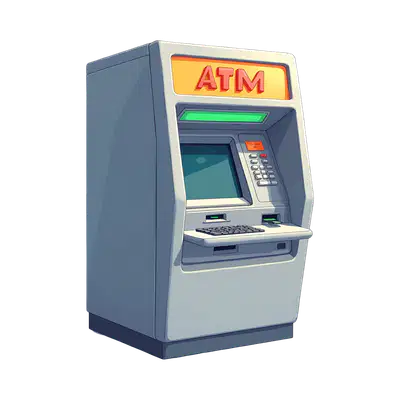
“Why are we able to trust ATM machines?”
Write a paragraph to explain why we can trust ATM machines that support the following points:
Confidentiality.
Integrity.
Availability.
CIA in your life...
1 - Defense in Depth
Show answer
Auto Play
Slide 1 / 26
SLIDE
Similar Resources on Wayground

21 questions
The Brain & Addiction
Presentation
•
9th - 12th Grade
20 questions
3.3 Manage Backup and Restore
Presentation
•
9th - 12th Grade
20 questions
Sejarah Internet
Presentation
•
9th - 12th Grade
21 questions
Exam Lesson 1 Turtle Programming
Presentation
•
9th - 12th Grade
21 questions
N5 Computing Database Revision Part 2
Presentation
•
9th - 12th Grade
19 questions
IGCSE Computer Science Ch6 Robotics and Automation Part 2
Presentation
•
9th - 12th Grade
17 questions
Observation and Inference
Presentation
•
9th - 12th Grade
20 questions
Types of Validation Checks
Presentation
•
9th - 11th Grade
Popular Resources on Wayground
10 questions
Safety Day 2026 – Student Review

Quiz
•
9th Grade
21 questions
Continents and Oceans
Quiz
•
6th Grade
20 questions
Parts of Speech
Quiz
•
5th Grade
16 questions
Subject & Predicate
Quiz
•
5th Grade
25 questions
Multiplication Facts
Quiz
•
5th Grade
12 questions
Map Skills
Quiz
•
3rd Grade
22 questions
Continents and Oceans
Quiz
•
5th Grade
15 questions
Rounding Decimals
Quiz
•
5th Grade