
Search Header Logo
Textbook Pages (2-9)

Textbook Pages (2-9)

Assessment

Presentation

Social Studies

9th Grade

Practice Problem

Medium

Created by

Christopher Yellowe

Used 1+ times

FREE Resource

0 Slides • 26 Questions

1

Multiple Choice

Question image

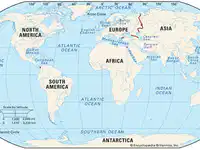
What image is depicted on page 2 with the caption "Physical Geography"

1
An image of a mountain range
2
A map of the world's continents
3

A volcano

4
A diagram of the water cycle

2

Fill in the Blank

Type answer...

3

Multiple Choice

Question image

What is the highest point on Earth? (Page 3)

1
Kangchenjunga
2
K2
3
Mount Everest
4
Lhotse

4

Multiple Choice

Question image

What is the lowest point on Earth? (Page 3)

1
Mount Everest
2
Dead Sea
3

Mariana Trench

4
Lake Baikal

5

Multiple Select

(Page 4) What are the three images of Seneca Falls, New York?

1

Heat Sensing

2

Road Map

3

Historical significance in women's rights, Seneca Falls Convention of 1848, and natural landscapes.

4

Satellite Image

6

Multiple Choice

Question image

What is the definition of Geography? (Page 5)

1
Geography is the study of animal behavior in their natural habitats.
2
Geography focuses solely on the political boundaries of countries.
3
Geography is the analysis of historical events and their timelines.
4

Geography is the study of the Earth's landscapes, environments, and the relationships between people and their environments. Physical + Human.

7

Multiple Choice

Question image

What are the 5 themes of geography? (Page 5)

1
landforms, ecosystems, weather, agriculture, tourism
2
climate, culture, economy, technology, history
3
population, infrastructure, resources, transportation, politics
4
location, place, region, movement, human-environmental interaction

8

Multiple Choice

Question image

(Page 6) How many degrees latitude are there and longitude and which two hemisphere is the United States in? *Must add

1
90 degrees latitude and 180 degrees longitude; Southern and Eastern Hemispheres.
2
360 degrees latitude and 180 degrees longitude; Northern and Southern Hemispheres.
3
180 degrees latitude and 180 degrees longitude; Northern and Eastern Hemispheres.
4
180 degrees latitude and 360 degrees longitude; Northern and Western Hemispheres.

9

Multiple Select

Question image

Location: Click all the BOLD words. (Page 6)

1

Absolute and Relative Location

2

Hemisphere, Equator, and Prime Meridian

3

Latitude and Longitude

4

HEI

10

Multiple Choice

Question image

(Page 6) How many degrees latitude are there and longitude and which two hemisphere is the United States in? *Must add

1
90 degrees latitude and 180 degrees longitude; Southern and Eastern Hemispheres.
2
360 degrees latitude and 180 degrees longitude; Northern and Southern Hemispheres.
3
180 degrees latitude and 180 degrees longitude; Northern and Eastern Hemispheres.
4
180 degrees latitude and 360 degrees longitude; Northern and Western Hemispheres.

11

Multiple Select

Question image

Location: Click all the BOLD words. (Page 6)

1

Absolute and Relative Location

2

Hemisphere, Equator, and Prime Meridian

3

Latitude and Longitude

4

HEI

12

Multiple Choice

Question image

(Page 6) Geographers describe a location in two ways.

1
Geographic Coordinates and Spatial Analysis
2
Topographic Location and Cultural Location
3
Absolute Location and Relative Location
4
Local Location and Global Location

13

Multiple Select

Question image

...+...+...+... = Place (Page 7)

1

"What is it like" (+)

2

Climate, landforms, vegetation (+)

3

Physical features and cultural characteristics (+)

4

Humans interact with the environment and buildings. (+)

14

Multiple Select

Question image

Geographers categorize regions in three ways. (Page 7)

1
cultural characteristics
2
economic characteristics
3
historical characteristics
4

Formal, Functional, and Perceptual

15

Multiple Choice

Question image

(Page 7) What are Formal Regions

1
Formal regions are defined by economic activities.
2
Formal regions are determined by population density.
3
Formal regions are areas defined by official boundaries and specific characteristics.
4
Formal regions are based on cultural similarities.

16

Multiple Select

Question image

(Page 7) Formal Regions include:

1

The United States and Canada

2

Latin America

3

East Asia

17

Multiple Choice

Question image

Functional Region (Page 8)

1
A zone that is purely residential without any commercial influence.
2

An area organized around a node or focal point related to economic activity.

3
An area with no specific economic focus or activity.
4
A region defined by physical boundaries like mountains or rivers.

18

Multiple Select

Question image

(Page 8) Perceptual Region

1

Rich areas

2

Christian areas

3

Creepy areas

4

Perceptual Region is a subjective area defined by people's perceptions and feelings.

19

Multiple Select

Question image

Human Environment Interaction (Page 8)

1

Building a dam/drain to help with flooding water (modify)

2

How do people relate to the physical environment?

3

Recreational activities on a hot day near water (beach volleyball) (depend)

4

New problems like... causing pollution (smoke in the air from factories) so face mask factories are built to prevent inhalation of smog (adapt)

20

Multiple Choice

Question image

How do humans interact with the environment?

1
Humans interact with the environment solely through technology.
2

(Ritual) Tribal dances in the sand.

3
Humans only interact with the environment during natural disasters.
4
Humans have no impact on the environment at all.

21

Multiple Choice

Question image

How do humans interact with the environment?

1

Dancing in the sand. (Ritual)

2
Humans have no effect on ecosystems or landscapes.
3
Humans only impact the environment through technological advancements.
4
Humans interact with the environment by avoiding all natural resources.

22

Multiple Choice

Question image

How do humans interact with the environment?

1

Praying in the sand.

2
Humans interact with the environment solely through technology.
3
Humans have no impact on the environment at all.
4
Humans only interact with the environment during natural disasters.

23

Multiple Choice

Question image

How do humans interact with the environment?

1
Humans interact with the environment solely by observing nature.
2
Humans only interact with the environment through tourism.
3
Humans interact with the environment by ignoring it completely.
4

Shopping in the sand.

24

Multiple Choice

Question image

How do humans interact with the environment?

1
Humans interact with the environment by avoiding all natural resources.
2

Nuclear bombing in the sand.

3
Humans only affect the environment through passive observation.
4
Humans have no impact on ecosystems or landscapes.

25

Multiple Choice

Question image

How do humans interact with the environment?

1
Humans interact with the environment by staying indoors all day.
2
Humans avoid any physical activity in nature.
3

Camping in the sand.

4
Humans only interact with the environment through technology.

26

Multiple Select

Question image

What is movement? (Page 9)

1

Migration of people like moving to a new city for a better opportunity.

2

The trading of Goods and Services like ordering a dress from Italy or Facetiming internationally for help.

3

The exchange of Ideas like a phone call or access to a website.

4
Movement is the ability to remain in one place.
Question image

What image is depicted on page 2 with the caption "Physical Geography"

1
An image of a mountain range
2
A map of the world's continents
3

A volcano

4
A diagram of the water cycle

Show answer

Auto Play

Slide 1 / 26

MULTIPLE CHOICE
