4A Evolution
Presentation
•
Biology
•
9th - 10th Grade
•
Easy
+7
Standards-aligned
Viveca Elsey
Used 2+ times
FREE Resource
10 Slides • 31 Questions
1
Unit 4A: Evolution
Use your new SEMESTER 2 Bio Notebook!!
Fill in the notes on pg. 5 and pg. 6
Use the notes to answer the questions!
2
3
Open Ended
What examples can you think about for evolution?
4
Open Ended
What comes to mind when you think about evolution?
5
Open Ended
Why do you think those would be examples of evolution?
6
NB pg. 5
7
Multiple Choice
What is evolution?
Staying the same
Change over time
Genetics skip generations
8
Multiple Choice
This picture shows....
how we are NOT all related
how we are all related to a common ancestor
9
Multiple Choice
What is biodiversity?
The study of biological species in a laboratory
The variety of life on Earth, encompassing variations in genetics, species, and ecosystems
The study of the human species exclusively
The study of marine life forms only
10
Multiple Choice
What is evolution?
The process through which species remain unchanged over time
The process through which species change over time due to variations in traits that are heritable
The process through which species adapt to other species
The process through which species communicate
11
12
Multiple Choice
What is Darwin famous for studying?
Penguins
Beagles
Fishes
Finches
13
Multiple Choice
Which set of Islands had a strong influence on Darwins ideas?
Hawaii
Galapagos
Samoa
Florida Keys
14
15
Open Ended
What was incorrect about the previous slide?
16
17
18
19
20
21
Multiple Choice
22
Multiple Choice
Natural selection explains HOW organisms change over time. What is the process in which populations are changed over time?
Digestion
Elimination
Evolution
Adaptation
23
Multiple Choice
Another term for Natural Selection is:
Breeding
Commensulism
Communism
Survival of the fittest
24
Multiple Choice
25
Multiple Choice
What word describes a trait that helps an organism survive in its environment?
natural selection
mutation
camouflage
adaptation
26
Multiple Choice
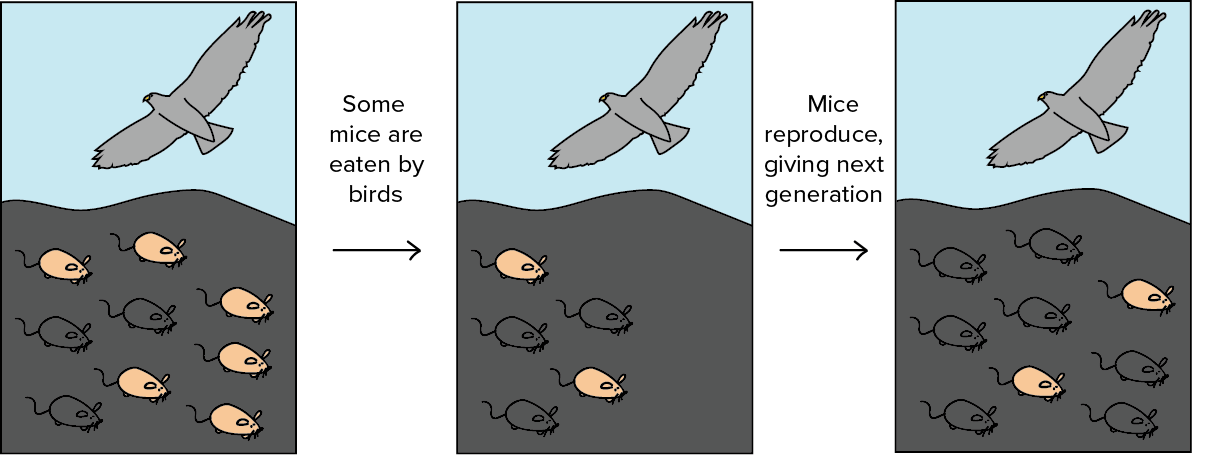
Why is the mouse population changing over time? (You can enlarge the picture by placing your cursor on it.)
The light mice can reproduce more successfully than the dark mice
The hawks eat more dark mice than light mice because the dark mice taste better
The hawks eat more light mice than dark mice because they can see the light mice more easily
The hawks eat more dark mice than light mice because they can see the dark mice more easily
27
Multiple Choice
Which organisms are most likely to survive?
the best adapted (best fit)
the fastest
the strongest
the most domesticated (tamed)
28
Multiple Choice
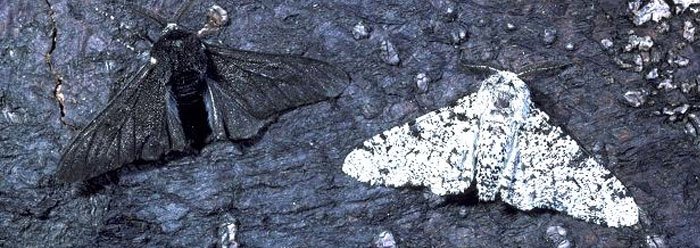
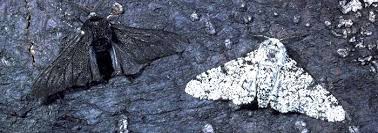
According to natural selection, light colored tree trunks would favor ___________________________.
light colored moths
dark colored moths
red colored moths
red and light colored moths
29
Multiple Choice
Why are advantageous (better fit) traits more likely to be passed onto offspring?
They are more likely to survive and reproduce.
They are more likely to die and not reproduce.
They are able to reproduce more offspring.
30
Multiple Choice
A slight difference in an inherited trait between individual members of the same species. (Example: Some rabbits have white fur and some have black fur.)
variations
adapatations
homologous structures
analogous structures
31
Multiple Choice
The passing of genetic traits (DNA) from parent to offspring is __________.
Survival of the fittest
Heredity
Evolution
32
Multiple Choice
The trees these moths used to live on were white, but have been covered in soot from coal factories. Which moth will be more successful in this environment?
Dark moth
Light moth
Both will be equally successful
Neither will be successful
33
Multiple Select
Which trait(s) would be considered an adaptation for a moth? (Check all that apply.)
Flies very slow.
Wings camouflaged within its environment
The catepillar stage camouflages within its environment.
Flies very fast.
34
Multiple Choice
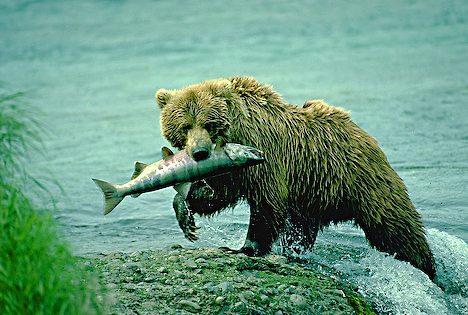
A grizzly bear survives because he is well-adapted (best fit) to his environment. When he reproduces he passes on those traits to his offspring. this process is called
Natural Selection
Selective Breeding
Random mutations
Variations in a species
35
Multiple Choice
Predict which moth would increase in population over time.
light colored
dark colored
36
Multiple Choice
What is the best claim for this image?
The grey wolves are best adapted to the Arctic
The brown rabbits are best adapted to the Arctic.
The white rabbits are best adapted to the Arctic.
37
Multiple Choice
If Easter eggs were living species of organisms, their different colors would be considered:
Adaptations
Variations
Different species
Extinct species
38
Multiple Choice
The peppered moth's color camouflaged it on the light colored tree bark. It's color was an example of a/n
Variation
Dominant trait
Recessive trait
Adaptation
39
Multiple Choice
40
Multiple Choice
41
Multiple Choice
What word describes a trait that helps an organism survive in its environment?
natural selection
mutation
camouflage
adaptation
Unit 4A: Evolution
Use your new SEMESTER 2 Bio Notebook!!
Fill in the notes on pg. 5 and pg. 6
Use the notes to answer the questions!
Show answer
Auto Play
Slide 1 / 41
SLIDE

Similar Resources on Wayground
38 questions
7.3 – The Senses
Presentation
•
9th Grade
36 questions
3.1 DNA Slides
Presentation
•
10th Grade
37 questions
Macromolecules
Presentation
•
9th - 10th Grade
38 questions
Mitosis
Presentation
•
9th Grade
32 questions
Flow of Energy
Presentation
•
9th Grade
35 questions
Cell Cycle Lesson
Presentation
•
9th - 10th Grade
35 questions
Viral Replication Cycles
Presentation
•
9th - 10th Grade
32 questions
Scientific Method Review v22
Presentation
•
9th - 10th Grade
Popular Resources on Wayground
20 questions
"What is the question asking??" Grades 3-5
Quiz
•
1st - 5th Grade
20 questions
“What is the question asking??” Grades 6-8
Quiz
•
6th - 8th Grade
10 questions
Fire Safety Quiz
Quiz
•
12th Grade
20 questions
Equivalent Fractions
Quiz
•
3rd Grade
34 questions
STAAR Review 6th - 8th grade Reading Part 1
Quiz
•
6th - 8th Grade
20 questions
“What is the question asking??” English I-II
Quiz
•
9th - 12th Grade
20 questions
Main Idea and Details
Quiz
•
5th Grade
47 questions
8th Grade Reading STAAR Ultimate Review!
Quiz
•
8th Grade
Discover more resources for Biology
24 questions
BIOLOGY STAAR REVIEW
Quiz
•
9th Grade
30 questions
Biology STAAR Review #3
Quiz
•
9th Grade
16 questions
AP Biology: Unit 1 Review (CED)
Quiz
•
9th - 12th Grade
50 questions
Biology EOC Review
Quiz
•
9th Grade
25 questions
photosynthesis and cellular respiration
Quiz
•
9th Grade
20 questions
AP Biology: Unit 3 Review (CED)
Quiz
•
9th - 12th Grade
20 questions
Enzymes
Quiz
•
9th Grade
20 questions
Food Chains and Food Webs
Quiz
•
7th - 12th Grade