Search Header Logo
Human Body Systems - I

Human Body Systems - I

Assessment

Presentation

Biology

9th Grade

Practice Problem

Easy

NGSS
MS-LS1-3, MS-LS1-1

Standards-aligned

Created by

Gerald Solorio

Used 11+ times

FREE Resource

6 Slides • 18 Questions

1

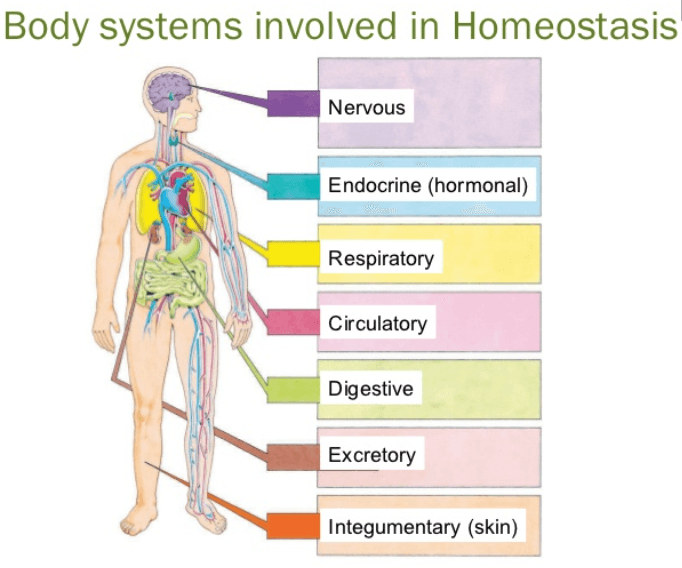
The human body systems work together to maintain homeostasis and ensure proper functioning. For example, the circulatory system delivers oxygen from the respiratory system to body tissues, while the digestive system provides nutrients that the circulatory system transports. The nervous system coordinates these activities, sending signals to other systems for efficient responses. These systems rely on one another to support overall health and survival. One system CANNOT live without the others.

Body Sytems Interdependence

media

2

Dropdown

Question image
is all body systems relying on one another for support, ​
, and survival. One body system ​
live without the others.

3

Fill in the Blank

Question image

Body systems working together for support, homeostasis, and survival.

4

Fill in the Blank

Question image

Healthy, Balanced, Temperature is 98.6, All systems working the way they should.

5

Multiple Choice

Explain interdependence of body systems.

1

The brain thinks about the food it sees and smells.

2

The lungs exchange carbon dioxide and oxygen by the movement of the diaphragm and intercostal muscles.

3

The skin grows hairs of different thickness throughout the body.

4

The teeth come in different shapes and sizes.

6

The integumentary system includes the skin, hair, nails, and glands, which work together to protect the body. It acts as a barrier against pathogens, UV radiation, and dehydration. This system also helps regulate body temperature through sweat and blood flow. Additionally, it allows for sensory perception, such as touch, pain, and temperature detection.

Integumentary System

media

7

Labelling

Label the parts of the Integumentary System.

Drag labels to their correct position on the image

Epidermis

Sweat Gland

Oil Gland

Fatty Tissue

Hair Follicle

Blood Vessels

Dermis

8

Reorder

Describe how the skin cools the body on a hot day.

The nerves detect an increase in temperature.

Water is released by sweat glands.

Blood vessels bring warm blood to the surface.

As sweat evaporates, it takes the body heat with it.

Body temperature drops.

1
2
3
4
5

9

media

The muscular system is responsible for movement in the body, allowing us to perform activities like walking, running, and lifting. It consists of three types of muscles: skeletal, smooth, and cardiac, each with different functions. Skeletal muscles are attached to bones and allow voluntary movement, while smooth muscles control involuntary movements in organs like the stomach. The cardiac muscle makes up the heart and is responsible for pumping blood throughout the body.

Muscular System

10

Categorize

Options (9)

Voluntary Movement

Involuntary Movement

Nonstop pumping

Biceps, Gluteus Maximus

intestine walls

heart

Question image
Question image
Question image
Question image

Organize these options into the right categories

Skeletal Muscle
Smooth Muscle
Cardiac Muscle

11

Drag and Drop

Question image
Skeletal muscle is ​
and attached to ​
for movement, smooth muscle is ​
and found in internal organs like the ​
, and cardiac muscle is involuntary, striated, and makes up the ​
.
Drag these tiles and drop them in the correct blank above
voluntary
bones
involuntary
intestines
heart
liver
lungs

12

media

The skeletal system provides structure and support to the body, giving it shape and allowing for movement. It protects vital organs, such as the brain, heart, and lungs, by surrounding them with bone. Bones also store minerals, like calcium and phosphorus, and release them into the bloodstream when needed. Additionally, the skeletal system houses bone marrow, where blood cells are produced.

Skeletal System

13

Labelling

Label the skeleton

Drag labels to their correct position on the image

Patela

tarsals

Femur

Fibula

Tibia

14

Labelling

Label the Skeleton

Drag labels to their correct position on the image

Ulna

Carpals

Sternum

Clavicle

Skull

Mandible

Humerus

Radius

15

Fill in the Blank

Question image

The part of the bones that makes blood including red blood cells, white blood cells, and platelets.

16

media

The circulatory system transports blood, oxygen, nutrients, and hormones throughout the body. The heart pumps blood through blood vessels, such as arteries, veins, and capillaries, to reach various tissues and organs. It also removes waste products like carbon dioxide and urea from cells for elimination. By maintaining blood flow, the circulatory system helps regulate body temperature and supports immune function (white blood cells).

Circulatory System

17

Match

Question image

Match the following words that describe the circulatory system.

Arteries

Veins

function of blood

capillaries

heart

blood away from the heart

blood toward the heart

transport

exchange gasses, wastes, and nutrients

pumping action

18

Match

Question image

Match the following

absorb nutrients

exchange oxygen and carbon dioxide

release urea waste

connect arteries to veins

capillaries in small intestine

capillaries in lungs

capillaries in nephrons in kidneys

capillaries

19

Reorder

Question image

Reorder the flow of blood coming from the body without oxygen to the body with oxygen.

From the body without oxygen to the heart

from the heart to the lungs without oxygen

from the lungs with oxygen to the heart

from the heart with oxygen to the body

1
2
3
4

20

The respiratory system is responsible for bringing oxygen into the body and removing carbon dioxide. Air is inhaled through the nose or mouth, travels down the trachea, and enters the lungs where gas exchange occurs in the alveoli. Oxygen from the air is absorbed into the bloodstream, while carbon dioxide is expelled from the blood into the lungs to be exhaled. This system helps maintain the body’s oxygen levels and supports cellular respiration for energy production.

Respiratory System

media

21

Fill in the Blank

Question image

The muscle that contracts to inhale and relaxes to exhale.

22

Labelling

Label the parts of the respiratory system.

Drag labels to their correct position on the image

pharynx

diaphragm

Nasal Passage

alveoli

bronchus

pleura

Trachea

bronchioles

23

Reorder

Question image

Reorder the following statements about breathing.

The diaphragm contracts to pull in air.

The nasal passage filters and warms the air.

The air travels down the trachea to the bronchioles and to the alveoli.

oxygen and carbon dioxide exchange in the alveoli.

the diaphragm relaxes releasing air.

1
2
3
4
5

24

Drag and Drop

Question image
Capillaries are small blood vessels that ​
arteries to veins and facilitate the ​
of oxygen, nutrients, waste products, and gases between the ​
and surrounding tissues, ensuring cellular function and ​
.
Drag these tiles and drop them in the correct blank above
connect
exchange
bloodstream
homeostasis
intestines
seperate

The human body systems work together to maintain homeostasis and ensure proper functioning. For example, the circulatory system delivers oxygen from the respiratory system to body tissues, while the digestive system provides nutrients that the circulatory system transports. The nervous system coordinates these activities, sending signals to other systems for efficient responses. These systems rely on one another to support overall health and survival. One system CANNOT live without the others.

Body Sytems Interdependence

media

Show answer

Auto Play

Slide 1 / 24

SLIDE