

Introduction to Adjustments-2-7-2025

Presentation
•
Computers
•
12th Grade
•
Hard

Steve Howard
Used 1+ times
FREE Resource
19 Slides • 21 Questions
1
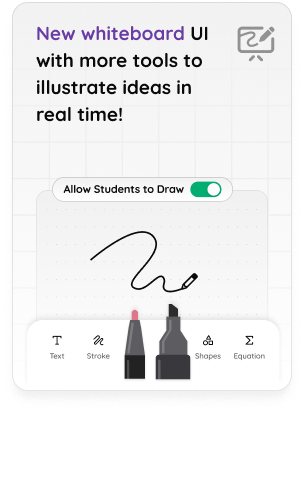
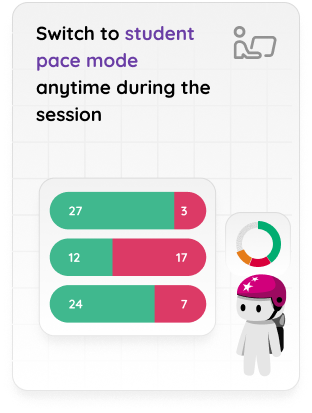
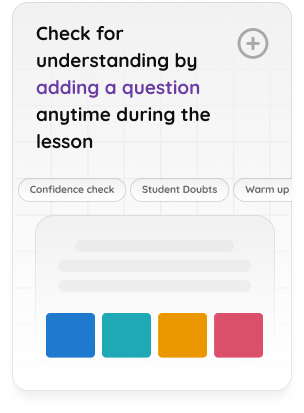
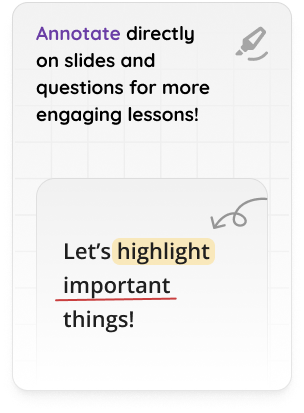
Discover new features in Lessons!
Finish all phases of “I-do ; We-do ; You-do” with Quizizz
2
3
This is a Ten-Column Worksheet with 5 Sections used to prove the general ledger.
Trial Balance
Adjustments
Adjusted Trial Balance
Income Statement
Balance Sheet
Trial Balance Worksheet

4
Trial Balance Section
Enter the Account Name and Number (from ALL account ledgers)
Enter the balance in the debit or credit column
(be sure you include the account Income Summary between the Drawing and the first Expense Account, it will have no balance!)
Rule the debit and credit columns single, then double if accurate
5
Multiple Choice
What is the purpose of a trial balance?
To prove the general ledger
To calculate net income
To assess inventory levels
To determine tax liability
6
Multiple Choice
What is the first step in preparing a ten-column worksheet?
Enter account name and number
Calculate net income
Adjust the balance sheet
Record inventory levels
7
Match Revenue and Expenses
Recording Supplies Adjustements
Write the debit amounts in the Adjustments Debit Column.
Write the credit Adjustments in the Credit Column.
Lable the two parts of the Supplies-Store Adjustment with a small a and the two parts of a different Supplies-Office account with b Prepaid Insurance 2 entries will then be c
8

& Prooving
9
Multiple Choice
10
Multiple Choice
What is the purpose of adjusting entries for prepaid expenses?
To decrease assets
To match revenues and expenses
To increase liabilities
To adjust the trial balance
11
Multiple Choice
When adjusting prepaid accounts, which accounts are credited?
Revenues
Assets
Expenses
Liabilities
12
Multiple Choice
When adjusting prepaid accounts, which accounts are debited?
Revenues
Assets
Expenses
Liabilities
13
to Supplies
Beginning Balance - Actual Balance = Adjustment
If the beginning Supplies balance is $2,200, and the ending Supplies balance is $700, the correct adjustment on the worksheet is to:
debit Supplies Expenses and credit Supplies, $1,500.
14
to Prepaid Insurance
(Beginning Balance/Months in a Year)
multiply by the number of months in the period if greater than 1
If the beginning Prepaid Insurance balance is $4,800 and the ending the correct adjustment on the worksheet at the end of one every month:
debit Preapid Insurance Expenses and credit Prepaid Insurance, $400.
15
Multiple Choice
The company paid $2,400 for an annual insurance premium at the beginning of the year. What is the adjusting entry at the end of the first month?
Debit Insurance Expense $200, Credit Prepaid Insurance $200
Debit Prepaid Insurance $200, Credit Insurance Expense $200
Debit Prepaid Insurance $2,400, Credit Insurance Expense $2,400
Debit Insurance Expense $2,400, Credit Prepaid Insurance $2,400
16
Multiple Choice
The company paid $2,400 for an annual insurance premium at the beginning of the year. What is the adjusting entry at the end of the first month?
Debit Insurance Expense $200, Credit Prepaid Insurance $200
Debit Prepaid Insurance $200, Credit Insurance Expense $200
Debit Prepaid Insurance $2,400, Credit Insurance Expense $2,400
Debit Insurance Expense $2,400, Credit Prepaid Insurance $2,400
17
Multiple Choice
What is true about Prepaid Insurance adjusting entries?
You will always divide by 12 to calculate
The ending balance is the same
The adjustment is the same value each month
The adjustment will be different values each month
18
Multiple Choice
The company paid $3,000 for a three-month advertising contract at the beginning of the quarter. What is the adjusting entry at the end of the first month?
Debit Advertising Expense $1,000, Credit Prepaid Advertising $1,000
Debit Prepaid Advertising $1,000, Credit Advertising Expense $1,000
Debit Prepaid Advertising $3,000, Credit Advertising Expense $3,000
Debit Advertising Expense $3,000, Credit Prepaid Advertising $3,000
19
Lesson Reinforcement
Instruction: Read the instructions indicated in the slides carefully.

20
Since businesses follow the Accrual Concept of accounting, entities must record transactions regardless of when the payment will be made. This concept results to adjusting the accounts at the end of the accounting period to keep it updated.
21
Accrued = Service Rendered but not yet paid
Deferred = Paid but not yet rendered.
22
Are expenses already incurred but not yet paid by the entity. Often supported by Billing Statement. This is recorded as an expense.
The most common example is Utilities Expense because this is often postpaid (paid after use).
23
Multiple Select
On March 16, Company A received billing for their electricity consumption for the month of February which is expected to be settled before March 20. What are the account titles involved in the initial journal entry? Select all possible account titles to be used.
Utilities Expense
Accounts Payable
Utilities Payable
Cash
Prepaid Utilities
24
Multiple Select
On March 20, Company A paid the billed expense. What are the account titles involved in the adjusting entry? Select all possible account titles to be used.
Utilities Expense
Accounts Payable
Utilities Payable
Cash
Prepaid Utilities
25
These are expenses paid in advance and are expected to be consumed in their useful time. These are often treated as current assets because of their nature.
Examples are Prepaid Rent, Prepaid Insurance, and etc.
26
Multiple Choice
On March 17, Company B paid Company A P20,000 for 2 months advance rental. From the choices below, select which account must be DEBITED to record the initial journal entry
Prepaid Rent
Rent Expense
Cash
Accounts Payable
27
Multiple Choice
On April 17, Company B already consumed half of the rent. Select from the choices below which account must be DEBITED to record the initial adjusting entry
Prepaid Rent
Rent Expense
Cash
Accounts Payable
28
The entity already rendered the service but the client has not paid yet. This must be recorded immediately as revenue.
29
Fill in the Blanks
If Company C, billed company A for Accounting services. What is the account to be DEBITED in the initial transaction? Type your answer in capital letters
Type answer...
30
Fill in the Blanks
If Company C, billed company A for Accounting services. What is the account to be CREDITED in the initial transaction? Type your answer in capital letters
Type answer...
31
Is a revenue paid but not yet rendered by the entity. Since the customer already paid us, we are now being obliged to render the service that is why it must be treated as a liability that needs to be settled.
32
Multiple Choice
TRUE/FALSE: In recording an unearned revenue, we debit Cash and credit Unearned Revenue.
TRUE
FALSE
33
Multiple Choice
TRUE/FALSE: In adjusting an unearned revenue, we debit revenue and credit unearned revenue.
TRUE
FALSE
34
Open Ended
WHY DO WE RECORD USE "UNEARNED REVENUE" A LIABILITY ACCOUNT, IN RECORDING THE TRANSACTION INSTEAD OF RECORDING THE REVENUE RIGHT AWAY? EXPLAIN YOUR ANSWER IN 1-2 SENTENCES.
35
A contra-asset account used to diminish/reduce the amount of a Non-Current Asset. Since Assets are subject to wear and tear for being used and with that, their value decreases. Accumulated Depreciation represents the used/utilized portion or lifespan of the asset.
This is often partnered with an expense account
36
DEFINITION OF TERMS:
SALVAGE VALUE: Amount of the asset at end of its useful life.
USEFUL LIFE: Lifespan of an asset.
FAIR MARKET VALUE: Current amount of an asset (Book Value - Depreciation)
BOOK VALUE: Amount of the asset when it was acquired.
37
FORMULA:
DEPRECIATION = (BOOK VALUE - SALVAGE VALUE) / USEFUL LIFE
MONTHLY DEPRECIATION = DEPRECIATION / 12 MONTHS
38
Multiple Choice
In recording the depreciation for the month. What are the accounts to be used?
Debit: Depreciation Expense
Credit: Accumulated Depreciation
Debit: Accumulated Depreciation
Credit: Depreciation Expense
Debit: Depreciation Expense
Credit: Cash
None of the above
39
Is also a contra-asset account that is used to record uncollectable receivables. This is often supported by a percentage indicated by businesses as part of contingency measures.
40
Multiple Select
What are the accounts needed to set up the Allowance for Doubtful Accounts. Select all possible answers
Allowance for Doubtful Accounts
Accounts Receivable
Bad Debts Expense
Discover new features in Lessons!
Finish all phases of “I-do ; We-do ; You-do” with Quizizz
Show answer
Auto Play
Slide 1 / 40
SLIDE
Similar Resources on Wayground

38 questions
Rhetorical Appeals and Strategies
Presentation
•
9th Grade
31 questions
Kolabarasi Dalam Masyarakat Digital
Presentation
•
12th Grade
35 questions
Productivity Tools
Presentation
•
11th - 12th Grade
36 questions
LEMBAGA KEUANGAN BUKAN BANK
Presentation
•
12th Grade
37 questions
Atomic Radius Lesson
Presentation
•
12th Grade
37 questions
NEW DEAL
Presentation
•
11th Grade - University
35 questions
APES Unit 1 Review
Presentation
•
12th Grade
Popular Resources on Wayground
10 questions
Safety Day 2026 – Student Review

Quiz
•
9th Grade
21 questions
Continents and Oceans
Quiz
•
6th Grade
20 questions
Parts of Speech
Quiz
•
5th Grade
16 questions
Subject & Predicate
Quiz
•
5th Grade
25 questions
Multiplication Facts
Quiz
•
5th Grade
12 questions
Map Skills
Quiz
•
3rd Grade
22 questions
Continents and Oceans
Quiz
•
5th Grade
15 questions
Rounding Decimals
Quiz
•
5th Grade