Search Header Logo
Cell City Tour

Cell City Tour

Assessment

Presentation

Science

6th - 8th Grade

Medium

NGSS
MS-LS1-2, MS-LS1-1, MS-LS1-3

+3

Standards-aligned

Created by

Benevolence Yangsi

Used 1+ times

FREE Resource

4 Slides • 29 Questions

1

Cell City

Let's take a trip to Cell City!

media

2

3

media

Explore(groups) Comparing Plant and Animal Cells

Plant

Animal

4

5

Multiple Choice

Which model is a Animal Cell?

1
2

6

Multiple Choice

Which model is a Plant Cell?

1
2

7

Multiple Choice

What is the difference between a prokaryotic cell and a eukaryotic cell?

1

Prokaryotes do not have a nucleus or organelles, but a eukaryotic cell does

2

Eukaryotic cells do not have a nucleus or organelles, but prokaryotes do

8

Multiple Choice

Question image

How can you tell that this is a prokaryote or eukaryote cell?

1

It is a prokaryote because it doesn't have a nucleus

2

It is a eukaryotic cell because it has a cell wall and a nucleus

3

It is eukaryotic because it does not a nucleus nor a cell membrane

4

It is prokaryote because it has a cell wall

9

Multiple Choice

Question image

Why is the vacuole in a plant cell larger than a vacuole in an animal cell?

1


A. The vacuole in the plant cell produces ribosomes.

2


B. The vacuole in the plant cell controls cellular activities.

3


C. The vacuole in the plant cell performs photosynthesis.

4


D. The vacuole in the plant cell maintains water balance.

10

Multiple Choice

Plants and animal cells have...

1

Mitochondria and chloroplasts

2

Nucleus and chloroplast

3

Cell wall and chloroplast

4

Mitchochodria and cytoplasm

11

Multiple Choice

Which organelle is the command center for eukaryotic (plant and animal) cells?

1

Cell wall

2

Nucleus

3

Mitochondria

4

Lysosome

12

Multiple Choice

what is the function of a lysosome?

1

To create energy for the cell

2

To command the cell what to do

3

To remove waste using digestive enzymes from the cell

4

To protect the cell

13

Multiple Choice

Which organelle holds the cell together? (found in both an animal and plant cell)

1

Cell Wall

2

Nucleus

3

Cell Membrane

4

Ribosome

14

Multiple Choice

"Envelopes" of the cell, used for transporting material:

1

ER

2

Golgi Body

3

Mitochondria

4

Chloroplast

15

Multiple Choice

An organism made up of more than one cell and often made of more then one type of cell.

1

Multicellular

2

Unicellular

3

Organelles

4

Prokaryotic

16

Multiple Choice

a rigid supporting layer that surrounds the cells of plants and some other organisms
1
cell membrane
2
cell wall
3
 nucleus
4
cytoplasm

17

Multiple Choice

the thick fluid region of a cell located inside the cell membrane or between the cell membrane and nucleus
1
cytoplasm
2
cell wall
3
organelle
4
golgi apparatus

18

Multiple Choice

a sac like organelle that stores water, food, and other matter
1
vacuole
2
lysosome
3
cytoplasm
4
cell wall

19

Multiple Choice

Question image
a small grain shaped organelle found in the cytoplasm of a cell or on the R-ER that produced proteins
1
cytoplasm
2
ribosome
3
cell membrane
4
mitochondria

20

Multiple Choice

Question image
an organelle in the cells of plants and some other organisms that captures energy from sunlight and changes it to an energy from that cells can use in making food
1
vacuole
2
chloroplasts
3
cytoplasm
4
mitochondria

21

Multiple Choice

What is found in both plant and animal cells but is much larger in plant cells?
1
Nucleus
2
Mitochondrion
3
Chloroplast
4
Vacuole

22

Multiple Choice

Which of the following is found in eukaryotic cells but NOT prokaryotic cells?
1
Cell membrane
2
Mitochondria
3
Ribosomes
4
DNA

23

Multiple Choice

Question image
Directs all cell activities through the DNA located there.
1
Lysosomes
2
Nucleus
3
ribosomes
4
Mitochondria

24

Multiple Choice

Which of the following are prokaryotic cells?

1

Plant

2

Animal

3

Bacteria

4

Plant and Animal

25

Multiple Choice

Question image

Two types of models that can be used to show details of the structures of cells are shown below.

Which of the following describes a limitation of the drawing but NOT the clay model?

1

It does not represent the main parts of a cell. B.

2

It does not contain the correct number of nuclei

3

It cannot represent a living cell, since a true cell is three-dimensional

4

It cannot represent a living cell, since the cytoplasm should be in constant motion

26

Multiple Select

Which of these are a part of a scientific theory( select all that apply)

1

A group of scientist in agreement

2

an explanation of nature

3

well-supported by evidence

4

An idea of one individual

27

Multiple Choice

Question image

The 3 parts of the Cell Theory are...?

1

All living things are composed of cells

Cells are the basic units of structure and function in living things

All cells are produced from other cells

2

All living things are composed of cells

Cells are the basic units of dance and vibes in living things

All cells are destroyed from other aliens

3

All living things are composed of Jell-O

Cells are the basic units of structure and function in living things

All cells are produced from factories in Canada

4

All living things are composed of cells

Cells do karate and practice eating whole pies in their free time

All cells are produced from other cells

28

Multiple Choice

What is the correct order of organization
1
tissues-cells-organs-organ systems-organism
2
cell-tissue-organs-organ systems-organism
3
organism-cells-tissues-organ systems-organism
4
tissues-cells-organs-organ sytems-organism

29

Multiple Choice

What makes scientific knowledge durable or long-lasting?

1

It will always be expressed under the same conditions.

2

It is well supported but can change when new evidence arises.

3

It can be expressed as a statement or as a mathematical equation.

4

It is something familiar that helps scientists understand anything not familiar.

30

Multiple Choice

Question image

In the 1800s two scientists, Theodor Schwann and Matthias Schleiden, studied different types of organisms. After many years of studying a great variety of organisms, they drew similar but independent conclusions about their observations.

What statement was developed most directly from these conclusions and is part of the modern cell theory?

1

The functions of living things occur in cells.

2

Cells exist only in multicellular organisms.

3

Living things are composed of cells.

4

Cells contain hereditary information.

31

Multiple Choice

Question image
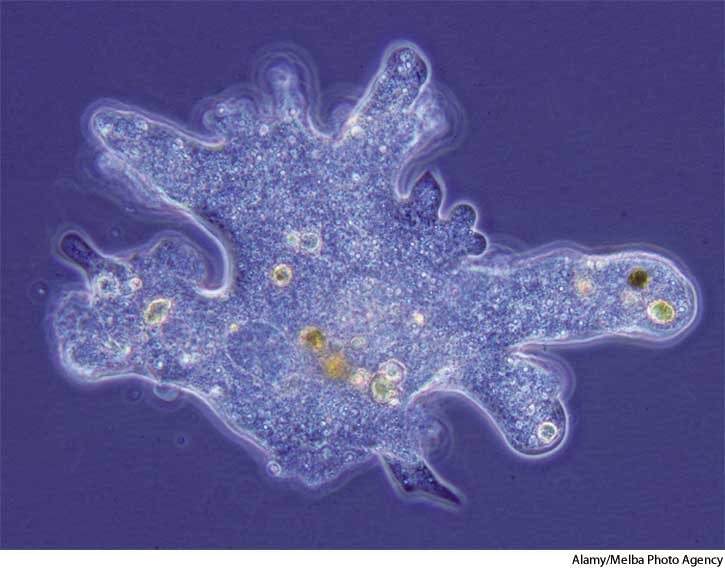
An Amoeba is a unicellular, animal-like protist that lives in ponds and streams. According to cell theory, where did this cell come from?
1

another pre-existing amoeba cell.

2

energy from sun that allowed the protist to reproduce.

3

a multicellular organism.

4

the nonliving environment.

32

Multiple Choice

Question image
What is one way in which all living things on Earth are alike?
1

All living things have hair.

2

All living things are made of cells and come from other cells.

3

The cells of all living things have chloroplast.

4

All living things can move. 

33

Multiple Choice

All cells -----

1

come from other dead cells

2

come from other living cells

3

spontaneously generate

4

form from water and air

Cell City

Let's take a trip to Cell City!

media

Show answer

Auto Play

Slide 1 / 33

SLIDE