Search Header Logo
Glycolysis, Pyruvate Oxidation and the Citric Acid Cycle

Glycolysis, Pyruvate Oxidation and the Citric Acid Cycle

Assessment

Presentation

Biology

11th Grade

Practice Problem

Medium

NGSS
HS-LS1-7, HS-LS2-3, HS-PS1-4

Standards-aligned

Created by

David Fink

Used 16+ times

FREE Resource

9 Slides • 10 Questions

1

media

2

Math Response

For each molecule of glucose, 38 molecules of ATP are produced in cellular respiration. These 38 molecules can then provide cells with 277 kcal of energy, which can then be used to undergo processes such as active transport, among others. 


Calculate the amount of energy present within 1 molecule of ATP. 


Type answer here
Deg°
Rad

3

media

4

media

5

Multiple Choice

Question image

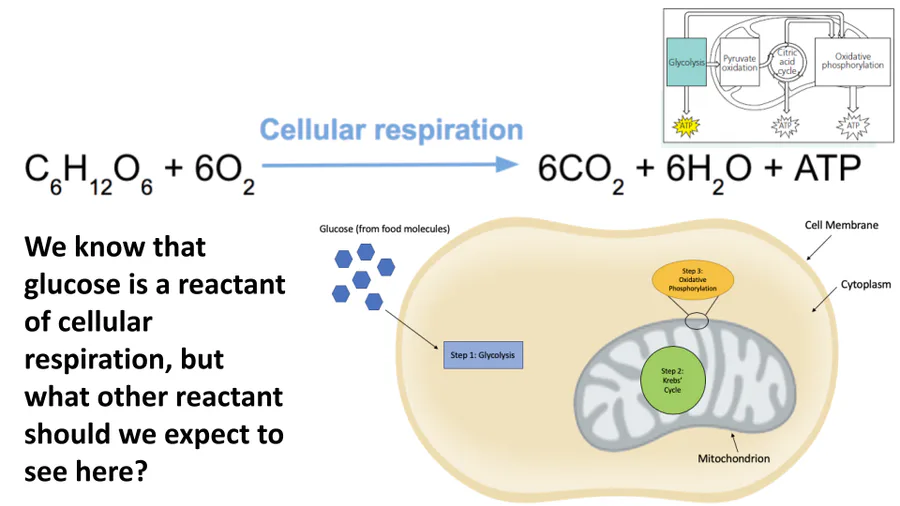
We know that glucose is a reactant of cellular respiration, but what other reactant should we expect to see here?

1

O2

2

CO2

3

H2O

4

ATP

6

media

7

Multiple Choice

Question image

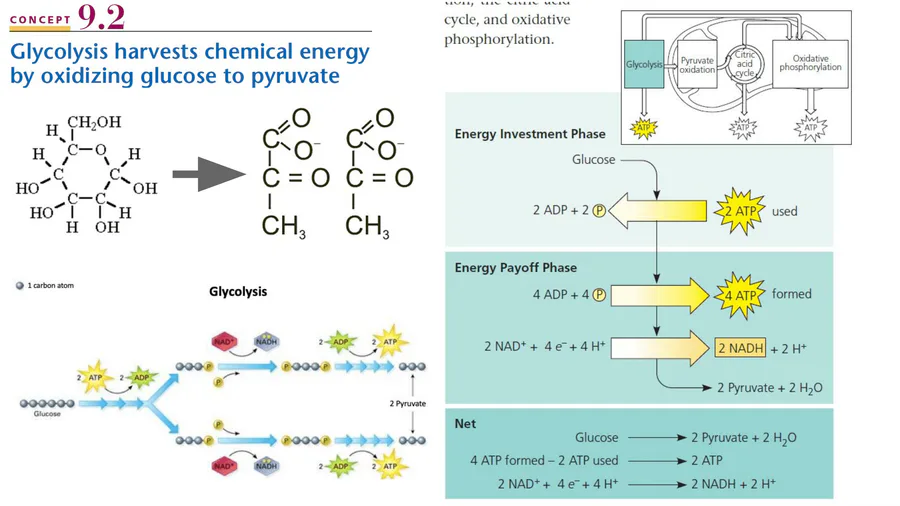
What is the net amount of ATP molecules made during glycolysis?

1

1

2

2

3

3

4

4

8

media

9

Open Ended

Question image

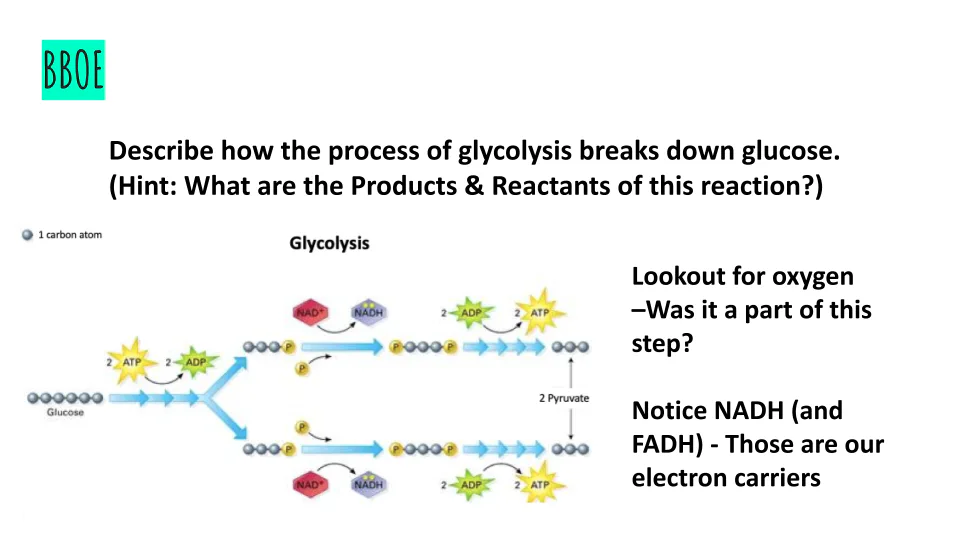
Describe how the process of glycolysis breaks down glucose. (Hint: What are the Products & Reactants of this reaction? What is the role of NADH?)

10

Multiple Choice
Question image

Does oxygen play a role in Glycolysis?

1

Yes

2

No

11

media

12

media

13

media

14

Multiple Choice

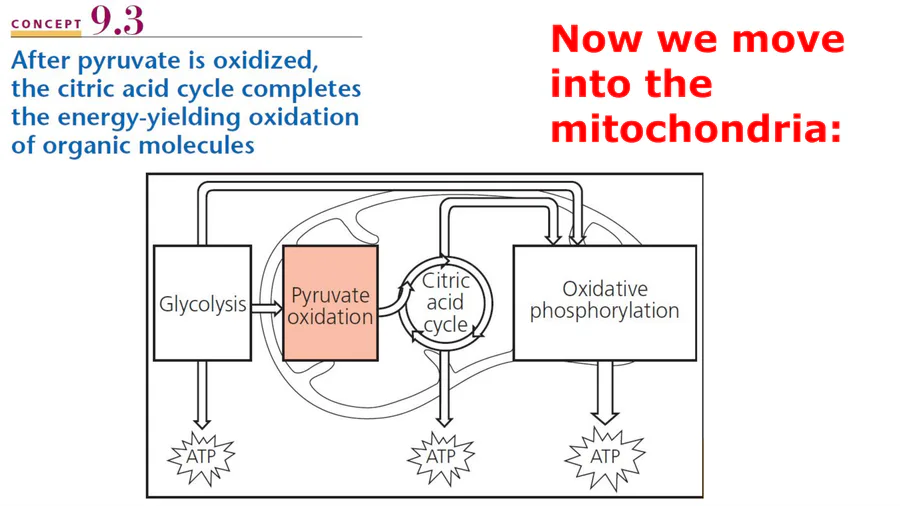
Where does pyruvate oxidation and the Citric acid Cycle take place?

1

ribosome

2

mitochondrion

3

nucleus

4

DNA

15

Multiple Choice

How many times does each pyruvate molecule go through the Citric Acid Cycle?

1

once

2

twice

3

three times

4

a lady

16

media

17

Open Ended

Question image

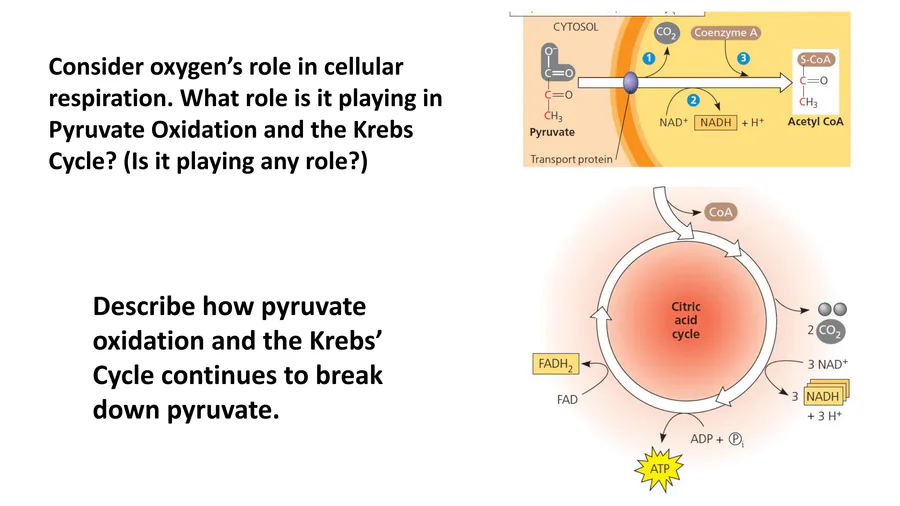
Describe how pyruvate oxidation and the Krebs’ Cycle continues to break down pyruvate.

18

Multiple Choice

Does oxygen play a role in pyruvate oxidation and/or the Citric Acid Cycle?

1

yes

2

no

19

Open Ended

Put It All Together

  1. If pyruvate oxidation and the Citric Acid Cycle were switched off, could a cell still produce ATP? Justify your answer.

  2. What about if glycolysis were switched off instead? Could a cell still produce ATP? Again, justify your answer.

media

Show answer

Auto Play

Slide 1 / 19

SLIDE