Unit 4 Science interim review Rotation, Planets, Climate
Presentation
•
Science
•
5th Grade
•
Hard
+1
Standards-aligned
Harvey Jones
FREE Resource
139 Slides • 39 Questions
1
2
3
4
5
Multiple Choice
6
7
Multiple Choice
8
Multiple Choice
9
Multiple Choice
10
11
The sun is made mostly of Hydrogen and Helium.
12
The Earth is a lot bigger than the moon that orbits around it.
13
Multiple Choice
Students chose objects to model the relative sizes of Earth and the moon. Which set of objects best compares the sizes of Earth and the moon?
F
G
H
J
14
Multiple Choice
15
16
Multiple Choice
17
Multiple Choice
18
19
Multiple Choice
20
Multiple Choice
21
22
23
24
25
26
27
Multiple Choice
28
29
30
Multiple Choice
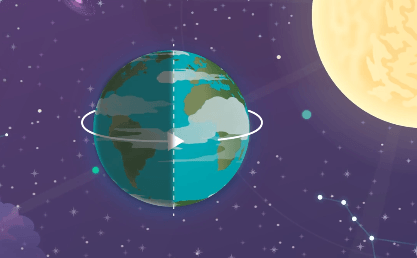
A student drew the following pictures to show the day-night cycle of Earth. Based on the pictures, how many hours should the student record on the nighttime picture to complete a day-night cycle?
11 hours
12 hours
13 hours
24 hours
31
Multiple Choice
A student makes the model shown with objects representing the sun, Earth, and the moon to use in a class demonstration. Which action should the student do with the objects to demonstrate a complete day-night cycle of Earth?
Move the moon around Earth once
Spin the sun in a circle once
Move Earth around the sun once
Spin Earth in a circle once
32
33
34
35
36
37
Multiple Choice
38
39
Multiple Choice
The sun appears to follow a path across the
sky each day.
Rotation
Revolution
40
Multiple Select
A student draws diagrams of her house and the location of the sun in the sky. Which 3 diagram below correctly represent the location of the sun at the time indicated?
41
Multiple Choice
A student draws diagrams of her house and the location of the sun in the sky. Which diagram below does NOT correctly represent the location of the sun at the time indicated?
42
Multiple Choice
A
B
C
D
43
44
Multiple Choice
45
46
Multiple Choice
Since WE rotate West to East, in which direction does the sun appear to rise?
In the East
In the North
In the West
In the South
47
Multiple Choice
Since WE rotate West to East, in which direction does the sun appear to set?
In the East
In the North
In the West
In the South
48
Multiple Choice
A
B
C
D
49
Dropdown
50
51
Multiple Choice
The diagram shows the shadow of a tree in a field at noon on a summer day. The sun rises at 7:00 A.M. on this day. Which diagram best shows the shadow of the tree at 10:00 A.M. on the same day?
F
G
H
J
52
53
54
Multiple Choice
55
56
57
58
59
60
61
62
Sun is mostly made of hydrogen and helium
63
Multiple Choice
The moon, the sun, and Earth have different physical characteristics. Which of these best describes a physical characteristic of the sun?
It is solid and has many layers.
It rotates on its axis every 24 hours.
It is mostly made of hydrogen and helium.
It is smaller and has less gravity than Earth or the moon.
64
65
66
67
68
69
70
71
72
73
74
75
76
77
78
79
80
81
82
83
84
85
86
87
88
89
90
91
92
93
94
95
96
97
98
99
Multiple Choice
Students observe a glass of ice and water. The glass is dry on the outside. After ten minutes students see drops of water on the outside of the glass. Which statement best explains the students’ observations?
A. The water vapor in the air changes to a liquid when it touches the cold glass.
B. The cold water inside the glass rises and then slides down the outside of the glass.
C. The ice in the glass melted and caused the water to overflow the glass.
D. The water moved to the outside surface through tiny holes in the glass.
100
Multiple Choice
A student plans to make a chart that describes each process in the water cycle. Which sentence should the student use to describe the process of condensation?
A. Water flows downhill.
B. Liquid water turns into water vapor.
C. Polar ice turns into liquid water.
D. Water vapor collects to form droplets.
101
Multiple Choice
Which of the following explains how water undergoes a change of state in one stage of the water cycle in order to move from the ocean’s surface into the air?
Liquid water that is heated by the sun becomes a gas and rises.
Gaseous water rises as it is cooled by the ocean.
Liquid water that is heated by the sun condenses into rain.
Gaseous water collects in drops of fog above the ocean’s surface.
102
Multiple Choice
Which process will happen when the sun interacts with the ocean?
Rain will fall only on the land.
Water will not evaporate at nighttime.
Salt water will become fresh water vapor.
Precipitation will happen less often.
103
104
105
106
107
108
109
110
111
112
113
Multiple Choice
Which table correctly classifies statements about weather and climate?
A
B
C
D
114
Multiple Choice
A
B
C
D
115
116
117
118
119
120
121
122
123
124
125
126
127
128
129
130
131
132
133
134
135
136
137
138
139
140
141
142
143
Multiple Choice
A
B
C
D
144
145
146
147
148
149
150
151
152
153
154
155
156
157
158
159
Multiple Choice
Students make a solar system model on the playground. The school building represents the sun. They label round objects for each planet. Which planet should they place at the greatest distance from the school building?
A. Jupiter
B. Neptune
C. Mercury
D. Saturn
160
Multiple Choice
In the early 1600s, the astronomer Galileo used a telescope to make observations of Mercury and Venus. What are the positions of these planets in relation to the sun?
Mercury is the planet closest to the sun, and Venus is the second planet from the sun.
Mercury is the second planet from the sun, and Venus is the third planet from the sun.
Venus is the planet closest to the sun, and Mercury is the second planet from the sun.
Mercury is the third planet from the sun, and Venus is the planet closest to the sun.
161
162
163
164
165
Multiple Choice
Shadow casts by objects change throughout the day. The picture below shows the shadow cast by a tree at 3:00 p.m. Which picture shows how the tree's shadow most likely looked at 9:00 a.m. ?
166
167
168
169
170
171
172
173
174
Multiple Choice
A
B
C
D
175
Multiple Choice
176
177
Multiple Choice
A student is looking for evidence that Earth is always rotating on its axis. Which of the following would provide the best evidence?
The different amount of rain that falls each day
The appearance of shadows changing throughout the day
The presence of other planets in the night sky
The different phases of the moon in a month
178
Show answer
Auto Play
Slide 1 / 178
SLIDE

Similar Resources on Wayground
157 questions
Earth Science SSA Review
Presentation
•
6th - 8th Grade
157 questions
Earth Science Review
Presentation
•
6th - 8th Grade
174 questions
Grade 5 Unit 2 Slideshow
Presentation
•
5th Grade
172 questions
toan 4 ttt
Presentation
•
4th Grade
172 questions
Topic 1 Lesson 2023-2024 (testing)
Presentation
•
6th Grade
162 questions
Mate-Matika
Presentation
•
6th Grade
179 questions
UNIT 6 CATCH UP
Presentation
•
1st - 5th Grade
182 questions
8TH MODULE 2
Presentation
•
8th Grade
Popular Resources on Wayground
20 questions
STAAR Review Quiz #3
Quiz
•
8th Grade
20 questions
Equivalent Fractions
Quiz
•
3rd Grade
6 questions
Marshmallow Farm Quiz
Quiz
•
2nd - 5th Grade
20 questions
Main Idea and Details
Quiz
•
5th Grade
20 questions
Context Clues
Quiz
•
6th Grade
20 questions
Inferences
Quiz
•
4th Grade
19 questions
Classifying Quadrilaterals
Quiz
•
3rd Grade
12 questions
What makes Nebraska's government unique?
Quiz
•
4th - 5th Grade
Discover more resources for Science
15 questions
5.L.3.1/3.2: Inherited/Acquired Traits
Quiz
•
5th Grade
20 questions
Food Chains and Food Webs Review
Quiz
•
5th Grade
15 questions
Fossil Fuel & Sedimentary Rock Formations
Quiz
•
5th Grade
14 questions
5.8.C Light STAAR Question PIN
Quiz
•
5th Grade
19 questions
Electric Circuits 5.8 B
Quiz
•
5th Grade
20 questions
Food Webs
Quiz
•
5th Grade
20 questions
The Water Cycle
Quiz
•
4th - 5th Grade
20 questions
Earth Processes and Landforms
Quiz
•
5th Grade