
PDA Software - Testing revision

Presentation
•
Computers
•
12th Grade
•
Practice Problem
•
Easy

Tracy Mutter
Used 3+ times
FREE Resource
9 Slides • 8 Questions
1
Testing Revision
2
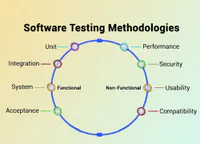
Unit Testing
Unit testing is a software testing technique where individual units or components of a software application are tested in isolation. The purpose is to validate that each unit of the software performs as expected. A unit is the smallest testable part of any software, such as a function, method, or class. Unit tests are typically automated and written by developers to ensure that their code works correctly.
3
Integration Testing
Integration testing is a level of software testing where individual units or components are combined and tested as a group. The purpose is to identify issues that occur when units interact with each other. This type of testing ensures that different modules or services used by your application work well together. Integration tests are typically performed after unit tests and before system tests.
4
Systems Testing
System testing is a level of software testing where a complete and integrated software system is tested. The purpose is to evaluate the system's compliance with the specified requirements. System testing is performed after integration testing. It involves testing the software in its entirety, including interactions with external systems, to ensure it behaves as expected in a real-world environment.
5
Test Plan
A test plan is a detailed document that outlines the strategy, objectives, resources, schedule, and scope of testing activities for a software project. It serves as a blueprint for conducting testing and ensures that all aspects of the software are thoroughly tested.
Typically, it will include normal, extreme, and exceptional test data.
6
Dry Run
A dry run is a process where a program or a piece of code is executed manually, step by step, without using a computer. The purpose is to verify the logic and correctness of the code by simulating its execution. This technique helps identify logical errors, understand the flow of the program, and ensure that the code behaves as expected before actual execution.
7
Walkthough
A walkthrough is a type of peer review in which a developer or author of a document presents their work to a group of peers for feedback. The purpose is to identify any issues, gather suggestions for improvement, and ensure the quality and correctness of the work. Walkthroughs are typically informal and involve a step-by-step presentation of the code, design, or document being reviewed.
8
Breakpoint
A breakpoint is a debugging tool used in software development to pause the execution of a program at a specific point. This allows developers to inspect the state of the program, including variables, memory, and the call stack, to diagnose and fix issues. Breakpoints are typically set in an integrated development environment (IDE) and can be conditional, meaning they only trigger under certain conditions.
9
Trace Table
A trace table is a tool used in debugging and understanding algorithms. It is a tabular method for tracking the values of variables and the output of a program at each step of its execution. Trace tables help visualise how an algorithm processes data, making it easier to identify logic errors and understand the flow of the program.
10
Multiple Choice
What is the primary purpose of unit testing?
To test the entire system as a whole
To test individual units or components in isolation
To test the interaction between different modules
To test the software in a real-world environment
11
Multiple Choice
What is a trace table used for?
To document the test strategy and objectives
To track the values of variables and the output of a program at each step of execution
To simulate user interactions with the software
To automate the testing process
12
Multiple Choice
What is the main goal of system testing?
A. To validate the system's compliance with specified requirements
B. To test individual functions or methods
C. To test the software's usability
D. To test the software's security features
13
Multiple Choice
What is a test plan?
A document that outlines the strategy, objectives, resources, and schedule for testing activities
A tool used to track the values of variables during program execution
A step-by-step manual execution of a program
A debugging tool used to pause the execution of a program
14
Multiple Choice
What is a dry run in software testing?
A. An automated test that runs without human intervention
B. A manual step-by-step execution of a program to verify its logic
C. A test that simulates user interactions with the software
D. A test that evaluates the software's performance under stress
15
Multiple Choice
What is the purpose of a walkthrough in software development?
A. To execute the program and check for runtime errors
B. To present and review code or documents with peers for feedback
C. To test the software's compatibility with different environments
D. To automate the testing process
16
Multiple Choice
What is a breakpoint used for in debugging?
A. To execute the entire program without stopping
B. To pause the execution of a program at a specific point
C. To automatically fix errors in the code
v
17
Multiple Choice
What is a trace table used for?
A. To document the test strategy and objectives
B. To track the values of variables and the output of a program at each step of execution
C. To simulate user interactions with the software
D. To automate the testing process
Testing Revision
Show answer
Auto Play
Slide 1 / 17
SLIDE
Similar Resources on Wayground

10 questions
مراجعة الفصل الثالث (الاحتمالات )
Presentation
•
12th Grade
13 questions
Páginas Web- Bach
Presentation
•
12th Grade
11 questions
Base de Datos
Presentation
•
12th Grade
13 questions
Exploring the Cloud: Unleashing the Power of Cloud Computing
Presentation
•
12th Grade
11 questions
App Dev Proj Week 2 Lesson 1
Presentation
•
12th Grade
12 questions
Geometry - Lesson Area of Circle Sector and Length of Arc
Presentation
•
12th Grade
13 questions
Satire
Presentation
•
12th Grade
11 questions
Reading tips
Presentation
•
12th Grade
Popular Resources on Wayground
10 questions
Safety Day 2026 – Student Review

Quiz
•
9th Grade
21 questions
Continents and Oceans
Quiz
•
6th Grade
20 questions
Parts of Speech
Quiz
•
5th Grade
16 questions
Subject & Predicate
Quiz
•
5th Grade
25 questions
Multiplication Facts
Quiz
•
5th Grade
12 questions
Map Skills
Quiz
•
3rd Grade
22 questions
Continents and Oceans
Quiz
•
5th Grade
15 questions
Rounding Decimals
Quiz
•
5th Grade