
Characteristics of Organisms

Presentation
•
Science
•
8th Grade
•
Easy
+4
Standards-aligned

Vanessa Hernandez
Used 4+ times
FREE Resource
22 Slides • 15 Questions
1

Tuesday 2/25/25 Do Now
1. Six scientists help develop cell theory: Hooke, Redi, Leeuwenhoek,
Schleiden, Schwann, and Virchow. Place each scientist with the part
of the cell theory their research helped create. Scientists can be
used more than once.
Homework: Complete
any basic characteristics
of life assignments
Materials:
1. Notebook
2. Planner
3. Pencil
Part of Cell Theory
Scientist involved
All cells come from other pre-
existing cells
All organisms are made up of 1 or
more cells
Cells are the basic unit of
structure and function in
organisms
2

© The Science Duo
3

•
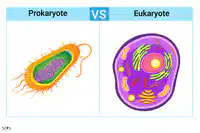
An organism whose cells lack a nucleus and other
organelles (Pro = NO)
•
Nucleoid – central part of the cell where the DNA is
located
•
Microscopic
Examples of Prokaryotes
Streptococcus
pyogenes
Salmonella
Escherichia
coli
4

•
An organism whose cells contain a nucleus and other
organelles (Eu = TRUE)
•
Nucleus – part of the cell where the DNA is located
•
Most are able to be seen, but some are microscopic
Examples of Eukaryotes
Tiger
Mushroom
Amoeba
5
Multiple Choice
____________a membrane bound organelle that contains the cell’s DNA.
Cell Wall
Cell Membrane
Organelle
Nucleus
6
Multiple Choice
The difference between a prokaryotic cell and a eukaryotic cell is that
only one has a nucleus
they are not different
one is blue, the other is red
7
Multiple Choice
_________is a single-celled organism that does not have a nucleus or membrane-bound organelles.
Prokaryote
Eukaryote
Unicellular
Multicellular
8
Multiple Choice
_________is an organism made up cells that contain their DNA in a nucleus.
Prokaryote
Eukaryote
Unicellular
Multicellular
9

Paramecium
Phytoplankton
Euglena
•
An organism that is made up of only 1 cell
•
Uni = one
•
Microscopic and many are found in water
Examples of Unicellular Organisms
10

Ant
•
An organism that is made up of many cells (2 or more)
•
Multi = many
•
Some may be very small and others very large
Examples of Multicellular Organisms
Elephant
Cactus
11
Multiple Choice
An organism with only one cell is known best as...
a disease
plankton
multicellular organism
unicellular organism
12
Multiple Choice
An organism with more than one cell is known as a/an
organ system
multicellular organism
unicellular organism
13
Multiple Choice
Which organism represents a multicellular organism?
14
Multiple Choice
____________organisms made up of one cell.
Cell
Unicellular
Organisms
Multicellular
15

Grass
Algae
Oak Tree
•
An organism that is able to produce its own food
through the process of photosynthesis
•
Auto = self; Troph = nourish/feeder
•
A large majority are green plants
Examples of Autotrophs
16

Hawk
Bear
Grasshopper
•
An organism that must consume other organisms in
order to obtain energy
•
Hetero = different or other; Troph = nourish/feeder
•
Many belong to the animal, protist, and fungi kingdoms
of life
Examples of Heterotrophs
17
Multiple Choice
Autotrophs ____
Eat other organisms
Make their own food
Consume dead organisms
Only drink water
18
Multiple Choice
Heterotrophs ___
Make their own food
Consume only plants
Use photosynthesis
Eat other organisms
19
Multiple Choice
Another word for autotroph is ___
Consumer
Predator
Producer
Decomposer
20
Multiple Choice
An organism with more than one cell is known as a/an
organ system
multicellular organism
unicellular organism
21
Multiple Choice
Another word for heterotroph is ___
Consumer
Decomposer
Producer
Prey
22
Multiple Choice

This is a Okapi. It eats leaves to survive. What kind of organism is it?
Heterotroph
Autotroph
23
Multiple Choice

This is corn. It makes its own food through photosynthesis. What kind of organism is it?
Heterotroph
Autotroph
24

•
5 checkpoint questions
•
Discuss each question with a partner
•
Write a complete answer to each question on
your notes page
25

Identify 3 organisms
that would be
classified as
eukaryotic,
multicellular, and
heterotrophic.
26

Humans, Cats, Birds,
Dogs, Elephants,
almost all animals
27

How would a
cactus be
classified?
28

Eukaryotic,
Multicellular,
Autotrophic
29

Describe the main
difference
between an
autotroph and a
heterotroph.
30

Autotrophs make their
own energy through
photosynthesis.
Heterotrophs must eat
to gain energy.
31

How do
unicellular and
multicellular
organisms differ?
32

Unicellular only have 1
cell and are microscopic.
Multicellular are made of
more than 1 cell and can
be a variety of sizes.
33

Question 5
How do
prokaryotic and
eukaryotic
organisms differ?
34

Prokaryotes do not
have a nucleus and
other organelles.
Eukaryotes have a
nucleus and complex
organelles.
35


Tuesday
Activities
Autotroph = Self Nourish (CAN produce its own food, gets its energy from the sun & uses photosynthesis)
Heterotroph = Different Nourishment
(Can NOT produce its own food, must get nutrients from other sources)
When you are complete, show it to me to check that it is correct for a STICKER.
36


Tuesday
Activities

37

Tuesday Exit Ticket
• What part of eukaryotic cells contains genetic material and controls
cells activities?
• What is the difference between unicellular and multicellular?
Tuesday 2/25/25 Do Now
1. Six scientists help develop cell theory: Hooke, Redi, Leeuwenhoek,
Schleiden, Schwann, and Virchow. Place each scientist with the part
of the cell theory their research helped create. Scientists can be
used more than once.
Homework: Complete
any basic characteristics
of life assignments
Materials:
1. Notebook
2. Planner
3. Pencil
Part of Cell Theory
Scientist involved
All cells come from other pre-
existing cells
All organisms are made up of 1 or
more cells
Cells are the basic unit of
structure and function in
organisms
Show answer
Auto Play
Slide 1 / 37
SLIDE
Similar Resources on Wayground

35 questions
Natural Selection and Adaptations
Presentation
•
8th Grade
29 questions
Limiting Factors and Carrying Capacity
Presentation
•
7th Grade
32 questions
Parts of the Cell Review
Presentation
•
8th Grade
30 questions
5/24 - BLITZ - 8.11A Ecosystems
Presentation
•
8th Grade
28 questions
Levels of Ecology Lesson
Presentation
•
8th Grade
32 questions
Digestive System
Presentation
•
7th Grade
30 questions
Organisms and their Environment Review
Presentation
•
7th Grade
32 questions
Animal Cells
Presentation
•
8th Grade
Popular Resources on Wayground
10 questions
How much do you know about our Portrait of an Eagle?

Quiz
•
10th Grade
10 questions
Fast Food Slogans
Quiz
•
6th - 8th Grade
21 questions
Continents and Oceans
Quiz
•
6th Grade
20 questions
Parts of Speech
Quiz
•
5th Grade
16 questions
Subject & Predicate
Quiz
•
5th Grade
25 questions
Multiplication Facts
Quiz
•
5th Grade
12 questions
Map Skills
Quiz
•
3rd Grade
22 questions
Continents and Oceans
Quiz
•
5th Grade
Discover more resources for Science
20 questions
Scientific Method and Variables
Quiz
•
8th Grade
20 questions
Scientific method and variables
Quiz
•
8th Grade
27 questions
Counting Atoms - Subscripts
Quiz
•
8th Grade
20 questions
Claim, Evidence and Reasoning (CER)
Quiz
•
6th - 8th Grade
18 questions
Counting Atoms
Quiz
•
7th - 8th Grade
20 questions
Elements, Compounds and Mixtures
Quiz
•
8th Grade
10 questions
Exploring Chemical and Physical Changes

Interactive video
•
6th - 10th Grade
10 questions
Decoding the Periodic Table of Elements
Interactive video
•
6th - 10th Grade