Waves
Presentation
•
Science
•
7th - 9th Grade
•
Hard

James Gonzalez
FREE Resource
25 Slides • 41 Questions
1
Waves Review
Lesson 6
2
3
Multiple Choice
What is a medium?
The lowest point of a transverse wave
The size of a wave
The middle of a wave
Matter through which a wave travels
4
Multiple Choice
Definition: Wave
Matter through which a wave travels
A disturbance that transfers energy from one place to another
The distance between two corresponding parts of a wave
The lowest point of a transverse wave
5
6
Multiple Select
Two main types of waves are:
Electrical
Magnetic
Mechanical
Electromagnetic
7
8
Multiple Choice
The material through which a wave travels is?
a rope
water wave
snaves
medium
9
Multiple Choice
Waves that require a medium are known as
Medium waves
Mechanical waves
Air waves
Heat waves
10
Multiple Choice
11
Multiple Choice
12
13
Multiple Choice
How are Electromagnetic (EM) waves different from Mechanical waves?
EM waves have very short wavelengths
EM waves transmit energy instead of matter
EM waves can travel through the vacuum of space (without particles)
EM waves can change direction by reflection
14
Multiple Choice
Mechanical waves can travel through space
True
False
15
16
Multiple Choice
17
Multiple Choice
What kind of wave is pictured below?
compressional wave
transverse wave
sound wave
mechanical wave
18
Multiple Choice
19
20
Multiple Choice
21
Multiple Choice
22
Multiple Choice
23
24
25
26
Multiple Choice
Water waves are a combination of _______ and transverse waves
Magnetic
Electrical
Longitudinal
27
Multiple Choice
Water waves are mechanical waves
True
False
28
29
30
Multiple Choice
Rank the seismic waves in order of appearance when an earthquake first occurs as measured by a seismograph.
S waves, P waves, then surface waves
P waves, S waves, then surface waves
S and P waves at the same time, then surface waves
Surface waves, then S and P waves at the same time
31
Multiple Choice
32
Multiple Choice
33
Multiple Choice
34
Multiple Choice
35
Multiple Choice
36
Multiple Choice
This is known as the sudden shaking of the ground and known as the sources of seismic waves.
earthquake
tsunami
flood
typhoon
37
Multiple Choice
It is the energy radiated in all directions from the focus due to earthquake.
seismic waves
epicenter
body waves
surface waves
38
39
40
41
42
Multiple Choice
43
Multiple Choice

44
Multiple Choice
What is a wavelength?
How many waves pass a certain point
The distance from one wave crest to another
The entire length of a wave
45
Multiple Choice
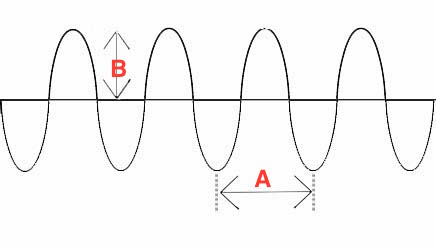
What property of the wave is represented by the letter "B"?
amplitude
crest
trough
wavelength
46
Multiple Choice
47
48
49
50
51
52
Multiple Choice
Transmission happens when the wave passes through the material.
True
False
53
Multiple Choice
Absorption occurs when waves are ‘trapped’ by a material. The waves’ energy changes to thermal energy within the material.
True
False
54
Multiple Choice
______ is an example of reflection
Echo
Water
Air
55
56
57
Multiple Choice
The angle of incidence is _________ the angle of reflection
58
Multiple Choice
What is reflection?
Reflection is the bouncing of light off the surface that it strikes on.
Reflection is the absorbing of light off the surface that it strikes on.
Reflection is the bending of light off the surface that it strikes on.
Reflection is the scattering of light off the surface that it strikes on.
59
Multiple Choice
In the diagram, what is A
Incidence wave
Reflected wave
Normal
60
Multiple Choice
What is B in the diagram
Normal
Angle of incidence
Reflected wave
61
Multiple Choice
What is C in diagarm
Nromal
Incidence wave
Angle of reflection
62
63
Multiple Choice
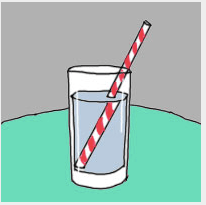
Why does the straw appear to be bent?
light is reflected
light is absorbed
light is turned
light is refracted
64
65
Multiple Choice
witch picture is diffraction
66
Multiple Choice
Waves Review
Lesson 6
Show answer
Auto Play
Slide 1 / 66
SLIDE

Similar Resources on Wayground
62 questions
Food Chains
Presentation
•
7th - 9th Grade
62 questions
Relative Dating and Fossil Quiz Review
Presentation
•
8th Grade
62 questions
Study Guide for Quiz #1
Presentation
•
6th - 8th Grade
64 questions
Net Force and Acceleration: 2nd Law of Motion
Presentation
•
7th - 8th Grade
61 questions
Plate Motion Unit
Presentation
•
6th - 8th Grade
62 questions
SAP2 Factors Affecting Potential & KineticEnergy
Presentation
•
8th Grade
59 questions
HON Physical and Chemical Changes
Presentation
•
8th Grade
58 questions
Inheritance and Genetic Variation Review
Presentation
•
6th - 8th Grade
Popular Resources on Wayground
20 questions
Math Review
Quiz
•
3rd Grade
15 questions
Fast food
Quiz
•
7th Grade
20 questions
Context Clues
Quiz
•
6th Grade
20 questions
Inferences
Quiz
•
4th Grade
19 questions
Classifying Quadrilaterals
Quiz
•
3rd Grade
20 questions
Figurative Language Review
Quiz
•
6th Grade
20 questions
Equivalent Fractions
Quiz
•
3rd Grade
10 questions
Identify Fractions, Mixed Numbers & Improper Fractions
Quiz
•
3rd - 4th Grade
Discover more resources for Science
16 questions
Interactions within Ecosystems
Presentation
•
6th - 8th Grade
26 questions
Amplify Chemical Reactions
Quiz
•
6th - 8th Grade
16 questions
Photosynthesis and Cellular Respiration Review
Quiz
•
7th Grade
25 questions
Naming Ionic and Covalent Compounds
Quiz
•
9th Grade
20 questions
genetics, punnett squares, heredity
Quiz
•
7th Grade
40 questions
NCFE Earth and Environmental Science Released Test
Quiz
•
9th - 12th Grade
49 questions
NC Released EOG 8 Science (2024)
Quiz
•
8th Grade
48 questions
8th Grade NC Science EOG Review 2
Quiz
•
8th Grade