Search Header Logo
Eclipses

Eclipses

Assessment

Presentation

Science

6th - 8th Grade

Hard

6.11B

Standards-aligned

Created by

James Gonzalez

FREE Resource

5 Slides • 58 Questions

1

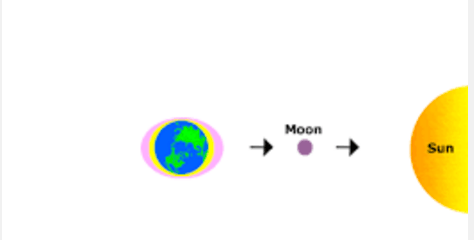
Solar Eclipse = sunlight is blocked by moon

media

2

3

Multiple Choice

Question image

What moon phase can lead to a solar eclipse?

1

new moon

2

full moon

3

first quarter

4

third quarter

4

Lunar eclipse = Earth casts a shadow on the moon

media

5

media

6

Multiple Choice

During a lunar eclipse, which object is aligned between the other two?

1

the sun

2

the moon

3

Earth

7

Multiple Choice

In a lunar eclipse, what is casting a shadow?

1

Earth

2

Moon

3

Sun

8

Multiple Choice

What moon phase can lead to a lunar eclipse?

1

new mooon

2

waxing crescent

3

waning crescent

4

full moon

9

Multiple Choice

In a solar eclipse, what is casting a shadow?

1

Earth

2

Moon

3

Sun

10

media
media

11

Multiple Choice

Question image
Why is it warmer in the summer?
1
Closer to the sun
2
More direct light from Earth's tilt
3
Stronger light from the sun
4
Earth spins slower

12

Multiple Choice

Question image

If it is summer in the Northern Hemisphere, the Northern Hemisphere is tilted ______________ the Sun?

1

towards

2

away from

13

Multiple Choice

Question image

What is the season in the Northern Hemisphere when the North Pole is pointed toward the sun?

1

Fall

2

Winter

3

Spring

4

Summer

14

Multiple Choice

Question image

What is the season in the Northern Hemisphere when the North Pole is pointed toward the sun?

1

Fall

2

Winter

3

Spring

4

Summer

15

Multiple Choice

Question image

What is the season in the Southern Hemisphere when the North Pole is pointed toward the sun?

1

Fall

2

Winter

3

Spring

4

Summer

16

Multiple Choice

Question image

What season is it in the northern hemisphere at Point A?

1

Spring

2

Summer

3

Fall

4

Winter

17

Multiple Choice

Question image

What season is it in the southern hemisphere at point C?

1

Spring

2

Summer

3

Fall

4

Winter

18

Multiple Choice

Question image

What season is it in the northern hemisphere at point B?

1

Spring

2

Summer

3

Fall

4

Winter

19

Multiple Choice

Question image

What season is it in the northern hemisphere at point D?

1

Spring

2

Summer

3

Fall

4

Winter

20

Multiple Choice

Question image

What season is it in the northern hemisphere at point C?

1

Spring

2

Summer

3

Fall

4

Winter

21

Multiple Choice

Question image
Red stars are the _____________.
1
hottest
2
coolest
3
biggest

22

Multiple Choice

Question image
Blue stars are the _____________.
1
hottest
2
coolest
3
smallest

23

Multiple Choice

The color of a star will tell you its ________________.
1
temperature
2
brightness
3
size
4
mass

24

Multiple Choice

What are stars mainly made of?
1
Dust particles
2
Hot Liquid
3
Hot Gas
4
Rock

25

Multiple Choice

Which of the following list the stars from coolest to hottest?

1

Yellow, Blue, Red, White

2

Blue, White, Yellow, Red

3

Red, Yellow, White, Blue

4

Red, Blue, Yellow, White

26

Multiple Choice

The Sun is the center of the _____.
1
solar system
2
Milky Way
3
constellation Ursa Major
4
universe

27

Multiple Choice

What is the term for Earth being in the center?
1
geocentric
2
heliocentric
3
sun centered
4
Galileo

28

Multiple Choice

Question image
A model of the solar system in which Earth and the other planets revolve around the SUN.
1
Heliocentric
2
Geocentric

29

Multiple Choice

Question image
A model of the universe in which Earth is at the center of the revolving planets and stars. This includes the sun revolving around the Earth. This model is no longer supported.
1
Geocentric
2
Heliocentric

30

Multiple Choice

The force that attracts objects that have mass

1
Magnetism
2
Friction
3
Acceleration
4
Gravity

31

Multiple Choice

the amount of matter an object has

1
weight
2
volume
3
mass
4
density

32

Multiple Choice

the force of gravity on an object

1

weight

2

push

3

pull

4

mass

33

Multiple Choice

when one object travels around another object

1

orbit

2
spinning
3
revolving
4
circling

34

Multiple Choice

Two factors affecting the magnitude of the force of gravity between 2 objects are...

1

mass and distance

2

mass and matter

3

distance and weight

4

weight and mass

35

Multiple Choice

The Moon travels in an elliptical orbit that is nearly circular around the Earth. This pattern has occurred for millions of years.

Which of the following best explains the cause of the Moon's motion?

1

The Moon is acted upon by balanced forces, so the orbit maintains the same nearly circular shape.

2

The gravitational forces that the Sun and the Earth on the Moon are equal, causing the Moon to maintain its orbit.

3

The Moon is constantly affected by the unbalanced force of the Earth’s gravity which causes it to continue to orbit the Earth.

4

There was a gravitational force millions of years ago that pulled the Moon in an elliptical direction and the Moon has not since been acted upon by a force.

36

Multiple Choice

Many objects within our solar system remain in constant motion and maintain predictable orbital patterns. What force governs the motion and patterns of objects in our solar system?

1

The force of gravity keeps the Sun, asteroids, and comets orbiting in an elliptical pattern around the Earth.

2

The force of gravity keeps planets, asteroids, and comets orbiting in an elliptical pattern around the Sun.

3

The equal and opposite force between the Sun and the Earth keeps the comets and asteroids orbiting in an elliptical pattern.

4

The Sun moves in an elliptical pattern and the planets, comets, and asteroids follow the gravity of the Sun in an elliptical pattern.

37

Multiple Choice

Question image

An image of the Earth-Moon-Sun system is shown. The moon remains in orbit around Earth because of the force of --

1

Earth's rotation

2

the moon's rotation

3

Earth's gravity

4

the sun's gravity

38

Multiple Choice

Question image

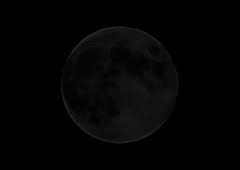
Name the moon phase

1

first quarter

2

third quarter

3

new moon

4

full moon

39

Multiple Choice

Question image

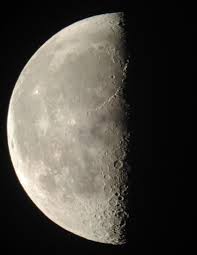
Name the moon phase

1

first quarter

2

third quarter

3

new moon

4

full moon

40

Multiple Choice

Question image

Name the phase of the moon for letter "a"

1

first quarter

2

last quarter

3

waxing gibbous

4

waning gibbous

41

Multiple Choice

Question image
What type of tides would this arrangement of earth-moon-sun create?
1
neap tide
2
spring tide
3
new moon tide
4
full moon tide

42

Multiple Choice

Question image

Which moon phase is shown in this diagram?

1

new moon

2

first quarter

3

full moon

4

third quarter

43

Multiple Choice

Question image

Name the moon phase

1

waning crescent

2

waxing crescent

3

waning gibbous

4

waxing gibbous

44

Multiple Choice

Question image

What moon phase is it during a solar eclipse?

1

Quarter Moon

2

Gibbous Moon

3

Full Moon

4

New Moon

45

Multiple Choice

Question image

What type of eclipse is this?

1

Solar Eclipse

2

Lunar Eclipse

46

Multiple Choice

Question image

What type of eclipse is this?

1

Solar Eclipse

2

Lunar Eclipse

47

Multiple Choice

What happens during a solar eclipse?

1

The Sun moves between the Earth and the Moon.

2

The Sun becomes larger in the sky.

3

The Moon blocks the Sun's light, causing darkness on Earth.

4

The Earth moves between the Sun and the Moon.

48

Multiple Choice

When is the next solar eclipse expected to cross Mexico, the United States, and Canada?

1

April 8th, 2025

2

April 8th, 2024

3

April 8th, 2023

4

April 8th, 2022

49

Multiple Choice

Why do solar eclipses happen?

1

Because the Moon is larger than the Sun.

2

Because the Earth rotates around the Sun.

3

Because the Sun is closer to the Earth than the Moon.

4

Because the Moon comes between the Earth and the Sun.

50

Multiple Choice

How often do total solar eclipses occur on average?

1

Every 2 years

2

Every year

3

Once every 18 months

4

Every 6 months

51

Multiple Choice

What makes witnessing a total solar eclipse a unique experience?

1

The moon appears larger than the sun.

2

It happens frequently.

3

It can be seen from anywhere on Earth.

4

The environment transforms dramatically.

52

Multiple Choice

Is it safe to look directly at a solar eclipse without any protection?

1

Only during a total eclipse

2

Yes, always

3

Yes, but only with sunglasses

4

No, it could cause blindness

53

Multiple Choice

What can you use to safely view a solar eclipse?

1

Special glasses

2

A magnifying glass

3

A telescope

4

A mirror

54

Multiple Choice

What is a pinhole projector?

1

A device to project movies

2

A tool to view solar eclipses safely

3

A type of camera

4

A special type of glasses

55

Multiple Choice

What is a total solar eclipse?

1

When the Moon partially blocks the Sun's light

2

When the Moon is too far to block the Sun's light

3

When the Moon completely blocks the Sun's light

4

When the Sun blocks the Moon's light

56

Multiple Choice

Why do the sun and moon appear to be the same size in the sky?

1

The sun is closer to Earth.

2

The moon is much larger than the sun.

3

The sun is much larger but also farther away.

4

They are actually the same size.

57

Multiple Choice

What causes a total solar eclipse?

1

The moon's shadow falls on Earth.

2

The Earth's shadow falls on the moon.

3

The sun moves behind the moon.

4

The Earth moves between the sun and the moon.

58

Multiple Choice

Why don't we experience a total solar eclipse every month?

1

The moon's orbit is perfectly circular.

2

The Earth's shadow misses the moon.

3

The moon's orbit around Earth is tilted.

4

The sun moves too quickly.

59

Multiple Choice

What is an annular eclipse?

1

The moon completely covers the sun.

2

The sun appears as a ring around the moon.

3

The Earth completely blocks the sun.

4

The moon appears larger than the sun.

60

Multiple Choice

On April 8th, what type of eclipse can most of North America expect to see?

1

No eclipse

2

Annular eclipse

3

Partial eclipse

4

Total eclipse

61

Multiple Choice

What is the 'path of totality'?

1

The path the moon takes around the Earth.

2

The area where a partial eclipse can be seen.

3

The trajectory of the sun during an eclipse.

4

The path on Earth where a total eclipse is visible.

62

Multiple Choice

Why is the upcoming eclipse on April 8th considered special?

1

It will be visible from the entire Earth.

2

It's the last eclipse ever.

3

It might be the only total eclipse one can experience.

4

It will last longer than usual.

63

Multiple Choice

What is crucial for a good eclipse viewing experience?

1

A telescope

2

Clear skies

3

A camera

4

Solar glasses

Solar Eclipse = sunlight is blocked by moon

media

Show answer

Auto Play

Slide 1 / 63

SLIDE