Isotope Ion
Presentation
•
Science
•
11th Grade
•
Hard

James Gonzalez
FREE Resource
7 Slides • 30 Questions
1
Isotopes, Ions and Average Atomic Mass
By TROB
2
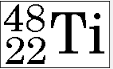
Ion Notation
Same as isotope
includes charge in upper right
+ means LESS ELECTRONS than PROTONS
(-) means MORE ELECTRONS than PROTONS
3
Ions
Ion means charged atom
To be charged it needs more or less electrons than protons
more electrons = NEGATIVE
less electrons = POSITIVE
4
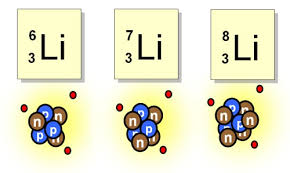
ISOTOPES:
Same Element
Different Mass Number
WHICH MEANS DIFFERENT # of NEUTRONS
5
Average Atomic Mass
DIFFERENT than Mass Number
Average of all of the isotopes of an atom found in nature.
6
How to tell which isotope is more abundant?
CLOSEST TO ROUNDED AVERAGE ATOMIC MASS
So the most abundant isotope of Gold would be?
Gold - 197
7
Multiple Choice
8
Multiple Choice
What is the average mass of this element?
9
Multiple Choice
How many protons does this element have?
10
Multiple Choice
11
Multiple Choice
12
Multiple Choice
13
Multiple Choice
14
Multiple Choice
15
Multiple Choice
How many electrons?
9
4
5
2
16
Multiple Choice
How many neutrons?
9
4
5
2
17
Multiple Choice
18
How they get that number
% abundance of that isotope x actual mass of that isotope
add together
divide by 100 (if you didn't put into percentage first)
19
Multiple Choice
20
Multiple Choice
21
Multiple Choice
22
Multiple Choice
23
Multiple Choice
24
Multiple Choice
25
Multiple Choice
26
Multiple Choice
27
Multiple Choice
28
Multiple Choice
An atom with the same number of protons and electrons (no charge) and the expected atomic mass or number of neutrons from the periodic table.
Neutral/Normal Atom
Ion
Isotope
29
Multiple Choice
An atom that has gained or lost electrons in an attempt to become stable/bond with another atom.
Normal/Neutral Atom
Ion
Isotope
30
Multiple Choice
A negatively charged ion that has gained electrons to satisfy the octet rule (metals do this)
Anion
Cation
Neutral Atom
Isotope
31
Multiple Choice
A positively charged ion that has lost electrons to satisfy the octet rule (non-metals do this)
Anion
Cation
Neutral Atom
Isotope
32
Multiple Choice
Atoms of the same element that have different mass than expected because they have a different number of neutrons.
Neutral Atom
Ion
Isotope
Cation
33
Multiple Choice
If an atom has 9 protons and 10 electrons it has a charge of ____.
0
-1
+1
-2
34
Multiple Choice
If an atom has 4 protons and 2 electrons it has a charge of ____.
0
-2
+2
+1
35
Multiple Choice
If an atom has a charge of +3 and an atomic number of 5 it should have _______ electrons.
1
2
3
4
36
Multiple Choice
If an atom has a charge of -2 and an atomic number of 16 it should have _______ electrons.
14
16
18
20
37
Multiple Choice
If an atom has a charge of 0 (neutral) and an atomic number of 8 it should have ____ electrons.
0
8
7
9
Isotopes, Ions and Average Atomic Mass
By TROB
Show answer
Auto Play
Slide 1 / 37
SLIDE

Similar Resources on Wayground
33 questions
Skeleton Components and Skull Bones
Presentation
•
11th - 12th Grade
35 questions
APES Unit 1 Review
Presentation
•
12th Grade
32 questions
Water Erosion Practice
Presentation
•
11th Grade
31 questions
Charges and charging - Lesson
Presentation
•
11th Grade
34 questions
The Rock Cycle
Presentation
•
11th Grade
26 questions
Newton's Second Law
Presentation
•
11th Grade
34 questions
Various Light Phenomena
Presentation
•
11th Grade
31 questions
Identifying and Predicting Reactions
Presentation
•
11th Grade
Popular Resources on Wayground
28 questions
US History Regents Review
Quiz
•
11th Grade
36 questions
Biology Regents Review
Quiz
•
9th - 10th Grade
20 questions
Math Review
Quiz
•
3rd Grade
38 questions
Regents Life Science General Review
Quiz
•
9th Grade
20 questions
Math Review
Quiz
•
6th Grade
21 questions
EOY Grade 6 Benchmark Assessment - Content Skills
Quiz
•
6th Grade
20 questions
Inferences
Quiz
•
4th Grade
20 questions
Figurative Language Review
Quiz
•
6th Grade