

Taxonomy Binomial Nomenclature

Presentation
•
Science
•
6th - 8th Grade
•
Hard

James Gonzalez
FREE Resource
18 Slides • 5 Questions
1
DAY 3
Taxonomy Lecture
Join quickly!
Your Bellringer/DO NOW is next!

2
Multiple Choice
3

How many species do you see in this picture? How many do you see on your way to school?
Classifying organisms helps us study how they're different and alike, and how they're related.
4
5
Carolus Linnaeus
Swedish scientist in the 1700s.
Invented a naming system based on giving each species two names:
Binomial nomenclature means "two name naming system" and it is based on Latin, an old language that is the "parent" of Spanish, Italian, French, and Romanian.

6
Multiple Choice
7
How it works:
This is Ursus americanus, or the American black bear (raawr).
Starts with Domain (right) and gets smaller and more specific as it goes left, until there's only one species left! However:
Look how it "shares" its Genus and Family with other bears today!

8
How it works:
Each "level" or taxa means something, too:
+ Animalia means animals
+ Chordata means spinal cord
+ Carnivora means eats meat
So, our friend Ursus americanus is an animal with a spinal cord that eats meat (most often).
9
Fill in the Blanks
10
Fill in the Blanks
11

Earth is full of different and amazing living things!
Taxonomy helps us classify them based on traits we can observe or investigate in their DNA.
12
13
Here's an example:
Which of these animals are the most alike?
Answer these questions, first:
How many taxa do they share?
Which ones shares the most taxa?
Which ones shares the least taxa?

14
What is our human taxonomy?
Look and see.
NOTE: Humans are in Domain Eukaria.

15
16
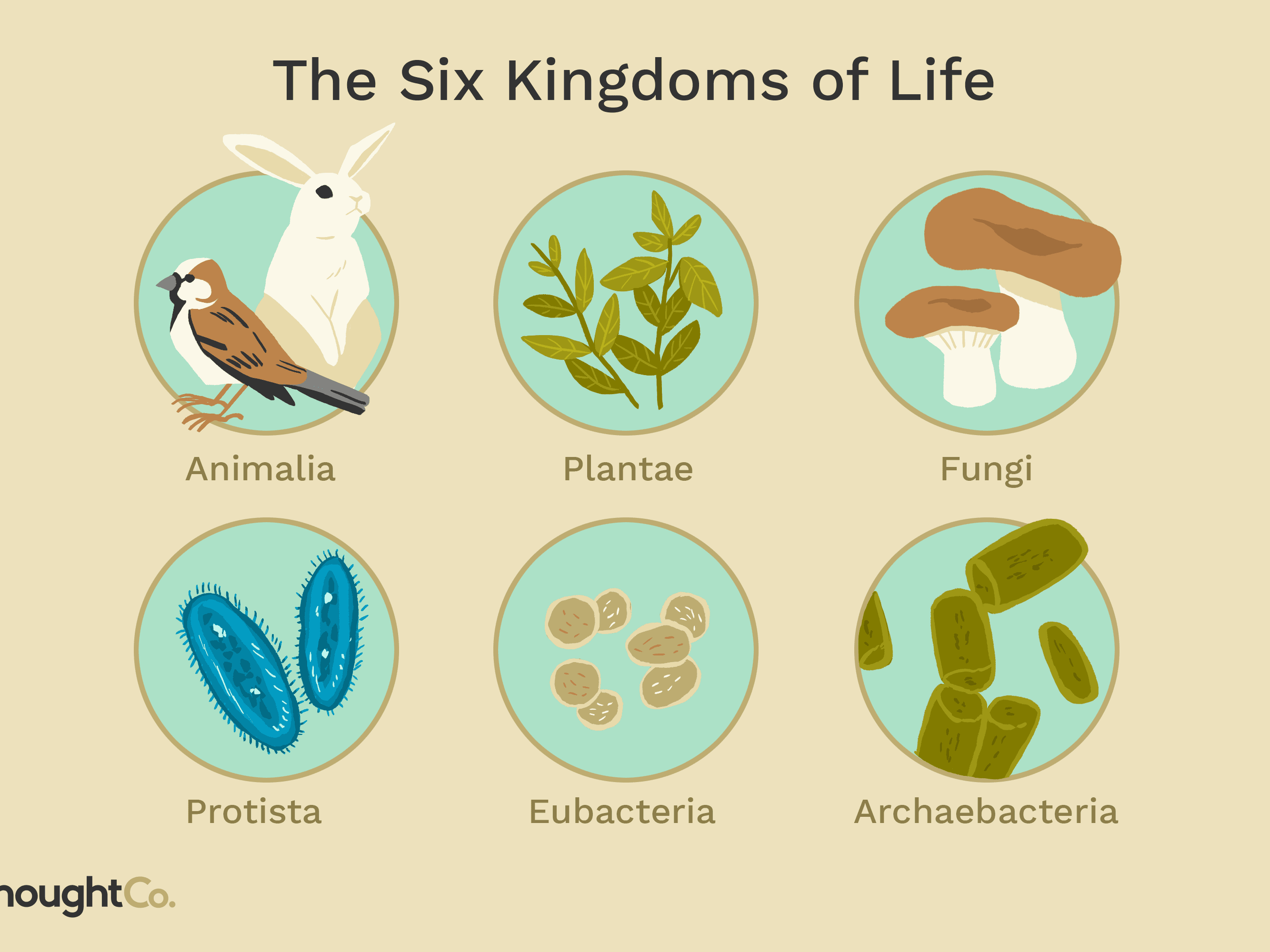
17
Multiple Select
18
Archaebacteria
Recognized as "bacteria" today.
+ Oldest living things on Earth
+ Survive in very hostile places, like boiling lakes of acid or volcanoes
+ Very simple structures
+ Usually prokaryotic

19
Eubacteria
Recognized as "true" bacteria.
+ More complex organisms
+ Still prokaryotic, though
+ Part of our everyday lives
+ The largest of the six kingdoms

20
Protista
Finally, some complexity!
+ Definitely eukaryotic
+ Have organelles
+ Still very small, most microscopic
+ Usually reproduce asexually

21
Plantae
The main producers on Earth.
+ Are eukaryotic and diverse
+ Can live on land or water
+ Carry out photosynthesis
+ Use cell walls and central vacuoles to "stand up" tall against gravity

22
Fungi
They do not make their own food!
+ Are eukaryotic and diverse
+ Relies on others to make food
+ A very important "link" in all forest ecosystems, like the "internet"
+ Tasty and sometimes poisonous

23
Animalia
Our kingdom! Cousins!
+ Are eukaryotic and very diverse
+ Do not photosynthesize like plants
+ Are mostly primary/secondary consumers in the ecosystem
+ Almost always reproduce sexually

DAY 3
Taxonomy Lecture
Join quickly!
Your Bellringer/DO NOW is next!
Show answer
Auto Play
Slide 1 / 23
SLIDE

