

Net+ 5.6/5.7 Lesson

Presentation
•
Information Technology (IT)
•
11th Grade
•
Practice Problem
•
Easy

Sean Carchidi
Used 1+ times
FREE Resource
14 Slides • 31 Questions
1
2
3
4
Multiple Choice
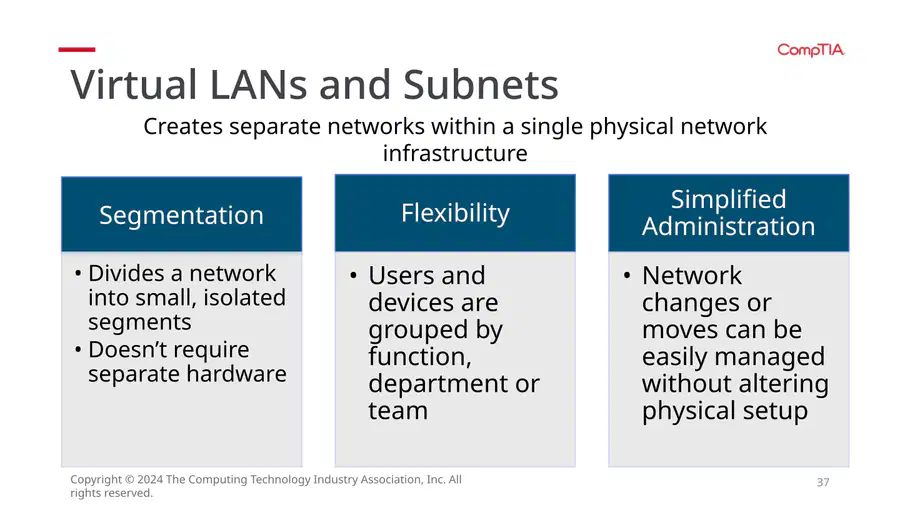
What is a VLAN?
5
Multiple Choice
VLANS can segment a network; what does segmentation mean?
6
Multiple Choice
VLANS are flexible because
7

8
Multiple Choice
Each VLAN is assigned a
9
Multiple Choice
Each device is a ______ of a VLAN.
10
Multiple Choice
Packets are _____with the VLAN ID to route only through that VLAN.
11
Multiple Choice
In order for one VLAN to communicate with another, WHAT needs to be enabled?
12
13
Multiple Choice
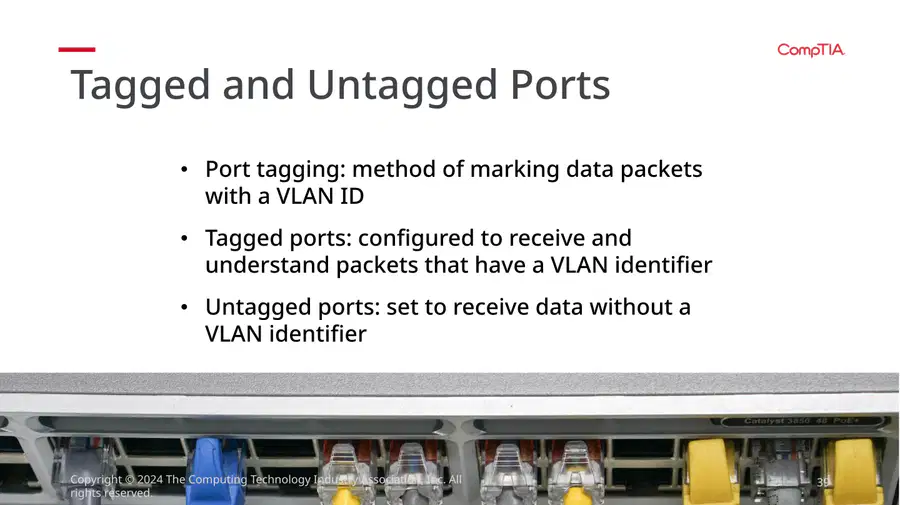
This is a method of marking data packets with a VLAN ID.
Port tagging
14
Multiple Choice
These types of ports are configured to receive and understand packets that have a VLAN ID.
tagged ports
15
Multiple Choice
These type of ports are set to receive data without a VLAN ID.
Untagged ports
16
Multiple Choice
Another name for TAGGED ports is
17
Multiple Choice
Another name for UNTAGGED ports are
18
19
Multiple Choice
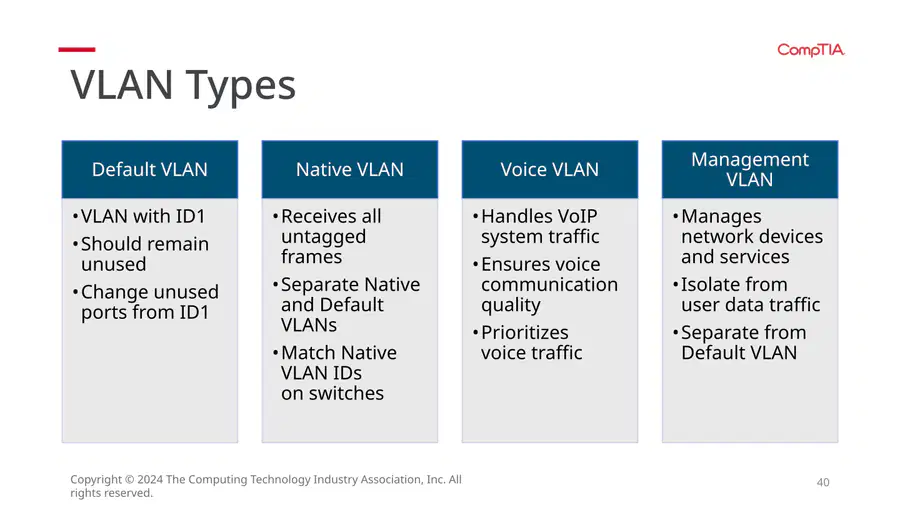
The default VLAN ID is usually
20
Multiple Choice
VLAN ID 1 should or should not be used?
21
Multiple Choice
What could happen if the Native VLAN is VLAN1?
22
Multiple Choice
Why are voice VLANs important?
23
Multiple Choice
A VLAN connected to critical systems and is isolated from user data traffic is known as
24
25
Multiple Choice
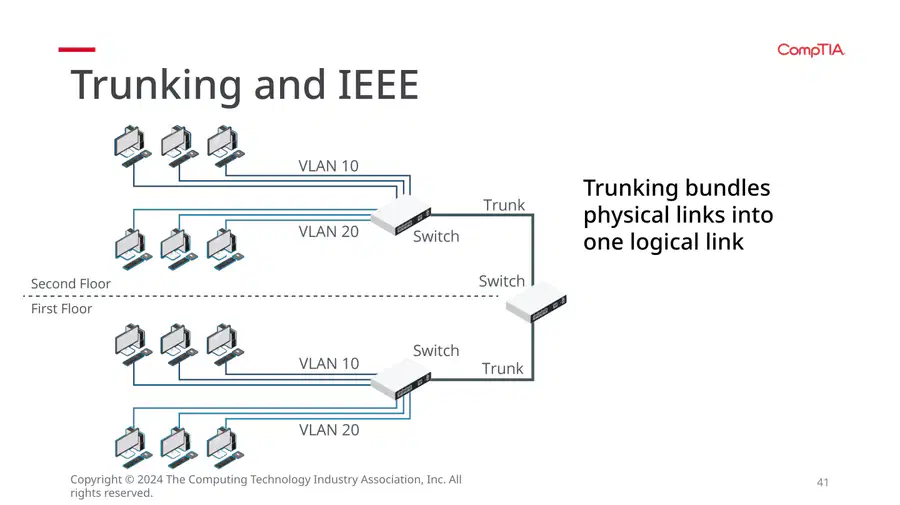
When multiple switches need to move VLAN packets from one switch to another, what needs to be enabled for it work?
26
Multiple Choice
VIDs are defined by what IEEE standard?
27

28
Multiple Choice
Since VLANS and switches work at layer 2, data that needs to be routed usually works at layer 3. Because of this VLAN IDs need to be on THIS DEVICE for it to work.
29

30
Multiple Choice
Which is the LIE?
Each device in a VLAN is assigned a unique VLAN ID.
Untagged ports are set to receive data without a VLAN identifier.
A Native VLAN receives all untagged frames.
31

32
33
Categorize
plugged in?
powered on?
can ping devices on own network
can ping gateway
use a command like 'route'
use a command like 'netstat'
examine subnets in the routing table
check manually configured routes for inaccuracies
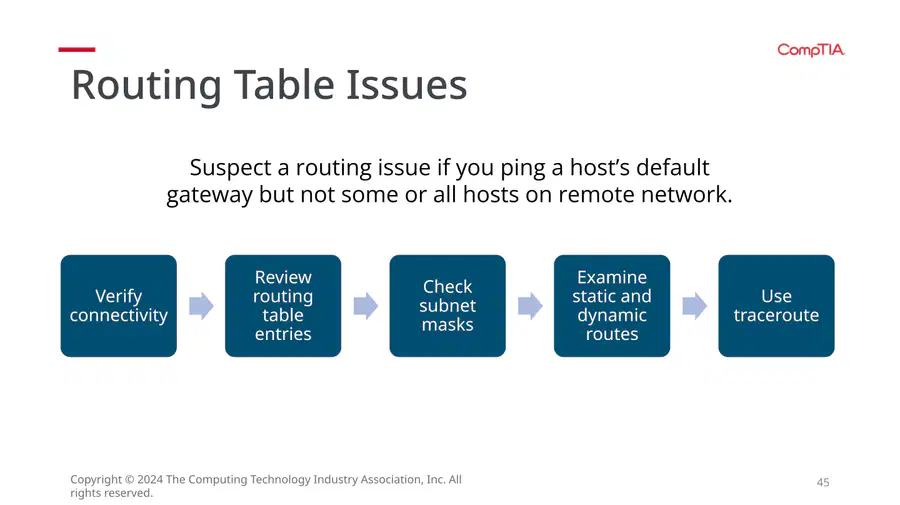
Organize these troubleshooting steps into the right category
34
35
Categorize
use ipconfig to check assigned IPs and gateways
Ping the gateway with the device in question
use command like show ip route to view the tables and verify the hops
check cables and interfaces
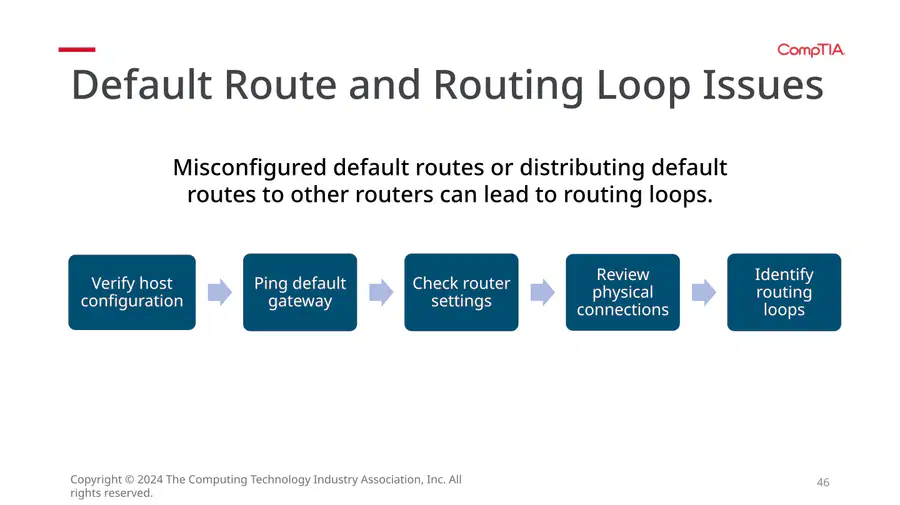
Match the routing loop troubleshooting to its category
36

37
Multiple Choice
What is the loopback address?
38
Multiple Choice
Pinging the default gateway would ensure that
39
Multiple Choice
Pinging a remote host ensures that the routing table is
40
41
Multiple Choice
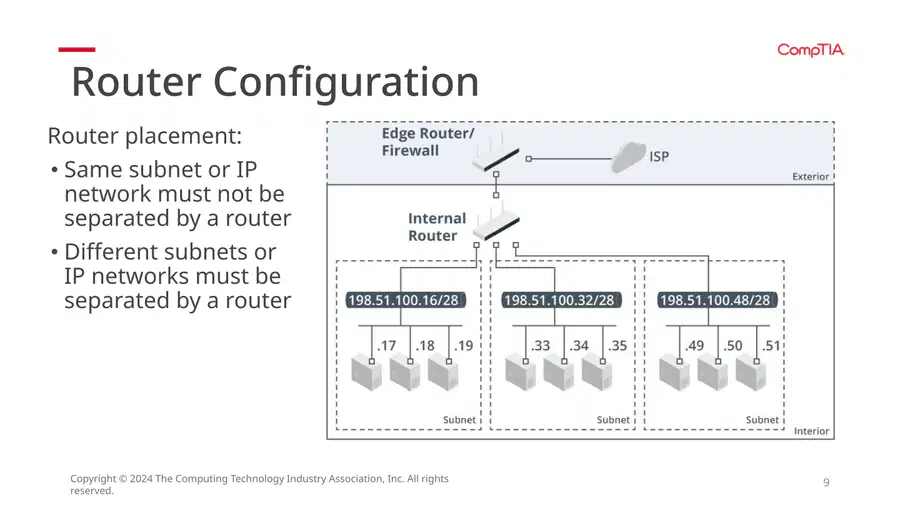
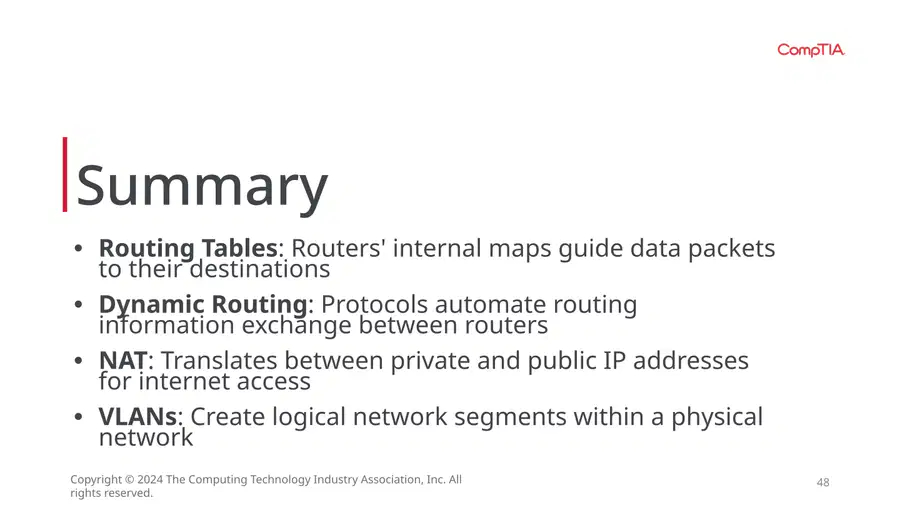
What is a routing table?
42
Multiple Choice
What is dynamic routing?
43
Multiple Choice
What is NAT?
44
Multiple Choice
What are VLANs?
45
Word Cloud
The concept I understand the MOST is
Show answer
Auto Play
Slide 1 / 45
SLIDE
Similar Resources on Wayground

39 questions
Supplying Energy
Presentation
•
11th - 12th Grade
44 questions
SLIDE PRESENTASI DAN SOAL PKPJ MATERI VLAN
Presentation
•
11th Grade
36 questions
TVL ICT COMPUTER SYSTEMS SERVICING NC II
Presentation
•
11th Grade
41 questions
4A Voyages of discovery - Perspectives C1 BrE
Presentation
•
10th - 12th Grade
38 questions
REDES E INTERNET
Presentation
•
10th Grade
43 questions
The Roaring Twenties
Presentation
•
11th Grade
38 questions
Unit 15 Technology (Review)
Presentation
•
11th Grade
39 questions
12.3.2. What are our choices for supplying energy for the future
Presentation
•
11th - 12th Grade
Popular Resources on Wayground
6 questions
PRIDE Always and Everywhere
Presentation
•
12th Grade
20 questions
Lab Safety Quiz

Quiz
•
6th Grade
26 questions
KOR Review Kahoot Questions
Quiz
•
8th Grade
21 questions
Continents and Oceans
Quiz
•
6th Grade
12 questions
Unit Zero lesson 2 cafeteria
Presentation
•
9th - 12th Grade
20 questions
Parts of Speech
Quiz
•
5th Grade
10 questions
Riddles Riddles fun Riddles
Quiz
•
6th - 12th Grade
16 questions
Subject & Predicate
Quiz
•
5th Grade
Discover more resources for Information Technology (IT)
12 questions
Unit Zero lesson 2 cafeteria
Presentation
•
9th - 12th Grade
10 questions
Riddles Riddles fun Riddles
Quiz
•
6th - 12th Grade
10 questions
Would you Rather?
Quiz
•
9th - 12th Grade
10 questions
Soup, Salad, or Sandwich?
Quiz
•
1st Grade - Professio...
10 questions
Labor Day and Its Historical Significance

Interactive video
•
7th - 12th Grade
20 questions
Scientific Method & Variables
Quiz
•
9th - 12th Grade
7 questions
EAHS PBIS Lesson- Bathroom
Presentation
•
9th - 12th Grade
20 questions
Spanish alphabet
Quiz
•
9th - 12th Grade