

Describing a process

Presentation
•
English
•
University
•
Practice Problem
•
Easy

Kate Chukina
Used 2+ times
FREE Resource
9 Slides • 6 Questions
1
Writing Task 1 📝
Describing a process

2
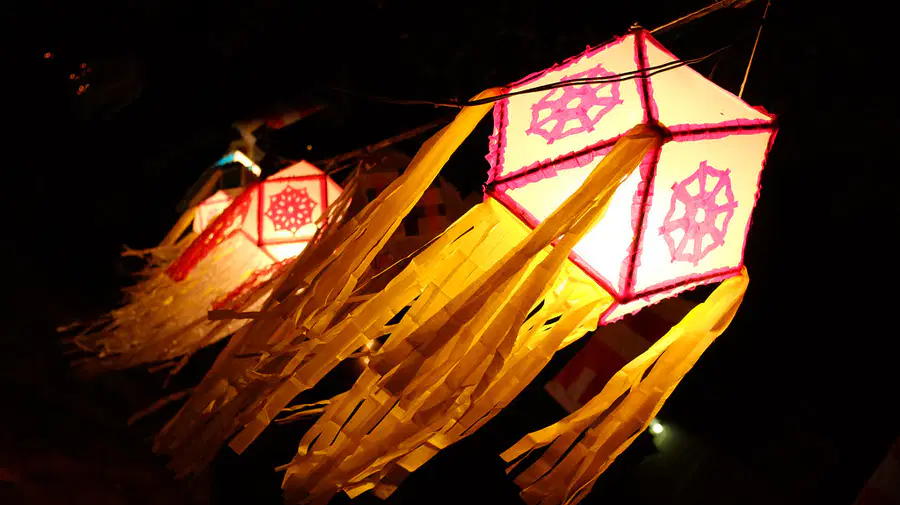
For Task 1 you might be asked to describe a process, such as how something is made or something happens in nature. You're given a diagram. Study each stage of the process to work out what is happening. Keep the tone quite formal as you would do in other Part 1 tasks.
3
The diagram shows the process of making Wesak lanterns, which Sri Lankans do to celebrate the festival of Wesak in May each year.
Verbs?
.
Nouns?
.
Adjectives?

4
The passive is a very useful structure for describing processes. There may be opportunities to use more complex passives and passive infinitives, which could improve your GRA score.
5
Open Ended
Stage 3: You have to tie the corners of four of these squares together.
6
Open Ended
Stage 6: Next, you can stick the square and triangular tissue paper shapes onto the frame.
7
Open Ended
Stage 8: The lantern is then ready to hang on a lightbulb.
8
Drag and Drop
9
Drag and Drop
10
SAMPLE ANSWER
.
The diagram shows the process of making Wesak lanterns. There are eight main stages, which consist of tying bamboo sticks together to form the frame of the lantern, followed by the cutting and pasting of coloured paper which is used to decorate it.
.
To begin with, you need to cut 24 bamboo sticks to a length of 25 cm each. Four of the sticks are then tied together to make a square. This stage of the process has to be repeated until you have made six squares.
After that, you have to tie the corners of four of the squares together. The remaining two squares are then tied in place at the top and bottom of the ring, which will give you the basic frame of the lantern.
.
Once your frame is completed, take brightly coloured tissue paper and cut out eight triangles and four squares to sizes which correspond to the squares and triangles on the frame. Next, the tissue paper shapes should be attached onto the frame. The squares at the top and bottom of the frame should be left empty. Finally, fold and cut paper for the frills, and decorate the base of the lantern with them, so that they hang down below it. The lantern is then ready to be hung on a lightbulb.
11

12
The diagram shows the traditional techniques used for carving wooden shoes known as clogs. The process consists of six main stages, which are done by hand rather than using automated processes.
.
The first stage is to obtain wood from either poplar or willow trees. The wood is cut into pieces of the correct size using a saw. Next, each outlined clog is roughly shaped using an axe. After this, the clog maker takes a long knife to cut the shoe to the exact shape it should be. Once the exterior is finished, the next stage in the process is to bore out the interior of the clogs using a spoon drill to make space for the foot.
.
Once this is done, the shoes are nearly finished. Sandpaper is used to smooth down the wood on both the interior and the exterior of the clog. The final task for the clog maker is to decorate the completed wooden shoe using various colours, although this is an optional stage. The clog is then ready to be worn.
.
This completes the process of making traditional wooden footwear, or clogs, by hand.
13
14
Task 1 Describing a Process
.
1) Is it linear or a cycle?
2) How many steps are there? Can they be broken down into stages?
3) Write an intro and an overview.
4) Write a detailed explanation of the process.
5) Include passives, relative clauses, linking phrases.
15
Reorder

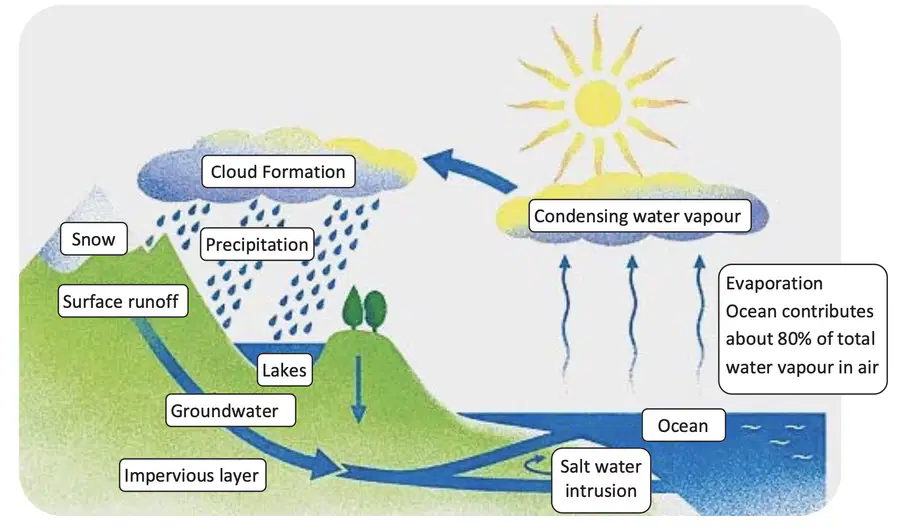
The diagram shows the water cycle, which is the continuous movement of water on, above and below the surface of the Earth.
Summarize the information by selecting and reporting the main features, and make comparisons where relevant.
The picture illustrates the way in which water passes from ocean to air to land during the natural process known as the water cycle.
Three main stages are shown on the diagram. Ocean water evaporates, falls as rain, and eventually runs back into the oceans again.
Beginning at the evaporation stage, we can see that 80% of water vapour in the air comes from the oceans. Heat from the sun causes water to evaporate, and water vapour condenses to form clouds. At the second stage, labelled ‘precipitation’ on the diagram, water falls as rain or snow.
At the third stage in the cycle, rainwater may take various paths. Some of it may fall into lakes or return to the oceans via ‘surface runoff’. Otherwise, rainwater may filter through the ground, reaching the impervious layer of the earth. Salt water intrusion is shown to take place just before groundwater passes into the oceans to complete the cycle.
Writing Task 1 📝
Describing a process
Show answer
Auto Play
Slide 1 / 15
SLIDE
Similar Resources on Wayground

10 questions
ENGLISH TEACHING METHODOLOGY
Presentation
•
University
11 questions
Teenager 5 Session 22: Pronunciation & Speaking
Presentation
•
KG
11 questions
Number the Stars Chapter 13
Presentation
•
KG - University
8 questions
Daily Routines Review
Presentation
•
University
11 questions
Writing Introductory Paragraphs For Essays
Presentation
•
University
10 questions
Unit (4) The Weather & Climate
Presentation
•
University
10 questions
Synonym
Presentation
•
1st - 3rd Grade
11 questions
Topic Sentences & Paragraphs
Presentation
•
University
Popular Resources on Wayground
10 questions
Safety Day 2026 – Student Review

Quiz
•
9th Grade
21 questions
Continents and Oceans
Quiz
•
6th Grade
20 questions
Parts of Speech
Quiz
•
5th Grade
16 questions
Subject & Predicate
Quiz
•
5th Grade
25 questions
Multiplication Facts
Quiz
•
5th Grade
12 questions
Map Skills
Quiz
•
3rd Grade
22 questions
Continents and Oceans
Quiz
•
5th Grade
15 questions
Rounding Decimals
Quiz
•
5th Grade
Discover more resources for English
20 questions
Disney Trivia
Quiz
•
University
10 questions
Spanish Greetings and Goodbyes!
Presentation
•
6th Grade - University
20 questions
Physical or Chemical Change/Phases
Quiz
•
8th Grade - University
39 questions
Unit 7 Key Terms
Quiz
•
11th Grade - University
25 questions
SER and Subject Pronouns
Quiz
•
8th Grade - University
38 questions
Unit 6 Key Terms
Quiz
•
11th Grade - University
19 questions
Key Concepts in Buddhism
Quiz
•
University
0 questions
Cell Domain Basic Review (Biology)
Quiz
•
University