

Can that be right?

Presentation
•
Mathematics
•
6th - 8th Grade
•
Practice Problem
•
Hard

Chynna Glover
Used 2+ times
FREE Resource
19 Slides • 9 Questions
1


Lesson 2: Can That Be Right?
© Carnegie Learning, Inc.
A bird leaves its nest andflies 3 miles due south, 2miles due east, 5 miles
duesouth, and 1 mile due eastto visit a friend’s nest.
1.
Draw a model of the situation.
1.
Determine the distance between the nests.
2


Lesson 2: Can That Be Right?
© Carnegie Learning, Inc.
3

Lesson 2: Can That Be Right?
© Carnegie Learning, Inc.
LEARNING GOALS
• Determine if three side lengths form a
right triangle.
• Generate side lengths of right triangles.
• Use the Pythagorean Theorem and the
Converse of the Pythagorean Theorem
to determine unknown side lengths in
right triangles.
KEY TERMS
• converse
• Converse of the
Pythagorean Theorem
• Pythagorean triple
4

Lesson 2: Can That Be Right?
© Carnegie Learning, Inc.
You know that the Pythagorean Theorem can be used to solve for unknown lengths in a right
triangle. How can you use the theorem to prove that a triangle is a right triangle?
ESSENTIAL QUESTION
5




Lesson 2: Can That Be Right?
© Carnegie Learning, Inc.
2.
What do you notice about the squares of the lengths of
the sides of the triangle of the non-right triangles versus
the right triangles?
6


Lesson 2: Can That Be Right?
© Carnegie Learning, Inc.
The Pythagorean Theorem can be used to solve many problems
involving right triangles, squares, and rectangles. The Pythagorean
Theorem states that, if a triangle is a right triangle, then the square
of the hypotenuse length equals the sum of the squares of the leg
lengths. Have you wondered if the converse is true?
7


Lesson 2: Can That Be Right?
© Carnegie Learning, Inc.
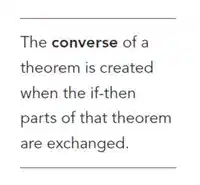
The Converse of the Pythagorean Theorem states that if the
sum of the squares of the two shorter sides of a triangle
equals the square of the longest side, then the triangle is a
right triangle.
In other words, if the lengths of the sides of a triangle satisfy
the equation a2 + b2 = c2, then the triangle is a right triangle.
8


Lesson 2: Can That Be Right?
© Carnegie Learning, Inc.
1.
Determine whether the triangle with the given side
lengths is a right triangle.
a.
9, 12, 15
b.
24, 45, 51
c.
25, 16, 9
d.
8, 8, 11
9


Lesson 2: Can That Be Right?
© Carnegie Learning, Inc.
Use your knowledge of the Pythagorean Theorem and its converse
to solve each.
1.
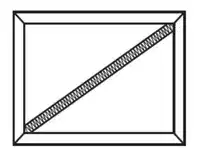
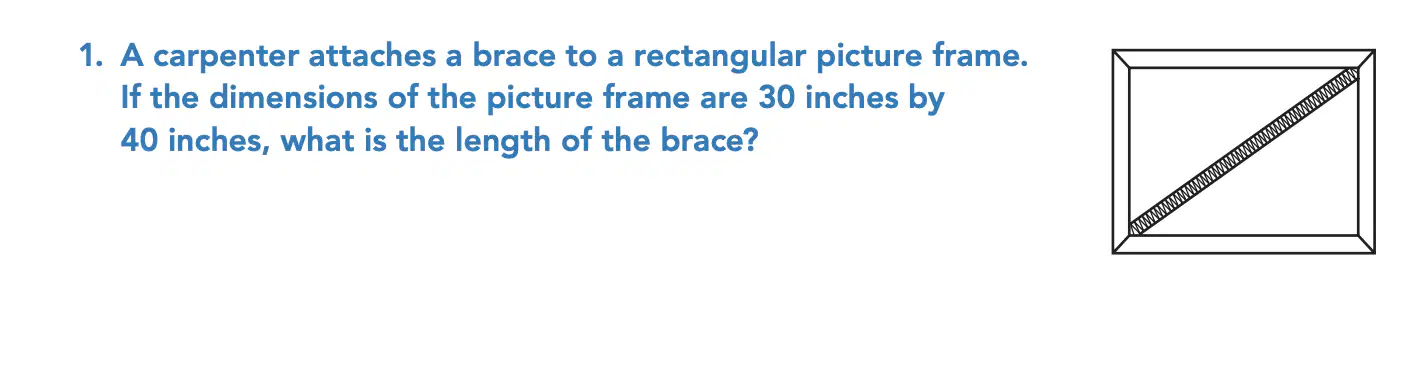
A carpenter attaches a brace to a rectangular picture frame.
If the dimensions of the picture frame are 30 inches by
40 inches, what is the length of the brace?
We Do!
10
Multiple Choice
Are we solving for the hypotenuse or leg?
Hypotenuse
Leg
11


Lesson 2: Can That Be Right?
© Carnegie Learning, Inc.
2.
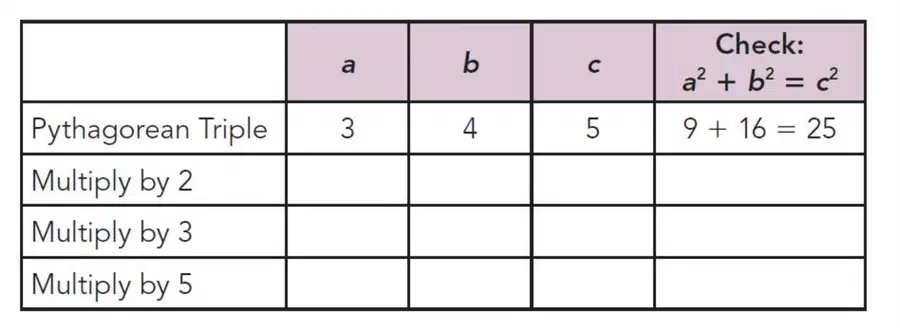
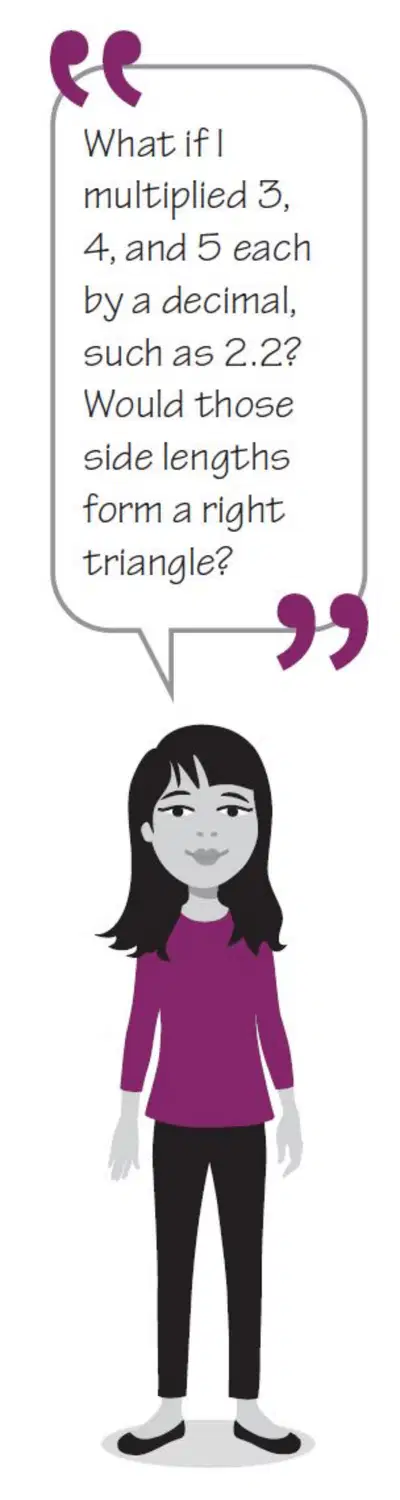
Complete the table to identify more Pythagorean triples.
12
Lesson 2: Can That Be Right?
© Carnegie Learning, Inc.
Use your knowledge of the Pythagorean Theorem and its converse
to solve each.
1.
A carpenter attaches a brace to a rectangular picture frame.
If the dimensions of the picture frame are 30 inches by
40 inches, what is the length of the brace?
We Do!
13


Lesson 2: Can That Be Right?
© Carnegie Learning, Inc.
2.
Bill is staking out a location to build a rectangular deck that
will be 8 feet wide and 15 feet long. Tyrone is helping Bill
with the deck. Tyrone has two boards, one that is 8 feet long
and one that is 7 feet long. He puts the two boards together,
end to end, and lays them on the diagonal of the deck area,
where they just fit. What should he tell Bill?
We Do!
14
Multiple Choice

Do we need to solve for the hypotenuse or the leg?
Hypotenuse
Leg
15
Lesson 2: Can That Be Right?
© Carnegie Learning, Inc.
2.
Bill is staking out a location to build a rectangular deck that
will be 8 feet wide and 15 feet long. Tyrone is helping Bill
with the deck. Tyrone has two boards, one that is 8 feet long
and one that is 7 feet long. He puts the two boards together,
end to end, and lays them on the diagonal of the deck area,
where they just fit. What should he tell Bill?
We Do!
16


Lesson 2: Can That Be Right?
© Carnegie Learning, Inc.
3.
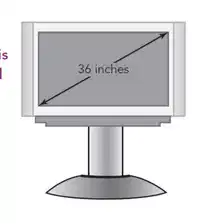
A television is identified by the diagonal measurement of
the screen. A television has a 36-inch screen, whose height is
22 inches. What is the width of the television screen? Round
your answer to the nearest inch.
We Do!
17
Multiple Choice
Do we need to solve for the hypotenuse or the leg?
Hypotenuse
Leg
18
Lesson 2: Can That Be Right?
© Carnegie Learning, Inc.
3.
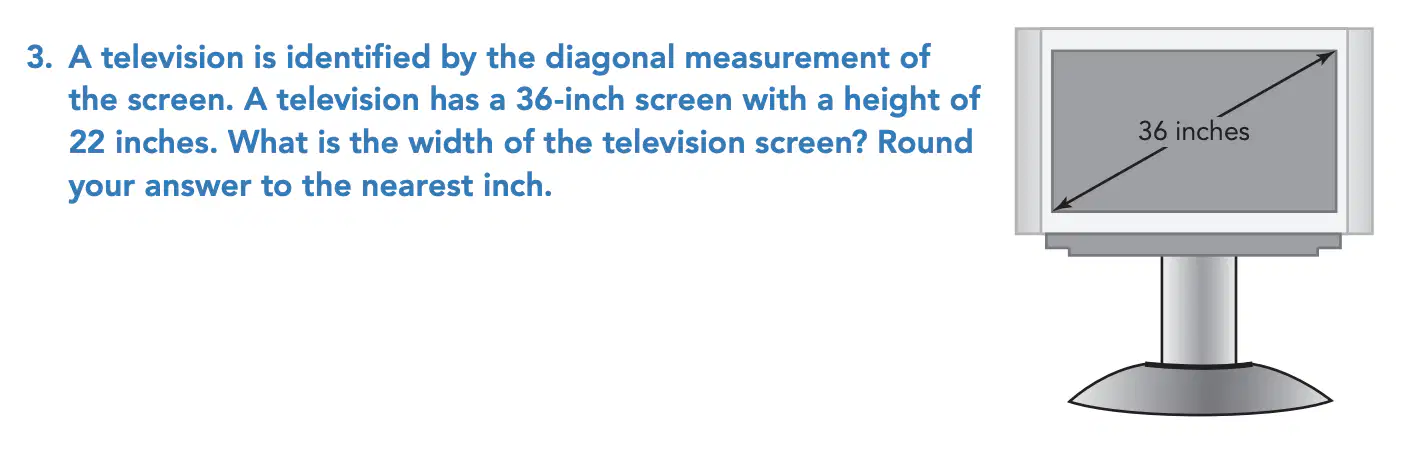
A television is identified by the diagonal measurement of
the screen. A television has a 36-inch screen, whose height is
22 inches. What is the width of the television screen? Round
your answer to the nearest inch.
We Do!
19
Partner
Practice!
Now it is time to practice solving with a partner. Use your time wisely, before your time to show you skills independently!
20
Multiple Choice

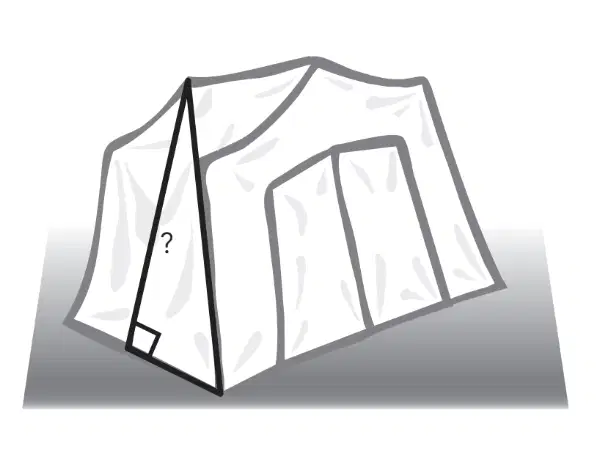
Orville and Jerri want to put a custom-made, round table in their dining room. The table top is made of glass with a diameter of 85 inches. The front door is 36 inches wide and 80 inches tall. Orville thinks the table top will fit through the door, but Jerri does not. Who is correct and why?
Orville is correct. The table top will fit through the door.
Jerri is correct. The table top will not fit through the door.
21
Fill in the Blanks
22
Fill in the Blanks
23
You do!
Time to SHOW what YOU know!
24
Fill in the Blanks
25



Lesson 2: Can That Be Right?
© Carnegie Learning, Inc.
9.
Danielle walks 88 feet due east to the library from her house.
From the library, she walks 187 feet northwest to the corner
store. Finally, she walks approximately 139 feet from the corner
store back home. Does she live directly south of the corner
store? Justify your answer.
10.
What is the diagonal length of a square that has a side length
of 10 cm?
26
Multiple Choice
Danielle walks 88 feet due east to the library from her house.
From the library, she walks 187 feet northwest to the corner
store. Finally, she walks approximately 139 feet from the corner
store back home. Does she live directly south of the corner
store? Justify your answer.
Yes, she lives directly south of the corner store.
No, she does not live directly south of the corner store.
27
Multiple Choice
What is the diagonal length of a square that has a side length
of 10 cm?
Not enough information to solve
4.5 cm
14.1 cm
10 cm
28
Time for your
EXIT TICKET!
login to SCHOOLCITY
Lesson 2: Can That Be Right?
© Carnegie Learning, Inc.
A bird leaves its nest andflies 3 miles due south, 2miles due east, 5 miles
duesouth, and 1 mile due eastto visit a friend’s nest.
1.
Draw a model of the situation.
1.
Determine the distance between the nests.
Show answer
Auto Play
Slide 1 / 28
SLIDE
Similar Resources on Wayground

22 questions
Find Percent of a number
Presentation
•
6th - 7th Grade
22 questions
Mental Math: Halving & Doubling
Presentation
•
5th - 8th Grade
20 questions
Prime Factorization
Presentation
•
5th - 8th Grade
20 questions
Rates & Unit Rates
Presentation
•
6th - 7th Grade
21 questions
Two Step Word Problems
Presentation
•
6th - 8th Grade
19 questions
Integers
Presentation
•
6th - 8th Grade
19 questions
Perfect Squares and Square Roots
Presentation
•
6th - 8th Grade
21 questions
Translate word problems to math equations.
Presentation
•
6th - 7th Grade
Popular Resources on Wayground
24 questions
PBIS-HGMS Day 10

Quiz
•
6th - 8th Grade
10 questions
HCS SCI 03 Summer School Review 3
Quiz
•
3rd Grade
11 questions
Home Scope
Quiz
•
7th - 8th Grade
15 questions
HCS SCI 05 Summer School Assessment 3 Review
Quiz
•
5th Grade
35 questions
Lufkin Road Middle School Student Handbook & Policies Assessment
Quiz
•
7th Grade
18 questions
Geo 11.3 Area of Circles and Sectors
Quiz
•
9th - 11th Grade