

WCAG-Modern Southwest Asia and North Africa

Presentation
•
Geography
•
6th Grade
•
Practice Problem
•
Medium

Nathan Fowler
Used 5+ times
FREE Resource
15 Slides • 5 Questions
1
crude oil, representative democracy, suffrage
Vocabulary
explain the importance of oil and natural gas to the region's economy
identify and summarize the governments in the region and how they have been impacted by conflict and tensions in the region
describe how the rest of the world interacts with Southwest Asia and North Africa
Goals
Modern Southwest Asia and North Africa
Essential Question-What has affected the growth and conflict of modern countries in Southwest Asia and North Africa?
2
crude oil-oil that has not been refined
representative democracies-governments where citizens vote for representatives to make political decisions for them
suffrage-the right to vote
Vocabulary
3

Are the leaders in Congress chosen by the people, the president, or both?
In the United States, individuals are chosen by the people through the election process, but not every country has the same form of government. In this lesson, you will learn about the different types of governments in countries in Southwest Asia and North Africa. Also, you will learn about the population and modern economy and how oil has impacted the region's countries.
Engage
The U.S. Capitol is shown in the image.
4
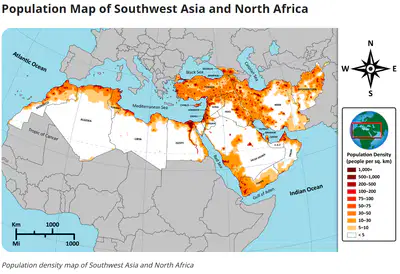
The population of Southwest Asia and North Africa is diverse, with millions of people living in this large region. Countries like Egypt, Turkey, and Iran have some of the largest populations, each with over 80 million people (about twice the population of California). In total, the region is home to over 400 million people. Look at the population density map below and notice where the highest population densities are located in the region.
In North Africa, the majority of people live near water. In Egypt, most of the population lives within 20 miles of the Nile River. The populations of other countries of North Africa live near the coast of the Mediterranean where they can farm, trade, and work in large cities.
The cities in Southwest Asia and North Africa are bustling and modern, with large urban centers like Cairo, Istanbul, and Tehran. These cities are known for their historic landmarks, busy markets, and cultural festivals. However, many people also live in rural areas, where they farm or herd animals. Watch the video on one of the wealthiest cities in the region, Abu Dhabi, located in the UAE. Notice the different ways this city has become developed and more modern.
Population
Let's watch a video on p. 3 in EDIO.
5
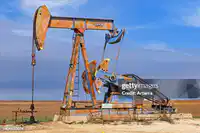
One of the most significant aspects of the region's economy is its vast natural resources, especially oil and natural gas. Countries like Saudi Arabia, Iran, and Iraq are some of the world's largest producers of oil, which plays a crucial role in their economies.
In addition to oil and gas, agriculture is important in many parts of the region. Egypt, for example, relies on the Nile River to irrigate its crops, producing cotton, wheat, and fruits. In Afghanistan, over half of the population farms for a living, even though just over 10 percent of the land is farmable. Morocco is responsible for another important food source in the region: fish. It brings in fish like sardines and mackerel from the Atlantic Ocean. Additionally, the largest dairy farm in the world, Almarai, is located in Saudi Arabia, producing over 1.47 tons of milk per year with over 100,000 cows.
Economy
Image: An oil pump is pumping crude oil.
6
The region also has a growing tourism industry, with historical sites like the Pyramids of Giza in Egypt, Petra in Jordan, and the ancient cities of Morocco attracting millions of visitors each year.
The ancient cities of Morocco, such as Fez, Marrakesh (meh ruh KESH), and Meknes, feature narrow winding streets, bustling markets, and historic palaces.
The Pyramids of Giza in Egypt are massive stone structures built as tombs for pharaohs. They are made of limestone and granite blocks weighing up to 15 tons.
Petra, in Jordan, was the capital of the Nabataean (na buh TEE an) Kingdom around the 4th century BCE. Known as the "Rose City," it is famous for its buildings carved into pink sandstone cliffs, including the iconic Treasury.


Image: Ancient wall in Morocco.
Image: The great pyramids of Egypt.
Image: A rock carved into a building know as Petra.
7
Multiple Select
Other than oil and natural gas, what are some important parts of Southwest Asia and North Africa’s economy?
agriculture
manufacturing
tourism
8
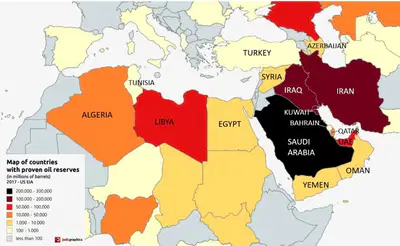
One of the most important natural resources found in this region is oil. Notice on the map shown here that countries like Saudi Arabia, Iran, and Iraq have large oil reserves, making them some of the top oil producers in the world.
Oil and natural gas are crucial for the global economy, as oil is used to produce fuel, plastics, and many other products. Natural gas is another significant resource found in countries like Qatar and Algeria, providing energy for homes, industries, and transportation.
The money from oil exports has enabled these countries to build modern cities, develop infrastructure, and improve living standards. These countries have used their oil wealth to build modern cities with impressive skyscrapers, like Dubai and Riyadh (ree AHD).
Importance of Oil and Natural Gas
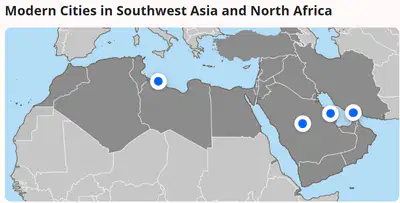
Image: A map of countries with oil reserves in North Africa and Southwest Asia.
Image: Modern Cities in Southwest Asia and North Africa.
9


Tripoli, Libya, is the capital of the country and the wealthiest city in Libya. (Seen in the image).
Riyadh, Saudi Arabia, is the capital and largest city in the oil-rich country.(Seen in the image).
Doha, Qatar, is the third-wealthiest city in Southwest Asia. The country has created many luxury buildings and hotels. (Seen in the image).
Dubai, UAE, is considered the wealthiest city in Southwest Asia. This image shows its man-made sand islands.
10
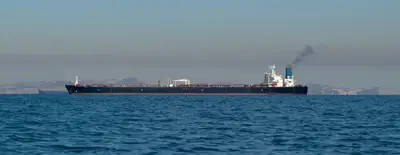
The wealth from oil and natural gas has also created new industries in the region. Iran and Saudi Arabia have oil-refining and oil-shipping businesses throughout the countries. Most other countries with oil export crude oil, or oil that has not been refined. Natural gas has also helped to create power for steel, textile, and electricity production.
Image: A ship hauls oil across the ocean.
11
Multiple Choice

Which country produces the most oil?
Iran
Oman
Saudi Arabia
12
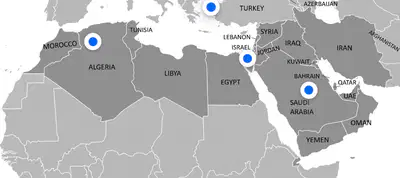
Many governments in Southwest Asia and North Africa are monarchies, a government where a king or queen rules. Other countries have established representative democracies, governments where citizens vote for representatives to make political decisions for them. These different governments must coexist as neighbors in the same region.
.
-Algeria’s government is a parliamentary democracy, where citizens vote for political parties.
-Turkey’s government is a republic, where leaders are elected by the people.
-Jordan’s government is a constitutional monarchy, ruled by a king who follows a constitution. Citizens are also able to elect representatives to the legislative branch.
-Saudi Arabia’s government is a monarchy, ruled by a king.
Government
Political map of Southwest Asia and North Africa.
13
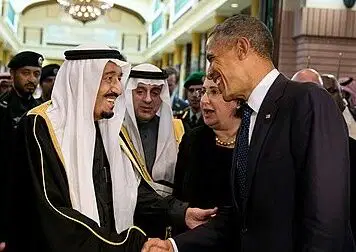
In Saudi Arabia, the Council of Ministers helps the king govern, but power rests with the monarch. Ministers, many of whom are from the royal family, are appointed by the king and can be dismissed at any time.
Saudi kings govern by Islamic law, and the country has no formal constitution. Opposition to those in power is not tolerated, and political parties are banned. Only males at least 21 years of age have suffrage, or the right to vote. Woman cannot vote. However, no national elections have yet been held.
Salman bin Abdulaziz Al Saud, the king of Saudi Arabia, shakes hands with U.S. president Barack Obama shortly after becoming king in 2015.
14
Recent advancements in women's rights in the region have brought positive changes to society. In Saudi Arabia, women can now drive, increasing their independence and participation in the workforce. Tunisia has seen legal reforms that improve women's rights in marriage and inheritance. These changes have significantly boosted literacy rates among women. In Oman, the literacy rate for women went from 2 percent in the 1970s to 91 percent in 2015 due to education reform.
In many countries, girls are encouraged to attend school, leading to higher literacy rates and better job opportunities. Morocco's government programs promoting girls' education have increased school enrollment rates for girls. In Egypt, efforts to reduce gender-based violence and discrimination have created a safer environment for women, encouraging pursuit of education and careers.
These advancements not only enhance women's lives but also strengthen the region's economies and societies. Educated women are more likely to take part in decision-making processes, leading to more inclusive governance. Overall, the progress in women's rights in Southwest Asia and North Africa has led to higher literacy rates and greater opportunities for women, benefiting the entire region.
After the end of Ottoman rule in 1923, Turkey became a republic. Recall that a republic is a form of democratic government in which representatives elected by the people hold power. Although it was established as a republic, only one party existed in Turkey for about 25 years. However, since the 1950s, Turkey has been a multiparty democracy. In 2007, voters in Turkey approved a constitutional amendment to establish direct presidential elections.
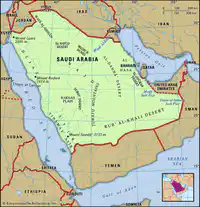
Image: Map of Saudi Arabia.
15
Match
Match the description of government to the country with that government.
The king and citizens both choose the members of the legislative branch.
Citizens vote for a political party, not individual leaders.
The king chooses the ministers and can dismiss them.
Citizens vote to choose individual leaders.
Jordan’s constitutional monarchy
Algeria’s parliamentary democracy
Saudi Arabia’s monarchy
Turkey’s republic
Jordan’s constitutional monarchy
Algeria’s parliamentary democracy
Saudi Arabia’s monarchy
Turkey’s republic
16
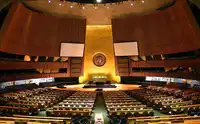
This region plays a large role in global politics, economics, and security. Many countries, such as Saudi Arabia, Iran, and Turkey, have a major influence globally. They are involved in various international organizations like the United Nations and the Arab League, working to address global issues like peace, security, and development.
The Arab League is an important organization that was founded to promote cooperation and unity among Arab nations. The Arab League has 22 member countries, including Egypt, Saudi Arabia, Iraq, and Jordan. One of the organization's main purposes is to strengthen political, economic, and social ties among its members. Additionally, it supports cultural and educational exchanges, helping to preserve and promote Arab heritage and language.
The Organization of the Petroleum Exporting Countries, or OPEC, includes countries like Saudi Arabia, Iran, and Iraq, which produce a large portion of the world's oil. OPEC controls oil production levels, influencing global oil prices. When OPEC decides to produce more or less oil, it can cause prices to rise or fall. This affects the cost of gasoline, heating, and many other products. By managing oil supply, OPEC plays a key role in the global economy, impacting everything from transportation costs to the prices of goods and services around the world.
International Relations
United Nations general assembly building in New York City.
17
Multiple Choice
Which international organization has the goal of promoting Arab culture?
The Arab League
United Nations
OPEC
18
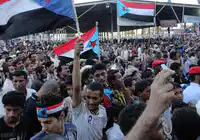
The region of Southwest Asia and North Africa faces many challenges and tensions. One significant event was the Arab Spring, which started in late 2010. It involved protests and uprisings across several Arab countries, where people demanded more freedom, better living conditions, and more job opportunities. While it led to leadership changes in places like Tunisia, Egypt, and Libya, it also caused long-term political uncertainty and conflict in other countries.
One of the most severe outcomes of the Arab Spring was the Syrian Civil War, which began in 2011 when protests against President Bashar al-Assad turned violent. Various groups fought each other and the government, leading to a brutal conflict that still continues.
This war has caused a humanitarian crisis, with millions of people fleeing their homes, resulting in a massive refugee crisis and widespread destruction.
Another significant source of tension is the relationship between Iraq and Iran, two neighboring countries with a long history of conflict and rivalry. The Iran-Iraq War from 1980 to 1988 was particularly devastating, with hundreds of thousands killed. Tensions still remain high due to political and religious differences.
Tensions and Challenges
Protests in Yemen during the Arab Spring.
19
You may submit today's lessons blank.
Please complete the exit ticket.
Reminders
The highest population in the region lies on the coasts of the many waterways.
Oil and natural gas are essential to the economy and the growth of the region.
There have been many modern-day conflicts that have affected the governments of the region.
Review
Review and Reminders
20
Open Ended
How has the availability of oil and natural gas reserves had a positive impact in Southwest Asia and North Africa?
crude oil, representative democracy, suffrage
Vocabulary
explain the importance of oil and natural gas to the region's economy
identify and summarize the governments in the region and how they have been impacted by conflict and tensions in the region
describe how the rest of the world interacts with Southwest Asia and North Africa
Goals
Modern Southwest Asia and North Africa
Essential Question-What has affected the growth and conflict of modern countries in Southwest Asia and North Africa?
Show answer
Auto Play
Slide 1 / 20
SLIDE
Similar Resources on Wayground

13 questions
Mesopotamia
Presentation
•
7th Grade
17 questions
SW Asia Political Geography
Presentation
•
7th Grade
15 questions
Reflexive and Intensive Pronouns
Presentation
•
6th Grade
15 questions
Science Variables Lesson
Presentation
•
6th Grade
15 questions
Multiply with Decimals
Presentation
•
6th Grade
15 questions
Ancient Egypt and Isrealite's
Presentation
•
6th Grade
15 questions
Citing Textual Evidence/Inference
Presentation
•
6th Grade
13 questions
Natural Resources
Presentation
•
5th Grade
Popular Resources on Wayground
25 questions
The Ultimate College Knowledge Quiz

Quiz
•
8th Grade
20 questions
Math Review
Quiz
•
3rd Grade
15 questions
Fast food
Quiz
•
7th Grade
20 questions
Math Review
Quiz
•
6th Grade
20 questions
Context Clues
Quiz
•
6th Grade
20 questions
Inferences
Quiz
•
4th Grade
19 questions
Classifying Quadrilaterals
Quiz
•
3rd Grade
20 questions
Figurative Language Review
Quiz
•
6th Grade