Artistic Visuals
Presentation
•
English
•
11th Grade
•
Medium
Haley O'Driscoll
Used 1+ times
FREE Resource
36 Slides • 28 Questions
1
Artistic Visuals
English 2201
2
Focal Point
The main area of interest in a visual.
In this image our eye is drawn to the woman holding the parasol. She stands out from the background (sky) and foreground (grass) in size and position.
3
Fill in the Blanks
Type answer...
4
Fill in the Blanks
Type answer...
5
Fill in the Blanks
Type answer...
6
Fill in the Blanks
Type answer...
7
Fill in the Blanks
Type answer...
8
Foreground/ Background
The part of the visual that is furthest away from the viewer.
Background
The part of a visual that is nearest to the viewer.
Foreground
9
10
Here the German Sheppard is in the foreground of the visual, while the garden (shrubs and flowers) are the background.
Foreground/
Background
11
Multiple Choice
What is the foreground of this image?
Sky
Sand
12
Multiple Choice
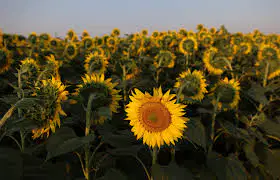
What is the background of this image?
Sky
Sunflowers
13
Open Ended
What is the foreground of this visual?
&
What is the background of this visual?
14
LINE
15
Sharp curves usually bring a feeling of unease or chaos.
The character in the painting is screaming with hands to the face which alerts the audience to the fact the character is unhappy - maybe even stressed.
When we see the lines used in the painting we can connect the character's expression to the chaos around him. The audience's overall feeling of this painting, because of these elements, is unease (apprehension).
Line
16
Straight lines generally bring order and a sense of harmony to a painting.
This painting is of a casual and airy seaside scene. This peacefulness can be recognized throughout the straight lines used by the artist - the shoreline, buildings, boardwalk, masses of sailboats, trees.
Line
17
Jagged lines usually create a sense of fear or doom. They represent chaos or tension.
In this painting we have a ship kneeling over in huge fierce waves. Nearly every part of this picture has sharp jagged lines - this proves the lack of calm in the picture. The artist uses the sharp lines to create fear.
Line
18
Gradually curved (or bending) lines help to create movement in a piece of artwork.
Here you see a tree bending in the wind. Here the curve of the tree helps the audience identify the movement in the painting.
Line
19
Multiple Choice
Which type of lines?
Sharp curves
Straight lines
Jagged Lines
Gradually Curved
20
Multiple Choice
Which type of lines?
Sharp curves
Straight lines
Jagged Lines
Gradually Curved
21
Multiple Choice
Which type of lines?
Sharp curves
Straight lines
Jagged Lines
Gradually Curved
22
Multiple Choice
Which type of lines?
Sharp curves
Straight lines
Jagged Lines
Gradually Curved
23
Multiple Choice
Which type of lines?
Sharp curves
Straight lines
Jagged Lines
Gradually Curved
24
Multiple Choice
Which type of lines?
Sharp curves
Straight lines
Jagged Lines
Gradually Curved
25
Multiple Choice
Which type of lines?
Sharp curves
Straight lines
Jagged Lines
Gradually Curved
26
Symmetry is the ultimate form of balance and creates a true sense of harmony.
A piece of artwork is symmetrical when both sides of the piece are the same on either side of an imaginary central divide (the mirror point).
Symmetry can be created vertically, horizontally, or diagonally.
Here in this picture if you drew a line down the centre of the moth, it would be symmetrical.
Symmetry
27
Asymmetry is the lack of balance, equality, or harmony.
Asymmetry is when something is not "matched" across an imaginary central divide.
In this painting, if you fold it in half vertically, diagonally, or horizontally neither of the halves will match.
Asymmetry
28
Multiple Choice
Symmetry or asymmetry?
Symmetry
Asymmetry
29
Multiple Choice
Symmetry or asymmetry?
Symmetry
Asymmetry
30
Multiple Choice
Symmetry or asymmetry?
Symmetry
Asymmetry
31
Multiple Choice
Symmetry or asymmetry?
Symmetry
Asymmetry
32
Multiple Choice
Symmetry or asymmetry?
Symmetry
Asymmetry
33
Balance is the arrangement of shapes and colours within a piece of art.
Here there are two similar flowers positioned vertically, balancing the photo. They balance the top and bottom of the photo in size and colour, so the picture does not seem lacking harmony or unbalanced.
Balance
34
Multiple Choice
Balanced or unbalanced?
Balanced
Unbalanced
35
Multiple Choice
Balanced or unbalanced?
Balanced
Unbalanced
36
Multiple Choice
Balanced or unbalanced?
Balanced
Unbalanced
37
Multiple Choice
Balanced or unbalanced?
Balanced
Unbalanced
38
Multiple Choice
Balanced or unbalanced?
Balanced
Unbalanced
39
A piece of artwork CAN be balanced without symmetry, but CANNOT be Symmetrical without Balance.
In the visual to the right we have a merged drawing of a younger woman and an older woman. While their features are balanced (they both have eyes, nose, mouth, chin, neck) and in proportion with each other, we can tell that over the “imaginary center divide” they are not the same/identical.
Balance vs. Symmetry
40
Colour
Primary colours = red, yellow, blue
Secondary colours = are composed of two primary colours; orange, green, purple
Warm colours = red, orange, yellow
Cold colours = blue, green, purple
Neutral colours = white, brown, beige, black, grey, tan
41
Red
Red is optimistic, a vital colour of activity, heat, movement, struggle, and passionate. It is the most expressive colour associated with fullness of life, courage, sacrifice, love, strong emotions and acts of passion.
Orange
Orange is a bright, shiny, warm colour of fire and sun. It is associated with sunrise or sunset, delicious fruits such as apricots, mandarins, oranges. It can symbolizes courage and sacrifice. It is an emotional stimulant, orange reflects warmth, generosity, it is light and playful.
Yellow
Yellow is the colour of sun, light, and optimism, which stimulates, activates and frees from fear. It retains the alertness and promotes concentration, symbolizes the creativity and wisdom.
42
Green
Green has two sides. It can symbolize nature and the natural aspects of life resulting in a calming effect, but it can also represent jealousy and greed.
Blue
In nature, blue is widespread like in the sky, which is reflected in the water. The symbolism of blue: wisdom, intelligence, immortality, infinity. It represents a fresh atmosphere, transparency, distance, and quiet. They say it is the colour of peace and rest.
Purple
Purple is the colour of royalty; it represents the high life, riches and jewels, and nobility.
43
White
White is the colour of clarity. It symbolizes innocence and purity, as well as a new beginning or rebirth. It is also a symbol of divinity, perfection, pride, kindness and the eternal.
Black
Black is the colour of doom and death. It symbolizes fear and destruction, as well as “the end”. It may also represent evil forces, greed, sadness, and depression.
44
Scale = is the relative size of objects within a visual, in comparison to the world around them.
Things to consider:
- Are the elements proportional?
- Out of proportion?
- All large?
- All small?
- “Regular” size?
- Over-exaggerated?
Proportion = is the relationship of sizes between different parts of a work.
Scale & Proportion
45
The relative size of artworks are almost always compared to the size of the human body. You will hear words like life-like or life-sized, miniature, gigantic or enormous. All these qualifiers of size use the human body as reference.
46
47
Here we see a Pringles tube that is appropriate in scale (compared to the real world) and two people who do not seem to be appropriately scaled due to their distance from the camera.
The artist (photographer) has used distance to alter the elements proportions in this picture. The people appear smaller than the Pringles tube.
Scale & Proportion
48
Caricatures usually play around with scale and proportion.
49
Open Ended
What is appropriate to scale here?
What is similarly proportioned?
50
Texture is the effective use of lines and dots in visual images which can be “felt” with the eyes; rough or smoothness. Texture is achieved by the use of line, shading, and colour.
In Van Gough's Starry Night, there is actual texture in the sky created by excess paint which adds depth to the painting.
Texture
51
What about texture in this painting?
There is visual texture created with colour and shading (the canvas would be smooth unlike the previous one) and it adds royalty to the painting - a true sense of riches.
Texture
52
Open Ended
What type of texture can be identified in this painting?
&
What does the texture create in this painting?
53
Open Ended
What type of texture can be identified in this painting?
&
What does the texture create in this painting?
54
Form/ Genre
Form/ Genre is the category that a piece of artwork falls into.
There are 100s of categories, but for the purpose of right now, you will need to know the following.....
55
Collage
Form/ Genre
56
Drawing/ Sketch
Form/ Genre
57
Graffiti
Form/ Genre
58
Cartoon
Form/ Genre
59
Caricature
Form/ Genre
60
Word/ Text
Form/ Genre
61
Painting
Form/ Genre
62
Mosaic
Form/ Genre
63
Photography
Form/ Genre
64
Sculpture
Form/ Genre
Artistic Visuals
English 2201
Show answer
Auto Play
Slide 1 / 64
SLIDE

Similar Resources on Wayground
61 questions
SSUSH9: Civil War
Presentation
•
11th Grade
55 questions
Unit 1 Vocab. Test
Presentation
•
11th Grade
55 questions
Phonics 1 - S A T P
Presentation
•
KG
59 questions
REVISION BEFORE THE FINAL TEST Grade 12
Presentation
•
12th Grade
58 questions
Collective Nouns
Presentation
•
11th Grade
60 questions
The Giver novel review (1-10)
Presentation
•
11th Grade
62 questions
Interpreting and Discussing Visual Art
Presentation
•
11th Grade
55 questions
Organizing Argumentative Essays
Presentation
•
11th Grade
Popular Resources on Wayground
20 questions
Math Review
Quiz
•
3rd Grade
15 questions
Fast food
Quiz
•
7th Grade
20 questions
Context Clues
Quiz
•
6th Grade
20 questions
Inferences
Quiz
•
4th Grade
19 questions
Classifying Quadrilaterals
Quiz
•
3rd Grade
20 questions
Figurative Language Review
Quiz
•
6th Grade
20 questions
Equivalent Fractions
Quiz
•
3rd Grade
10 questions
Identify Fractions, Mixed Numbers & Improper Fractions
Quiz
•
3rd - 4th Grade
Discover more resources for English
30 questions
K/H Final Review Part 1
Quiz
•
9th - 12th Grade
22 questions
Revise and Edit Final Review 3
Quiz
•
8th - 12th Grade
50 questions
Romeo and Juliet Prologue & Acts 1-5 Test
Flashcard
•
9th - 12th Grade
45 questions
LOTF Chapters 1-12 Quiz
Quiz
•
8th - 11th Grade
20 questions
Analyzing Author's Purpose and Audience
Quiz
•
11th Grade
15 questions
After Twenty Years
Quiz
•
KG - University
6 questions
I Am Malala Chapter 29-30
Quiz
•
9th - 11th Grade
20 questions
English III Final
Passage
•
11th Grade