

Boyle's & Charles' Law

Presentation
•
Chemistry
•
9th Grade
•
Practice Problem
•
Easy
Standards-aligned

Pryvilen Retuya
Used 5+ times
FREE Resource
38 Slides • 11 Questions
1

2
3
4
5
6
7
8
9
Match
Match the following:
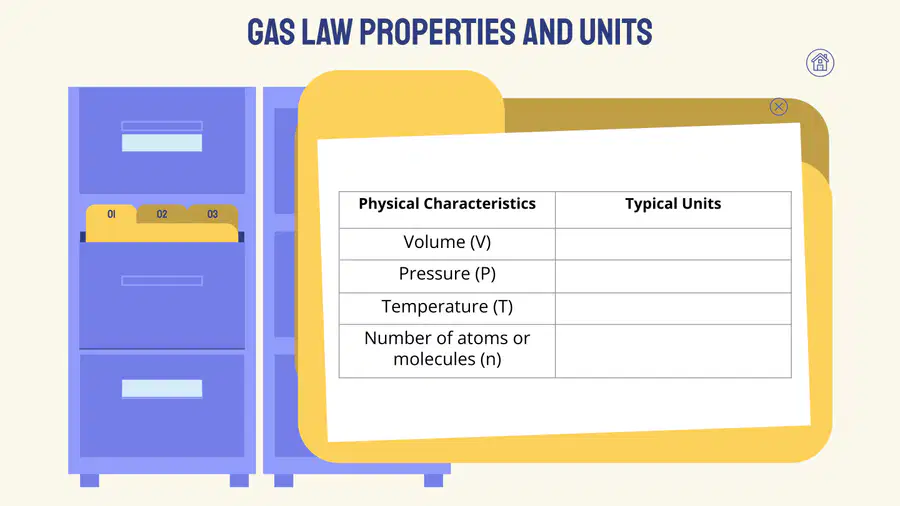
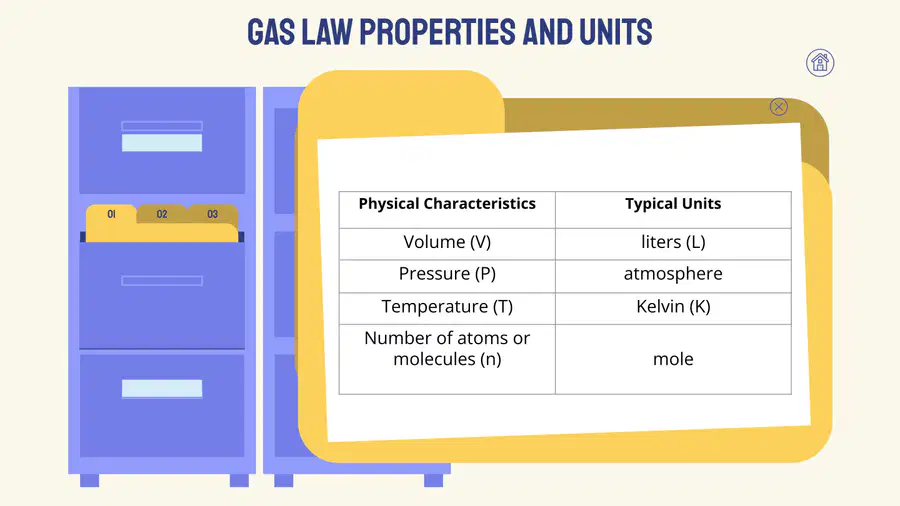
Kelvin
Atmosphere
Liters
mol
Temperature
Pressure
Volume
Amount of Substance
Temperature
Pressure
Volume
Amount of Substance
10
11
12
13
14
Multiple Choice
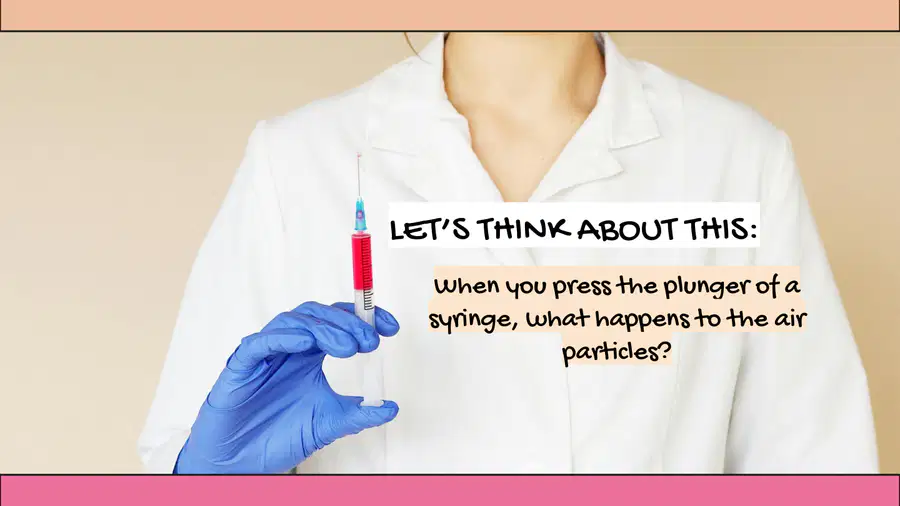
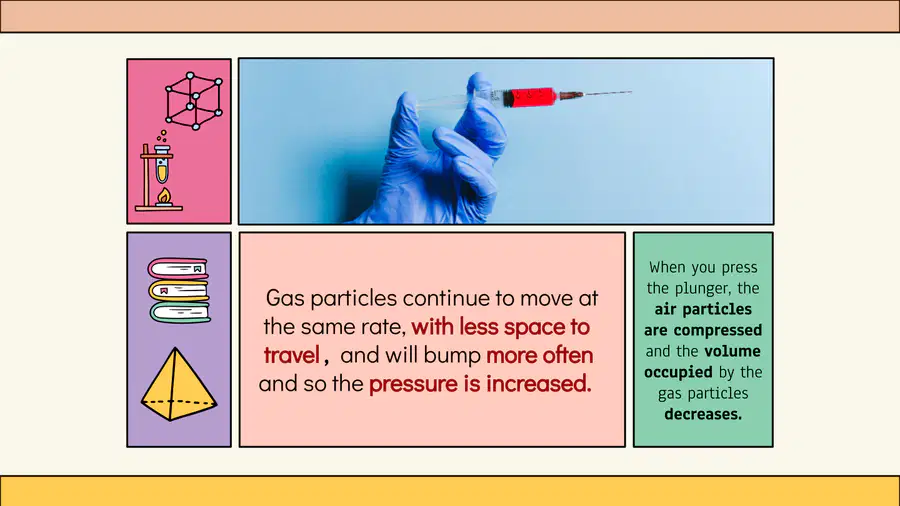
What happens to the air particles inside a syringe when you press the plunger while the nozzle is sealed?
The air particles stop moving.
The air particles move slower as pressure increases.
The air particles collide more frequently, increasing pressure.
The number of air particles decreases.
15
16
17
18
19
20
21
Fill in the Blanks
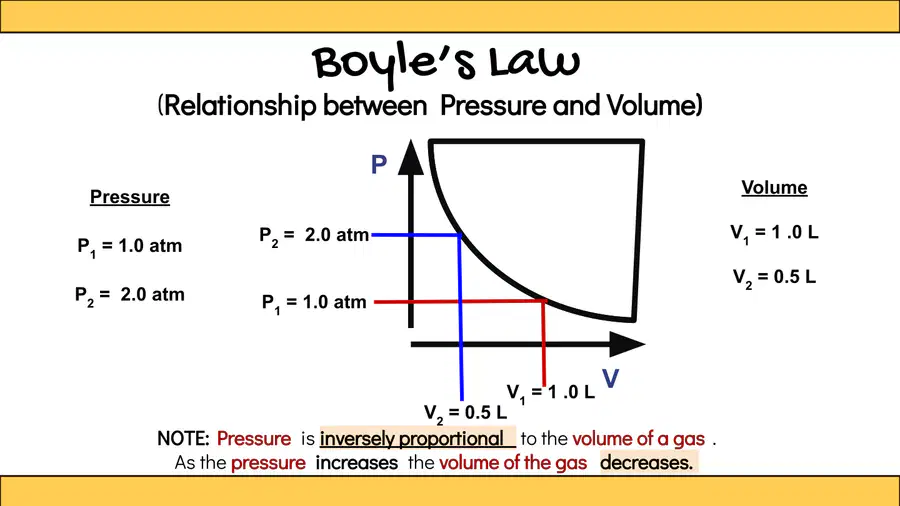
According to Boyle’s Law, if the volume of a gas (decreases) at constant temperature, then its pressure will
22
Fill in the Blanks
Conversely, if the volume
23
24
25
26
Math Response
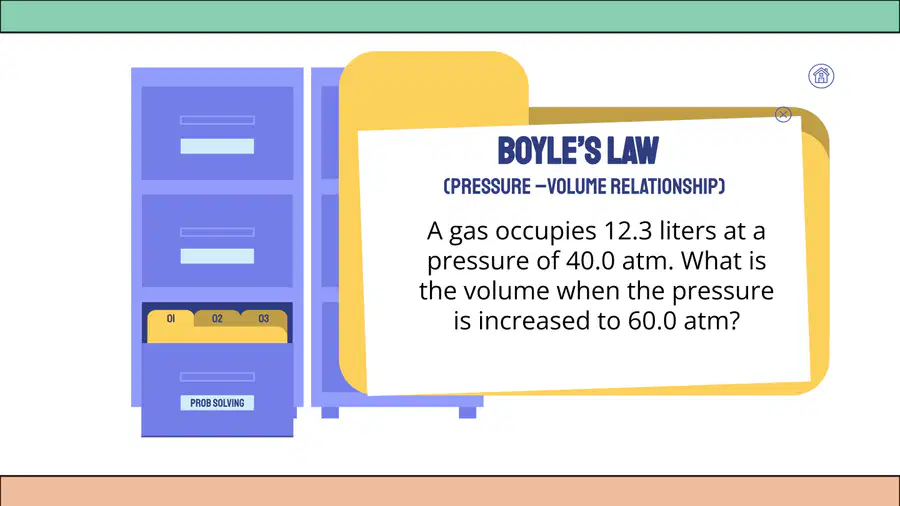
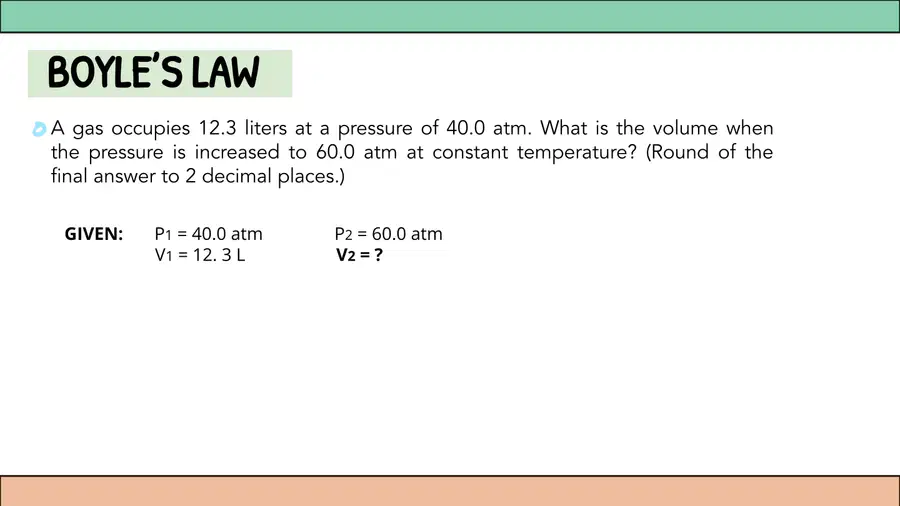
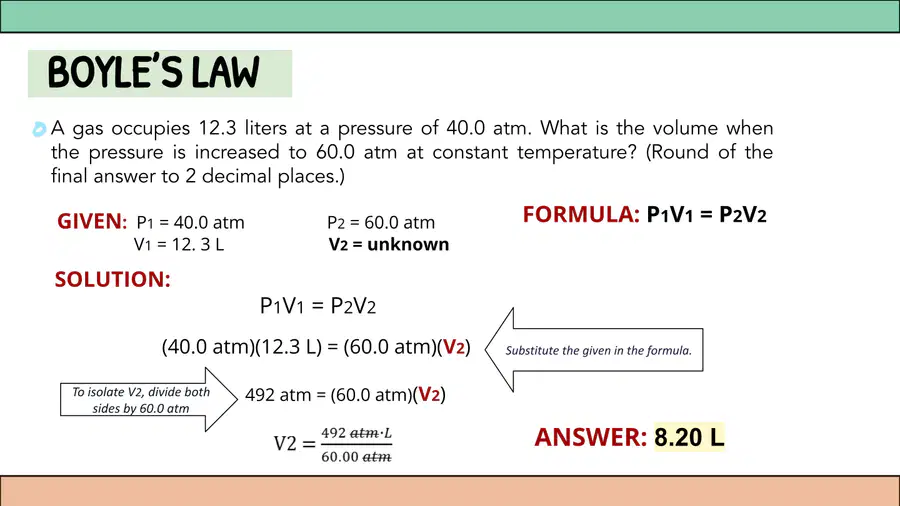
A gas occupies 12.3 liters at a pressure of 40.0 atm. What is the volume when the pressure is increased to 60.0 atm at constant temperature? (Round of the final answer to 2 decimal places.)
27
28
29
Math Response
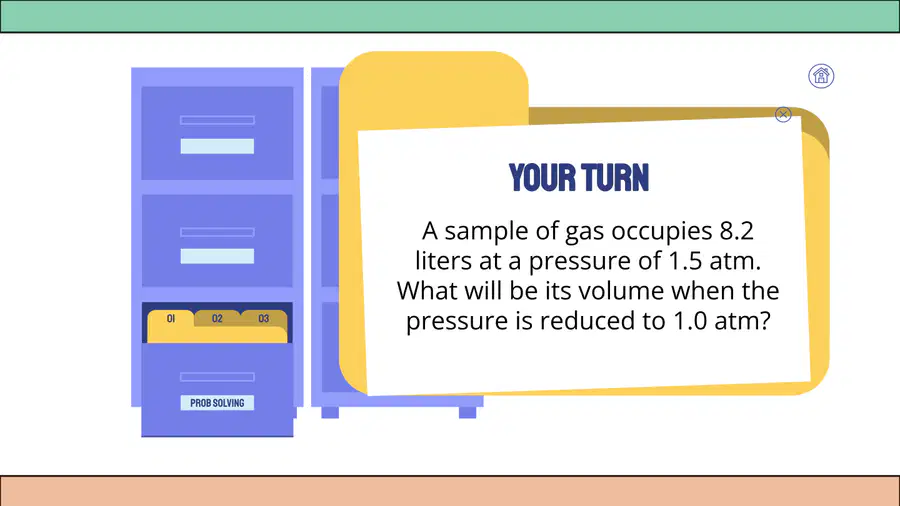
A sample of gas occupies 8.2 liters at a pressure of 1.5 atm. What will be its volume when the pressure is reduced to 1.0 atm?
30
Math Response
A 5.0 L container of gas is at a pressure of 2.0 atm. If the gas is compressed to a volume of 2.0 L, what will the new pressure be, assuming the temperature is kept constant?
31
32

33
Multiple Choice
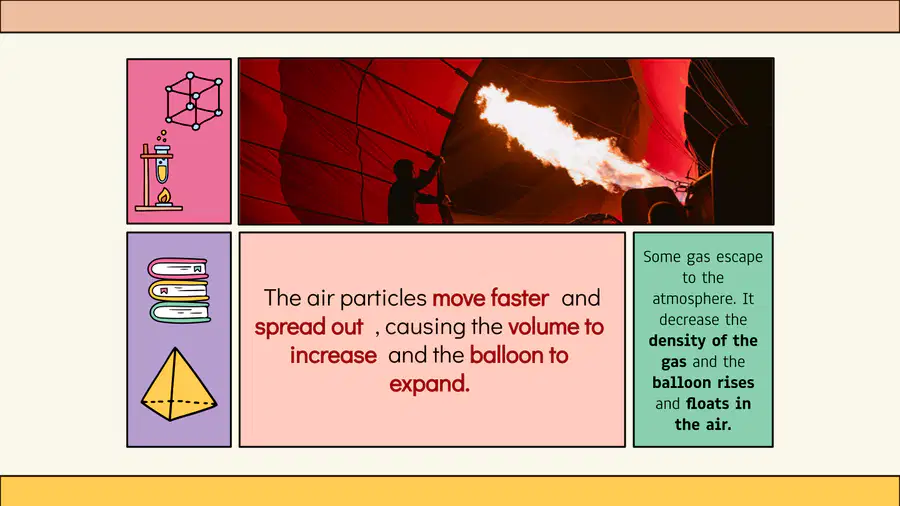
What happens to the air particles inside a hot air balloon when heated using a small propane burner?
The air particles move faster and spread out, decreasing density.
The air particles slow down and come closer together, increasing density.
The number of air particles inside the balloon increases.
The air particles stop moving, causing the balloon to rise.
34
35
36
37
38
39
40
Fill in the Blanks
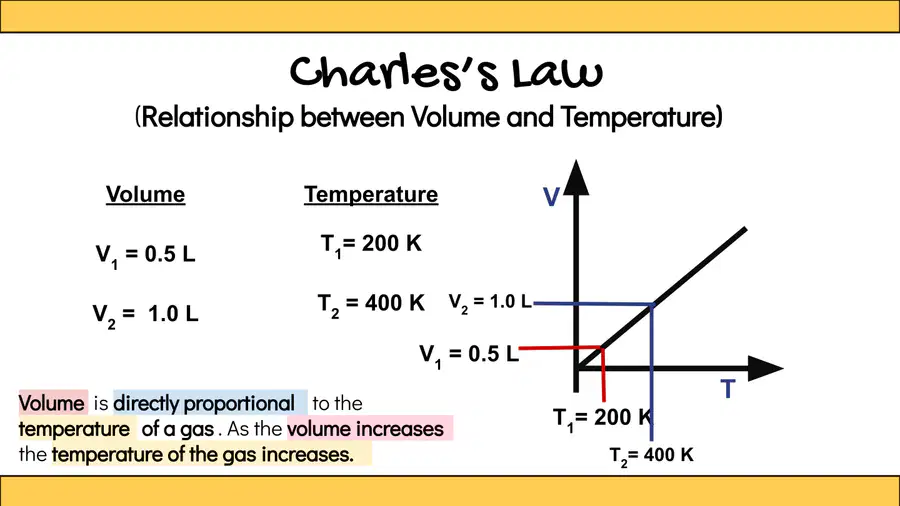
According to Charles' Law, if the temperature of a gas (increases) at constant pressure, then its volume will
41
Fill in the Blanks
Conversely, if the temperature
42
43
44
45
46
Math Response
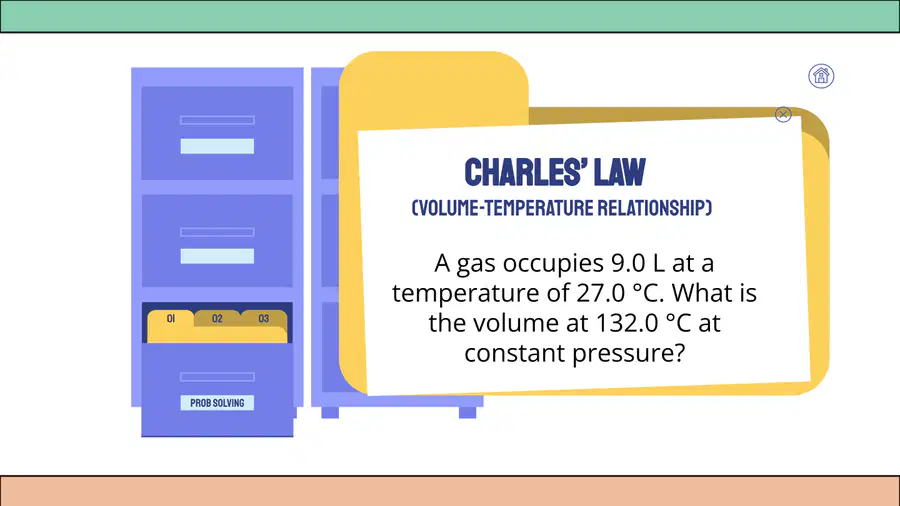
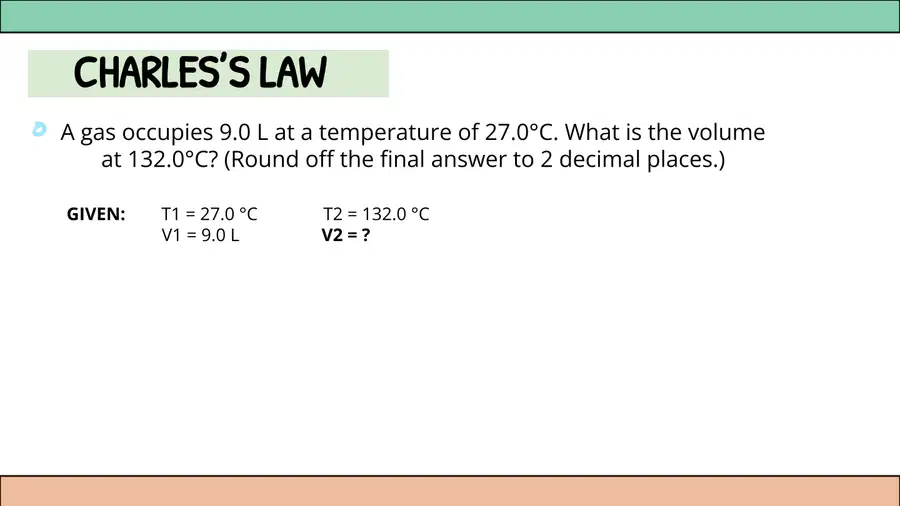
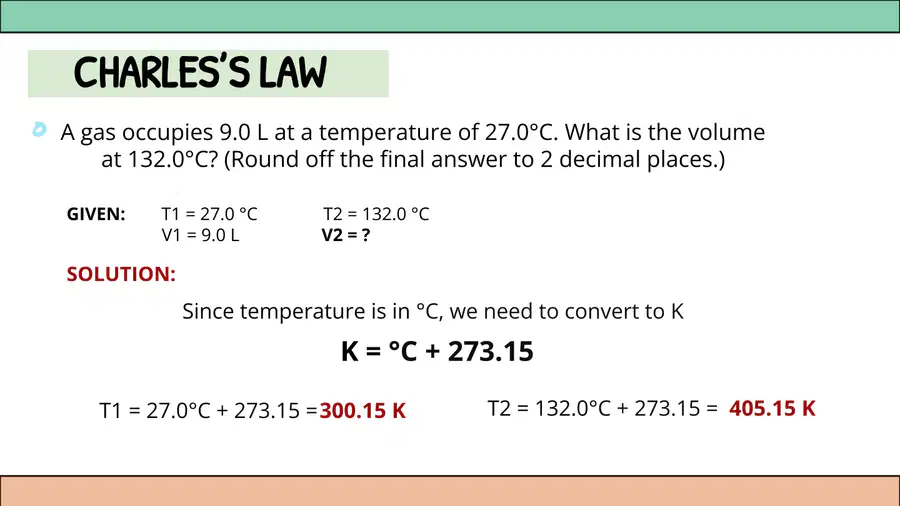
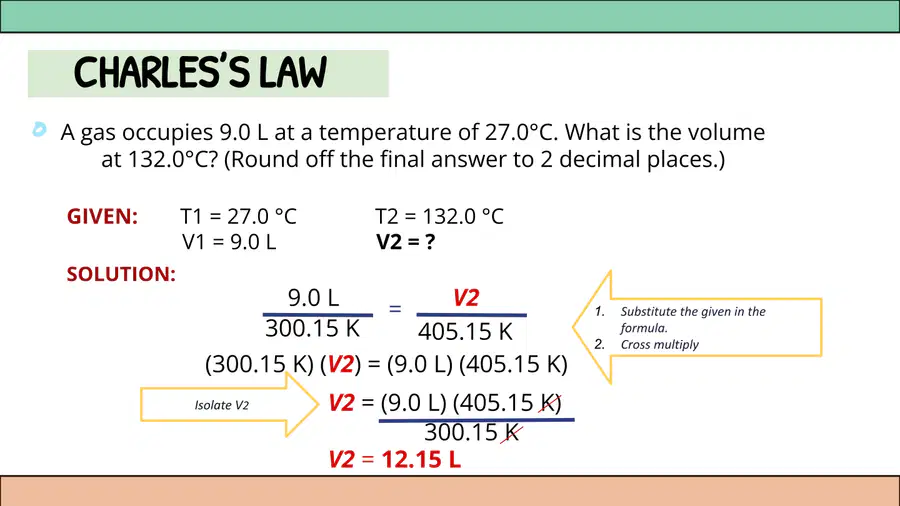
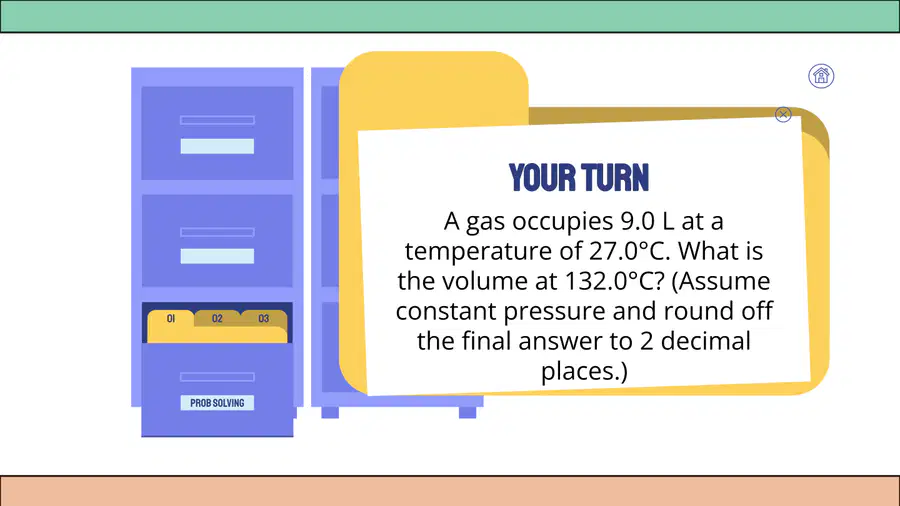
A gas occupies 9.0 L at a temperature of 27.0°C. What is the volume at 132.0°C? (Round off the final answer to 2 decimal places.)
47
48
49
Show answer
Auto Play
Slide 1 / 49
SLIDE
Similar Resources on Wayground

42 questions
Ser vs. Estar
Presentation
•
9th Grade
45 questions
Chemical Names and Formulas
Presentation
•
9th - 10th Grade
41 questions
The Judicial Branch/Supreme Court
Presentation
•
9th Grade
42 questions
Measurements of Matters
Presentation
•
9th Grade
42 questions
Latin America Map 1
Presentation
•
9th Grade
45 questions
Ecology Final Review
Presentation
•
9th Grade
44 questions
3.1 - 3.3 Quiz Review_Alg1
Presentation
•
9th Grade
40 questions
Grade 9 General Unit 3 Lesson 1
Presentation
•
9th Grade
Popular Resources on Wayground
10 questions
How much do you know about our Portrait of an Eagle?

Quiz
•
10th Grade
10 questions
Fast Food Slogans
Quiz
•
6th - 8th Grade
21 questions
Continents and Oceans
Quiz
•
6th Grade
20 questions
Parts of Speech
Quiz
•
5th Grade
16 questions
Subject & Predicate
Quiz
•
5th Grade
25 questions
Multiplication Facts
Quiz
•
5th Grade
12 questions
Map Skills
Quiz
•
3rd Grade
22 questions
Continents and Oceans
Quiz
•
5th Grade
Discover more resources for Chemistry
20 questions
electron configurations and orbital notation
Quiz
•
9th - 12th Grade
11 questions
Balancing Chemical Equations
Presentation
•
9th Grade
21 questions
IP: Electron Configuration Part 1
Quiz
•
9th Grade
10 questions
Mastering Significant Figures in Chemistry

Interactive video
•
6th - 10th Grade
21 questions
Isotopes and Ions
Quiz
•
9th Grade
30 questions
Atoms, Ions and Isotopes
Quiz
•
9th - 12th Grade
21 questions
Atomic Structure: Atoms, Isotopes & Ions...Oh, My!
Quiz
•
9th - 12th Grade
19 questions
Isotopes & Ions
Quiz
•
9th Grade