

Boolean and Conditionals

Presentation
•
Computers
•
9th Grade
•
Medium

Steven Howard
Used 1+ times
FREE Resource
42 Slides • 16 Questions
1

2

3

4

5

6

7
8

9
Multiple Choice
10

11
Multiple Choice
12

13
Multiple Choice
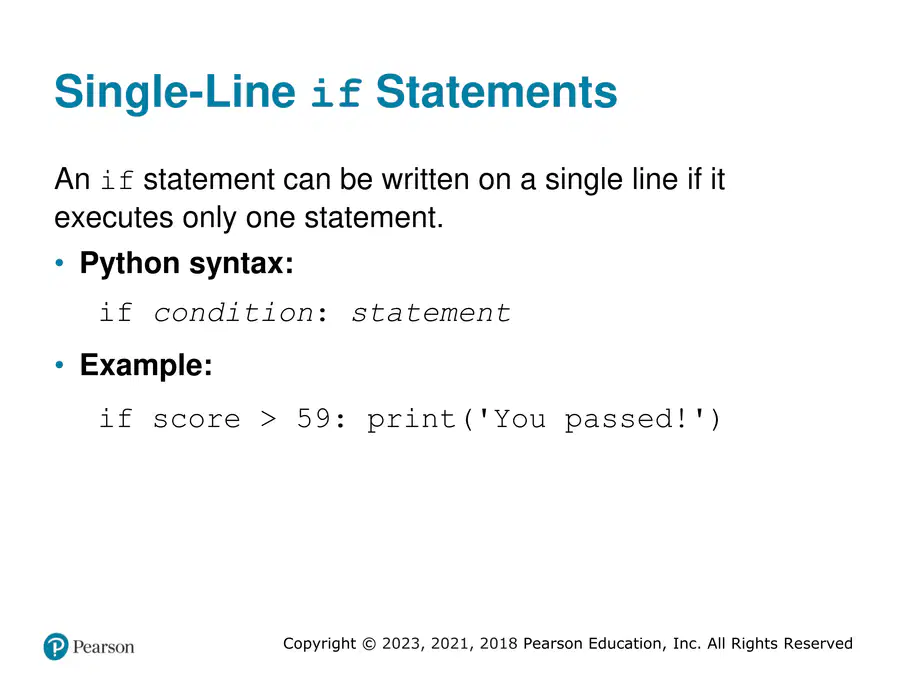
Friday = False
if Friday:
print "Jeans day!"
else:
print "Dress code"
14
Multiple Choice
15
Multiple Choice
16

17
Multiple Choice
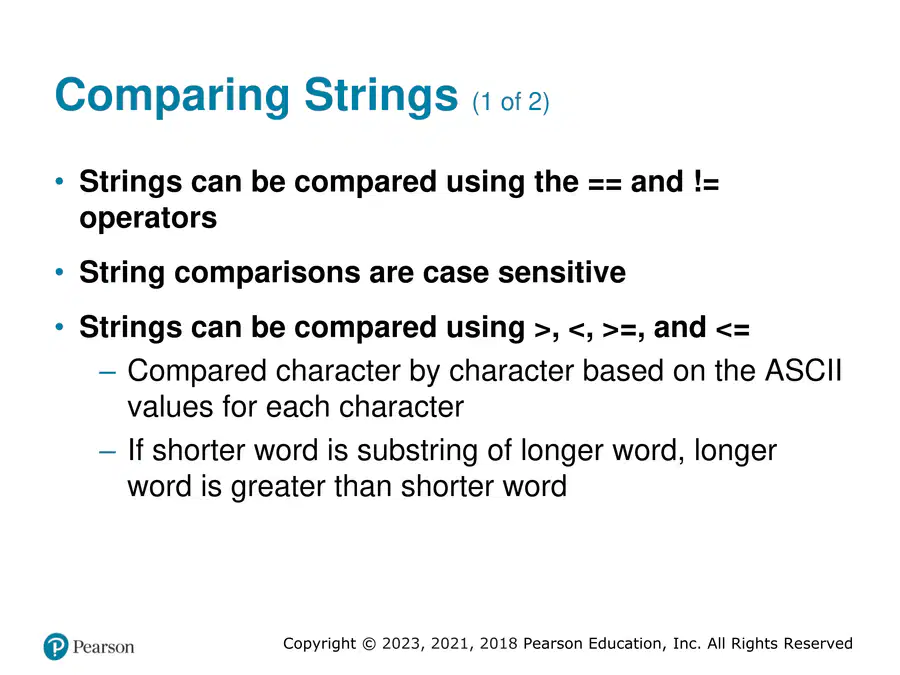
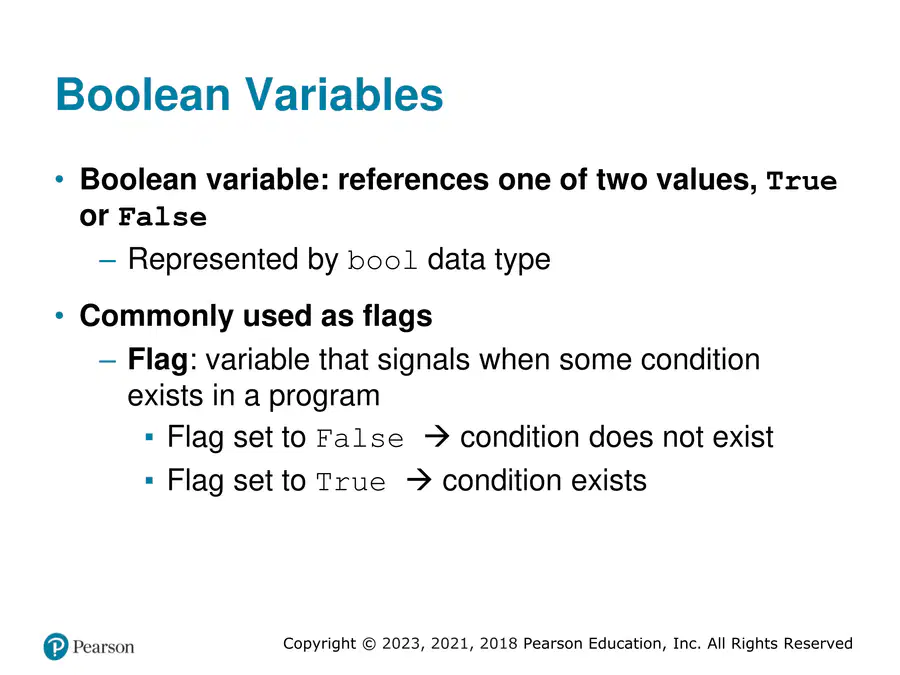
Pieces of code that only run "under certain conditions":
conditional statements
control flow statments
syntax
variables
18
19
20

21
Multiple Choice
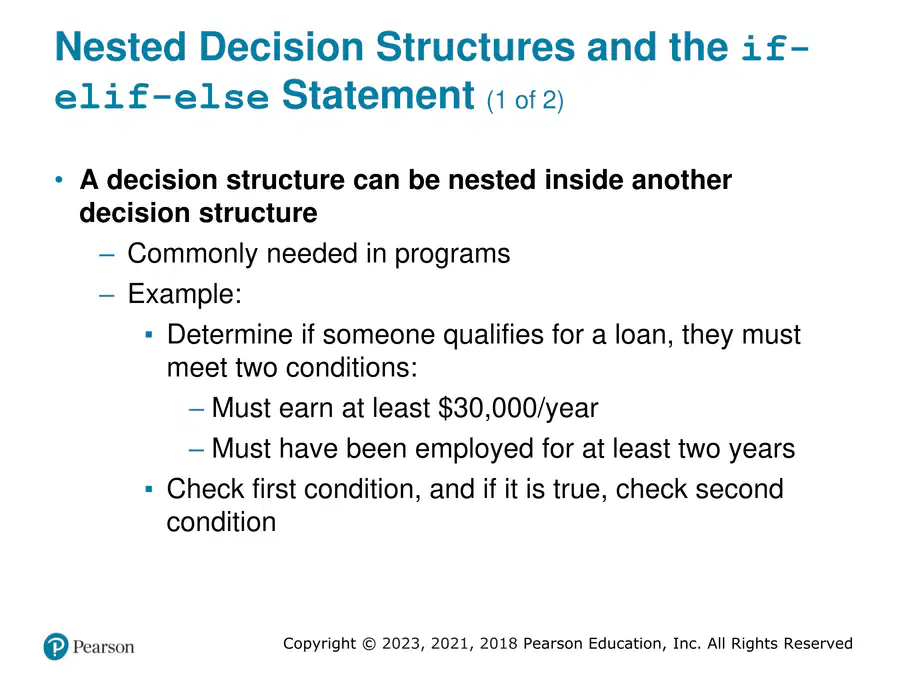
what is a string in Python?
a long piece of woven material
text, or keyboard characters
something that ties words together
yarn
22

23
Multiple Choice
24
Multiple Choice
"These are words!" is a ...
Integers
Floats
Booleans
String
25

26
Multiple Choice
1205 is a ...
Boolean
Float
Integer
String
27

28

29
Multiple Choice
How can you use elif for multiple conditions in Python?
You can use 'elif' to check for multiple conditions in Python by using it after a 'try' statement and before the 'else' statement.
You can use 'elif' to check for multiple conditions in Python by using it after a 'while' statement and before the 'else' statement.
You can use 'elif' to check for multiple conditions in Python by using it after a 'for' statement and before the 'else' statement.
You can use 'elif' to check for multiple conditions in Python by using it after an 'if' statement and before the 'else' statement.
30
31
Explanation Slide...
You can use 'elif' to check for multiple conditions in Python by using it after an 'if' statement and before the 'else' statement.
32
Multiple Choice
What are some common mistakes students make when using elif in Python?
Using 'else if' instead of 'elif'
Forgetting to include a condition after the 'elif' keyword
Placing 'elif' before 'if'
Using 'elif' without an 'if' statement
33
Explanation Slide...
The correct answer is forgetting to include a condition after the 'elif' keyword, as this is a common mistake students make when using elif in Python.
34
Explanation Slide...
The advantages of using elif over nested if in Python are improved readability, avoidance of excessive indentation, and better performance.
35
Multiple Choice
What are the advantages of using elif over nested if in Python?
Reduced performance
Increased complexity of code
Less readable code
The advantages of using elif over nested if in Python are improved readability, avoidance of excessive indentation, and better performance.
36

37

38

39

40

41
42
Combining Conditions
43

44

45
Multiple Choice
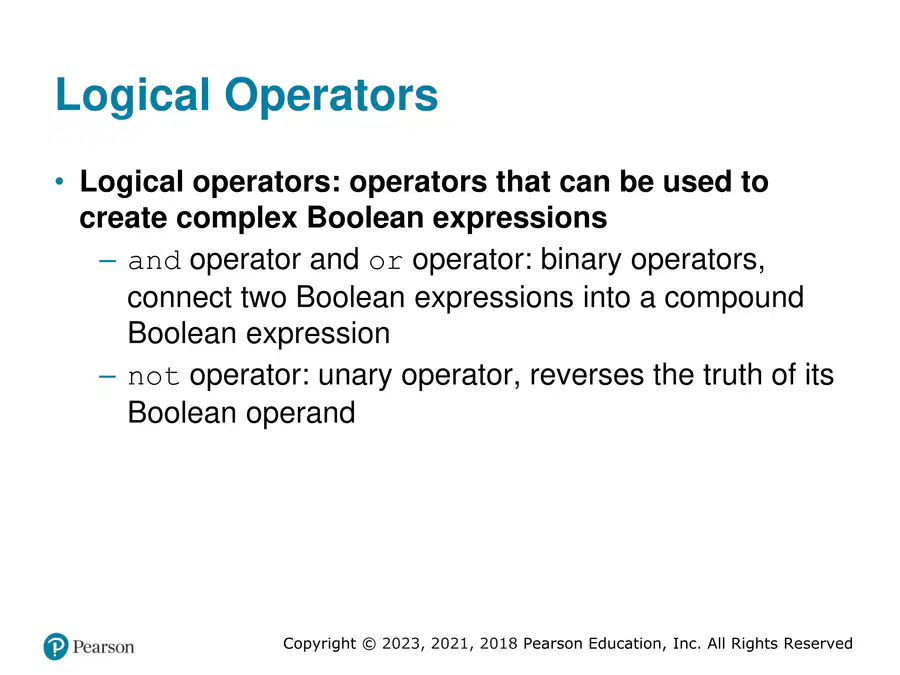
What do logical operators allow you to do in Python?
Combine multiple conditions
Perform mathematical operations
Create loops
Access external files
46
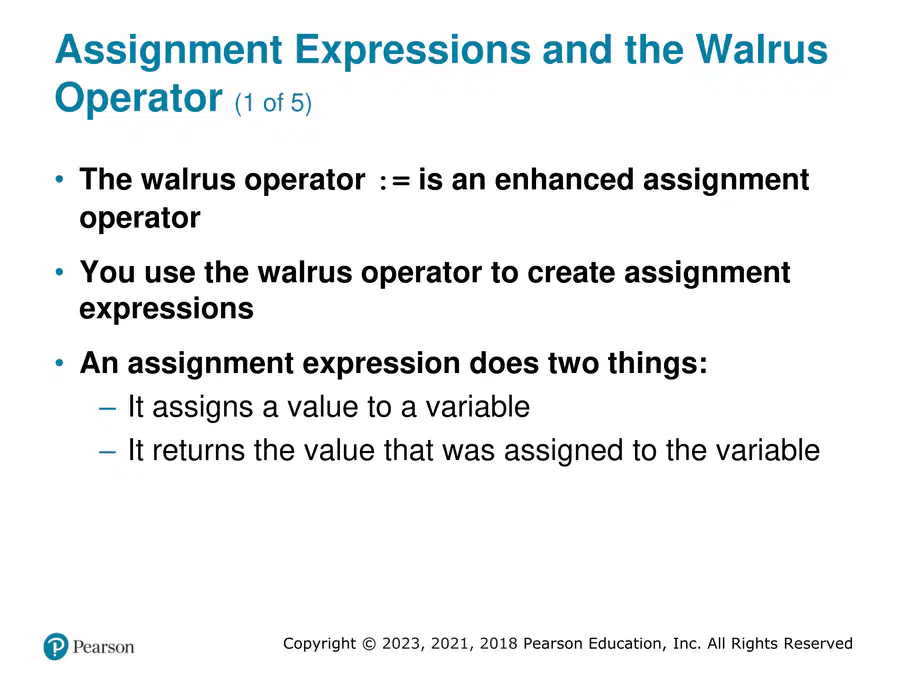
Else Statements in Python
Trivia: Else statements in Python conditionals are used to handle alternative paths in decision-making. They enhance the flexibility and robustness of Python programs by ensuring that all possible scenarios are accounted for. They allow code to be executed when the condition in an if statement is not met. Remember, else statements are crucial for creating efficient and comprehensive code!
47
48
Multiple Choice
What is the purpose of else statements in Python conditionals?
To handle alternative paths in decision-making
To execute code when the condition in an if statement is met
To enhance the flexibility and robustness of Python programs
To ensure that all possible scenarios are accounted for
49

50
51
52
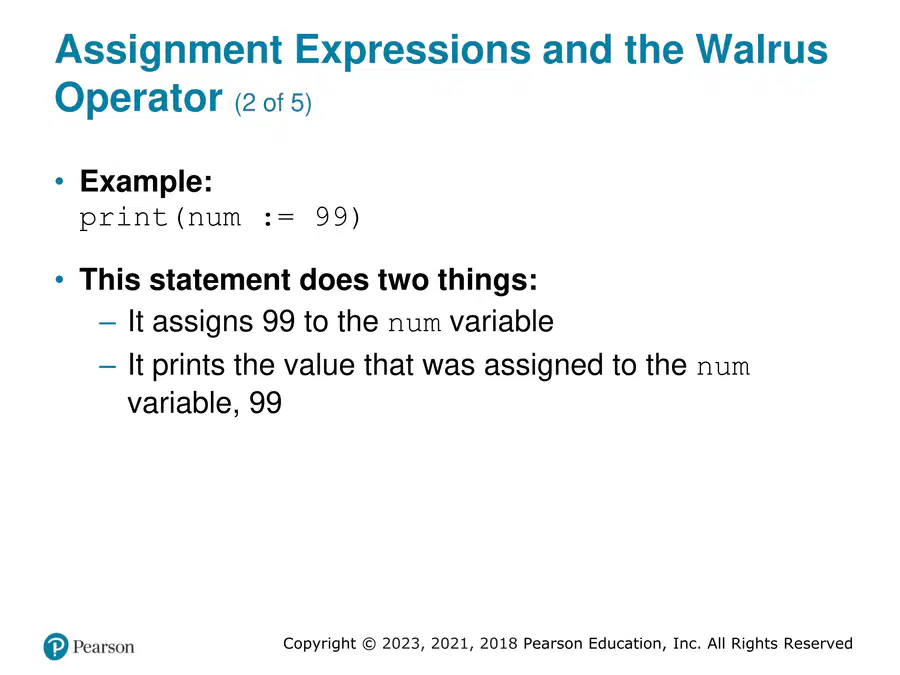
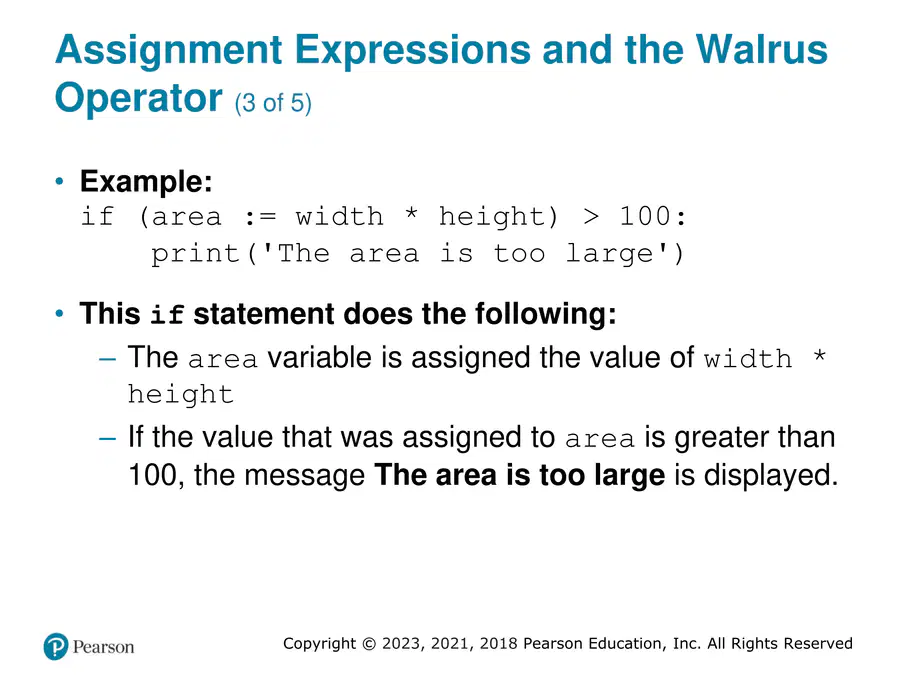
Python Conditionals
Unlocking the Power of Decision-Making: Introduction to Conditionals
53

54
Multiple Choice
What do conditionals allow us to do in our code?
Make decisions based on certain conditions
Execute different blocks of code based on the result
Control the flow of execution
Evaluate conditions
55
56
Conditionals: Decision Makers
Trivia: Conditionals allow us to make decisions based on certain conditions, execute different blocks of code, control the flow of execution, and evaluate conditions. They are essential in programming to create dynamic and interactive applications. With conditionals, we can make our code smart and responsive, enabling it to adapt and react to different scenarios. Conditionals are like the brain of our code, making it intelligent and capable of decision-making.
57
Python Conditionals
58
Logical Operators:
Trivia: Logical operators in Python allow you to combine multiple conditions to make complex decisions. They are essential for controlling the flow of your program and making it more efficient. With logical operators, you can create powerful and flexible code that can handle various scenarios. Remember, accessing external files or performing mathematical operations are not the primary purpose of logical operators in Python.
Show answer
Auto Play
Slide 1 / 58
SLIDE
Similar Resources on Wayground

49 questions
Python - powtórzenie
Presentation
•
9th Grade
55 questions
G-1/25: Dark Ages and Feudalism
Presentation
•
9th Grade
53 questions
IGCSE-Economic Activity 2-Clark Fisher and Location of industry
Presentation
•
9th - 10th Grade
54 questions
The Holocaust Introduction
Presentation
•
8th Grade
49 questions
Biology 8.3
Presentation
•
9th Grade
49 questions
F4 Images (R&S) L56
Presentation
•
9th Grade
58 questions
Sound Representation
Presentation
•
8th Grade
54 questions
8.10 B How Patterns Influence Local Weather
Presentation
•
8th Grade
Popular Resources on Wayground
11 questions
Hallway & Bathroom Expectations

Quiz
•
6th - 8th Grade
10 questions
HCS SCI 03 Summer School Assessment 2
Quiz
•
3rd Grade
11 questions
Home Scope
Quiz
•
7th - 8th Grade
12 questions
2026 TAP Technology in the Classroom
Presentation
•
Professional Development
15 questions
HCS SCI 05 Summer School Assessment 2 Review
Quiz
•
5th Grade
15 questions
HCS SCI 04 Summer School Review 2
Quiz
•
4th Grade
59 questions
Geometry Unit 3 Review
Quiz
•
9th - 12th Grade
14 questions
FAST ELA READING SMAPLE TEST MATERIALS

Passage
•
3rd Grade