Search Header Logo
  1. Resource Library
  2. Science
  3. Physics
  4. Static Electricity
  5. Static Electricity Notes
Static Electricity Notes

Static Electricity Notes

Assessment

Presentation

•

Science

•

8th Grade

•

Medium

•
NGSS
MS-PS2-3, MS-PS2-5, MS-PS1-1

+1

Standards-aligned

Created by

Whitney Price

Used 4+ times

FREE Resource

3 Slides • 22 Questions

1

media

2

media

3

media

4

Multiple Choice

What types of charges attract?
1
Positive and Positive
2
Positive and Neutral
3
Negative and Neutral
4
Positive and Negative

5

Multiple Choice

The buildup of charges on an object is called:
1
positive charge
2
static charge
3
negative charge
4
static discharge

6

Multiple Choice

Electric charges that are alike _______ each other.
1
Attract
2
Repel

7

Multiple Choice

Electric charges that are different _______ each other.
1
Attract
2
Repel

8

Multiple Choice

What charge does a proton have?
1
negative (-)
2
positive (+)
3
neutral or no charge (0)

9

Multiple Choice

What charge does an electron have?
1
negative (-)
2
positive (+)
3
neutral or no charge (0)

10

Multiple Choice

If a substance has a higher number of electrons than protons on its surface, what type of charge does it have?
1
A positive charge.
2
A negative charge.
3
A neutral charge
4
No charge at all

11

Multiple Choice

True or False, Lighting is a form of static electricity.
1
True
2
False

12

Multiple Choice

Question image
If the two charges represented in the figure were brought near each other, they would
1
attract each other.
2
repel each other.
3
cause static discharge.
4
have no affect on each other

13

Multiple Choice

If an object has a higher number of protons than electrons on its surface, what type of charge does it have?
1
A positive charge.
2
A negative charge.
3
A neutral charge
4
No charge at all

14

Multiple Choice

If an object has a higher number of electrons than protons on its surface, what type of charge does it have?
1
A neutral charge.
2
A positive charge.
3
A negative charge
4
No charge at all

15

Multiple Choice

Which type of charge moves from one object to another to cause static electricity?  
1
Atom
2
Proton
3
Electron
4
Neutron

16

Multiple Choice

A buildup of electric charge on an object.
1
Electric field
2
Electric force
3
static electricity
4
static discharge

17

Multiple Choice

The loss of static electricity as electric charges move from one object to another.
1
Electric field
2
Electric force
3
static electricity
4
static discharge

18

Multiple Choice

Question image

A force that pushes objects away from each other

1

electrical charge

2

attraction

3

force

4

repulsion

19

Multiple Choice

Question image

What type of charge does this balloon have?

1

Positive

2

Negative

3

Neutral

20

Multiple Choice

Question image
What will you likely see during an electrical discharge?
1
A rainbow
2
A spark
3
Red
4
Moisture

21

Multiple Choice

Question image
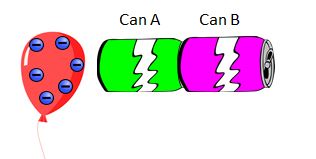
The negatively charged balloon is brought near the two cans. What happens?
1
The negative charges in Can B move towards the balloon
2
The negative charges in Can A move away from the balloon
3
The positive charges in Can B move towards the balloon
4
The positive charges in Can A move away from the balloon

22

Multiple Choice

Question image

Will the balloons ATTRACT or REPEL each other?

1
2

23

Multiple Choice

Question image

Will the balloons ATTRACT or REPEL each other?

1
2

24

Multiple Choice

What happens when you touch a metal doorknob after rubbing your shoes on the carpet?
1
The doorknob sends a burst of electric current into your body
2
Millions of electrons go from your finger into the doorknob
3
The doorknob sends millions of electrons into your finger
4
our finger becomes negatively charged

25

Multiple Select

What would cause two balloons to repel?

1

one is positive and one is negative

2

both balloons are positive

3

both balloons are negative

4

one balloon is positive and one is neutral

pattern-tertiary
media

Show answer

Auto Play

Slide 1 / 25

SLIDE