

Earth's Spheres

Presentation
•
Science
•
6th - 8th Grade
•
Hard

Joseph Anderson
FREE Resource
4 Slides • 11 Questions
1
Quarter 2 Mini-Lesson: Earth's Spheres
SC.6.E.7.4 Differentiate and show interactions among the geosphere, hydrosphere, cryosphere, atmosphere, and biosphere. (DoK 3)

2
3
Earth's Sphere Key Concepts
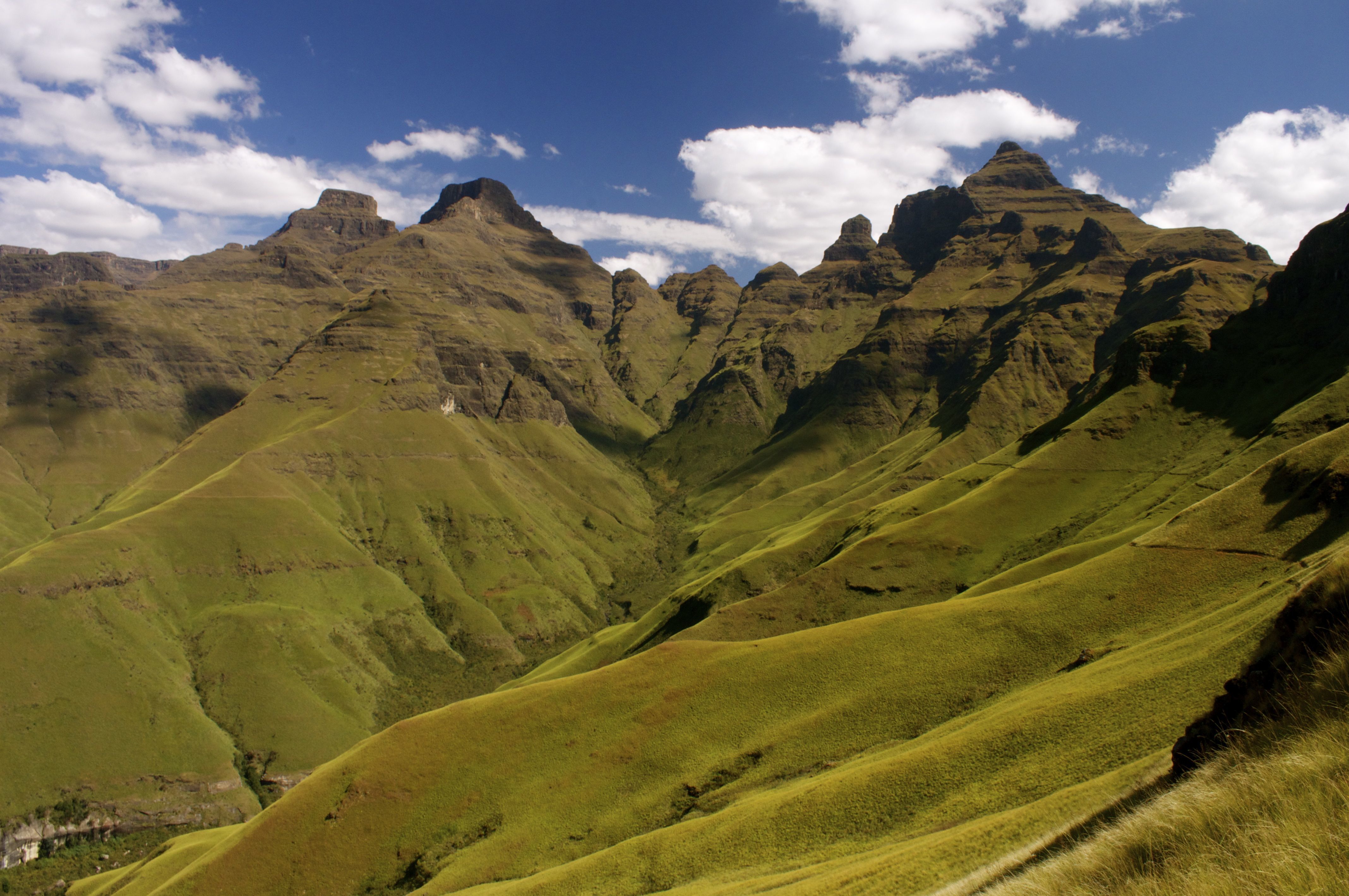
When studying the Earth, scientists consider it a system of parts all interacting and working together. They divide this system into four (or five) spheres: atmosphere, biosphere, geosphere, and hydrosphere (and sometimes cryosphere).
The root of the words describe what is included in each category:
atmos = air = all of the gases surrounding the Earth
bio = life = all living (or once living) things
geo = land and rock = Earth's crust and landforms
hydro = water = all of Earth's oceans, lakes, rivers, etc.
cryo = ice = all of the frozen water
4

The atmosphere is the envelope of gases surrounding Earth that extends up to approximately 10,000 km above Earth's surface (the extreme edges of the atmosphere lie about 35,000 km above the surface). Atmospheric density decreases going further away from Earth's surface. Because of this, most (99%) of the atmosphere's mass lies within 30 km of Earth's surface.
The biosphere includes both oceanic and terrestrial (land) domains. On land, there are a number of different, easily recognizable communities called biomes. Biomes essentially result from the interaction of regional climate, biota (life), and substrates (soils or underlying surfaces) and are usually defined by their vegetation.
Derived from the Greek word "kryo", meaning cold, the cryosphere encompasses those parts of the Earth system that are subject to temperatures below 0 degrees Celsius for at least part of the year. Its largest components by far are the ice sheets in Greenland and Antarctica, but the cryosphere also includes: ice caps and glaciers, sea ice, ice shelves, snow, river and lake ice, and frozen ground.
The geosphere is the outer rigid shell of the solid Earth. It is composed of the entire crust (oceanic and continental) and the top rigid portion of the mantle lying above the partially melted, less rigid athenosphere. Broken into major tectonic plates moving relative to one another over the asthenosphere, the geosphere consists of rocks, sediment, and soil.
The hydrosphere consists of all of the Earth's water, whether it be gas, liquid, or solid. Most water (97%) resides in the oceans. The remainder is found in the ice sheets of Greenland and Antarctica (2%), and in freshwater lakes, rivers, groundwater below the surface, and water vapor in the atmosphere (1%).
5
Multiple Choice
6
Multiple Choice

7
Multiple Choice

8
Multiple Choice
9
Multiple Choice

10
Multiple Choice
11
Multiple Choice
12
Multiple Choice
13
Multiple Choice
14
Multiple Choice
15
Multiple Choice
Quarter 2 Mini-Lesson: Earth's Spheres
SC.6.E.7.4 Differentiate and show interactions among the geosphere, hydrosphere, cryosphere, atmosphere, and biosphere. (DoK 3)
Show answer
Auto Play
Slide 1 / 15
SLIDE
Similar Resources on Wayground

11 questions
Force & Motion
Presentation
•
6th - 8th Grade
11 questions
Earth's Tides
Presentation
•
6th - 8th Grade
11 questions
Excretory system
Presentation
•
6th - 8th Grade
13 questions
Prokaryotes vs Eukaryotes
Presentation
•
6th - 8th Grade
13 questions
Distances in Space
Presentation
•
6th - 8th Grade
13 questions
Electromagnetism
Presentation
•
6th - 8th Grade
10 questions
Temperature and Heat
Presentation
•
6th - 8th Grade
10 questions
Mechanical and chemical digestion
Presentation
•
6th - 8th Grade
Popular Resources on Wayground
10 questions
Impact of 9/11 and the War on Terror

Interactive video
•
10th - 12th Grade
21 questions
Continents and Oceans

Quiz
•
6th Grade
5 questions
9/11
Interactive video
•
9th Grade
20 questions
Parts of Speech
Quiz
•
5th Grade
16 questions
Subject & Predicate
Quiz
•
5th Grade
10 questions
Riddles Riddles fun Riddles
Quiz
•
6th - 12th Grade
21 questions
Lab Safety
Quiz
•
10th Grade
6 questions
PRIDE in the Hallways and Bathrooms
Presentation
•
12th Grade
Discover more resources for Science
20 questions
Lab Safety
Quiz
•
5th - 8th Grade
17 questions
7.6D Aqueous Solutions
Quiz
•
7th Grade
20 questions
Scientific Method and Variables
Quiz
•
8th Grade
20 questions
Scientific method and variables
Quiz
•
8th Grade
27 questions
Counting Atoms - Subscripts
Quiz
•
8th Grade
10 questions
6.6D - Relative Density Review
Quiz
•
6th Grade
14 questions
Science Variables
Quiz
•
7th Grade
20 questions
Elements, compounds, and mixtures
Quiz
•
6th Grade