
Big Bang Theory

Presentation
•
Science
•
6th Grade
•
Hard

Joseph Anderson
FREE Resource
26 Slides • 9 Questions
1
The Formation of the UNIVERSE!!!
2
THE BIG BANG THEORY
• The idea that the universe is expanding
and was once compressed in one small point
• Our best guess (so far) at how our universe began
• George Lemaitre proposed this idea in 1927.
• This idea was NOT accepted at first
3
EVIDENCE FOR THE BIG BANG THEORY
• Scientists found cosmic background radiation –
this tells us that some large “explosion” must have
happened to leave all that radiation behind
• Edwin Hubble observed that other galaxies
were moving away from each other
4
HOW IT ALL HAPPENED:
• It didn’t all happen at once – but it happened FAST!
• The next slides contain steps describing how the
universe evolved to be the way we observe it today
5

STEP 1:
• Time and space begin.
• Everything quickly expands everywhere
from one tiny, microscopic point
Time:
10-43 seconds
6


STEP 1:

7

STEP 2:
• The universe is “quark soup”.
• It is very hot, and only quarks –
and some electrons – exist now.
• Visible light does not exist.
Time:
10-32 seconds
8
STEP 2:

9

STEP 3:
• Things have begun to cool down,
slow down and stick together
• Quarks collide & stick together
to form protons & neutrons
Time:
1 second
10

STEP 3:

11

ONLY ONE SECOND
HAS PASSED SINCE THE BEGINNING OF EVERYTHING
12

STEP 4:
• Gravity causes electrons to collide with
protons and neutrons to form the first atoms -
Hydrogen & Helium
• The fusion of these particles creates light.
(this is also what makes stars shine)
Time:
3 minutes


13

STEP 4:

14

STEP 5:
• Gravity causes Hydrogen and Helium molecules
to condense into clouds
• Under great pressure from gravity, stars form in
dense areas of these gas clouds
• This process created galaxies made up of billions
and trillions of stars
Time:
300,000 years
15

STEP 5:

16

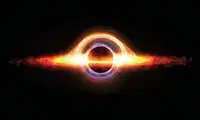
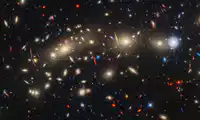
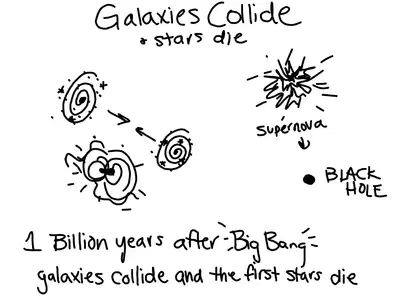
STEP 6:
• Gravity causes galaxies to collide and cluster together
• Old stars die, spewing gas and dust back
into space to form new stars –
some denser stars form black holes.
Time:
1 billion years
17

STEP 6:
18

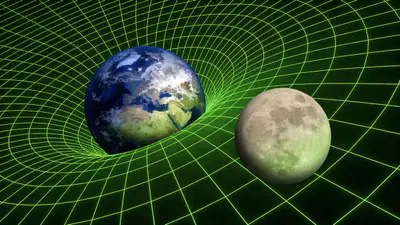
WHAT IS GRAVITY??
A force which attracts the center of
mass of an object to other objects
(it doesn’t just pull things down)
19

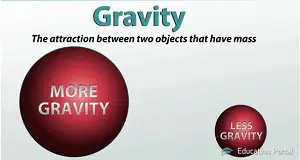
Gravity
©
KeslerScience.com
(more mass = more gravity)
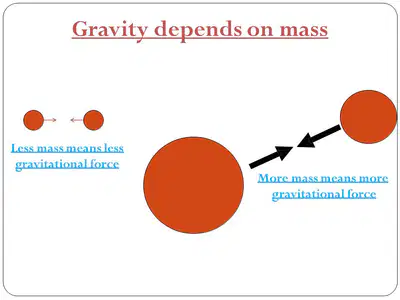
Everything has gravity, HOW MUCH it has
depends on its MASS!
20
20
Gravity
Did you know?
Gravity is the force that keeps us grounded on Earth. It is what makes objects fall towards the ground and keeps the planets in orbit around the sun. Without gravity, everything would float away!
Gravity was first described by Sir Isaac Newton in his famous law of universal gravitation!
21
Gravity
©
KeslerScience.com
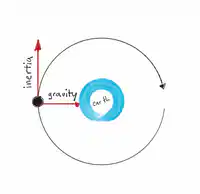
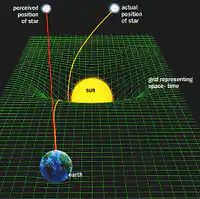
The Sun’s gravity is part of what keeps the planets in orbit around the sun!
21
22

The Law of INERTIA
" An object in motion will remain in motion, and an object at rest will remain at rest - unless acted on by an outside force"
24
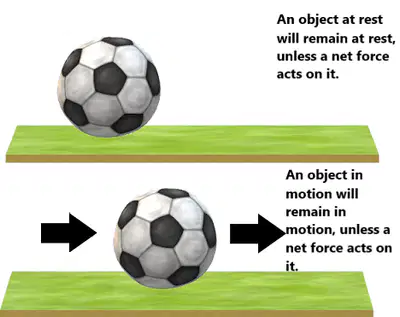
The soccer ball will not move unless something moves it, and will keep rolling until something stops it.
23

Inertia
©
KeslerScience.com
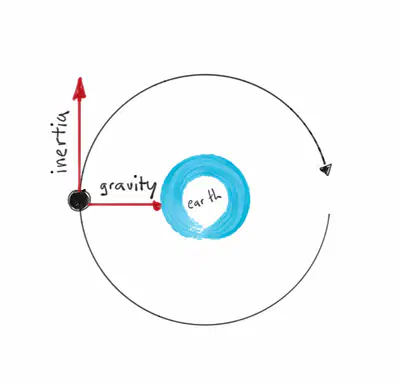
Inertia helps the planets stay in orbit around the sun
*without inertia, gravity would just pull the planets into the sun, and the moon would crash into Earth!
21
24
Multiple Choice
True or False: Gravity is what makes the planets orbit the Sun.
True
False
25
Multiple Choice
True or False: Gravity is the only force that makes the planets stay in orbit the Sun.
True
False
26

GRAVITY
caused gas and dust to clump together more and more until it pressed so hard that it BURNED and made a STAR!!!!
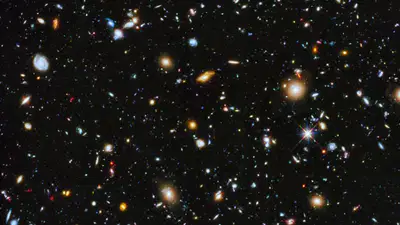
This Hubble Deep Field image shows over 10,000 stars!
27
Multiple Choice
Which scientist proposed the idea of the Big Bang Theory?
Georges Lemaître
Edwin Hubble
Albert Einstein
Isaac Newton
28
The Birth of the Universe
STEP 1: Time and space begin. Everything quickly expands everywhere from one tiny, microscopic point. Time: 10-43 seconds
STEP 2: The universe is 'quark soup'. It is very hot, and only quarks – and some electrons – exist now. Visible light does not exist – no stars yet. Time: 10-32 seconds
STEP 3: Things begin to cool off, slow down, and stick together. Quarks collide & stick together to form protons and neutrons. Time: 1 second
29
Multiple Choice
What is happening during Step 3 of the birth of the universe?
The universe is expanding rapidly
Visible light starts to exist
Quarks collide and stick together to form protons and neutrons
Time and space begin
30
The Birth of the Universe
STEP 3: Only One second has passed since the big bang began
STEP 4: Electrons collide with protons and neutrons to form the first atoms - Hydrogen & Helium, creating light
STEP 5: Gravity causes gas clouds to condense, forming stars and galaxies
STEP 6: Galaxies collide, stars die, and new stars form, including black holes
Gravity: A force that attracts objects towards each other
31
Multiple Choice
What formed approximately 1 second after the Big Bang?
Quarks
Protons & Neutrons
Atoms
Stars
32
Multiple Choice
How long did it take for the first atoms to form?
3 seconds
3 minutes
1 million years
14 billion years
33
Multiple Choice
What is the force that attracts objects towards each other?
Gravity
Inertia
Strong Force
Weak force
34
Multiple Choice
What force keeps planets in orbit around the sun (rather than just crashing into it)
Gravity
Inertia
Strong force
Weak force
35
Multiple Choice
Which scientist proposed the Big Bang Theory?
Albert Einstein
Edwin Hubble
Sir Isaac Newton
Georges Lemaitre
The Formation of the UNIVERSE!!!
Show answer
Auto Play
Slide 1 / 35
SLIDE
Similar Resources on Wayground

28 questions
Engineering Types: Day 1
Presentation
•
6th Grade
32 questions
Electricity and Magnetism Study Guide
Presentation
•
5th Grade
25 questions
Air masses and fronts
Presentation
•
6th Grade
27 questions
Microorganisms On and In the Human Body
Presentation
•
6th Grade
27 questions
Ocean Tides and Eclipses
Presentation
•
6th Grade
27 questions
Abiotic vs Biotic Factors
Presentation
•
6th Grade
31 questions
Living Things
Presentation
•
6th Grade
26 questions
Human Impact on Biodiversity
Presentation
•
6th Grade
Popular Resources on Wayground
10 questions
HCS SCI 03 Summer School Review 4

Quiz
•
3rd Grade
11 questions
HSMS - Standard Response Protocol
Quiz
•
6th - 8th Grade
16 questions
1.1-1.2 Quiz Review
Quiz
•
9th - 12th Grade
12 questions
Exponent Expressions
Quiz
•
6th Grade
20 questions
Adding and Subtracting Integers
Quiz
•
6th - 7th Grade
11 questions
Northeast States
Quiz
•
3rd - 4th Grade
10 questions
Characterization
Quiz
•
3rd - 7th Grade
10 questions
Common Denominators
Quiz
•
5th Grade