Search Header Logo
Chemistry Review

Chemistry Review

Assessment

Presentation

•

Science

•

8th Grade

•

Hard

Created by

Joseph Anderson

FREE Resource

5 Slides • 58 Questions

1

​Chemistry Unit Review
media

Atoms, Periodic Table, Formulas, and Changes

2

media
​Parts Of The Atom

3

Multiple Choice

The small area in the center of an atom where most of the atom's mass is concentrated.
1
neutron
2
proton
3
electron
4
nucleus

4

Multiple Choice

A subatomic atomic particle that has a positive charge.
1
neutron
2
proton
3
electron
4
nucleus

5

Multiple Choice

A subatomic atomic particle that has a negative charge.
1
neutron
2
proton
3
electron
4
nucleus

6

Multiple Choice

A neutral atomic particle that is located in the atom's nucleus.
1
neutron
2
proton
3
electron
4
nucleus

7

Multiple Choice

The number of protons in an atom of an element.
1
atomic number
2
atomic mass
3
electron shells
4
valence number

8

Multiple Choice

Protons and neutrons are located in an atoms __________________.
1
nucleus
2
electron shell
3
cell
4
house

9

Multiple Choice

Electrons are located in _____________
1
a neutron
2
a proton
3
the nucleus of an atom
4
 a cloud orbiting the nucleus of an atom

10

Multiple Choice

An element's atomic mass is made up of ____________.
1
the total number of protons, neutrons and electrons in an atom
2
the total number of protons and neutrons in an atomic nucleus 
3
the total number of electrons in the electron shell of an atom
4
the total number of protons in an atom

11

Multiple Choice

Question image
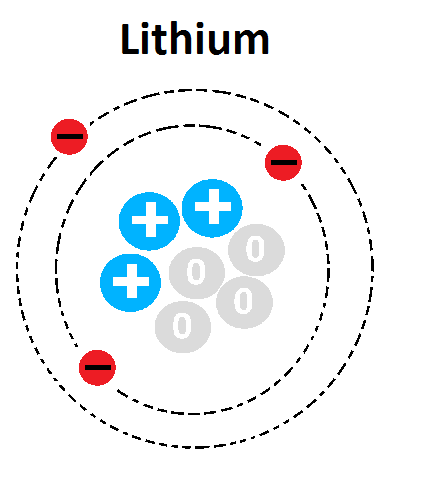
What number indicates an electron?
1
1
2
2
3
3
4
4

12

Multiple Choice

Question image
Oxygen’s atomic number is 8. This means that an oxygen atom must have
1
8 electrons
2
8 protons
3
8 neutrons
4
a mass number of 8

13

Multiple Choice

Question image
 What is the mass number of this element?
1
5
2
27
3
32
4
59

14

Multiple Choice

Question image
What is the number of protons that the element in this image contain?
1
14
2
7
3
15
4
18

15

Multiple Choice

Question image
What is the atomic mass of "F"
1
9
2
18
3
17
4
19

16

Multiple Choice

Question image

What is the mass number of this atom?

1

1

2

3

3

4

4

7

17

Multiple Choice

Question image

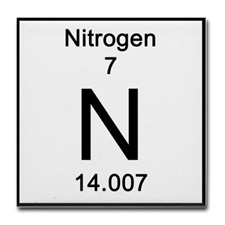
Name the element

1

Boron

2

Carbon

3

Nitrogen

4

Oxygen

18

Multiple Choice

Question image
Electrons in the outermost orbital.
1
Protons
2
Neutrons
3
Valence Electrons
4
Isotopes

19

media
​The Periodic Table

20

media

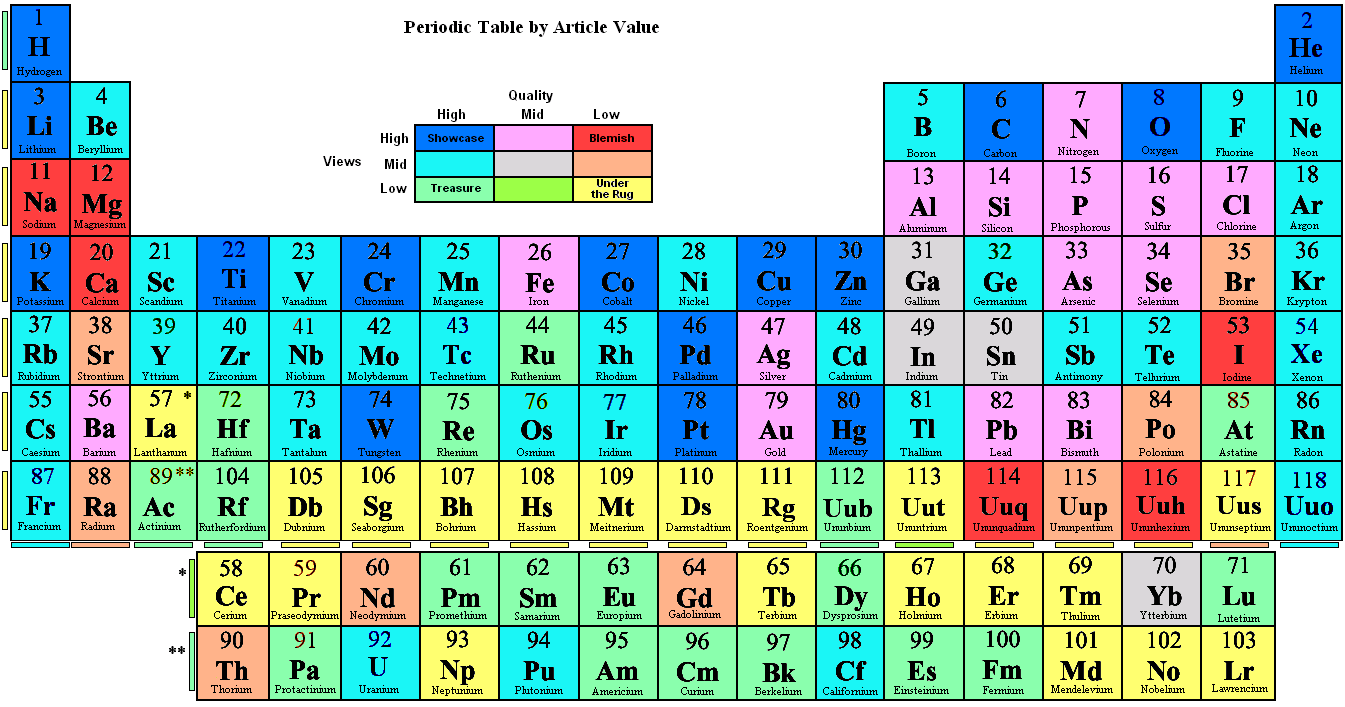
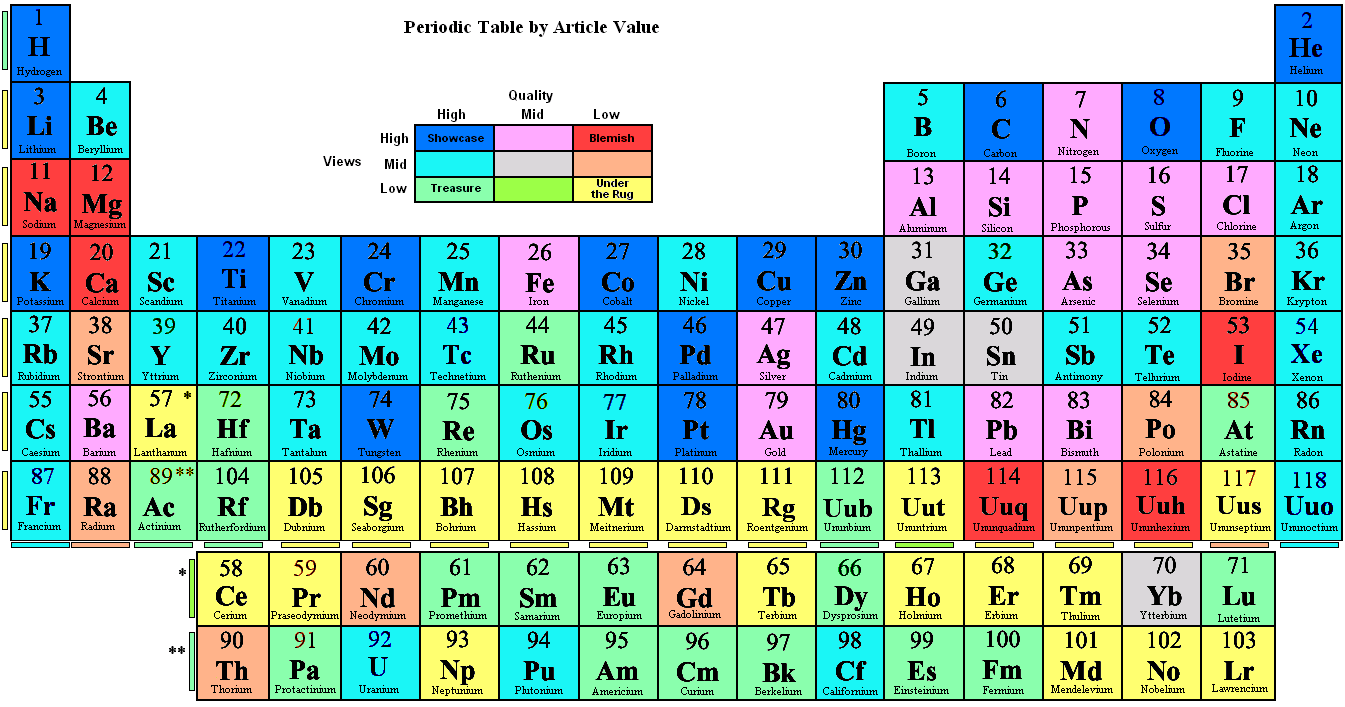
​The GROUP an atom is in tells you the number of VALENCE ELECTRONS and how it will REACT

​

The PERIOD an atom is in tells you how many ENERGY LEVELS an atom has.​

21

Multiple Choice

Each column in the periodic table is called a 
1
period
2
group
3
cluster
4
unit

22

Multiple Choice

Question image
The yellow atoms are called 
1
metals
2
nonmetals
3
metalloids
4
noble gases

23

Multiple Choice

How many Valance electrons does Iodine Have?
1
6
2
16
3
7
4
17

24

Multiple Choice

Question image
The period for Bromine is ___________.
1
3
2
2
3
4

25

Multiple Choice

Question image
Beryllium is in group number______.
1
Group 2
2
Group 3
3
Group 4
4
Group 7

26

Multiple Choice

Group 18 elements are known as the _____ _____ and have full valence shells.
1
royal gases.
2
supreme solids.
3
noble gases.
4
legit liquids.

27

Multiple Choice

Elements in the same ________ are more chemically similar.
1
group
2
period
3
club
4
table

28

Multiple Choice

The majority of elements on the periodic table are
1
man made.
2
nonmetals.
3
metals.
4
gases.

29

Multiple Choice

Which elements have the most similar chemical properties?
1
K and Na
2
K and Ca
3
K and Cl
4
K and S

30

Multiple Choice

What period and group is Silver (Ag)? 
1
Period 2, Group 1
2
Period 3, Group 16
3
Period 5, Group 11
4
Period 2, 14

31

Multiple Choice

The elements in this group have 5 valence electrons and include elements N, P, and As.
1
Group 5
2
Group 1
3
Group 18
4
Group 15

32

Multiple Choice

Which of the following is not a property of metals?
1
brittle
2
malleable
3
lustrous
4
conductive

33

Multiple Choice

Rows on the period table are called _____ while columns are called _____.
1
groups, families
2
groups, periods
3
periods, groups
4
families, groups

34

Multiple Choice

How many electrons do atoms need to be stable?
1
1
2
2
3
6
4
8

35

Multiple Choice

An outermost electron of an atom that participates in chemical bonding is called a(n)____________. They have the most energy of all electrons in an atom.  
1
valence electron
2
head electron
3
available electron
4
master electron

36

Multiple Choice

Question image
What color are the metals on this periodic table?
1
green
2
yellow
3
blue

37

Multiple Choice

Question image
What color are the metalloids on this periodic table?
1
blue
2
yellow
3
green

38

Multiple Choice

Question image
What color are the nonmetals on this periodic table?
1
blue
2
yellow
3
green

39

Multiple Choice

Question image
Which Period would this element be found on just by looking at the shells/levels?
1
1
2
2
3
3
4
4

40

Multiple Choice

Which of the following determines the identity of an element..."what it is"?
1
valence electrons
2
neutrons
3
protons
4
energy levels

41

Multiple Choice

Which of the following determines the reactivity of an element..."what it does"?
1
valence electrons
2
neutrons
3
protons
4
energy levels

42

media
​Chemical Formulas And Reactions

43

Multiple Choice

Question image
In a chemical formula, this is used to represent the number of each atom being represented. 
1
An Exponent
2
The Coefficient
3
A Molecule
4
The Subscript

44

Multiple Choice

Two or more atoms bonded together. 
1
A Molecule
2
The Coefficient
3
The Subscript
4
An Atom Party

45

Multiple Choice

Question image
This appears before a chemical formula; it represents how many molecules there are. 
1
An Atom
2
The Subscript
3
A Molecule
4
The Coefficient

46

Multiple Choice

Question image
How many hydrogen atoms are in this chemical formula: 
1
4 hydrogen atoms
2
1 hydrogen atom
3
2 hydrogen atoms
4
3 hydrogen atoms

47

Multiple Choice

Question image
How many molecules are in this chemical formula?
1
4 Molecules
2
6 Molecules
3
2 Molecules
4
5 Molecules

48

Multiple Choice

Question image
How many Iron (Fe) atoms are in this chemical formula?
1
2 iron atoms
2
6 iron atoms
3
5 iron atoms
4
4 iron atoms

49

Multiple Choice

Question image
How many molecules are in this chemical formula?
1
5 molecules
2
4 molecules
3
2 molecules
4
10 molecules

50

Multiple Choice

Question image
In this image, the information in red is called the_______.
1
Product
2
Reactant
3
Chemical Subscript
4
Yield

51

Multiple Choice

Question image
In this image, the information to the right of the arrow (in black) is called the_______.
1
Product
2
Reactant
3
Chemical Subscript
4
Equation

52

Multiple Choice

The law of conservation of mass states that....
1
Matter can be created
2
Matter can be destroyed
3
Matter can neither be created or destroyed
4
E=mc2

53

Multiple Choice

Is this balanced?...
Al + O2 --> 2Al2O3
1
Yes!
2
No!

54

Multiple Choice

How many atoms of aluminum are on each side of the following equation: 4Al + 3O2 --> 2Al2 O3
1
2
2
6
3
1
4
4

55

Multiple Choice

If 5 grams of hydrogen gas reacts with 20 grams of oxygen gas, how much water will be produced?
2H2 + O2 --> 2H20
5g         20g            ?
1
5 grams 
2
20 grams
3
25 grams
4
15 grams

56

Multiple Choice

Why is the following chemical equation not balanced?
H2 + O2 → H2O
1
each side of the equation has a different number of oxygen atoms
2
each side of the equation has a different number of hydrogen atoms
3
each side has the same mass

57

Multiple Choice

What is the total number of atoms present in 5Na3PO4
1
5
2
40
3
55
4
60

58

Multiple Choice

You know you a chemical reaction has occurred if 
1
there is a precipitate.
2
there is a color change.
3
there is a temperature change.
4
All of these answers are evidence.

59

Multiple Choice

Which is an example of a chemical reaction?
1
paper cut into small pieces
2
chocolate melting in a pan
3
flour and sugar mixed in a bowl
4
cookies baking in an oven

60

Multiple Choice

In the following equation, what are the reactants?
CaO + 3 C → CaC2 + CO
1
CaO + 3 C
2
CaC2 + CO
3
3 C → CaC2
4
the stuff on the outside

61

Multiple Choice

In the following equation, what are the products?
HCl + Zn → H2 + ZnCl2
1
HCl + Zn
2
H2 + ZnCl2
3
Zn → H2
4
the stuff on the outside

62

Multiple Choice

30 g of NaCl was broken into 20 g of Na and some Cl2. How much Cl2 was produced?
1
10 g
2
20 g
3
30 g
4
2 g

63

Multiple Choice

45 g of H2O2 was broken into 30 g of H2O and O2 gas. How much O2 gas was made?
1
15 g
2
75 g
3
3 g
4
30 g
pattern-tertiary
​Chemistry Unit Review
media

Atoms, Periodic Table, Formulas, and Changes

Show answer

Auto Play

Slide 1 / 63

SLIDE