
Ancient Rome Social Classes

Presentation
•
Social Studies
•
7th Grade
•
Hard

Joseph Anderson
FREE Resource
13 Slides • 10 Questions
1

Social Classes and Citizenship
2
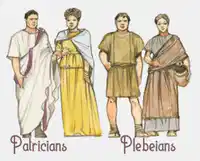
Patricians and Plebeians
Explore the social hierarchy of Ancient Rome, including the privileges and challenges faced by the Patricians and Plebeians.
3
Patricians: Privileges
Political Power: Patricians were the aristocratic class and held significant political power. They dominated the Roman Senate and other key governmental positions.
Land Ownership: Patricians owned large estates, providing them with considerable wealth and influence.
Legal Privileges: They enjoyed certain legal advantages, including the ability to hold and inherit property.
4
Patricians: Challenges
Responsibilities: Patricians were expected to take on various civic responsibilities, including military service and participation in government affairs.
Internal Strife: Despite their unity against the plebeians, patricians often faced internal conflicts over political power and influence.
5
Plebeians: Privileges
Economic Contribution: Plebeians constituted the majority of the population and were primarily involved in agricultural and trade activities, contributing significantly to the Roman economy.
Tribunes: Over time, the plebeians gained political representation through the creation of the office of tribunes, who had the power to protect plebeian interests and veto certain decisions.
6
Plebeians: Challenges
Limited Political Power: Initially, plebeians had limited political rights and were excluded from high offices. They had to struggle for equal political representation.
Debt and Poverty: Many plebeians faced economic challenges, including debt and poverty, which led to social unrest.
7
Struggles and Reforms:
The conflict between patricians and plebeians, known as the "Conflict of the Orders," persisted for centuries.
The plebeians achieved important reforms, such as the establishment of the Twelve Tables (laws inscribed on tablets) and the right to hold the office of consul.
8
Social Mobility:
Over time, social mobility increased, and some plebeians were able to climb the social ladder through achievements in the military or business.
9
Summary
The social hierarchy of Ancient Rome was dynamic and underwent changes through various reforms and struggles. The tension between patricians and plebeians played a crucial role in shaping the political and social landscape of the Roman Republic.
10
Multiple Choice
What were the two primary classes in social hierarchy of Ancient Rome, and what distinguished them from each other?
Senators and Soldiers
Plebeians and Tribunes
Patricians and Plebeians
Emperors and Citizens
11
Multiple Choice
Which class in Ancient Rome held significant political power, dominated the Roman Senate, and had legal privileges such as property ownership?
Plebeians
Tribunes
Patricians
Senators
12
Multiple Choice
What was the economic contribution of the plebeians to Ancient Rome, and what role did they play in the society?
They were primarily soldiers.
They owned large estates.
They were involved in agriculture and trade.
They were artisans and craftsmen.
13
Multiple Choice
What office was created to represent and protect the interests of the plebeians in the Roman government?
Senators
Consuls
Patricians
Tribunes
14
Multiple Choice
What were some of the challenges faced by plebeians in Ancient Rome, and how did they address these challenges over time?
They faced limited political rights and economic challenges; reforms such as the Twelve Tables and the right to hold the office of consul helped address these issues.
They had unlimited political rights but faced military challenges; reforms included the creation of the Roman Senate.
They enjoyed economic privileges but struggled with legal issues; reforms included the establishment of the Roman Forum.
They faced no significant challenges, and the social hierarchy remained unchanged.
15
Citizenship Rights and Responsibilities
Discuss the rights and responsibilities of Roman citizens and how citizenship was acquired.
16
Rights of Roman Citizens
Voting Rights: Roman citizens had the right to participate in the political process by voting in various assemblies. The ability to vote was a crucial aspect of Roman citizenship.
Legal Protections: Citizens enjoyed legal protections and had the right to a fair trial. They could not be subjected to certain harsh punishments reserved for non-citizens.
Property Rights: Roman citizens had the right to own and inherit property. They could engage in legal transactions and contracts, protecting their economic interests.
Military Service: Citizenship came with the responsibility of military service. Citizens were expected to serve in the Roman army when called upon, contributing to the defense and expansion of the Roman Republic.
Access to Public Office: Roman citizens had the opportunity to hold public office. This allowed them to participate in the governance of the Republic, with positions ranging from local magistrates to higher offices like consul.
17
Responsibilities of Roman Citizens
Payment of Taxes: Citizens were required to pay taxes to support the functioning of the Roman state. These taxes were crucial for funding public infrastructure, the military, and other state affairs.
Military Service: While military service was a right, it was also a responsibility. Citizens were obligated to serve in the Roman army when called upon, contributing to the defense and expansion of the Republic.
Participation in Civic Life: Citizens were expected to actively participate in civic life. This included attending assemblies, voting, and engaging in discussions on matters of public interest.
Adherence to Roman Laws: Citizens were required to abide by Roman laws and regulations. Failure to do so could result in legal consequences, reflecting the importance of maintaining order in Roman society.
18
Acquisition of Roman Citizenship
Birth: The most straightforward way to acquire Roman citizenship was through birth. If both parents were Roman citizens, their children were automatically granted citizenship.
Manumission: Freed slaves could become Roman citizens through a process called manumission. Once freed, a former slave could gain citizenship by meeting certain criteria.
Military Service: Non-citizens who served in the Roman army could be rewarded with citizenship as a form of recognition for their service.
Grant by the State: In some cases, individuals or communities could be granted Roman citizenship as a reward for loyalty or exceptional service to the state.
19
Multiple Choice
What were the rights associated with Roman citizenship?
Right to own unlimited property
Right to engage in private wars
Right to fair trial and voting
Right to exemption from taxes
20
Multiple Choice
What responsibility did Roman citizens have in terms of military service?
It was optional, depending on personal choice.
It was not a responsibility for citizens.
Only patricians were required to serve in the military.
Citizens were obligated to serve in the Roman army when called upon.
21
Multiple Choice
How could an individual acquire Roman citizenship through the process of manumission?
By purchasing citizenship
Through birth to Roman citizens
By serving in the Roman army
As a reward for exceptional service to the state
22
Multiple Choice
What was one of the responsibilities of Roman citizens related to civic life?
Active participation in civic life, including attending assemblies and voting
Owning large estates
Engaging in private trade
Avoiding any involvement in public affairs
23
Multiple Choice
In addition to voting rights, what other privilege did Roman citizens have in the political sphere?
The right to declare war
The right to unlimited property ownership
The right to exemption from military service
The right to hold public office
Social Classes and Citizenship
Show answer
Auto Play
Slide 1 / 23
SLIDE
Similar Resources on Wayground

18 questions
Early Republic and Jackson Review
Presentation
•
8th Grade
19 questions
Unit 3 Influential People/Documents
Presentation
•
7th Grade
17 questions
American Indians of Texas
Presentation
•
7th Grade
21 questions
God, Gold, and Glory
Presentation
•
7th Grade
17 questions
Day 1 Road to Revolution
Presentation
•
7th Grade
16 questions
The Lamar and Houston Administration
Presentation
•
7th Grade
18 questions
New South - Tom Watson and Populist Party
Presentation
•
8th Grade
Popular Resources on Wayground
20 questions
Math Review

Quiz
•
3rd Grade
15 questions
Fast food
Quiz
•
7th Grade
20 questions
Context Clues
Quiz
•
6th Grade
20 questions
Inferences
Quiz
•
4th Grade
19 questions
Classifying Quadrilaterals
Quiz
•
3rd Grade
20 questions
Figurative Language Review
Quiz
•
6th Grade
20 questions
Equivalent Fractions
Quiz
•
3rd Grade
10 questions
Identify Fractions, Mixed Numbers & Improper Fractions
Quiz
•
3rd - 4th Grade
Discover more resources for Social Studies
56 questions
Civics & Econ Practice SOL #1
Quiz
•
6th - 8th Grade
35 questions
7th ELA 4th 9wks Final
Quiz
•
7th Grade
35 questions
Civics EOC Review: Category 1
Quiz
•
7th Grade
50 questions
TCI 7 Semester 2 Exam Quiz
Quiz
•
7th Grade
56 questions
Civics & Econ Practice SOL #1
Quiz
•
6th - 8th Grade
29 questions
7th Grade: Spring Semester Final Exam Review
Quiz
•
7th Grade
20 questions
The United States 1800s-1900s
Quiz
•
6th - 8th Grade
6 questions
Texas History Timeline Questions

Interactive video
•
7th Grade