Search Header Logo
Animal Phylums

Animal Phylums

Assessment

Presentation

Science

6th - 7th Grade

Hard

Created by

Joseph Anderson

FREE Resource

12 Slides • 25 Questions

1

Animalia Phyla

Oh the Diversity we shall see!

Slide image

2

Multiple Choice

The name "Felis catus" includes which of the following ranks?

1

Genus and species

2

Kingdom and phylum

3

Class and order

4

Species and subspecies

3

Multiple Choice

Which rank contains the largest amount of organisms?

1

Genus

2

Species

3

Class

4

Order

4

Multiple Select

Question image

Select all of the following characteristics that apply to mammals: (select 3 choices)

1

Give live birth

2

Produce milk for young

3

Skin is covered in hair or fur

4

Have feathers

5

Kingdom Animalia

This kingdom has many different phyla but we are going to go indepth with Cnidaria, Arthorpod, Annelida,Mollusca, Echinderm, and Chordata.

Slide image

6

Let's get onething straight. Ha Ha get it?

You need to know the difference between invertbrate animals and vertbrate animals. Be ready to explain what you see here!

Slide image

7

Open Ended

On the previous slide there was a worm and star fish grouped as an invertebrate and a fish and a snake grouped under verbrate. Please explain what makes an organism fit into the invertbrate group and what makes an organism fit into the vertbrate group.

8

Vertebrates

  • Less than 5% of all described animals

  • An animal of a large group distinguished by the possession of a backbone or spinal column, including mammals, birds, reptiles, amphibians, and fishes

Slide image

9

Chroadata

  • Noral or spinal chord

  • Segmented body, including segmented muscles

  • Bilateral symmetry

  • Bony or cartilaginous endoskeleton usually present

Slide image

10

Multiple Choice

What is a vertebrate?

1

an animal without a backbone

2

an animal with a backbone

11

Invertebrate

  • More than 90 percent of all living animal species are invertebrates

  •  Any animal that lacks a vertebral column, or backbone

Slide image

12

Multiple Choice

What is a invertebrate?

1

an animal without a backbone

2

an animal with a backbone

13

Cnidaria Phyla

  • Fun Fact: Over 11,000 species found only in aquatic and mostly marine environments.

  • Radial symmetrical

  • Tentacles, stingy things

  • The name Cnidaria comes from the Greek word "cnidos," which means stinging nettle.

Slide image

14

Multiple Choice

Question image
What type of symmetry is displayed in the picture?
1
asymmetry
2
bilateral symmetry
3
radial symmetry
4
photosynthesis

15

Multiple Choice

Jelly Fish 
1
Echinoderm
2
Cnidarian 
3
Arthropod
4
Chordate 

16

Multiple Choice

Question image
What phylum of invertebrates does the following picture belong?
1
Cnidaria
2
Porifera
3
Platyhelminthes
4
Animalia

17

Multiple Choice

Question image
What kind of symmetry does a Cnidarian have?  
1
No Symmetry 
2
Bilateral Symmetry 
3
Radial Symmetry 
4
Square

18

Arthropoda

  • Has an exoskeleton

  • Has a segmented body

  • Has paired jointed appendages

  • Bilateral symmetry

  • 84 percent of all known species of animals are members of this phylum.

  • Arthropod means “jointed feet”

Slide image

19

Multiple Choice

Question image

What phylum is this crab in?

1

Cnidaria

2

Nematoda

3

Mollusca

4

Arthropoda

20

Multiple Choice

Which is not an example of arthropods?
1
crab
2
grasshopper
3
starfish
4
spider

21

Multiple Choice

Question image

Which Phylum does the Black Widow belong to?

1

Mammals

2

Birds

3

Echinoderms

4

Arthropods

22

Open Ended

Question image

What makes an arthopod, well, an arthropd? Describe the characteristics.

23

Annelida

  •  Also called segmented worm

  • Has a body cavity (or coelom)

  • Use movable bristles (or setae) to move around

  • Over 22,000 

  • Excretion of s slimy or sticky substance on their body

Slide image

24

Multiple Choice

What is another name for annelid worms?

1

roundworms

2

segmented worms

3

closed worms

4

flatworms

25

Multiple Choice

Which type of symmetry do most worms have?

1

radial

2

bilateral

3

no symmetry (asymmetrical)

26

Multiple Choice

Earthworms and leeches are annelids.

1

TRUE

2

FALSE

27

Echinodermata

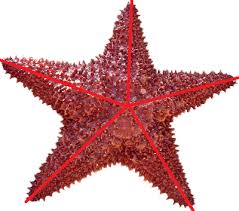
  • Radial symmetry, without distinct head or brain

  • Endoskeleton

  • Tube-feet projecting out of the body

  • Spiney "Pokey"

  •  Around 7,000 

Slide image

28

Multiple Choice

Question image

What phylum does this animal belong to?

1

Echinodermata

2

Chordata

3

Mollusca

4

Arthropoda

29

Multiple Choice

What does the term echinoderm mean?
1
tube feet
2
star shaped
3
spiny skin
4
stomach foot

30

Multiple Choice

Question image
Which of the following are examples of echinoderms?
1
Jellyfish, Hydrozoa, Squid
2
Slugs, Snails, Mussels
3
Sea stars, sea urchins, sea cucumbers
4
bony fish, cartilaginous fish

31

Multiple Choice

Question image
What type of symmetry is displayed in the picture?
1
asymmetry
2
bilateral symmetry
3
radial symmetry
4
photosynthesis

32

Multiple Choice

Question image

Which of the following refers to sea stars and sea cucumbers?

1

Echinodermata

2

Mollusca

3

Arthropoda

4

Porifera

5

Cnidaria

33

Mollusca

  •  Soft bodies which typically have a "head" and a "foot" regio

  • Muscular foot to move around

  • Ove 100,000 described

  •  Bilaterally symmetrical

  • The foot is variously modified for creeping, burrowing and swimming.

Slide image

34

Multiple Choice

An unsegmented, triploblastic animal with a head, muscular foot and visceral mass

are the characteristics of ______________.

1

nematodes

2

molluscs

3

echinoderms

4

chordates

35

Multiple Choice

Question image
Mollusks include which of the following?
1
Octopus, Squid, Slugs, Snails
2
Fish, Squid, Jellyfish, Sea cucumbers
3
Sea stars, Sea cucumbers, sea urchins
4
Oysters, Fish, Whales, Sponges

36

Multiple Choice

Question image

Which phyla has a soft unsegmented body and can be protected by a shell?

1

Mushroom

2

Mollusks

3

Echinoderm

4

Annelid

37

Congrats. You now know the 6 main animal Phyla

Cnidaria, Arthropoda, Annelida, Mollusca, Echinodermata, Chordata

Slide image

Animalia Phyla

Oh the Diversity we shall see!

Slide image

Show answer

Auto Play

Slide 1 / 37

SLIDE