
Chemistry Bonding Unit Review

Presentation
•
Chemistry
•
9th - 12th Grade
•
Hard

Joseph Anderson
FREE Resource
9 Slides • 25 Questions
1
Ionic and Covalent Bonding
Why do atoms form bonds?

2
Why do chemical bonds form?
Atoms form bonds when their valence electrons interact.
What are valence electrons?
Atoms join to form bonds so that each atom has a stable electron configuration.
Each atom binds in order to fill its outermost energy levels.
3
Open Ended
Why do atoms join to form bonds?
4
Valence electrons are the outer electrons on an atom!
In the picture to the right there are 2 electrons

5
Multiple Choice
Valence electrons are:
Electrons farthest away from the nucleus
Electrons closest to the nucleus
Electrons that just come and go - they don't stay with the atom
Electrons in the second shell
6

7
Multiple Choice
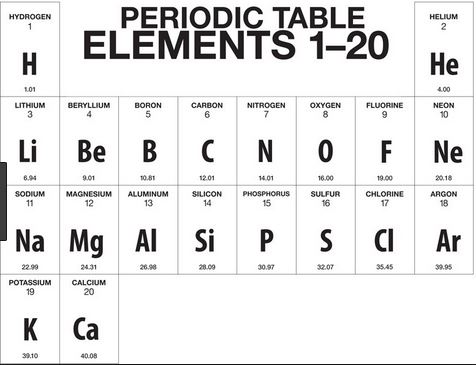
How many valence electrons does Nitrogen Have?
1 Valence electron
2 Valence electron
3 Valence electron
4 Valence electron
5 Valence electron
8
Multiple Choice
How many valence electrons does Hydrogen Have?
1 Valence electron
2 Valence electron
3 Valence electron
4 Valence electron
5 Valence electron
9
Multiple Choice
Which group has the greatest number of valence electrons?
1
14
18
16
10
Multiple Choice
USE THE PERIODIC TABLE
How many valence electrons does carbon have?
4
12
6
14
11
Multiple Choice
12
Multiple Choice
13
COMPOUNDS
A compound is formed when two or more elements chemically bond together.
The properties of compounds are different from the properties of the elements that make them.
Example:
The properties of water (a liquid) are different from the properties of hydrogen (a gas) and oxygen (a gas).
Compounds use chemical names (e.g. Carbon dioxide) and are represented by a chemical formula (e.g. CO2)
14
Multiple Choice
Element or compound?
H2O
element
compound
15
Multiple Choice
16
Multiple Choice
Element or Compound?
Na
Element
Compound
17
Multiple Choice
Element or Compound?
NaCl
Compound
Element
18
Multiple Choice
Formula for barium sulfide
B2S3
BaS
Ba2S
BaS2
19
Multiple Choice
Which of the following is a group of compounds?
O, N, P
NaCl, H2O, CH4
both are correct
20
Multiple Choice
A compound is a combination of ________ or more elements.
one
two
three
four
21
Ionic bond
the bonding between a non-metal and a metal, that occurs when charged atoms (ions) attract
structure is a network of bonded ions
valence electrons are transferred
Electrical conductivity is good when melted/dissolved
Solid at room temperature; high melting and boiling points
22

23
Multiple Choice
Ionic bonds are formed between...
Non - metals
A metal and a non-metal
Metals
24
Multiple Choice
An ionic bond is the attraction between:
oppositely charged ions
similarly charged ions
neutral ions
neutral atoms
25
Multiple Choice
26
Multiple Choice
How is an ionic bond formed?
Sharing of electrons
Delocalised electrons
Transfer of electrons
27
Multiple Choice
An example of an ionic compound is Sodium Chloride, which is made from Na+ and Cl- ions. Why do these ions form an ionic bond?
They have like charges
They are from the same group
They are from the same period
They have opposite charges
28
Covalent Bond
a chemical bond formed between nonmetal atoms when electrons are shared between two atoms.
structure of molecules
valence electrons are shared
poor electrical conductivity and can be a solid, liquid, or gas at room temperature
has low melting and boiling points
29

30
Multiple Choice
A covalent bond forms when atoms ___________ electrons.
gain
share
increase
transfer
31
Multiple Choice
How are covalent bonds explained?
When one atom takes the other atom's electron
When the atom shares an electron with an another atom
When the two nucleus merge
When the neutrons leave the nucleus
32
Multiple Choice
What two types of atoms make a covalent bond?
2 Nonmetals
1 Nonmetal and 1 Metal
2 Metals
2 Noble Gases
33
Multiple Choice
Molecules
Ionic compounds
Covalent compounds
34
Multiple Choice
Network of bonded ions
Ionic bonds
Covalent bonds
Ionic and Covalent Bonding
Why do atoms form bonds?
Show answer
Auto Play
Slide 1 / 34
SLIDE
Similar Resources on Wayground

27 questions
Introduction to Stoichiometry Day 1
Presentation
•
9th - 12th Grade
30 questions
Chem04 Quantum Shells, Subshells, Orbitals
Presentation
•
9th - 12th Grade
27 questions
Bonding Day 1 - Bonding Basics
Presentation
•
9th - 12th Grade
23 questions
Valence Electrons, Lewis Dot Diagrams and Ions
Presentation
•
10th - 12th Grade
26 questions
Chemical changes
Presentation
•
9th - 12th Grade
29 questions
Pure Matter
Presentation
•
9th - 12th Grade
30 questions
Atomic Theory History
Presentation
•
9th - 12th Grade
24 questions
Nuclear Decay
Presentation
•
9th - 12th Grade
Popular Resources on Wayground
6 questions
PRIDE Always and Everywhere
Presentation
•
12th Grade
20 questions
Lab Safety Quiz

Quiz
•
6th Grade
26 questions
KOR Review Kahoot Questions
Quiz
•
8th Grade
21 questions
Continents and Oceans
Quiz
•
6th Grade
12 questions
Unit Zero lesson 2 cafeteria
Presentation
•
9th - 12th Grade
20 questions
Parts of Speech
Quiz
•
5th Grade
10 questions
Riddles Riddles fun Riddles
Quiz
•
6th - 12th Grade
16 questions
Subject & Predicate
Quiz
•
5th Grade
Discover more resources for Chemistry
21 questions
Lab Safety
Quiz
•
10th Grade
20 questions
Scientific Method
Quiz
•
10th - 12th Grade
20 questions
Lab Safety
Quiz
•
10th Grade
20 questions
Metric Conversions
Quiz
•
11th Grade
12 questions
Significant figures
Quiz
•
9th - 12th Grade
20 questions
COUNTING ATOMS
Quiz
•
10th Grade
19 questions
Isotopes & Ions
Quiz
•
9th Grade
11 questions
AP Chemistry - Unit 1 Review
Quiz
•
11th Grade