Search Header Logo
Evolution

Evolution

Assessment

Presentation

Biology

9th - 12th Grade

Hard

Created by

Joseph Anderson

FREE Resource

25 Slides • 14 Questions

1

media
media
media
media
media
media

Evidence for

Evolution

Notes - write in your notebook!

Comprehension Questions

2

media
media
media

Big Picture
Questions

How does fossil record evidence support the theory of evolution?

How does biogeographical evidence support the theory of evolution?

How do homologies provide evidence for the theory of evolution? (Anatomical, molecular, and developmental)

How is the genetic code similar among all organisms?

3

media

What is

Evolution?

Gradual genetic

change in a species

over time

(lots & lots of time!)

4

media
media
media
media

Source of Evidence #1:

Fossil Record

Life has existed on Earth for billions of
years.

Evidence of life on Earth, and how it

has changed over time, is found in the
fossil record.

The fossil record shows us that there
has been an overall increase in the
complexity of organisms over time. It
also shows us that there has been an
increase in organism diversity.

5

6

Multiple Choice

How do fossils provide evidence that evolution has happened on Earth?
1
Fossils show how the sizes of certain animals has changed drastically over millions of years
2
Fossils show that some species have gone extinct
3
Fossils show how life forms present today are different than those from the past
4
Different sedimentary rock layers provide evidence for how the environment has changed over time

7

Multiple Choice

Question image

What are the oldest fossils and why?

1

B, C- because they are closest to the top

2

A, B- because they are closest to the bottom

3

They are all the same age- because they are all found on layer 2

4

A, B- because they are found closest to the top

8

media

The fossil record is not
complete, and there are
sometimes gaps between
species.

Because of this, there are 2
major theories about the rate of
evolution based on the fossil
record.

9

media
media
media
media

Gradualism describes evolution as a process of slow and
continuous change.
Populations are graduallychanging over time into new
species.

10

media
media
media
media

Punctuated equilibrium describes evolution as having long
periods of stabilitythat are interrupted by geologically brief
periods of significant change.

11

media

12

media
media
media

Stasis: Long periods of time with little/no change

13

Multiple Choice

What is slow change over a long period of time in a species called?
1
Punctuated equilibrium
2
Phylogeny
3
Stasis
4
Gradualism

14

Multiple Choice

Question image

The butterfly diagram on the right (b) refers to which model of evolution?

1
Selection
2
Gradualism
3
Punctuated Equilibrium
4
Adaptive

15

Multiple Choice

Question image

Species show very little evolutionary change in the fossil record

1

Stasis

2

Natural Selection

3

Artificial Selection

4

Darwinsim

16

media
media
media

Source of Evidence #2:

Structural Evidence

17

media
media

18

media
media
media
media

19

media

20

media
media
media

21

media
media
media

22

media
media
media

23

media
media
media
media

24

Multiple Choice

Question image
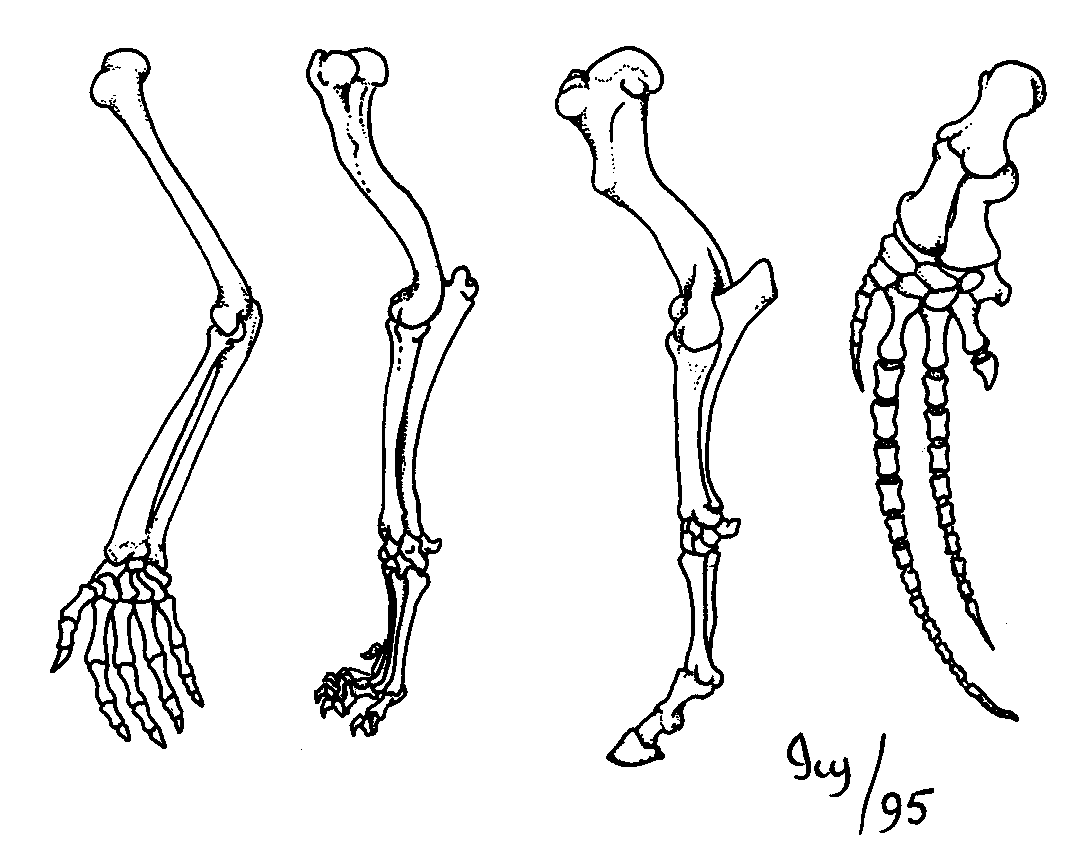
Structures with the same parts have different functions; suggests that organisms share a common ancestry
1
vestigial structures
2
homologous structures
3
adaptive radiation
4
fossil

25

Multiple Choice

Question image

The similarities of bone structure in the diagram provide evidence of what?

1

The organisms probably use there forelimbs for the same thing.

2

The organisms evolved from a common ancestor.

3

The organisms have the same DNA.

4

All vertebrate species have identical forelimbs.

26

Multiple Choice

The human appendix, which is not needed to survive, is conisdered to be a

1

Homologous Structure

2

Analagous Structure

3

Vestigial Structure

4

Homology

27

Multiple Choice

Question image

What type of structure does this image illustrate?

1

Homologous structures

2

Analogous structures

3

Vestigial structures

28

media
media
media
media

Source of Evidence #3:

Developmental Homologies

Comparative embryology is the comparison of the
developmental stages of different species.

Similarities may be
used to infer
relationships between
organisms.

Species that are
related show
similarities in their
embryonic
development.

29

media
media
media

Comparative Embryology

30

31

Multiple Choice

Question image

Various species show similar developmental patterns as embryos.

1

DNA similarities

2

Anatomical Homology

3

Embryology

4

All of the above

32

Multiple Choice

Question image
In stage one (top row) of these embryos, most of the embryos________
1
look very similar.
2
have very different features.
3
show different stages of development.
4
have only a tail if they are non-human.

33

media
media
media

Source of Evidence #4:

Biogeography

The study of the geographical
distribution of organisms, both living
and extinct.

The Darwin-Wallace theory of
evolution proposes that, for a new
species to arise, a group of
individuals must become isolated
(geographically separated) from
the rest.

34

media
media
media

35

Multiple Choice

Question image

Why are similar fossils found all over the world?

1

The animals swam to new parts of the world before going extinct

2

The land masses were once connected

3

The organisms were transported to different areas of the world

4

They are not similar fossils.

36

Multiple Select

How does Pangaea support the Theory of Evolution? Select all that apply

1

It provides an explanation for why similar fossils are found on different continents

2

The movement of continents provides an example of a big change in environment that would cause evolutionary pressures that would drive species to evolve

3

It explains how the planet became warmer over the years

4

It provides evidence that continents are growing in size slowly

37

media

Source of Evidence #5:

Molecular Evidence

All organisms use DNA and RNA as genetic material and the genetic code by which proteins
are synthesised is (almost) universal

This shared molecular heritage means that base and amino acid sequences can be
compared to ascertain levels of relatedness

Over the course of millions of years, mutations will accumulate within any given segment of
DNA

The number of differences between comparable base sequences demonstrates the degree

of evolutionary divergence

A greater number of differences between comparable base sequences suggests more time

has past since two species diverged

Therefore, the more similar the base sequences of two species are, the more closely related
the two species are expected to be

38

media

39

Multiple Choice

Question image

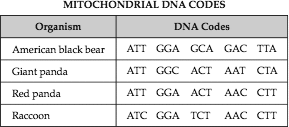
What conclusions can be made based on this table shown?

1

the American black bear and the giant panda are most closely related

2

the giant panda and the red panda are most closely related

3

the red panda and the racoon are the most closely related

4

the giant panda and the racoon are most closely related

media
media
media
media
media
media

Evidence for

Evolution

Notes - write in your notebook!

Comprehension Questions

Show answer

Auto Play

Slide 1 / 39

SLIDE