Search Header Logo
  1. Resource Library
  2. Science
  3. Earth & Space Science
  4. Igneous Rocks
  5. Igneous Rocks Lesson
Igneous Rocks Lesson

Igneous Rocks Lesson

Assessment

Presentation

Science

6th Grade

Hard

Created by

Joseph Anderson

FREE Resource

4 Slides • 12 Questions

1

Igneous Rocks
Slide image

2

Vocabulary Review

  • Mineral: natural, solid substance that has a definite chemical composition and physical structure

  • Magma: melted rock within the earth

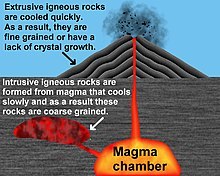
  • Igneous Rock: forms when magma is pushed up from the mantle into the cool crust and hardens into rock

  • Lava: Magma that reaches the surface

3

Multiple Choice

Question image

Where is lava located?

1

above ground

2

below ground

3

in the core

4

in the mantle

4

Multiple Choice

Question image

Where is magma located?

1

above ground

2

below ground

3

in the stratosphere

4

in the thermosphere

5

Multiple Choice

Igneous rock that forms when magma hardens beneath Earth's surface
1
Intrusive Rock
2
Compaction
3
Extrusive Rock

6

Multiple Choice

Igneous rock that forms from lava on Earth's surface
1
Organic Rock
2
Intrusive Rock
3
Extrusive Rock

7

Fill in the Blank

Type answer...

8

Slide image

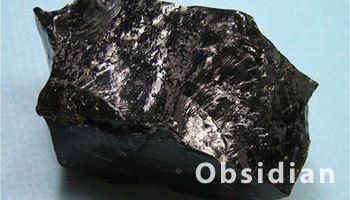
Obsidian is an example of an extrusive rock. Because it cooled and hardened quickly, extrusive rocks have a fine grained texture.

9
Slide image

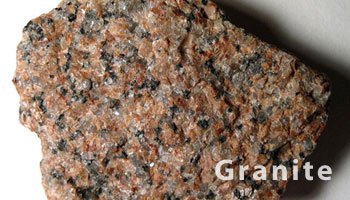
Granite is an intrusive igneous rock. Because they cool slowly, the crystals are large giving these rocks a coarse texture.

10

Multiple Choice

Question image

Diorite is an intrusive igneous rock. What does this tell you about it?

1

it was formed from lava that erupted onto Earth's surface

2

it was formed from magma that hardened beneath Earth's surface

3

it was formed from rapidly cooling lava

11

Multiple Choice

Question image

Basalt is an extrusive igneous rock. What does this tell you about it?

1

it was formed from lava that erupted onto Earth's surface

2

it was formed from slowly cooling magma

3

it was formed from magma that hardened beneath Earth's surface

12

Multiple Choice

Question image

Pegmatite is a coarse-grained, intrusive, igneous rock. How did it form?

1

rapidly cooling lava

2

slowly cooling magma

13

Multiple Choice

Question image

Rhyolite is a fine-grained, extrusive, igneous rock. How did it form?

1

rapidly cooling lava

2

slowly cooling magma

14

Multiple Choice

Question image

Is this igneous rock, obsidian, fine-grained or coarse-grained?

1

fine-grained

2

coarse-grained

15

Multiple Choice

Question image

Is this igneous rock, porphyry, fine-grained or coarse-grained?

1

fine-grained

2

coarse-grained

16

Multiple Choice

What option below is NOT one of the uses of igneous rocks?

1

statues

2

kitchen counters

3

building materials

4

chalkboards

Igneous Rocks

Slide image

Show answer

Auto Play

Slide 1 / 16

SLIDE