Search Header Logo
Ionic and Covalent Bonding Review Lesson

Ionic and Covalent Bonding Review Lesson

Assessment

Presentation

•

Chemistry

•

9th - 12th Grade

•

Hard

Created by

Joseph Anderson

FREE Resource

9 Slides • 37 Questions

1

Electrons are the Key

  • If valence electrons are shared by atoms, it is called COVALENT bonding

  • If valence electrons move freely between atoms, it is called METALLIC bonding

  • If valence electrons are transferred from one atom to another, it is called IONIC Bonding

media

2

media

​Two nonmetals

​Electron(s) are

​shared

​Between a metal and nonmetal

​Electrons are transferred from a metal to a nonmetal

3

Ionic Bonds

  • Form Crystalline Lattice (crystals)

  • Have high melting and boiling points

  • Hard

  • Brittle

  • Conduct electricity when dissolved in water

media

4

What you need to remember...

  • Metals + Nonmetals

  • Make IONIC bonds

  • Transfer electrons

  • High electronegativity difference

media

5

Covalent Compounds

  • Have Lower melting and boiling points

  • Tend to be flammable

  • When dissolved in water they do not conduct electricity

  • Soft or brittle solid

  • Can also form crystals

media

6

What you need to remember

  • Nonmetal + Nonmetal

  • Make COVALENT bonds

  • Share electrons

  • Low electronegativity difference

media

7

ELECTRONEGATIVITY

  • DEN Range is the difference in electronegativity values between atoms

  • Determines the type of bond

  • Covalent bonds have similar electronegativities

  • Ionic bonds have different electronegativities

media

8

Metallic Bonds

  • good conductors of heat and electricity

  • malleable and ductile

  • lustrous

  • opaque

media

9

What you need to remember

  • Metal ions near each other share valence electrons

  • These valence electrons flow freely between all of the ions

  • These delocalized electrons are why metals conduct heat and electricity

  • It is also why metals are malleable and ductile

media

10

Multiple Choice

Why do all bonds form?

1

so the number of protons equals the number of electrons

2

so an atom can become unstable

3

to fill the outermost energy level

11

Multiple Choice

Valence electrons are found

1

in the innermost energy level of an atom

2

in the middle energy levels of an atom

3

in the outermost energy levels of an atom

12

Multiple Choice

Covalent bonds are between...
1
Metal and Non-metal
2
Non-metal and Non-metal
3
Metal and Metal

13

Multiple Choice

Ionic bonds are between...
1
Metal and Non-metal
2
Non-metal and Non-metal
3
Metal and Metal

14

Multiple Choice

Atoms are most stable when their outer shell is complete.
1
true
2
false

15

Multiple Choice

How are covalent bonds formed?
1
Sharing of electrons
2
Transfer of electrons

16

Multiple Choice

How are ionic bonds formed?
1
Transfer of electrons
2
Sharing of electrons

17

Multiple Choice

Why do elements bond?
1
To be friends
2
To create a new element
3
To become stable

18

Multiple Choice

What is a valence electron?
1
The sum of neutrons and protons.
2
The # of electrons in the last shell.
3
A type of bond.
4
A popular compound.

19

Multiple Choice

Question image
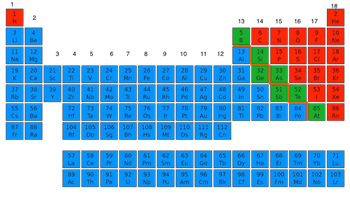
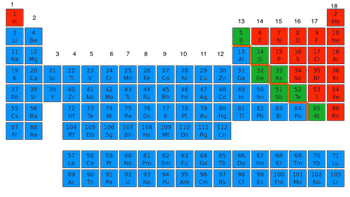
Where are the nonmetals located on the periodic table? 
1
Blue
2
Red
3
Green

20

Multiple Choice

Question image
Where are metals located on the periodic table?
1
Blue
2
Green
3
Red

21

Multiple Choice

Question image
Which of the following is the correct Lewis dot structure for the molecule fluorine (F2)?
1
A
2
B
3
C
4
D

22

Multiple Choice

Question image
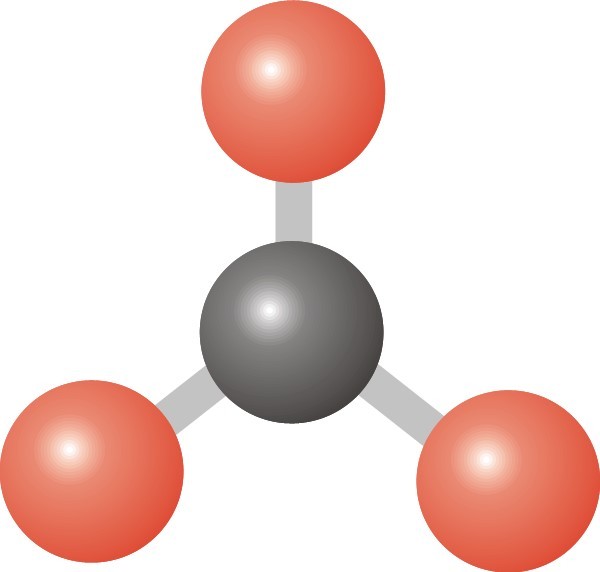
What is the correct structure for BF3?
1
Option A.
2
Option B. 
3
Option C.
4
Option D.

23

Multiple Choice

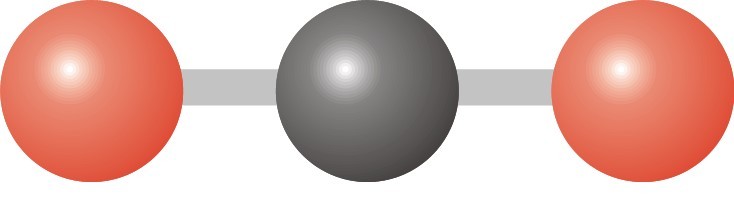
Which is the correct molecular structure for carbon dioxide?

1
2
3
4

24

Multiple Choice

Which of the following is an ionic bond?
1
H3N
2
CaCl2
3
NO2
4
SCl

25

Multiple Choice

Question image

What do atoms that form positive ions tend to do?

1

lose electrons

2

gain electrons

3

lose protons

4

gain protons

26

Multiple Choice

Atoms that gain electrons become...
1
negatively charged
2
positively charged
3
remain neutrally charged
4
21

27

Multiple Choice

If an oxygen atom has 8 protons (+) and 10 electrons (-), what is it's charge?
1
O10-
2
O8+
3
O2-
4
O10+

28

Multiple Choice

Question image

What is the correct Lewis Structure for the bond between Mg and Cl?

1

A

2

B

3

C

4

D

29

Multiple Choice

Question image

What is the correct Lewis Structure and chemical formula for an ionic bond between Aluminum and Oxygen?

1

A

2

B

3

C

4

D

30

Multiple Choice

What is the chemical formula for Sodium Chloride?

1

NaCl

2

Na2Cl

3

NaCl2

4

Na2Cl2

31

Multiple Choice

What is the chemical formula for water?

1

H2O

2

HO2

3

OH2

4

HHO

32

Multiple Choice

The chemical formula for carbon dioxide is

1
CO2
2

C2O

3

(CO)2

4

CO(II)

33

Multiple Choice

Al2O3 is

1

Aluminum oxide

2

Dialuminum trioxide

3

Aluminum trioxide

4

Aluminum (III) oxide

34

Multiple Choice

Question image

Cl2

1

Ionic Bond

2

Covalent Bond

35

Multiple Choice

Question image

CaCl

1

Ionic Bond

2

Covalent Bond

36

Multiple Choice

Question image

NH3

1

Ionic Bond

2

Covalent Bond

37

Multiple Choice

Question image

NaO

1

Ionic Bond

2

Covalent Bond

38

Multiple Choice

Question image

NaO

1

Metal with Nonmetal

2

Nonmetal with Nonmetal

39

Multiple Choice

Question image
This is a correct dot diagram for oxygen (O)
1
true
2
false

40

Multiple Choice

Question image
What is incorrect about the Lewis structure?
1
too many valence e-
2
too few valence e-
3
paired e- with not all sides filled
4
nothing

41

Multiple Choice

Question image
Which molecule would have this shape?
1
BF3
2
CH4
3
PCl5
4
CO2

42

Multiple Choice

Question image
What molecule could this be? 
1
BF3
2
CH4
3
H2O
4
CO2

43

Multiple Choice

Question image
This is a correct dot diagram for fluorine (F)
1
true
2
false

44

Multiple Choice

Question image
This is a correct dot diagram for nitrogen (N)
1
true
2
false

45

Multiple Choice

Which Lewis Dot Model drawing correctly shows an O2 molecule?

1
2
3
4

46

Multiple Choice

Question image
Is this ionic bond drawn correctly?
1
Yes
2
No

Electrons are the Key

  • If valence electrons are shared by atoms, it is called COVALENT bonding

  • If valence electrons move freely between atoms, it is called METALLIC bonding

  • If valence electrons are transferred from one atom to another, it is called IONIC Bonding

media

Show answer

Auto Play

Slide 1 / 46

SLIDE