
- Resource Library
- Social Studies
- Civics & Government
- Landmark Supreme Court Cases
- Landmark Supreme Court Cases

Landmark Supreme Court Cases

Presentation
•
Social Studies
•
12th Grade
•
Hard

Joseph Anderson
FREE Resource
13 Slides • 8 Questions
1

Supreme Court Cases
2
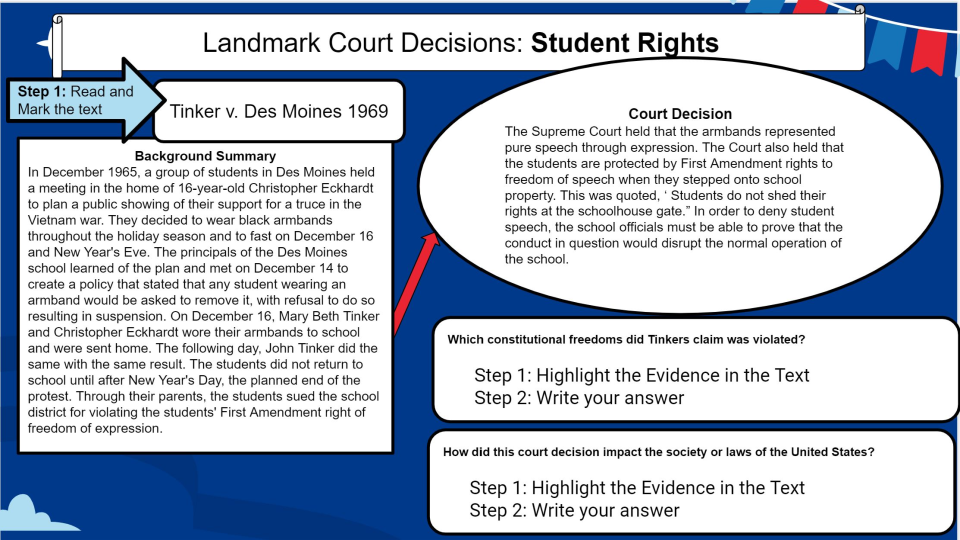
3
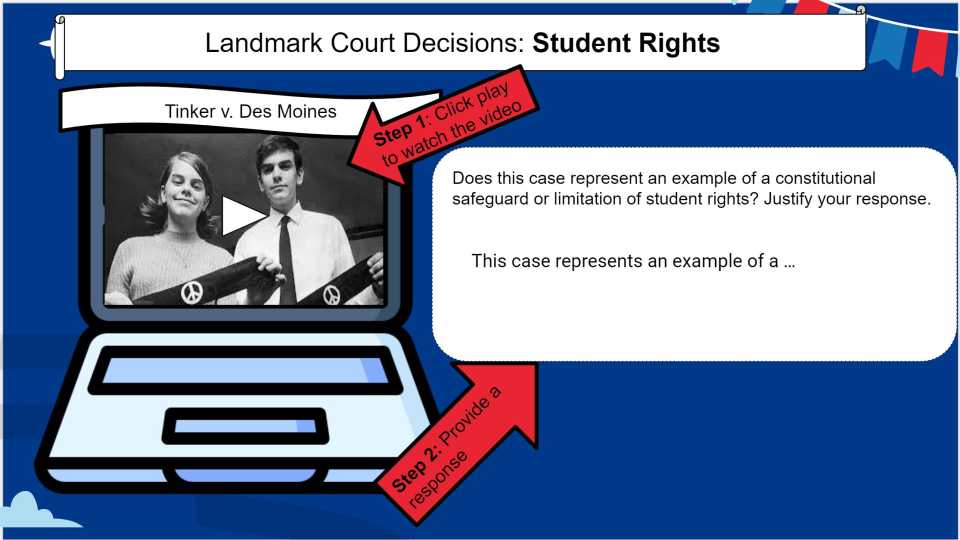
4
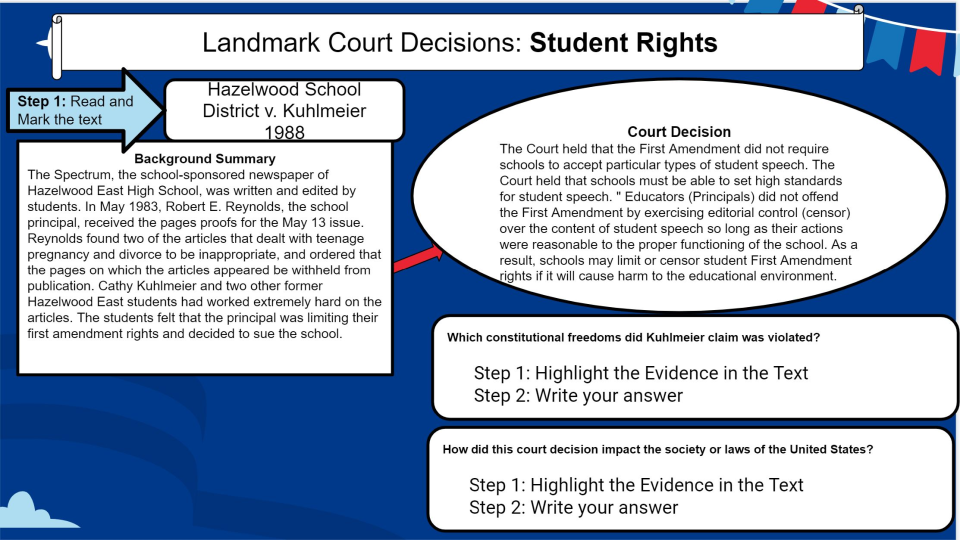
5
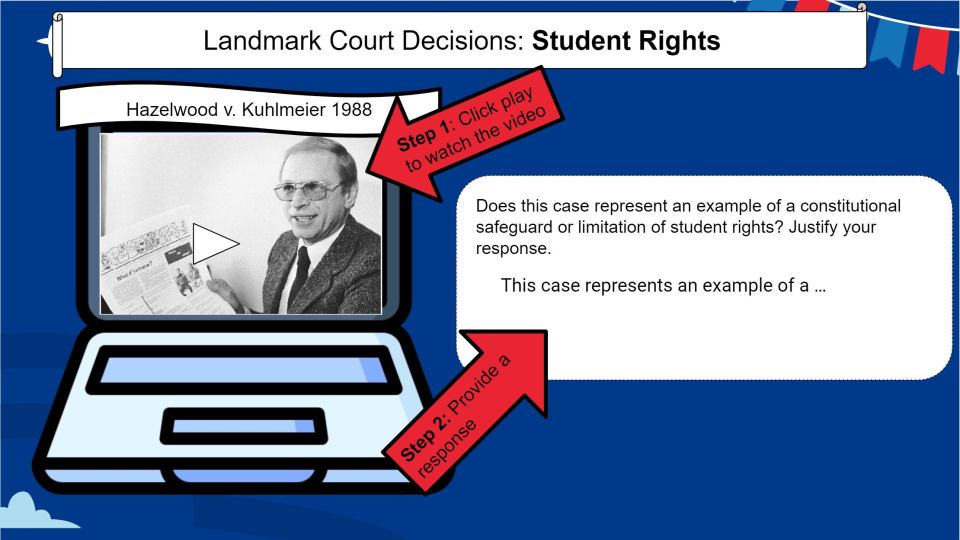
6
7
8
Multiple Choice
Students at a high school were recently suspended for wearing religious symbols on their clothing. What Supreme Court case could the students use to defend their position?
Plessy v. Ferguson
Tinker v. Des Moines
Bush v. Gore
Gideon v. Wainwright
9
4th Amendment
Exclusionary Rule
This rule holds that if police violate your constitutional rights in order to obtain evidence, they cannot use that evidence against you.
10
5th/6th Amendment
In Miranda v. Arizona, the U.S. Supreme Court rules that the Fifth Amendment right against self-incrimination is not limited to in-court testimony, but also applies when a person is taken into police custody for questioning. The Court also rules that criminal suspects must be told of their Sixth Amendment right to an attorney. Once a person “indicates in any manner that he does not wish to be interrogated,” the police must stop asking questions – even if the person has answered questions up to that point, the Court says.
11
6th Amendment
In Gideon v. Wainwright, the U.S. Supreme Court unanimously extends to state court trials the rule it established for federal court trials nearly 30 years earlier in Johnson v. Zerbst: The Sixth and 14th Amendments guarantee indigent defendants the right to have an attorney appointed, at the government’s expense, if they are charged with a serious crime.
12
8th Amendment
In Ingraham v. Wright, the U.S. Supreme Court refuses to find that the Eighth Amendment bars punishment of schoolchildren by “paddling.” Based on the amendment’s history and its language, the Court concludes that the amendment applies only to punishment of criminal offenses, not civil offenses such as breaking school rules.
13
Multiple Choice
This ruling held that evidence obtained in violation of the Fourth Amendment protection against "unreasonable searches and seizures" must be excluded from criminal prosecutions in state courts, as well as federal courts.
Mapp v. Ohio, 1961
Miranda v. Arizona, 1966
McCulloch v. Maryland, 1819
Marbury v. Madison, 1803
14
Multiple Choice
Which court case stated that suspects must be read their rights when arrested or anything said is inadmissible in court?
Plessy v Ferguson
Texas v Johnson
Tinker v Des Moines
Miranda v. Arizona
15
Multiple Choice
Lemon v Kurtman
Gideon v Wainwright
US v Nixon
Brown v Board of Ed
16
Multiple Choice

This Supreme Court case established that states and local districts can decide whether schools can use corporal punishment - 19 states still allow it.
Ingraham v. Wright
Tinker v. Des Moines
Vernonia School District v. Acton
Westside Community School v. Mergens
17
Multiple Choice
Which of these incidents led to the New Jersey v. TLO case?
A school principal censored articles from the school newspaper
A school district used public transportation to segregate students by race
School authorities searched a student’s bag without a warrant
School authorities suspended students for wearing black armbands as a protest
18
Multiple Choice
Which of these statements best explains why school officials are allowed to search a student’s locker without a search warrant?
It is illegal for police officers to enter school property
All constitutional rights are denied to students who are under 21 years of age
School officials are part of local police departments
It is considered necessary for protection of other students
19
Multiple Choice
According to the Supreme Court’s decision in New Jersey v. TLO, a school administrator can legally
Search the locker of a student who brags about stealing a wallet
Prevent a student from peacefully expressing an opinion
Suspend a student without an explanation of the offense
Prevent a student from performing in a controversial, privately sponsored play
20
Marbury v. Madison (1803) Argued: February 11, 1803 Decided: February 24, 1803
In the early 1800s, the Constitution was still very new. There were a lot of questions about what it meant and what powers it gave to the different branches of the government. This was true when it came to the powers of the Supreme Court. Many of the powers the Supreme Court has today, like the power to declare laws unconstitutional, did not yet exist. This case is important because it explains how the Supreme Court got that power.
21

Supreme Court Cases
Show answer
Auto Play
Slide 1 / 21
SLIDE
Similar Resources on Wayground

16 questions
USHC 7.4 HOLOCAUST
Presentation
•
11th Grade
16 questions
Creating America's Government - Introduction
Presentation
•
11th Grade
16 questions
Economics: Chapter 3: The American Free Enterprise System
Presentation
•
12th Grade
17 questions
Understanding Federalism
Presentation
•
12th Grade
17 questions
Punctuation
Presentation
•
12th Grade
15 questions
Conditionals
Presentation
•
12th Grade
20 questions
Fiscal Policy
Presentation
•
12th Grade
16 questions
Federal Bureaucracy
Presentation
•
12th Grade
Popular Resources on Wayground
6 questions
PRIDE Always and Everywhere
Presentation
•
12th Grade
20 questions
Lab Safety Quiz

Quiz
•
6th Grade
26 questions
KOR Review Kahoot Questions
Quiz
•
8th Grade
21 questions
Continents and Oceans
Quiz
•
6th Grade
12 questions
Unit Zero lesson 2 cafeteria
Presentation
•
9th - 12th Grade
20 questions
Parts of Speech
Quiz
•
5th Grade
10 questions
Riddles Riddles fun Riddles
Quiz
•
6th - 12th Grade
16 questions
Subject & Predicate
Quiz
•
5th Grade
Discover more resources for Social Studies
6 questions
PRIDE Always and Everywhere
Presentation
•
12th Grade
6 questions
PRIDE in the Hallways and Bathrooms
Presentation
•
12th Grade
30 questions
AP Human Geography Unit 1
Quiz
•
9th - 12th Grade
64 questions
USHC 4 Key Terms 22-23
Quiz
•
11th Grade - University
10 questions
Federalism Quiz
Quiz
•
12th Grade
27 questions
MR. DROHAN'S RECONSTRUCTION REVIEW (SY25)
Quiz
•
9th - 12th Grade
22 questions
American Revolution Review
Quiz
•
9th - 12th Grade
16 questions
Unit 1-2 Quiz
Quiz
•
12th Grade