Molecule Diagrams
Presentation
•
Chemistry
•
9th Grade
•
Hard

Joseph Anderson
FREE Resource
6 Slides • 20 Questions
1
Dot Diagrams and Bonding
Integrated Physics and Chemistry
2
Valence Electron and Dot Diagram Review
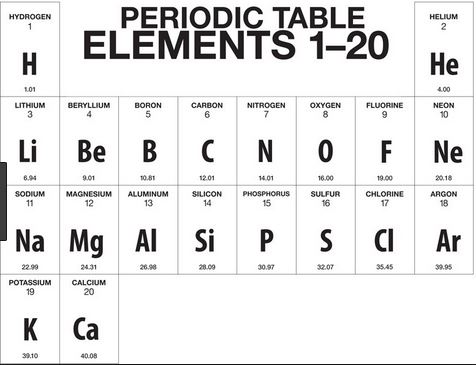
Have a periodic table and valence electron table open
3
Multiple Choice
What is a valence electron?
an electron that is found in the outermost shell of an atom.
an electron found in the innermost shell of an atom.
an electron found in the middle shell.
4
Multiple Choice
This is a correct dot diagram for neon (Ne)
true
false
5
Multiple Choice
What elements generally make a covalent bond?
metal and nonmetal
2 or more nonmetals
metal
none of the above
6
Multiple Choice
This could be the dot diagram of
Mg
Cl
C
O
7
Multiple Choice
How would you draw a Lewis dot diagram for Magnesium?
8
Multiple Choice
How many valence electrons does Aluminum Have?
1
2
3
4
5
9
Ionic Bonding
Atoms give/take electrons
Atoms do NOT share
Usually occurs between a metal and a nonmetal
10
Multiple Choice
What happens when the sodium atom loses an electron?
It become negatively charged
It become positively charged
none
11
MgI2
Let's take a look at the ionic bonding of Magnesium with two Iodine atoms.
12
Poll
How many electrons would Magnesium lose in an ionic bond?
1
2
13
Multiple Choice
How many electrons did oxygen gain?
1
2
4
8
14
Covalent bonds
Electrons are shared between atoms
usually occurs between two nonmetals
15
Multiple Choice
Which is the best way to represent a covalent bond of hydrogen atoms?
16
Multiple Choice
A carbon bonds covalently with 4 hydrogens. How many bonds will the carbon have?
1
2
3
4
17
General Bonding Questions
18
Multiple Choice
What type of bond would most likely form between Nitrogen and Oxygen?
Ionic
Covalent
19
Multiple Choice
Which type of bond would most likely form between potassium and iodine?
Ionic
Covalent
20
Multiple Choice
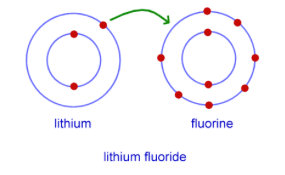
What type of bonding does this picture show?
Ionic
Covalent
21
Multiple Choice
22
Multiple Choice
23
Multiple Choice
What elements generally make an ionic bond?
metal and nonmetal
2 or more nonmetals
metal
none of the above
24
Multiple Choice
What happens when an atom gains an electron?
Neutral (no charge)
Positive Charge
Negative Charge
25
Multiple Choice
Covalent compounds:
Share electrons
Transfer electrons
Neither
26
Multiple Choice
Ionic Bonding involves:
The transfer of protons
The transfer of neutrons
The transfer of electrons
None Of the above
Dot Diagrams and Bonding
Integrated Physics and Chemistry
Show answer
Auto Play
Slide 1 / 26
SLIDE

Similar Resources on Wayground
19 questions
Bohr Model Quick Prez & Quizizz
Presentation
•
8th - 10th Grade
19 questions
Radioactive Decay
Presentation
•
9th Grade
18 questions
Cellular Respiration
Presentation
•
9th Grade
19 questions
Discovery of the electron
Presentation
•
9th Grade
23 questions
Atoms
Presentation
•
8th Grade
21 questions
Periodic Trends
Presentation
•
9th Grade
22 questions
The Atom
Presentation
•
8th - 10th Grade
19 questions
Magnetism Notes + Practice
Presentation
•
9th Grade
Popular Resources on Wayground
10 questions
Safety Day 2026 – Student Review
Quiz
•
9th Grade
21 questions
Continents and Oceans
Quiz
•
6th Grade
20 questions
Parts of Speech
Quiz
•
5th Grade
16 questions
Subject & Predicate
Quiz
•
5th Grade
25 questions
Multiplication Facts
Quiz
•
5th Grade
12 questions
Map Skills
Quiz
•
3rd Grade
22 questions
Continents and Oceans
Quiz
•
5th Grade
15 questions
Rounding Decimals
Quiz
•
5th Grade
Discover more resources for Chemistry
20 questions
electron configurations and orbital notation
Quiz
•
9th - 12th Grade
20 questions
Physical or Chemical Change/Phases
Quiz
•
8th Grade - University
15 questions
Periodicity Module Exam Practice Quiz
Quiz
•
9th - 12th Grade
44 questions
C1 Atomic Structure Review
Quiz
•
9th Grade
19 questions
Isotopes & Ions
Quiz
•
9th Grade
8 questions
Label Energy Diagram
Quiz
•
9th - 12th Grade
10 questions
Endothermic/Exothermic
Quiz
•
9th - 12th Grade
6 questions
Energy Change
Quiz
•
9th - 12th Grade