

Radioactive Decay

Presentation
•
Chemistry
•
9th Grade
•
Practice Problem
•
Medium

Mandy Mills
Used 17+ times
FREE Resource
15 Slides • 4 Questions
1

Radioactive Decay
2
3
Nuclear (Radioactive) Decay
If there is too much energy in the nucleus, some of the energy is pushed out so that the nucleus can become stable (correct amount of energy). The energy that gets thrown out is called radiation.
It occurs spontaneously, so at any time
The nucleus becomes lighter
Sometimes it may even change the number of protons which will change the element the atom is
4
Types of Decay
Atoms can be unstable for different reasons, so they release energy in the best way for them to become stable. The three different types of decay are called:
Alpha (α)
Beta (β)
Gamma (γ)
5
Imagine an atom as a heavy suitcase. If it's too heavy to carry, you might take out a couple of big items to make it lighter.
In alpha decay, the atom gets rid of two protons and two neutrons (which are like the big items) all at once. This makes the atom lighter and more stable.
Alpha Decay

6

Alpha decay is what occurs when a nucleus breaks down and releases an alpha particle. This is represented with the symbol 𝛂.
An alpha particle is essentially the nucleus of a helium atom (two protons and two neutrons).
Alpha Decay
7
In alpha decay, the atomic mass is reduced by 4 (2 protons and two neutrons).
How much does the atomic number reduce by?
Alpha Decay

8
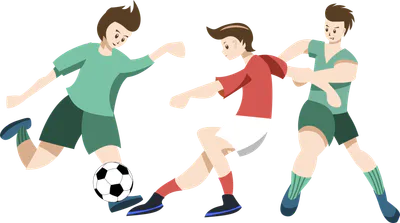
Imagine an atom as a sports team with too many defenders. In beta decay, one defender changes into an attacker to balance the team. This switch helps the atom become more stable.
Beta Decay
9
Sometimes a neutron is capable of turning into a proton and an electron. The electron is immediately kicked out from the nucleus. This high-speed electron is known as a beta particle. Beta particles are represented with the symbol 𝛽.
When an atom undergoes beta decay, the atomic mass stays the same but the atomic number increases.
Beta Decay
10
The parent nucleus loses an electron, resulting in a proton.
The new daughter nucleus has an additional positive charge but its atomic mass stays the mass stays the same because the mass of a proton is equal to the mass of a neutron.
Beta Decay

11
Beta Decay

12
After an atom goes through alpha or beta decay, it might still have too much energy, like a toy that keeps spinning after you stop pushing it. Gamma decay is when the atom releases this leftover energy in the form of gamma rays. These rays don’t change the atom’s parts, but they help the atom settle down into a more comfortable state.
Gamma Decay

13
Gamma decay happens when an atom releases extra energy in the form of gamma rays after going through alpha or beta decay. This energy doesn't change the number of protons or neutrons, but it helps the atom settle down into a more stable state. Gamma rays are like a final burst of energy that makes the atom more comfortable.
Gamma Decay

14

15
Read over your notes before we do some multiple choice questions.
16
Multiple Choice
What happens during alpha decay?
The atom releases a tiny particle called a beta particle
The atom gets rid of two protons and two neutrons
The atom releases energy as gamma rays
The atom absorbs energy to become stable
17
Multiple Choice
What happens during beta decay?
A neutron changes into a proton and releases a tiny particle
The atom releases two protons and two neutrons
The atom emits a strong burst of energy as gamma rays
The atom gains more neutrons to become stable
18
Multiple Choice
What happens during gamma decay?
The atom loses a neutron and gains a proton
The atom releases two protons and two neutrons
The atom releases leftover energy as gamma rays
The atom gains energy to become more stable
19
Multiple Choice

Which type of radiation does this image show?
Alpha
Beta
Gamma
Radioactive Decay
Show answer
Auto Play
Slide 1 / 19
SLIDE
Similar Resources on Wayground

15 questions
Chemical Reactions & the Conservation of Mass
Presentation
•
8th Grade
14 questions
Effects of Exploration
Presentation
•
9th Grade
14 questions
French Revolution
Presentation
•
9th Grade
14 questions
Electron Math
Presentation
•
9th - 12th Grade
14 questions
Covalent Bonding
Presentation
•
9th - 10th Grade
13 questions
Acids/Bases
Presentation
•
9th - 10th Grade
14 questions
Periodic Table Review
Presentation
•
8th Grade
14 questions
Balancing Chemical Equations
Presentation
•
10th Grade
Popular Resources on Wayground
6 questions
PRIDE Always and Everywhere
Presentation
•
12th Grade
20 questions
Lab Safety Quiz

Quiz
•
6th Grade
26 questions
KOR Review Kahoot Questions
Quiz
•
8th Grade
21 questions
Continents and Oceans
Quiz
•
6th Grade
12 questions
Unit Zero lesson 2 cafeteria
Presentation
•
9th - 12th Grade
20 questions
Parts of Speech
Quiz
•
5th Grade
10 questions
Riddles Riddles fun Riddles
Quiz
•
6th - 12th Grade
16 questions
Subject & Predicate
Quiz
•
5th Grade
Discover more resources for Chemistry
12 questions
Significant figures
Quiz
•
9th - 12th Grade
19 questions
Isotopes & Ions
Quiz
•
9th Grade
14 questions
Matter Module Exam Practice Quiz
Quiz
•
9th - 12th Grade
15 questions
Lab Safety & Equpiment
Quiz
•
9th - 12th Grade
20 questions
Chemistry Flame Assessment
Quiz
•
9th - 12th Grade
1 questions
Phase Changes and heat transfer
Quiz
•
9th Grade
15 questions
Solutions: Solute and Solvent
Quiz
•
9th - 12th Grade
40 questions
Metals, Nonmetals, and Metalloids
Quiz
•
7th - 9th Grade