
Observations, Models and Experiments

Presentation
•
Science
•
11th Grade
•
Hard

Joseph Anderson
FREE Resource
11 Slides • 5 Questions
1
The Wonders of Science
Exploring the incredible advancements and discoveries in the world of science that continue to shape our understanding of the universe and improve our lives.
2
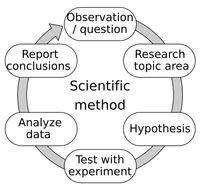
The Scientific Method
3
Multiple Choice
What is the fourth step in the scientific method?
Ask a question
Do background research
Formulate a hypothesis
Conduct experiments
4
Scientific Method: Step 4
Conduct experiments to test your hypothesis. This step involves carefully designing and carrying out experiments to gather data and evidence. Remember to record your observations and analyze the results. Experiments help scientists draw conclusions and make informed decisions based on evidence.
5
The Power of Observation
6
Multiple Choice
What is the foundation of scientific inquiry?
Hypothesis
Experimentation
Observation
Analysis
7
Scientific Inquiry:
Trivia: The foundation of scientific inquiry is observation. It involves gathering data through the senses or using scientific tools. Observation is crucial for forming hypotheses, conducting experiments, and analyzing results. Without observation, scientific progress would be impossible.
8
The Power of Data Analysis
9
Multiple Choice
What is the process of inspecting, cleaning, transforming, and modeling data to discover useful information?
Statistical analysis
Data mining
Machine learning
Data analysis
10
Data Analysis
Data analysis is the process of inspecting, cleaning, transforming, and modeling data to discover useful information. It involves applying statistical techniques, data mining, and machine learning. Data analysis helps organizations make informed decisions and gain valuable insights from their data. It is a crucial step in extracting meaningful knowledge from raw data.
11
The Power of Science
12
Multiple Choice
What does science allow us to do?
Draw conclusions based on evidence and data
Understand the world around us
Make informed decisions
Explore, discover, and innovate for a better future
13
Science: Drawing Conclusions
Science allows us to draw conclusions based on evidence and data. By analyzing and interpreting data, scientists can make informed decisions and understand the world around us. Science also empowers us to explore, discover, and innovate for a better future. It is through science that we can unlock the secrets of the universe and make groundbreaking advancements.
14
The Power of Science
15
Multiple Choice
What has science enabled?
Revolutionized the world
Transformed our lives
Improved health and communication
All of the above
16
All of the above
The Wonders of Science
Exploring the incredible advancements and discoveries in the world of science that continue to shape our understanding of the universe and improve our lives.
Show answer
Auto Play
Slide 1 / 16
SLIDE
Similar Resources on Wayground

13 questions
Groundwater
Presentation
•
10th - 12th Grade
10 questions
Climate change lesson #1
Presentation
•
11th Grade
10 questions
Simple Past
Presentation
•
11th Grade
11 questions
Air conditioner & Humidity
Presentation
•
11th Grade
14 questions
Ecology
Presentation
•
10th Grade
12 questions
What is Science?
Presentation
•
KG - 12th Grade
10 questions
El Nino and La Nina Notes
Presentation
•
12th Grade
11 questions
1-D Kinematics: Graphing Velocity
Presentation
•
12th Grade
Popular Resources on Wayground
6 questions
Secondary Safety Quiz
Presentation
•
9th - 12th Grade
10 questions
MyPath Diagnostic Overview
Presentation
•
6th - 8th Grade
20 questions
Lab Safety Quiz

Quiz
•
6th Grade
21 questions
Continents and Oceans
Quiz
•
6th Grade
20 questions
Adding and Subtracting Decimals
Quiz
•
5th Grade
20 questions
Parts of Speech
Quiz
•
5th Grade
16 questions
Subject & Predicate
Quiz
•
5th Grade
21 questions
Lab Safety
Quiz
•
10th Grade
Discover more resources for Science
9 questions
Scientific method

Interactive video
•
9th - 12th Grade
35 questions
Flinn Lab Safety
Quiz
•
11th Grade
10 questions
Structure of Water and Hydrogen Bonding
Quiz
•
9th - 12th Grade
20 questions
Quiz #1: Lab Safety and Scientific Method
Quiz
•
9th - 12th Grade
11 questions
Unit 0: Introduction to Biology Vocab
Quiz
•
9th - 12th Grade
26 questions
Introduction to Anatomy and Physiology
Quiz
•
11th Grade
19 questions
Explore Macromolecules in Living Organisms
Quiz
•
9th - 12th Grade
55 questions
U1: Directional Terms & Body Regions
Quiz
•
9th - 12th Grade