

Reactivity of Elements

Presentation
•
Science
•
7th Grade
•
Hard

Joseph Anderson
FREE Resource
12 Slides • 11 Questions
1


Reactivity in Elements
Reactivity: how easily or quickly a chemical reaction occurs.
Valence Electrons: Electrons in the outermost shell of an atom.
The number of valence electrons determines how and if the
element/atom will chemically react/bond.
If the outer shell is full, the element will
not react with other elements.
If the outer shell is NOT full, the element
will react with other elements.
Will this element
react?
2
Multiple Choice
Describes how likely an element is to form bonds with other elements.
Reactivity
Families
Period
Group
3
Multiple Choice
The number of valence electrons determines how and if the element/atom will chemically react/bond
True
False
4
Multiple Choice
How many valence electrons makes most atoms stable (nonreactive)?
2
8
1
4
5


Non-Reactive
Inert: means non-reactive
6
Multiple Choice
Elements that when put together are unable to react chemically.
Metal
Nonmetal
Metalloid
Inert
7

Valence Electrons and Groups
The Number of electrons is associated with the
element’s reactivity.
Elements with the same number of valence
electrons behave in similar way in reactions and
so are grouped together.
Elements in the same group share similar
properties.
8


Groups 1,2, and 17
are the most
Reactive Groups
Group 18 is Inert
(Non-Reactive)
READ THIS
9
Multiple Choice
On the periodic table, reactivity increases as you move ______________.
from right to left
from left to right
10
Multiple Choice
Elements in the same group or family have _____________.
the same number of valence electrons and different properties.
the same number of valence electrons and similar properties
different number of valence electrons and similar properties.
different number of valence electrons and different properties.
11


Families of the Periodic Table
groups of elements with similar properties.
12
Multiple Choice
Elements in the same family or group have similar _______________.
Protons
Physical and Chemical Properties
Shape
Size
13


Alkali Metals-Group 1
Hydrogen is NOT a member, it is a
non-metal
Most Reactive because they are trying to get rid of their 1 valence electron
1 Valence Electron
Soft Metals, soft enough to cut with
butter knife
Very reactive, can explode when they are
exposed to water
Conduct Electricity
14
Multiple Choice
Which family of elements are the most reactive?
Alkali Metals
Alkaline Metals
Halogens
Nobel Gases
15

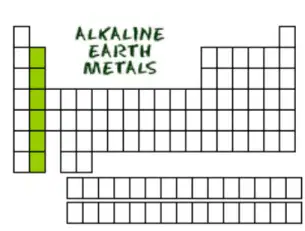
Alkaline Earth Metals
Location: Group 2
2 Valence Electrons
Reactive, but less than Alkali metals
Conduct electricity
16
Multiple Choice
Name this group: These metals are the second most reactive.
17




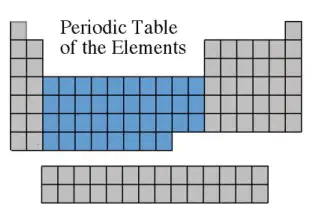
Transition Metals
Location: Groups 3-12
Good Conductors of heat
and electricity
Some are used for jewelry
Able to put up to 32
electrons in their second to
last shell
18


Halogens
Location: Group 17 - Has 7 Valence
Electrons
All are Non-Metals
Very Reactive, are often bonded with
elements from Group 1
Uses as disinfectants and to
strengthen teeth
*Most Reactive Non-Metal
Because they need 1 more valence electron to be stable
19


20
Multiple Choice
Alkali
Alkali Earth
Halogen
Noble Gas
21


Noble Gases
Location : Group 18- Has 8
Valence Electrons
Exist as gases
Non-MEtals
Not Reactive with other
elements because outer shell is
full
Used in lighted “neon” signs
22
Multiple Select
Group 18 also known as __________ or __________.
noble gases
alkali metals
inert gases
23
Important to Remember:
Elements in the same groups share the same properties
Group 1, 2 and 17 are the most Reactive Groups.
Group 17 is the most reactive Non-Metal
Group 18 is the most Inert (Non-Reactive) group.
Reactivity in Elements
Reactivity: how easily or quickly a chemical reaction occurs.
Valence Electrons: Electrons in the outermost shell of an atom.
The number of valence electrons determines how and if the
element/atom will chemically react/bond.
If the outer shell is full, the element will
not react with other elements.
If the outer shell is NOT full, the element
will react with other elements.
Will this element
react?
Show answer
Auto Play
Slide 1 / 23
SLIDE
Similar Resources on Wayground

20 questions
Classification of Living Things
Presentation
•
7th Grade
21 questions
Ocean Currents
Presentation
•
7th Grade
18 questions
Scientific Method Lesson
Presentation
•
6th - 8th Grade
18 questions
Atoms and the Periodic Table
Presentation
•
8th Grade
20 questions
Structure of Atoms - Vocabulary
Presentation
•
8th Grade
17 questions
Drawing Compounds
Presentation
•
7th Grade
19 questions
Solar System History
Presentation
•
6th - 8th Grade
17 questions
3.2 - Atomic Structure
Presentation
•
7th Grade
Popular Resources on Wayground
6 questions
PRIDE Always and Everywhere
Presentation
•
12th Grade
20 questions
Lab Safety Quiz

Quiz
•
6th Grade
26 questions
KOR Review Kahoot Questions
Quiz
•
8th Grade
21 questions
Continents and Oceans
Quiz
•
6th Grade
12 questions
Unit Zero lesson 2 cafeteria
Presentation
•
9th - 12th Grade
20 questions
Parts of Speech
Quiz
•
5th Grade
10 questions
Riddles Riddles fun Riddles
Quiz
•
6th - 12th Grade
16 questions
Subject & Predicate
Quiz
•
5th Grade
Discover more resources for Science
20 questions
Lab Safety
Quiz
•
5th - 8th Grade
14 questions
Science Variables
Quiz
•
7th Grade
18 questions
Counting Atoms
Quiz
•
7th - 8th Grade
10 questions
Exploring Chemical and Physical Changes

Interactive video
•
6th - 10th Grade
10 questions
Exploring the States of Matter
Interactive video
•
6th - 10th Grade
26 questions
6.6A: Metals, Metalloids, & Nonmetals
Quiz
•
6th - 8th Grade
16 questions
Scientific Method Quiz Review
Quiz
•
6th - 7th Grade
10 questions
Exploring the Evolution of Cell Theory
Interactive video
•
7th Grade