

Structure and Discovery of Atoms

Presentation
•
Chemistry
•
9th - 12th Grade
•
Hard

Joseph Anderson
FREE Resource
10 Slides • 17 Questions
1
Atomic Structure Review
2
Format
Google Form with multiple choice questions
Chart: atomic number, atomic mass, # of protons, # of neutrons, # of electrons
Drawing Bohr Model and Lewis Dot diagrams
3
Topics
History of atomic structure
Subatomic particles
Isotopes
Ions
Bohr Model Diagrams
Lewis Dot Diagrams
4
History of Atomic Structure
Democritus - first person to describe atoms
Dalton - solid sphere / cannonball model
J.J. Thompson - plum pudding model
Rutherford - gold foil experiment, nuclear model
Bohr - planetary model
Schrodinger - wave-mechanical model, most accurate
5
Atomic Theory
All matter is composed of very tiny particles called atoms.
Atoms are indivisible.
All atoms of the same element are the same.
All atoms of different elements are different.
developed by Dalton
6
Multiple Choice
What Greek philosopher was the first person to propose the idea that matter is made of tiny particles called atoms?
Democritus
Dalton
Thompson
Rutherford
Bohr
7
Multiple Choice
Which of the following is the most accurate model of the atom?
Solid Sphere / Cannonball Model
Plum Pudding Model
Planetary Model
Wave-mechanical model
8
Multiple Select
Which conclusions were made based on the gold foil experiment? Check all that apply.
Electrons are found in orbits around the nucleus.
Most of the atom is empty space.
The nucleus is positively charged.
Electrons have a negative charge.
9
Multiple Choice
Which particle did J.J. Thompson discover?
Proton
Neutron
Electron
Nucleus
10
Multiple Choice
Which scientists proposed the solid sphere / cannonball model of the atom?
Dalton
Thompson
Rutherford
Bohr
Schrodinger
11
Multiple Choice
Which scientists proposed the planetary model of the atom?
Dalton
Thompson
Rutherford
Bohr
Schrodinger
12
Multiple Choice
Which scientists performed the gold foil experiment and proposed the nuclear model of the atom?
Dalton
Thompson
Rutherford
Bohr
Schrodinger
13
Multiple Choice
Which scientist proposed the plum pudding model of the atom?
Dalton
Thompson
Rutherford
Bohr
Schrodigner
14
Subatomic particles
Protons: positively charged, mass of 1 a.m.u., found in the nucleus
Neutrons: no charge, mass of 1 a.m.u., found in the nucleus
Electrons: negatively charged, mass so little we consider it zero, found in the electron cloud outside the nucleus
15
Multiple Choice
Which subatomic particle identifies an element?
Protons
Neutrons
Electrons
Protons and Neutrons
16
Multiple Select
Which particles have a charge?
Protons
Neutrons
Electrons
17
Multiple Select
Which particles are found in the nucleus?
Protons
Neutrons
Electrons
18
Multiple Select
Which particles account for almost all the mass of an atom?
Protons
Neutrons
Electrons
19
Multiple Choice
Magnesium's atomic number is 12. This means that a magnesium atom has
12 protons in its nucleus
A total of 12 protons and electrons
12 neutrons in its nucleus
A total of 12 neutrons and electrons
20
Multiple Choice
A potassium atom has an atomic mass of 39. Its atomic number is 19. How many neutrons does the iron atom have?
19
39
20
58
21
Isotopes
atoms of the same element with different numbers of neutrons and therefore different masses
22
Multiple Choice
Two atoms that are different isotopes of the same element have
a different number of protons but the same number of neutrons
the same number of protons and the same number of neutrons
a different number of protons and a different number of neutrons
the same number of protons but different numbers of neutrons
23
Ions
charged atoms formed by an atom gaining or losing electrons
24
Multiple Choice
A neutral atom becomes a negative ion when
gains electrons
gains protons
loses protons
loses electrons
25
Multiple Choice
What is the charge of an atom with 5 protons, 5 neutrons, and 7 electrons?
0
+5
+2
-2
26
Bohr Model Diagrams
show location of electrons in orbits/shells/energy levels

27
Lewis Dot Diagrams
only show valence electrons
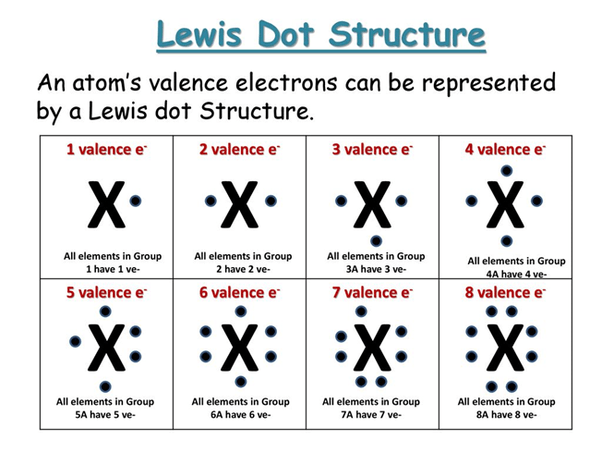
Atomic Structure Review
Show answer
Auto Play
Slide 1 / 27
SLIDE
Similar Resources on Wayground

19 questions
Review Periodic Table
Presentation
•
10th - 12th Grade
21 questions
Mass and The Mole Part 1
Presentation
•
10th - 12th Grade
25 questions
Introduction to Electrons
Presentation
•
9th - 12th Grade
22 questions
Chemical Bonding Notes
Presentation
•
9th - 12th Grade
19 questions
Ionic Bonds
Presentation
•
9th - 12th Grade
21 questions
IONIC BONDING
Presentation
•
9th - 12th Grade
21 questions
Isotopes and Avg. Atomic Mass Notes
Presentation
•
9th - 12th Grade
21 questions
Ionic Bonding
Presentation
•
8th - 12th Grade
Popular Resources on Wayground
10 questions
Safety Day 2026 – Student Review

Quiz
•
9th Grade
21 questions
Continents and Oceans
Quiz
•
6th Grade
20 questions
Parts of Speech
Quiz
•
5th Grade
16 questions
Subject & Predicate
Quiz
•
5th Grade
25 questions
Multiplication Facts
Quiz
•
5th Grade
12 questions
Map Skills
Quiz
•
3rd Grade
22 questions
Continents and Oceans
Quiz
•
5th Grade
15 questions
Rounding Decimals
Quiz
•
5th Grade
Discover more resources for Chemistry
20 questions
electron configurations and orbital notation
Quiz
•
9th - 12th Grade
20 questions
Periodic Table Trends
Quiz
•
11th Grade
25 questions
Writing and Naming Binary Ionic compounds
Quiz
•
10th Grade
20 questions
COUNTING ATOMS
Quiz
•
10th Grade
50 questions
Unit 3: Atomic Assault Summative Review
Quiz
•
11th Grade
20 questions
Physical or Chemical Change/Phases
Quiz
•
8th Grade - University
15 questions
Periodicity Module Exam Practice Quiz
Quiz
•
9th - 12th Grade
20 questions
Naming Ionic Compounds
Quiz
•
10th Grade