Earth's Movement in Space
Presentation
•
Science
•
8th Grade
•
Hard

Joseph Anderson
FREE Resource
32 Slides • 34 Questions
1
Earth's Movement in Space
2
Rotation
Rotate - to spin around a center (axis)
Axis - an imaginary line that an object rotates around
Earth rotates on its axis one time every 24 hours
3
Day and Night
Earth's rotation on its axis causes the day/night cycle:
the sun to rise in the east and set in the west
the apparent movement of the sun and moon
4
Revolution
Revolve - to move around another object
Orbit - the path that an object takes as it goes around another object
Earth revolves around the Sun one time every 365 days
The Earth does this around the Sun on its orbital path.
5
Fill in the Blank
Type answer...
6
Fill in the Blank
Type answer...
7
8
Seasons
9
Multiple Choice
Our Earth is split into 2 hemispheres. The Northern Hemisphere and the Southern Hemisphere. Which one do WE live in?
Northern Hemisphere
Southern Hemisphere
10
11
Multiple Choice
Does our Earth sit straight up and down, or is it tilted?
The Earth is tilted
The Earth is NOT tilted
12
13
14
Multiple Choice
How long does 1 full rotation take?
365 days
12 hours
1 year
24 hours
15
Multiple Choice
The Earth's rotation causes what on Earth?
Day & Night
Seasons
Wind
Ocean tides
16
17
Multiple Choice
What do we call Earth's orbit (go around the sun)?
Rotation
Spin
Revolution
18
Multiple Choice
How long does it take the Earth to go around the sun 1 time?
365 days (1 year)
12 hours
24 hours
24 years
19
20
Multiple Choice
Which answer correctly lists the seasons in the right order?
Summer, Spring, Winter, Fall
Summer, Fall, Winter, Spring
Summer, Winter, Spring, Fall
Summer, Winter, Fall, Spring
21
22
Multiple Choice
Which season has the longest days?
Winter
Spring
Fall
Summer
23
Multiple Choice
Which seasons have equal day and night? (Same amount of light)
Fall & Spring
Summer & Winter
Summer & Spring
Fall & Winter
24
25
26
Multiple Choice
At position 1, when the Earth is beside the sun, what season is it in the Northern Hemisphere? (Hint: position 2 is the NH during summer.)
Winter
Fall
Summer
Spring
27
Multiple Choice
At position 2, when the Earth is pointed at the sun, what season is it in the Northern Hemisphere?
Winter
Fall
Summer
Spring
28
Multiple Choice
At position 4, when the Earth is pointed AWAY from the sun, what season is it in the Northern Hemisphere?
Winter
Fall
Summer
Spring
29
Multiple Choice
At position 4, when the Earth is pointed AWAY from the sun, what season is it in the Southern Hemisphere?
Winter
Fall
Summer
Spring
30
Tides
Let's learn about tides!
31
What are tides?
Tides are the rise and fall of the levels of the ocean
They are caused by the force of gravity of the Moon and Sun, also the earth's rotation, cause them.
32
The Cycle Of Tides
Tides adjust as the moon rotates all-around Earth and the Suns' location
The cycle is
1. The sea level begins to increase.
2. The high tide has arrived.
3. The sea level is falling.
4. The tide hits its lowest point
5. It starts all over again
33
Types Of Tides
1. High Tides-The highest point of the tidal cycle is high tide when the sea level is at its highest.
2. Low Tides-Low tide occurs when the sea level is at its lowest point in the tidal cycle.
3. Spring Tides- The highest spring tide happens when the Sun and Moon are in perfect alignment.
5.Neap Tides- A neap tide is when the tidal range is at its smallest. This occurs during the first and third quarters of the Moon.
34
Multiple Choice
What is the difference between spring and neap tides
Neap tides occur when the sea is at the highest level
Spring tides occur when the earth and sun align.
Spring tides occur when the sea is at the lowest level.
35
How the moon affects tides
The Moon is responsible for high and low tides. The tidal force is caused by the gravitational pull of the Moon. The tidal force causes Earth—and its water—to bulge out on its nearest and furthest sides from the Moon. These water bulges are high tides.
36
Tidal Range
The tidal range is the height difference between high tide and low tide
The tidal range is not constant: it varies based on the Moon's and Sun's positions.
37
Multiple Choice
What is Tidal range?
The speed of a tidal current
The time between each high tide
The speed of the tidal current
The difference in sea level between the low tide and high tide
38
Multiple Choice
The water bulges are ____ tides
High
low
spring
neap
39
Multiple Choice
What causes ocean tides?
Energy from the sun's rays
Wind moving across the surface area
Gravitational pull of the Sun and the moon, and the rotation of Earth
All of the above
None of the above
40
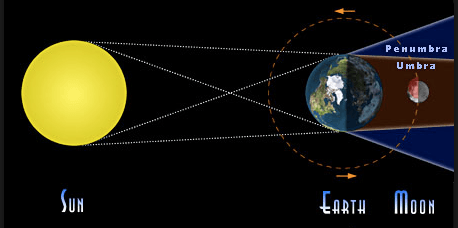
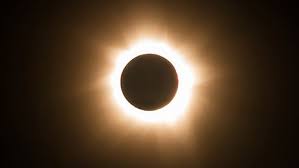
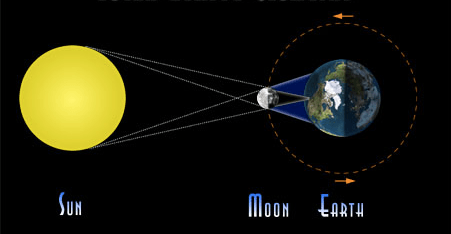
Eclipses
41
42
43
Multiple Choice
44
Multiple Choice
45
Multiple Choice
46
Multiple Choice
47
Multiple Choice
48
Multiple Choice
49
Multiple Choice
We do NOT have a lunar eclipse each month because...
The tilt of the moon's orbit is at 5 degrees
The moon is too small
The moon's orbital distance changes
All choices
50
Multiple Choice
51
Multiple Choice
52
Multiple Choice
53
Gravity and Inertia
54
Effects of Mass & Distance on Gravitational Force
The more massive an object, the greater it's gravitational pull
The closer the distance between objects, the greater the gravitational pull
The gravitational pull between the Sun and each planet or between Earth and it's moon causes distinct motions between and among the objects
55
56
57
Multiple Select
If the mass of an object increases, what happens to the gravitational pull?
Increases
Decreases
58
Multiple Select
The closer that two objects come together, what happens to the gravitational pull?
Decreases
Increases
59
Effects of Gravity on Planetary Orbits
The Sun's gravitational attraction along with a planet's inertia (continued forward motion), keeps the planets moving in an elliptical orbit (slightly oval) & determines how fast they move.
60
61
Effects of Gravity on Planetary Orbits
Planets nearer to the Sun move/orbit faster due to the higher gravitational pull from the Sun.
Planets farther from the Sun move/orbit slower due to the gravitational pull becoming less the farther from the Sun a planet is located.
62
Mercury, Venus, Earth, Mars
4 planets closest to the Sun that orbit faster because of higher gravitational pull between them and the Sun
63
Jupiter, Saturn, Uranus, Neptune
Even though these 4 planets are more massive, the large distance that they are from the Sun reduces the gravitational pull the Sun has on them.
64
Multiple Choice
Inertia is:
Forward motion
Reverse motion
Sideways motion
65
Multiple Choice
Planets closer to the sun have:
More gravitational pull with the Sun
Less gravitation pull with the sun
66
Multiple Choice
What keeps planets in elliptical orbits?
Gravitational attraction
Inertia
Both gravitational attraction & inertia
Neither one
Earth's Movement in Space
Show answer
Auto Play
Slide 1 / 66
SLIDE

Similar Resources on Wayground
63 questions
Air Temperature
Presentation
•
8th Grade
63 questions
Chem Lesson Set
Presentation
•
8th Grade
63 questions
Bridges
Presentation
•
8th Grade
58 questions
Ecology
Presentation
•
9th Grade
60 questions
Spheres, Layers, Rocks
Presentation
•
8th Grade
61 questions
Formation and Shape of Galaxies
Presentation
•
8th Grade
61 questions
Formation and Motion of Galaxies
Presentation
•
8th Grade
61 questions
Galaxies
Presentation
•
8th Grade
Popular Resources on Wayground
10 questions
5.P.1.3 Distance/Time Graphs
Quiz
•
5th Grade
10 questions
Fire Drill
Quiz
•
2nd - 5th Grade
20 questions
Equivalent Fractions
Quiz
•
3rd Grade
22 questions
School Wide Vocab Group 1 Master
Quiz
•
6th - 8th Grade
20 questions
Main Idea and Details
Quiz
•
5th Grade
20 questions
Context Clues
Quiz
•
6th Grade
20 questions
Inferences
Quiz
•
4th Grade
12 questions
What makes Nebraska's government unique?
Quiz
•
4th - 5th Grade
Discover more resources for Science
8 questions
Amoeba Sister Asexual vs Sexual Reproduction
Interactive video
•
8th Grade
19 questions
Introduction to Properties of Waves
Presentation
•
6th - 8th Grade
16 questions
Interactions within Ecosystems
Presentation
•
6th - 8th Grade
10 questions
Exploring the Layers of the Earth
Interactive video
•
6th - 10th Grade
20 questions
Energy Transformations
Quiz
•
6th - 8th Grade
46 questions
8th Science STAAR Review
Quiz
•
8th Grade
20 questions
Cell Organelles and Functions
Quiz
•
6th - 8th Grade
20 questions
Moon Phases and Eclipses
Quiz
•
6th - 8th Grade