Search Header Logo
DNA - Tutoring

DNA - Tutoring

Assessment

Presentation

•

Biology

•

9th - 12th Grade

•

Medium

•
NGSS
HS-LS3-2, HS-LS1-1, HS-LS1-6

Standards-aligned

Created by

Viveca Elsey

Used 2+ times

FREE Resource

4 Slides • 17 Questions

1

media

2

media

3

Multiple Choice

Question image

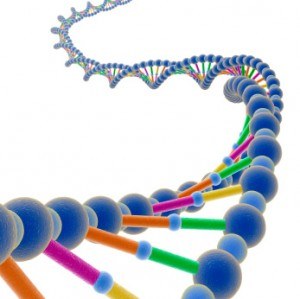
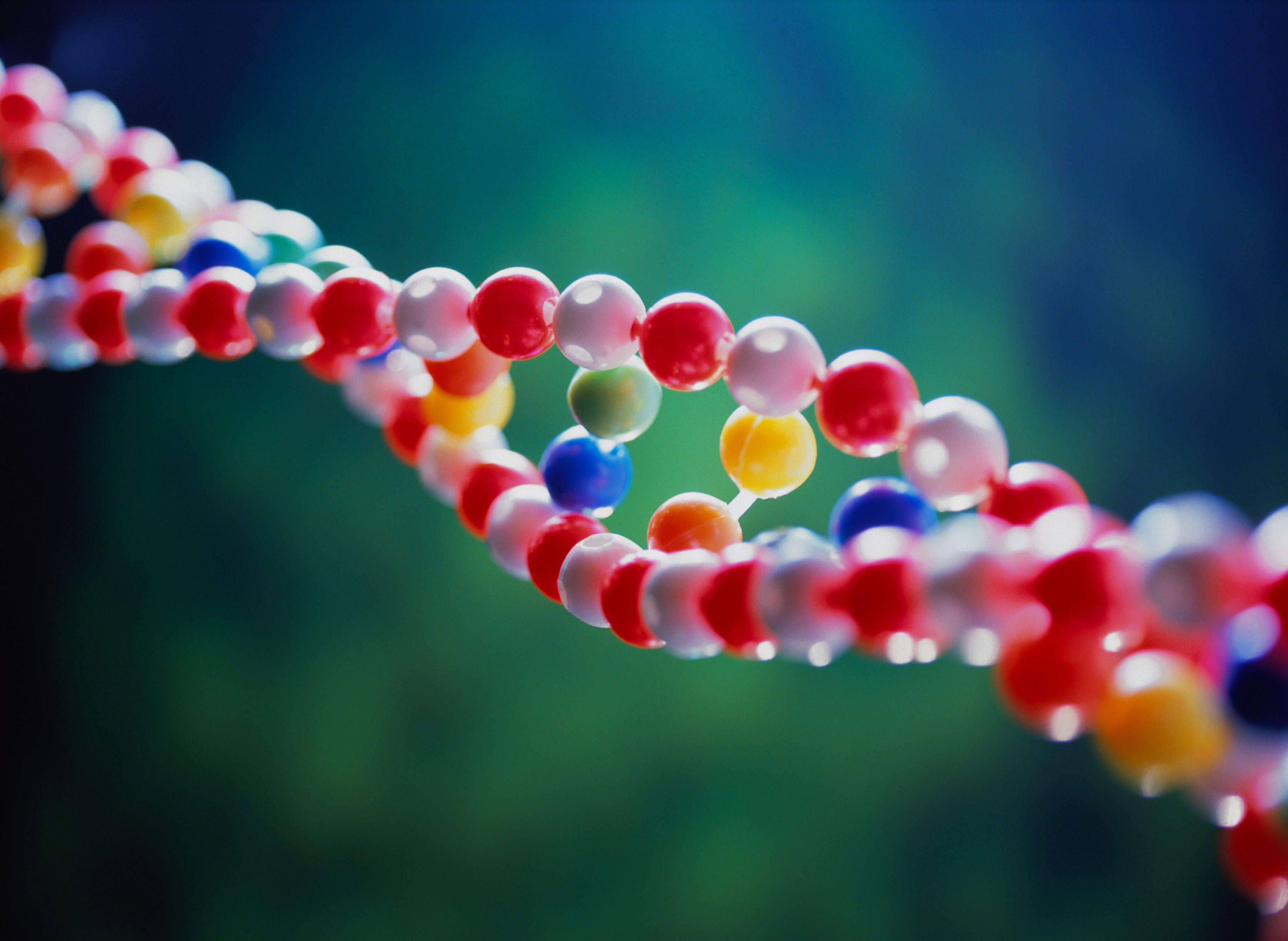
Which of the following best describes a DNA molecule?

1

double helix

2

contains ribose

3

made of amino acids

4

contains Uracil

4

Multiple Choice

Question image

Why is DNA important?

1

it is very small and very complicated

2

it's in everything

3

it serves as the blueprint for traits of all living things

4

because we eat it every day for energy

5

Multiple Choice

Which 2 molecules form the sides (backbone) of the DNA ladder?

1

deoxyribose sugar and adenine

2

deoxyribose sugar and a hydrogen bond

3

deoxyribose sugar and the nucleus

4

deoxyribose sugar and phosphate

6

media
media

7

media
media

A frameshift mutation is an insertion or deletion that changes the codons for the rest of the DNA - it moves everything forward or back by 1 or more nucleotides so the ribosome reads it wrong!

8

Multiple Choice

Question image

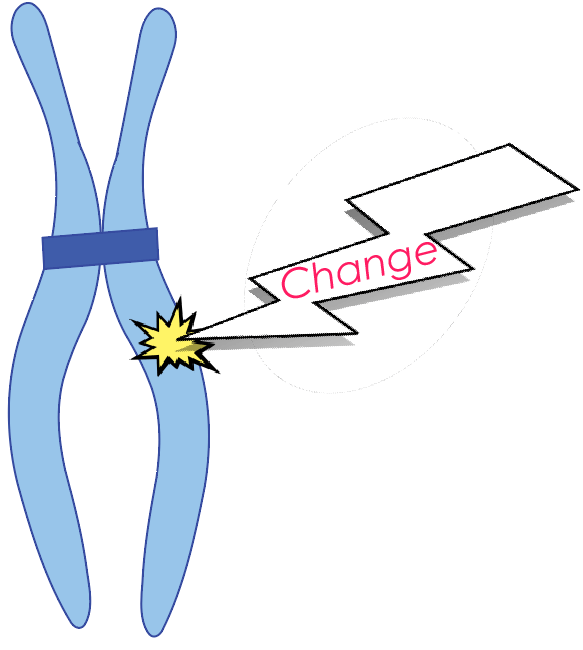
A change in a gene, group of genes or chromosome that results in a change in the proteins

1

Replication

2

Mutations

3

Translation

4

Transcription

9

Multiple Choice

Question image

A point mutation where one nucleotide base replaces an original nucleotide base

1

Inversion Mutation

2

Chromosomal Mutation

3

Translocation

4

Substitution Mutation

10

Multiple Choice

Question image

A nucleotide base is inserted or deleted shifting the entire DNA sequence. Entire protein will be changed.

1

Substitution Mutation

2

Silent Mutation

3

Frameshift Mutation

4

Translocation

11

Multiple Choice

Question image

A frameshift mutation where a nucleotide base

is removed from the DNA sequence.

1

Deletion Mutation

2

Substitution Mutation

3

Translocation

4

Silent Mutation

12

Multiple Choice

Question image

A frameshift mutation where a nucleotide base is added

to the DNA sequence

1

Insertion Mutation

2

Deletion Mutation

3

Substitution Mutation

4

Chromosomal Mutation

13

Multiple Choice

A monomer of DNA is called a(n)
1
Monosaccharide
2
Amino Acid
3
Triglyceride
4
Nucleotide

14

Multiple Choice

Question image
Which of the following best describes a DNA molecule?
1
double helix
2
contains ribose
3
made of amino acids
4
contains Uracil

15

Multiple Choice

A T T T G A G C C- Original
    A T T G A G C C  - Mutated
The example above is an example of a :
1
Insertion- Frameshift
2
Deletion- Substitution
3
Deletion -Frameshift
4
All of the above

16

Multiple Choice

Why are insertion and deletion mutations so harmful?
1
They change all of the codons from the mutation on down the line, which changes the amino acid sequence
2
They insert things that an organism doesn't need.
3
They often delete things that organisms need.
4
Insertion and deletions are not any more harmful than substitution mutations.

17

Multiple Choice

mRNA is read in chunks of three, called...
1
quadralets
2
anticodons
3
codons
4
capsids

18

Multiple Choice

Which of the following statements describes processes that occur during DNA replication?
1
A DNA sequence is read by RNA polymerase, which produces another RNA strand complementary to the first strand.
2
Two free-floating single strands of DNA are joined by polymerase. The polymerase finds the point at which the two strands will match up into a double strand.
3
Messenger RNA are decoded by a ribosome to produce an amino acid chain. In the cell's cytoplasm, transfer RNA join the messenger RNA, forming a polypeptide.
4
A double-stranded DNA molecule is unwound into single strands. Polymerase matches the right nucleotides to the single strand so that each forms a double strand of DNA.

19

Multiple Choice

The genetic code is universal. This means...

1

All living things share the same DNA, RNA, Amino Acids, and Proteins

2

All living things just have the same DNA

3

All living things have a nucleus

4

All living things build the same amino acid chains but use different DNA bases

20

Multiple Choice

What mutation has occurred here?

T-G-A-C-C-A

T-G-A-G-C-A

1

Substitution

2

Deletion

3

Insertion

4

Frameshift

21

Multiple Choice

What mutation has occurred here?

T-G-A-C-C-A

T-G-A-G-C-A

1

Substitution

2

Deletion

3

Insertion

4

Frameshift

media

Show answer

Auto Play

Slide 1 / 21

SLIDE