

24 Ecology Unit - IB

Presentation
•
Biology
•
9th - 12th Grade
•
Practice Problem
•
Hard
+2
Standards-aligned

Amanda Kessler
FREE Resource
56 Slides • 50 Questions
1

2
Multiple Choice
A chimpanzee eats fruits, nuts, leaves, and small mammals. What kind of organism is a chimpanzee?
carnivore
decomposer
producer
omnivore
3

4
Multiple Choice
Which of the following is NOT an example of a predator with its prey?
a fox and a rabbit
a bear and a fish
a honeybee and flower
a spider and a fly
5
Fill in the Blanks
Ecology is the study of interactions between organisms and their
6
Multiple Choice
Which statement is true about predators?
a predator is an organism that eats other organisms
a predator is an organism that is eaten by other organisms
a predator can never be eaten by other organisms
a predator is an organism that eats decaying organisms
7
Multiple Choice
What is the significance of studying ecology in understanding our living planet?
It helps in conserving biodiversity
It explains the interactions between organisms and their environment
It provides insights into climate change
All of the above
8
Multiple Choice
What type of relationship between organisms is one in which one organism benefits and the other is not affected?
predation
parasitism
commensalism
mutualism
9

10
Multiple Choice
What is a niche?
the range of tolerance an organism has
the location where an organism lives
the first trophic level of a food chain
the role an organism plays in its environment
11
Open Ended
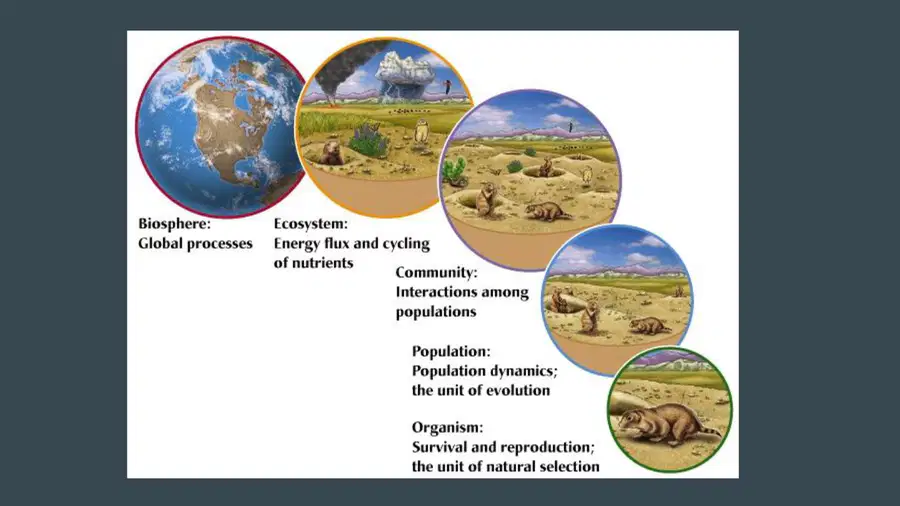
Explain the different levels of organization in ecology from smallest to largest.
12
Multiple Choice
Which of the following refers to a community of living organisms and the way they interact with nonliving parts of their environment?
trophic
biome
habitat
ecosystem
13
14
Multiple Choice
If a prey species becomes extinct, what else is most likely to happen?
The climate the species lived in will change.
The plants the species ate will also go extinct.
The predators that eat the prey may be threatened.
The habitats that the species lived in will be threatened.
15
Multiple Choice
What are the different levels of biological organization depicted in the image?
Biosphere, Ecosystem, Community, Population, Organism
Cell, Tissue, Organ, Organ System, Organism
Molecule, Cell, Tissue, Organ, Organism
Population, Community, Ecosystem, Biome, Biosphere
16
Multiple Choice
17
18
Multiple Choice
19
Open Ended
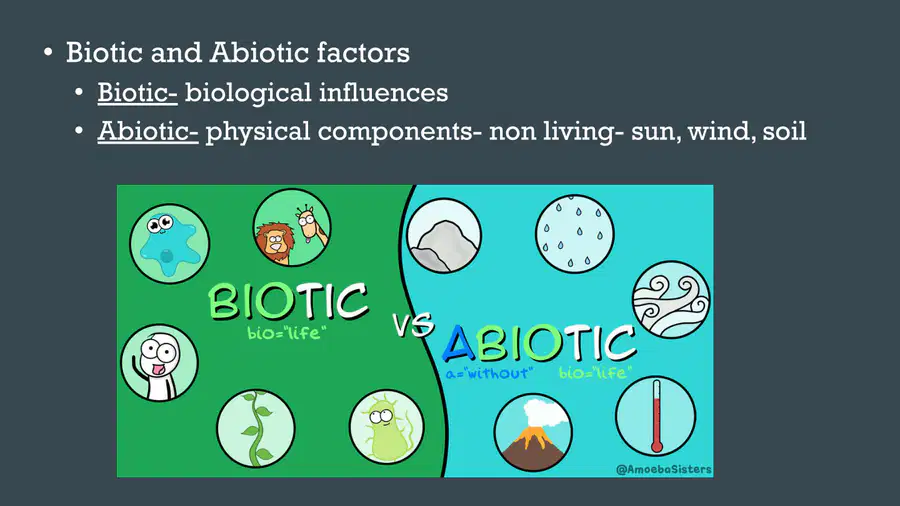
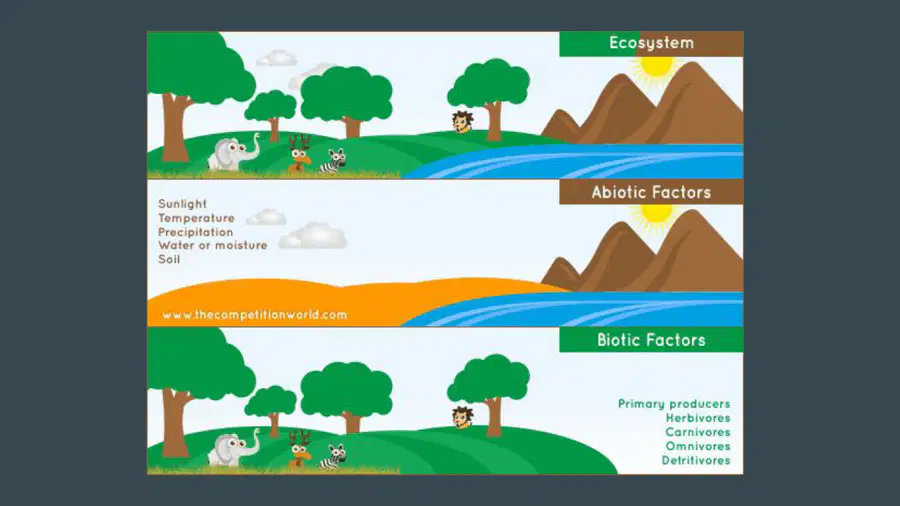
Explain the difference between biotic and abiotic factors.
20
Multiple Choice
21
22
Multiple Choice
23
Multiple Choice
Which of the following are considered abiotic factors in an ecosystem?
Temperature, Soil, Water
Plants, Animals, Bacteria
Herbivores, Carnivores, Omnivores
Producers, Consumers, Decomposers
24
Multiple Choice
25
26
Multiple Choice
27
Multiple Choice
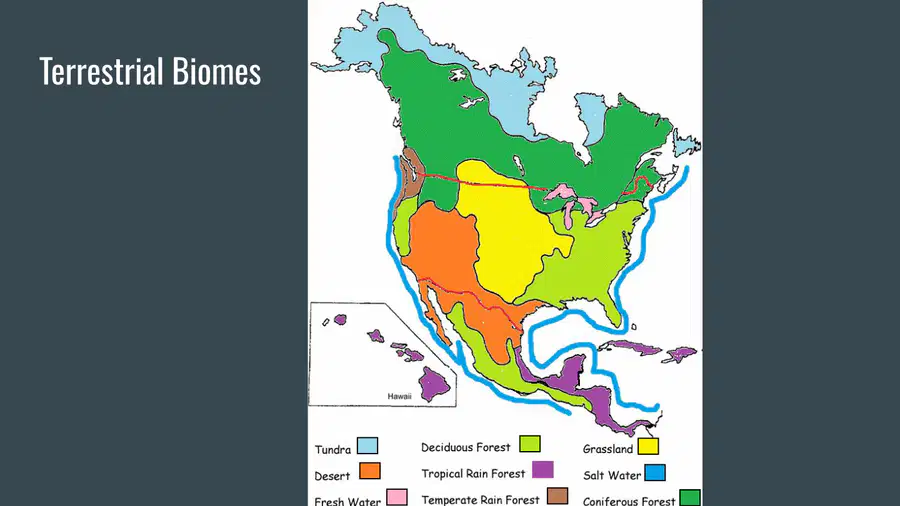
Identify the biome that covers the largest area in North America according to the map.
Tundra
Deciduous Forest
Grassland
Coniferous Forest
28
Multiple Choice
29
30
Multiple Choice
31
Multiple Choice
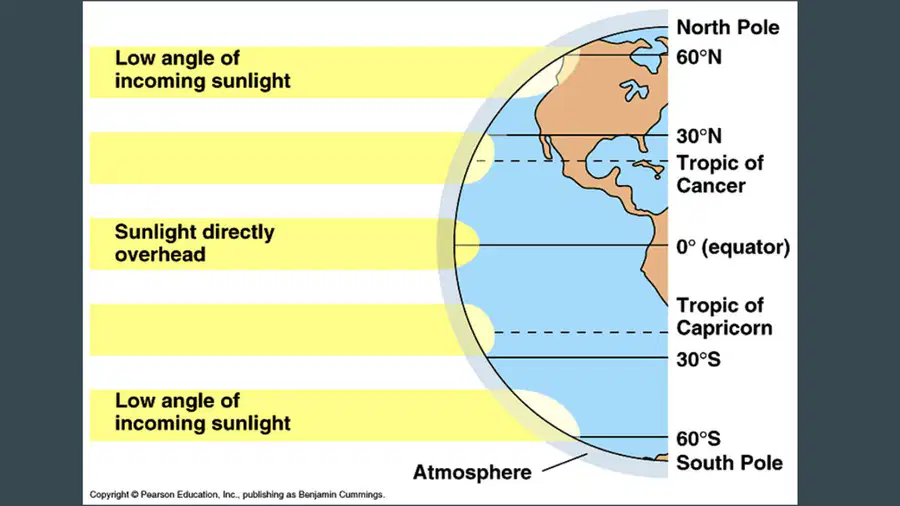
The angle of incoming sunlight affects the Earth's climate by influencing the amount of solar energy received at different latitudes. True or False?
True
False
32
Multiple Choice
33
34
Multiple Choice
35
Fill in the Blanks
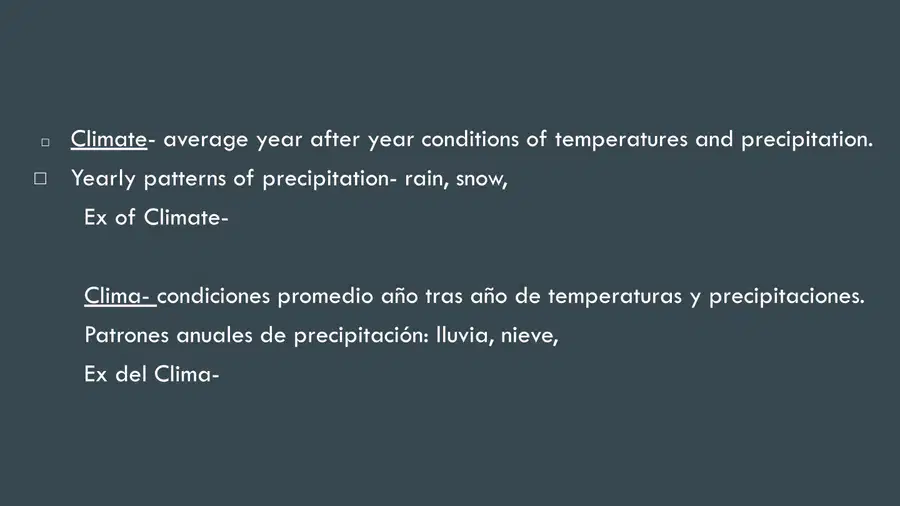
Climate is defined as the average year after year conditions of
36
Multiple Choice
37
38
Multiple Choice
Heterotrophs that eat producers and other heterotrophs are called...
autotrophs
herbivores
carnivores
omnivores
39
Multiple Choice
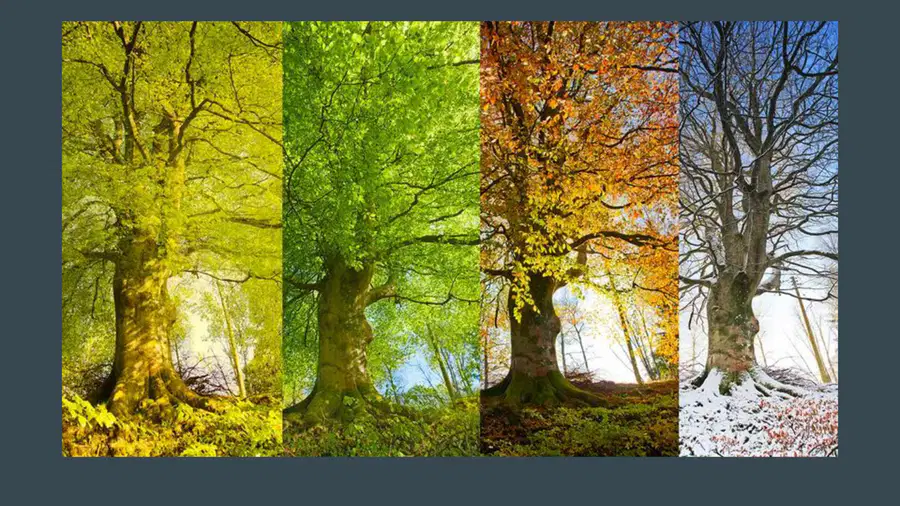
What are the four seasons depicted in the image?
Spring, Summer, Autumn, Winter
Summer, Autumn, Winter, Spring
Autumn, Winter, Spring, Summer
Winter, Spring, Summer, Autumn
40
Multiple Choice
41
42
Multiple Choice
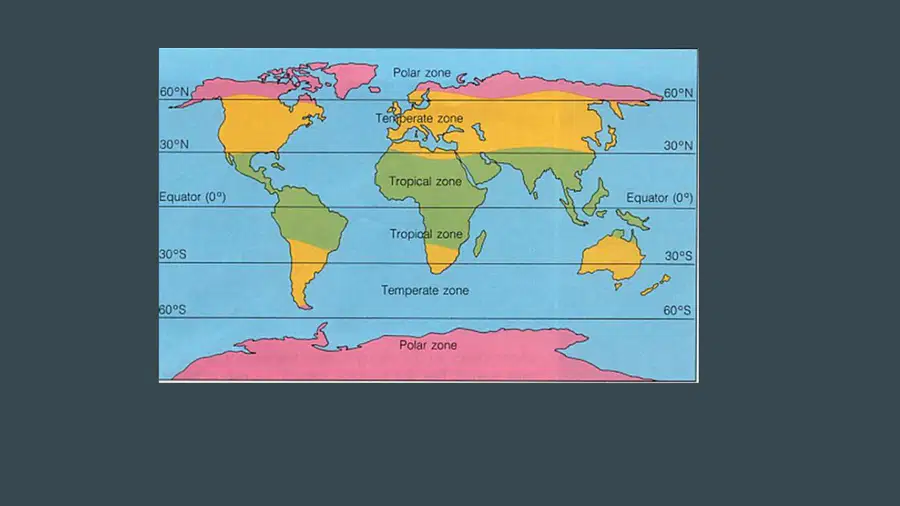
Identify the climate zones shown on the map.
Polar, Temperate, Tropical
Tropical, Subtropical, Polar
Temperate, Subtropical, Equatorial
Equatorial, Polar, Temperate
43
44
Fill in the Blanks
What is the day-to-day condition of Earth's atmosphere called?
Type answer...
45
46
Open Ended
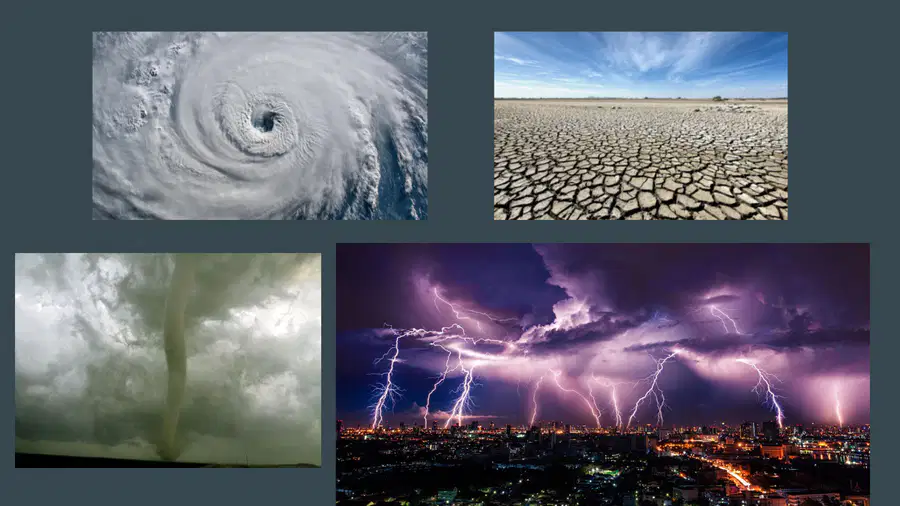
Describe one example of a weather event.
47
48
Multiple Choice
What is a food web?
A network of feeding interactions
A single food chain
A type of ecosystem
A habitat for animals
49
50
Multiple Choice
Which processes do primary producers use to obtain energy?
Photosynthesis, Chemosynthesis
Respiration, Photosynthesis
Chemosynthesis, Respiration
Photosynthesis, Fermentation
51

52
Multiple Choice
Which of the following animals is a herbivore?
Fox
Deer
Wolf
Eagle
53
54
Fill in the Blanks
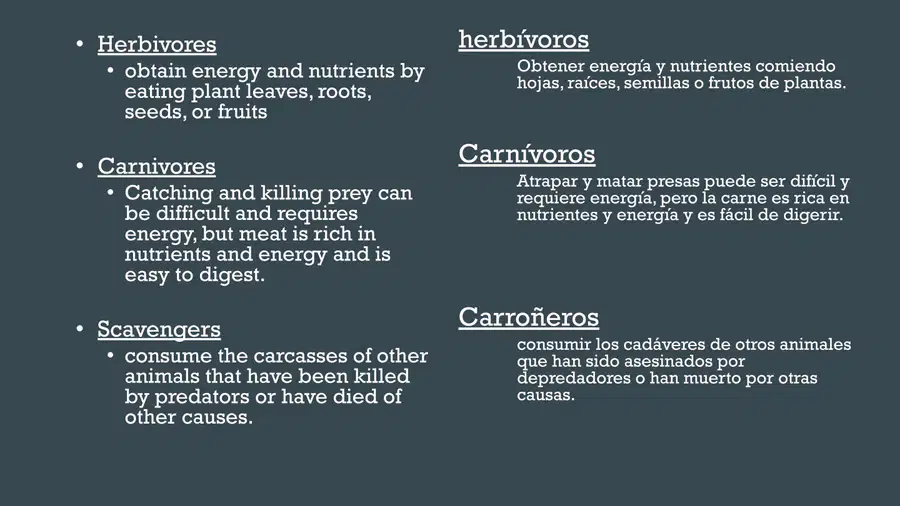
Consumers are also known as
Type answer...
55
56
57
Multiple Select
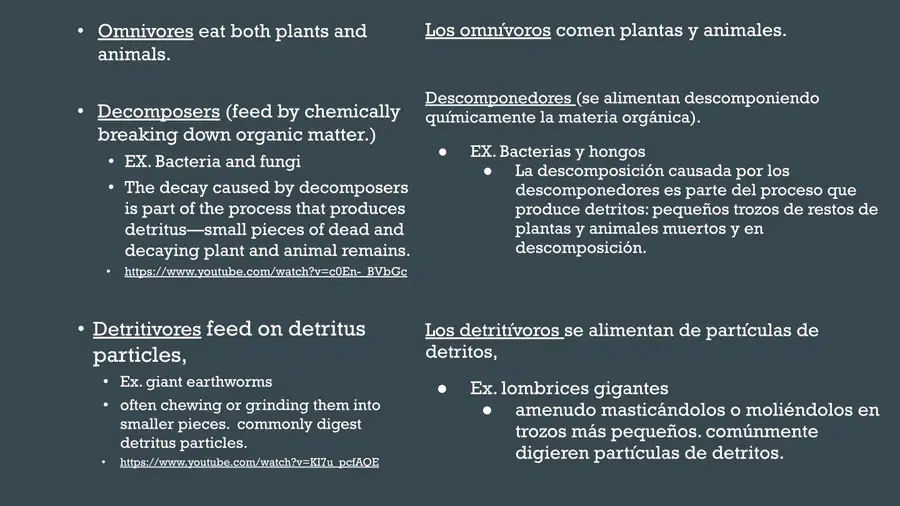
Select all that apply: Which of the following are considered consumers?
Herbivores
Carnivores
Decomposers
Omnivores
58
Multiple Choice
Which organisms obtain energy by eating both plants and animals?
Herbivores
Carnivores
Omnivores
Scavengers
59
60
Multiple Choice
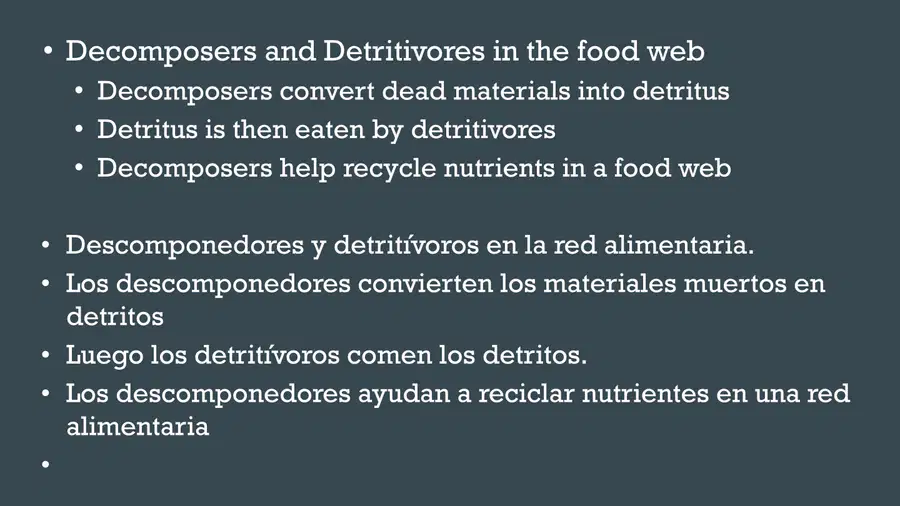
What is the primary role of decomposers in the food web?
Produce energy
Recycle nutrients
Consume plants
Hunt prey
61
62
Open Ended
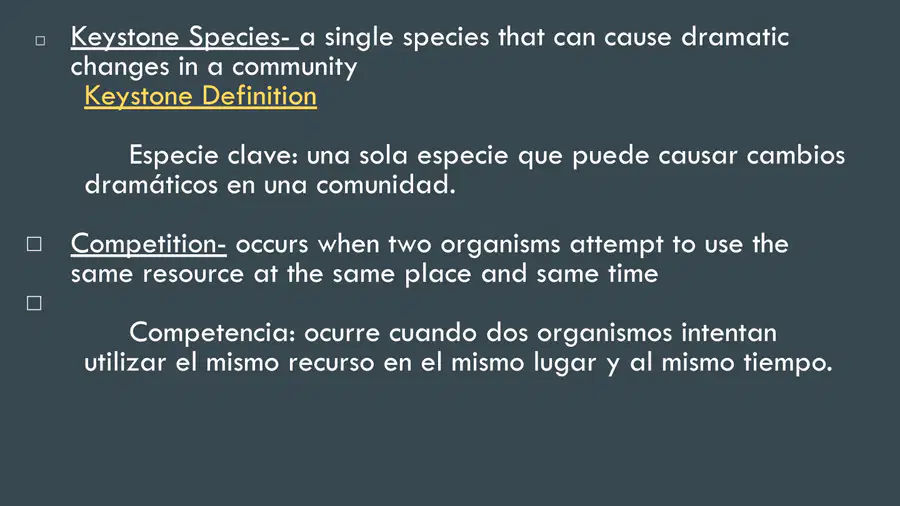
Explain the concept of a keystone species and its impact on a community.
63
64
Multiple Choice
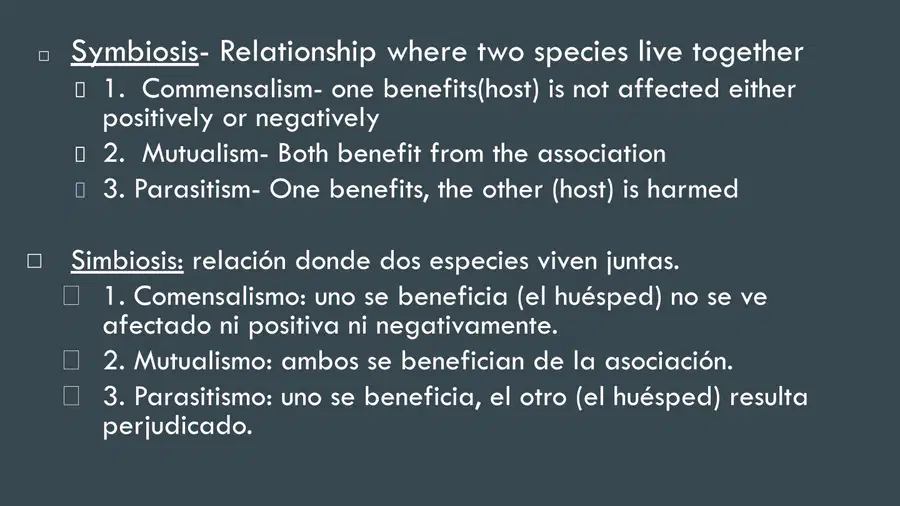
What are the three major types of symbiosis?
Commensalism, Parasitism, Competition
Mutualism, Commensalism, Parasitism
Parasitism, Predation, Mutualism
Competition, Mutualism, Commensalism
65
66
Open Ended
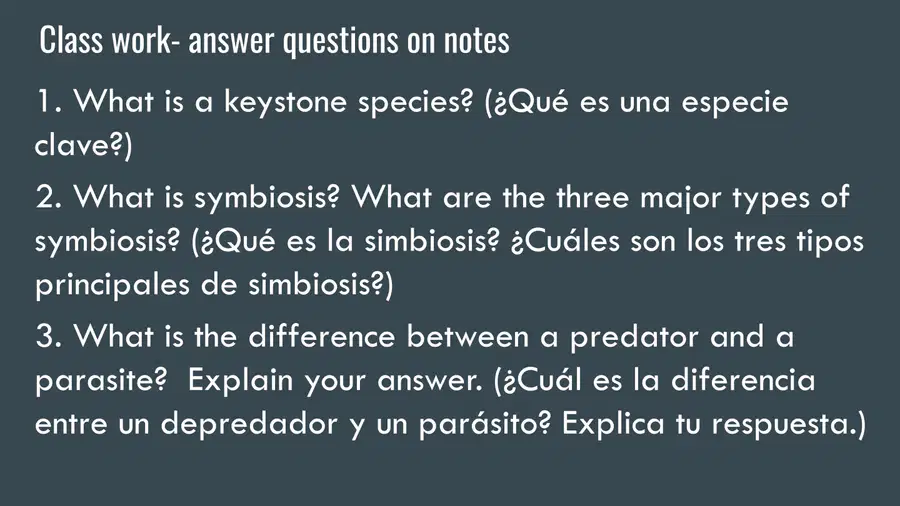
Explain the difference between a predator and a parasite.
67
Open Ended
What is symbiosis? What are the three major types of symbiosis?
68
69
Multiple Choice
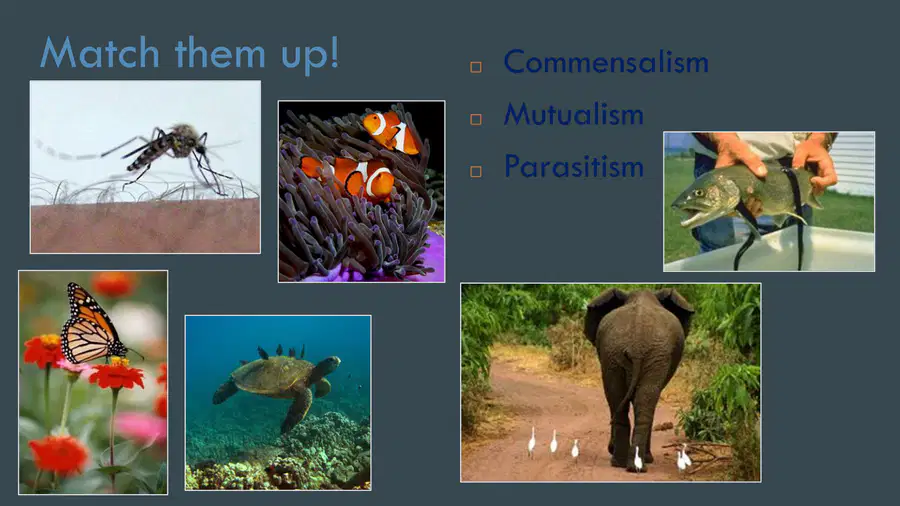
Which image represents mutualism?
Mosquito on skin
Clownfish and anemone
Fish with parasite
Elephant with birds
70
71
72
Fill in the Blanks
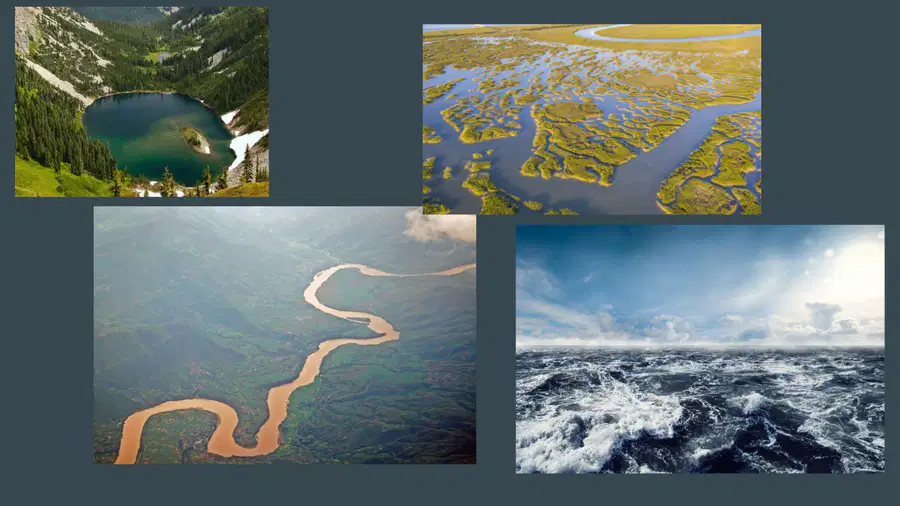
Aquatic ecosystems include lakes, rivers, and
Type answer...
73
74
Open Ended
What factors might affect aquatic ecosystems?
75
76
77
78
79
80
81
82
83
84

85
86
87
88
89
90
91
92
93

94
95
96
97
98
99
100
101
102
103
104
Fill in the Blanks
The entire planet and all life that exists on it, including land, water, and air, is known as the
Type answer...
105
Open Ended
List the levels of organization in ecology from smallest to largest.
106
Multiple Choice
What is the study of the relationships between organisms and their environment called?
Ecology
Biology
Zoology
Botany
Show answer
Auto Play
Slide 1 / 106
SLIDE
Similar Resources on Wayground

101 questions
Culture, Race, and Gender
Presentation
•
KG - University
98 questions
Training 2
Presentation
•
KG
97 questions
Kirchoff's Law
Presentation
•
9th - 12th Grade
103 questions
Asian Culture
Presentation
•
KG - University
98 questions
WH Question
Presentation
•
KG - University
102 questions
LEVEL 3c Filing your Taxes
Presentation
•
9th - 12th Grade
96 questions
BIOTEKNOLOGI KURIKULUM MERDEKA
Presentation
•
9th - 12th Grade
99 questions
2nde 2019 AP Apprendre
Presentation
•
9th - 12th Grade
Popular Resources on Wayground
10 questions
Safety Day 2026 – Student Review

Quiz
•
9th Grade
21 questions
Continents and Oceans
Quiz
•
6th Grade
20 questions
Parts of Speech
Quiz
•
5th Grade
16 questions
Subject & Predicate
Quiz
•
5th Grade
25 questions
Multiplication Facts
Quiz
•
5th Grade
12 questions
Map Skills
Quiz
•
3rd Grade
22 questions
Continents and Oceans
Quiz
•
5th Grade
15 questions
Rounding Decimals
Quiz
•
5th Grade
Discover more resources for Biology
20 questions
Cell organelles and functions
Quiz
•
10th Grade
20 questions
Cell Transport
Quiz
•
9th - 12th Grade
25 questions
photosynthesis and cellular respiration
Quiz
•
9th Grade
20 questions
Cell Cycle
Quiz
•
9th Grade
8 questions
DNA vs. RNA
Presentation
•
9th - 12th Grade
14 questions
Ecological Succession: Primary and Secondary
Quiz
•
9th Grade
20 questions
Macromolecules
Quiz
•
10th Grade
20 questions
Characteristics of Life
Quiz
•
9th - 10th Grade