Search Header Logo
  1. Resource Library
  2. Science
  3. Chemistry
  4. Phase Change
  5. Phase Changes And Heat Energy Cornell Doodle Notes Presentation

Phase Changes and Heat Energy Cornell Doodle Notes Presentation

Phase Changes and Heat Energy Cornell Doodle Notes Presentation

Assessment

Presentation

•

Science

•

7th - 12th Grade

•

Practice Problem

•

Medium

•
NGSS
MS-PS1-4, MS-PS3-1, MS-PS3-4

Standards-aligned

Created by

Sarah Denaker

Used 1+ times

FREE Resource

23 Slides • 12 Questions

1

media

2

Unit 5 Notes

States of Matter and Phase Changes

Fill out pages 11-14 of your Unit 5 note packet as you move through this lesson

3

media

4

Multiple Choice

Which of the following best describes kinetic energy?

1

The energy of an object because of motion.

2

The energy stored in chemical bonds.

3

The energy an object has due to its position.

4

The energy released during a nuclear reaction.

5

media

6

Multiple Choice

Which of the following statements best describes what happens to the energy of particles at high and low temperatures according to the Kinetic Molecular Theory?

1

At high temperatures, particles have high energy; at low temperatures, particles have less energy.

2

At high temperatures, particles stop moving; at low temperatures, particles move faster.

3

At high temperatures, particles lose energy; at low temperatures, particles gain energy.

4

At high temperatures, particles are tightly packed; at low temperatures, particles spread out.

7

8

media

9

media

10

Multiple Select

Which of the following factors does thermal energy depend on?

1

The type of particles in the system

2

The total number of particles in the system

3

How fast the particles are moving (their temperature)

4

The color of the particles

11

media

12

media

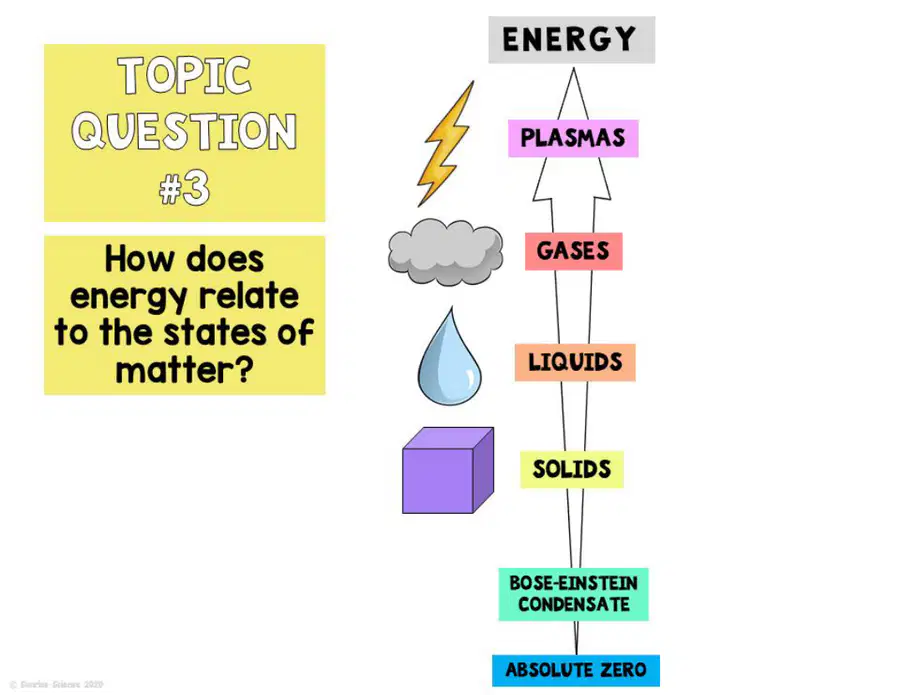
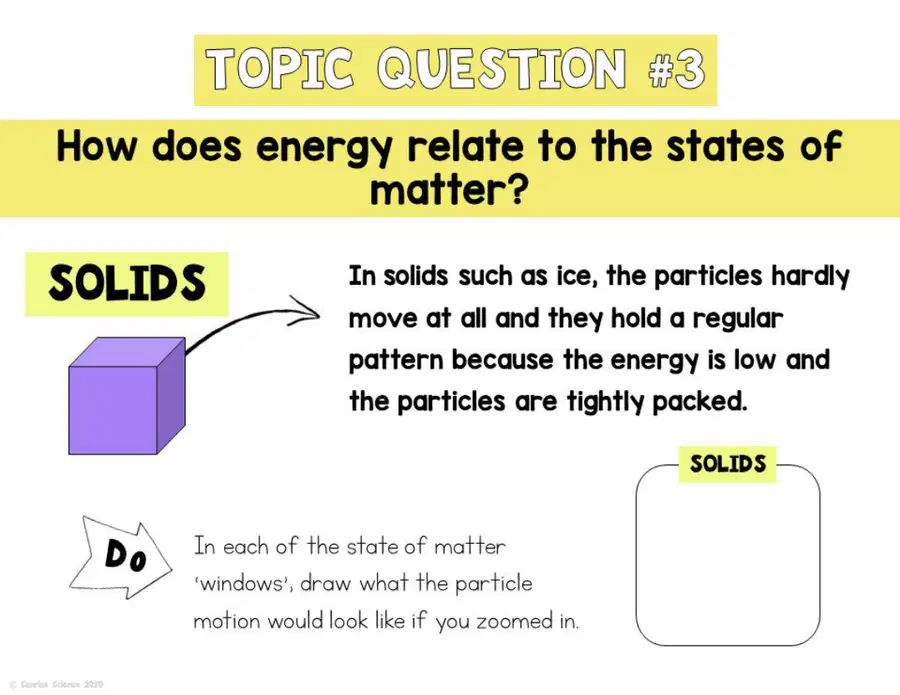
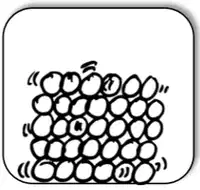
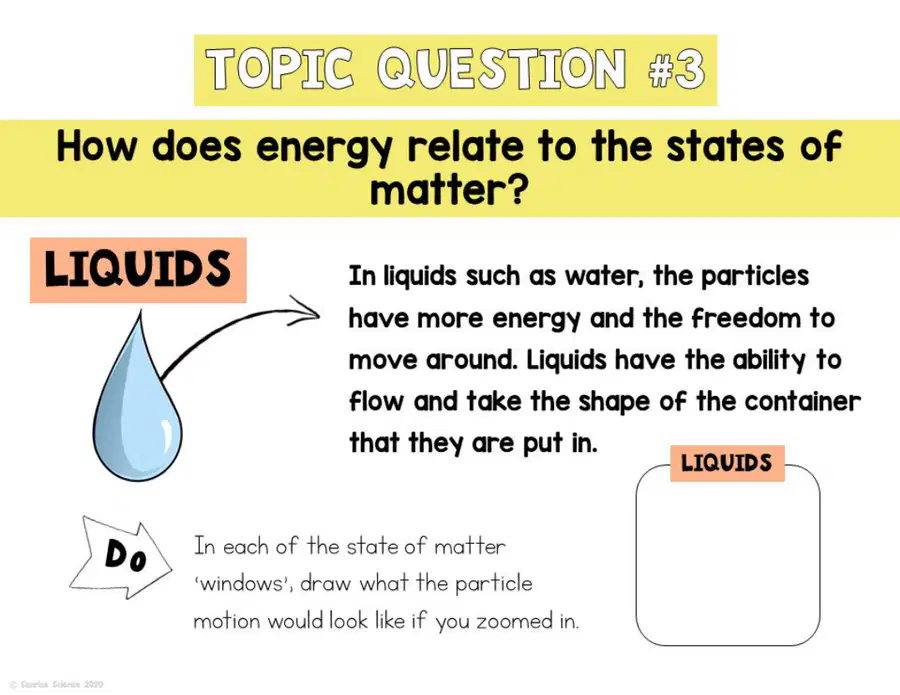
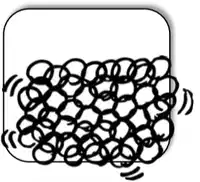
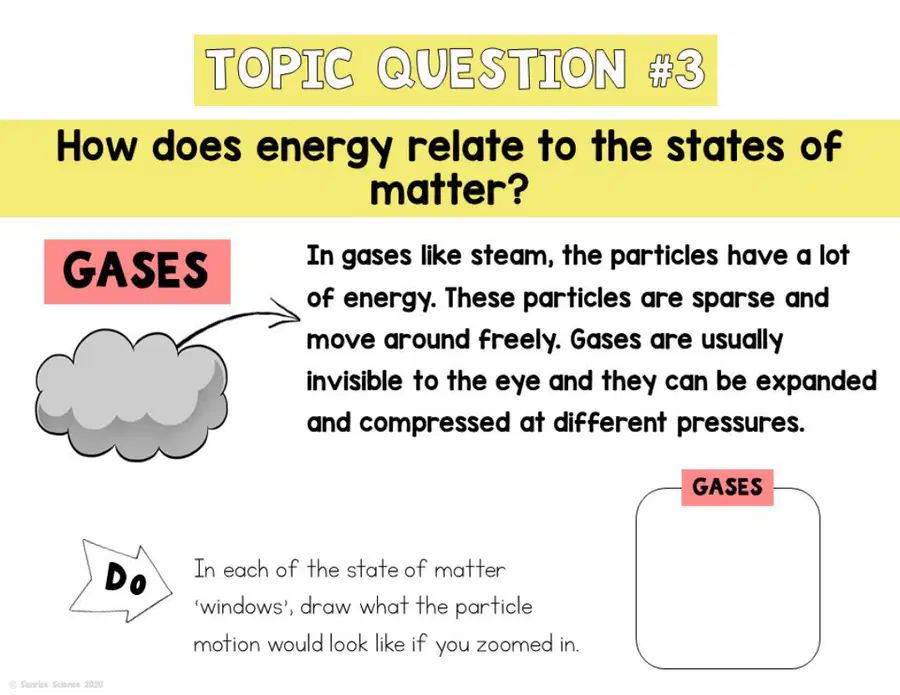
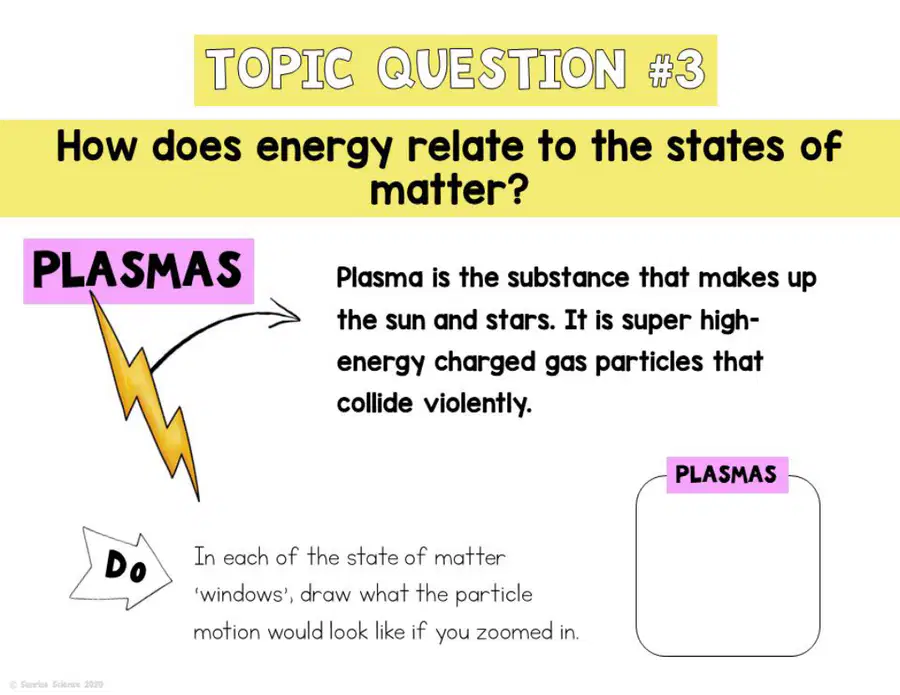
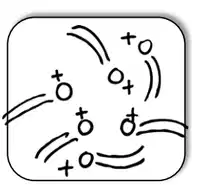
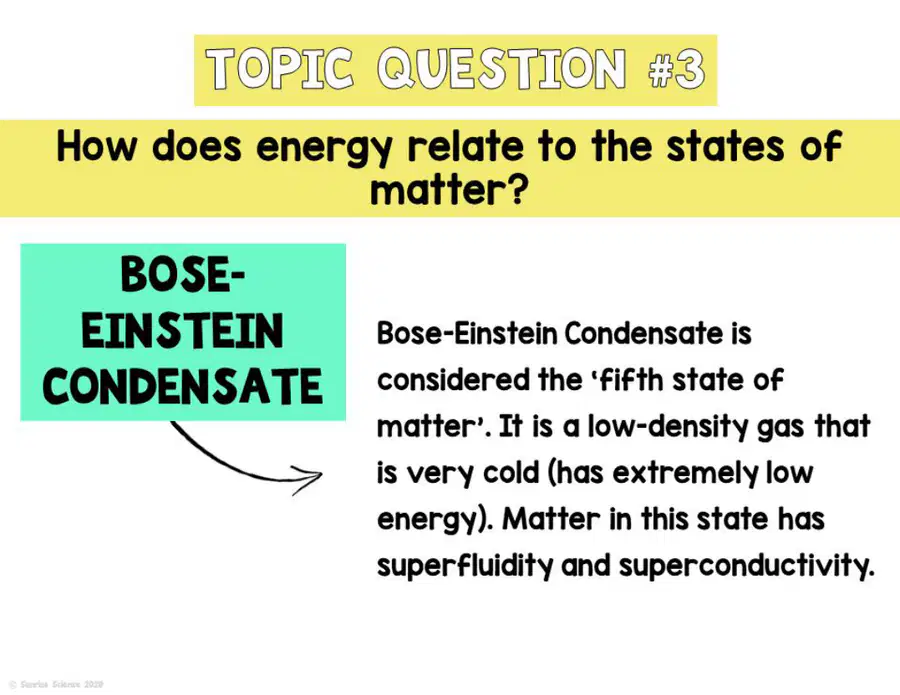
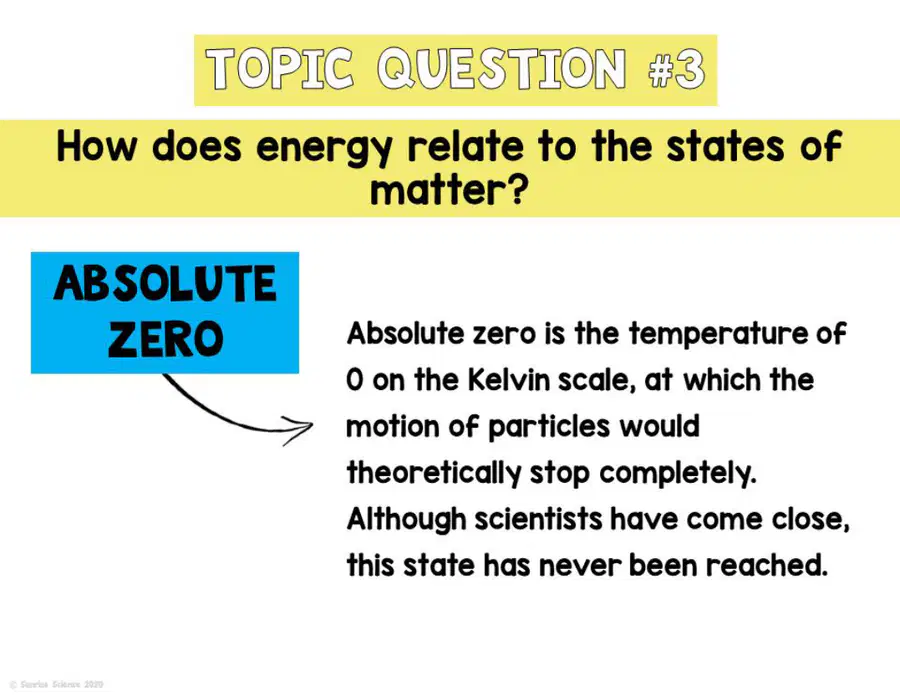
​Use the following 'Topic Question 3' slides to complete the notes on page 12 of your Unit 5 note packet

13

media
media

14

media
media

15

media
media

16

media
media

17

Multiple Choice

How does the energy of particles differ between liquids, gases, and plasmas?

1

Liquids have the most energy, followed by gases, then plasmas.

2

Gases have the most energy, followed by plasmas, then liquids.

3

Plasmas have the most energy, followed by gases, then liquids.

4

Liquids and gases have the same energy, but plasmas have more.

18

media

19

media

20

Fill in the Blanks

The state of matter with the lowest energy is

Type answer...

.

21

media

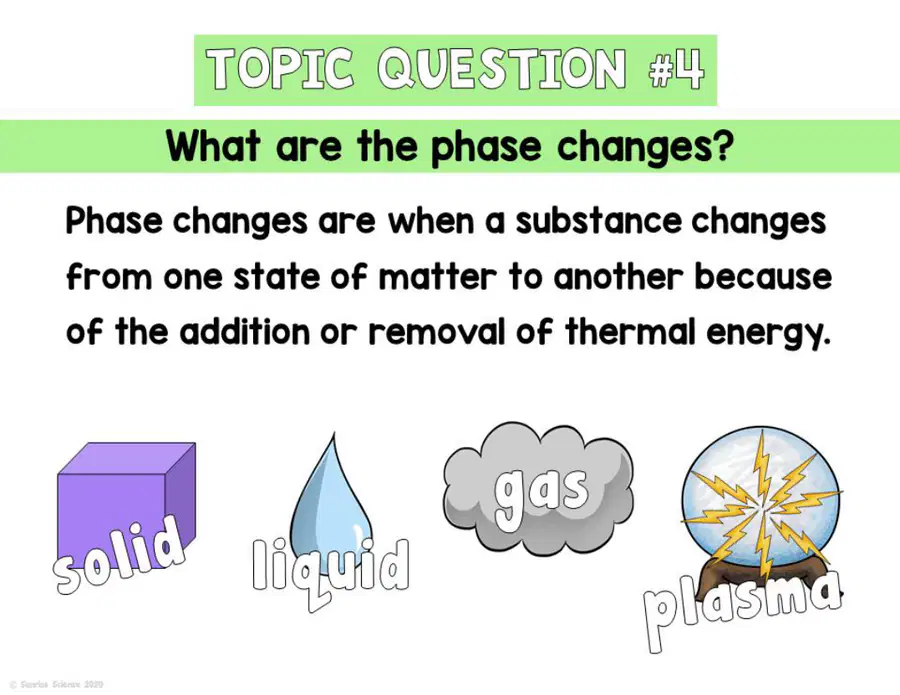
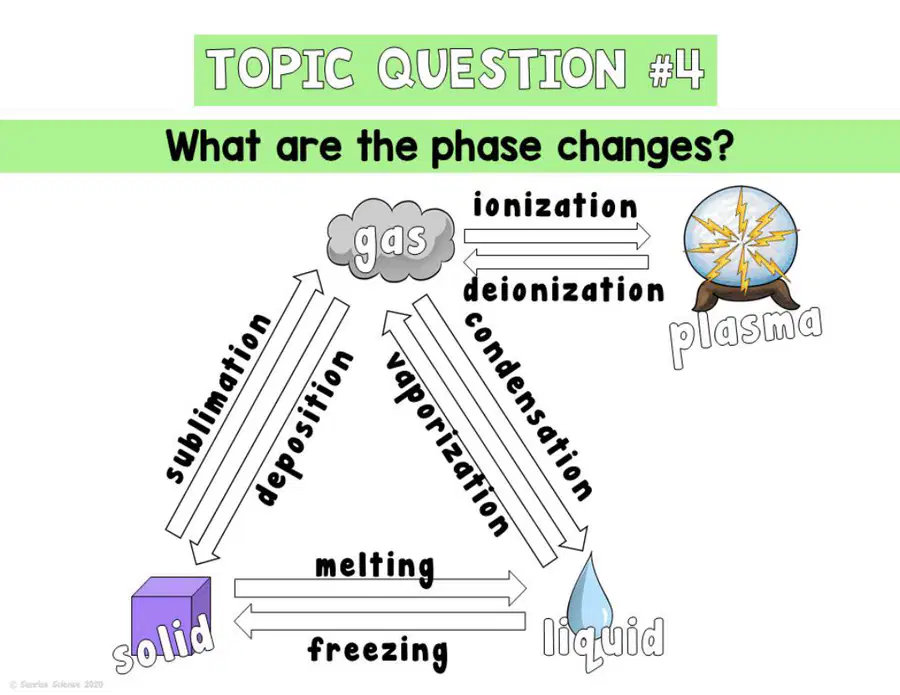
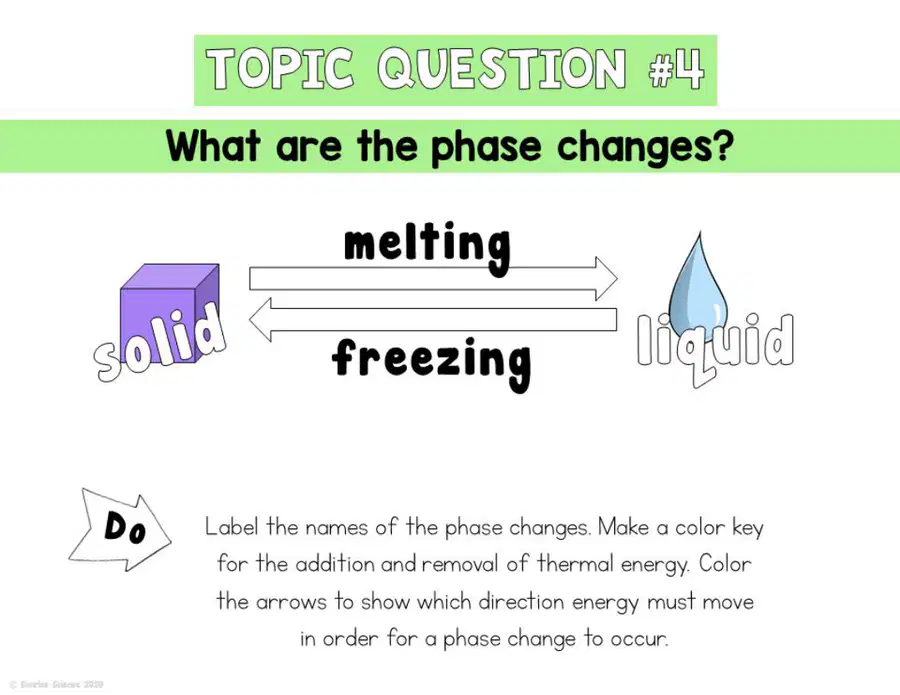
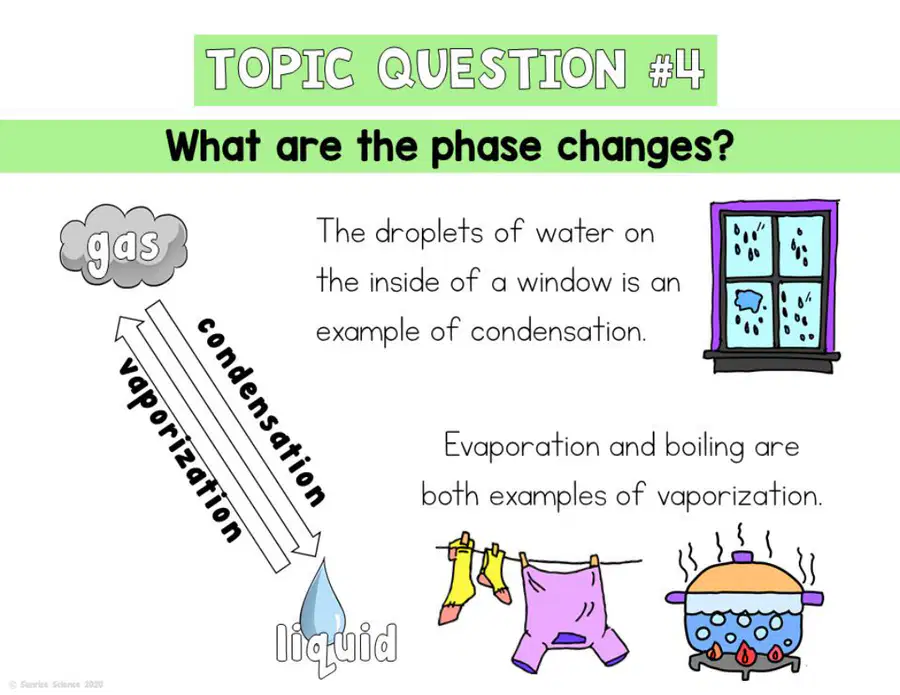
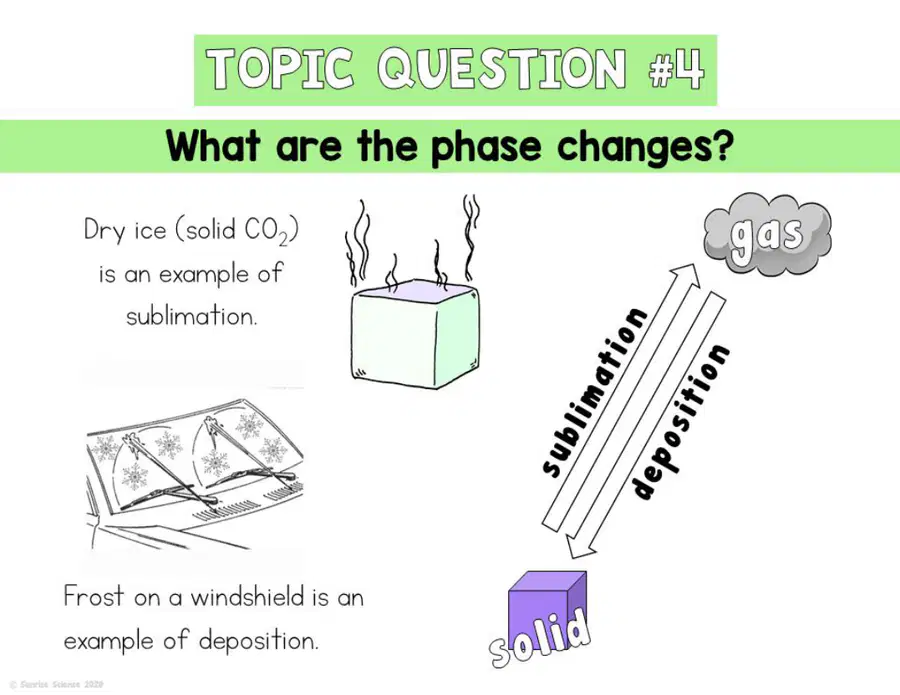
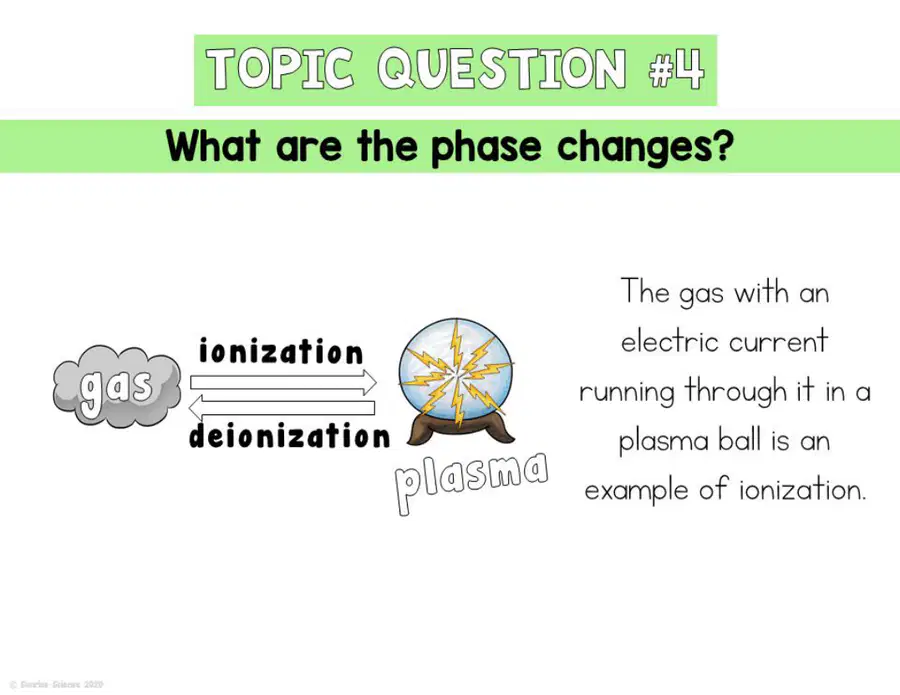
​Go to page 13 for the Topic #4 notes

22

media

23

media

24

media

25

media

26

media

27

media

28

Multiple Choice

Phase changes are when a substance changes from one state of matter to another because of the addition or removal of thermal energy. Which of the following are examples of phase changes?

1

Melting, freezing, condensation, evaporation

2

Melting, dissolving, burning, freezing

3

Evaporation, rusting, condensation, melting

4

Freezing, sublimation, dissolving, burning

29

Open Ended

What are the phase changes?

30

Fill in the Blanks

The process by which a liquid turns into a solid is called

Type answer...

.

31

Multiple Choice

Which phase change describes the process where a solid turns directly into a gas?

1

Sublimation

2

Deposition

3

Condensation

4

Melting

32

Multiple Select

Which of the following are examples of vaporization?

1

Evaporation

2

Boiling

3

Condensation

4

Freezing

33

Multiple Choice

Which phase change occurs when a gas becomes plasma?

1

Ionization

2

Condensation

3

Deposition

4

Melting

34

Open Ended

Explain how energy is involved in the phase changes between solid, liquid, and gas.

35

media

​Complete the 'Sum it Up' questions on page 14 of your Unit 5 note packet

pattern-tertiary
media

Show answer

Auto Play

Slide 1 / 35

SLIDE