

Unit 6 Short Answer Practice - Slides Version

Presentation
•
History
•
10th Grade
•
Practice Problem
•
Medium

Shayne Hanpanit
Used 1+ times
FREE Resource
12 Slides • 5 Questions
1
Unit 6 Short Answer Review
2
Unit Refresher
We will first be going over some multiple-choice questions and answer explanations which will provide some useful information you may use to answer the short answer question on the test.
Then, we will complete a practice short answer question to prepare you for the Unit 6 Test's short answer prompt.
3
Multiple Select
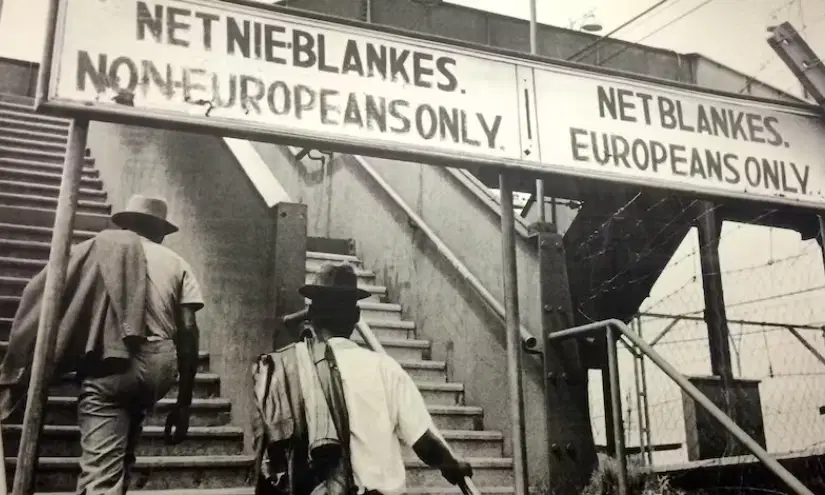
What were three obstacles to democracy that South Africa experienced?
(Choose 3 correct answers)
Apartheid laws segregated society based on race
Nelson Mandela's release from prison
Apartheid government suppressed protests
The African National Congress was formed
High unemployment and poverty
4
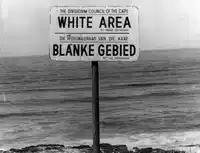
Apartheid laws were passed in in 1948, which segregated society based on race and persecuted black South Africans
Protests were suppressed, and the African National Congress formed to opposed apartheid was banned; anti-apartheid leaders such as Nelson Mandela were arrested
Apartheid finally ended in 1994, though South Africa continues to face high unemployment and poverty levels
Apartheid in South Africa
5
Multiple Select

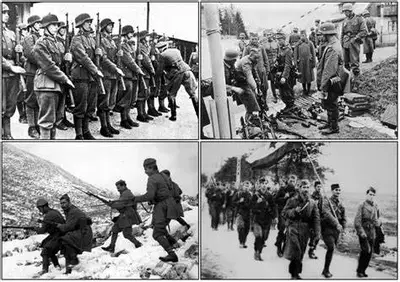
What were three obstacles to democracy that Central and Eastern European countries experienced after the collapse of the Soviet Union?
(Choose 3 correct answers)
Rising unemployment in Czechoslovakia
Poland was faced with an economic crisis in the 1990s
The destruction of the Berlin Wall
Violent conflicts between ethnic and religious groups in Yugoslavia
Democratic and socialist parties formed a coalition in Hungary
6

Though countries like Poland and Hungary held democratic elections, they were faced with severe economic crises
Disagreement over an economic crisis caused Czechoslovakia to split into the Czech Republic and Slovakia
Yugoslavia collapsed into civil war and broke apart into multiple countries due to violence between ethnic/religious groups
Central & Eastern Europe after Soviet collapse
7
Multiple Select

What were three obstacles to democracy that China experienced during its era of reform?
(Choose 3 correct answers)
Imprisonment of political opponents
Deng Xiaoping modernized the economy
Mao Zedong's Cultural Revolution led to millions of deaths
Deng Xiaoping cracked down violently on pro-democracy protests
Selling state industries to private owners
8
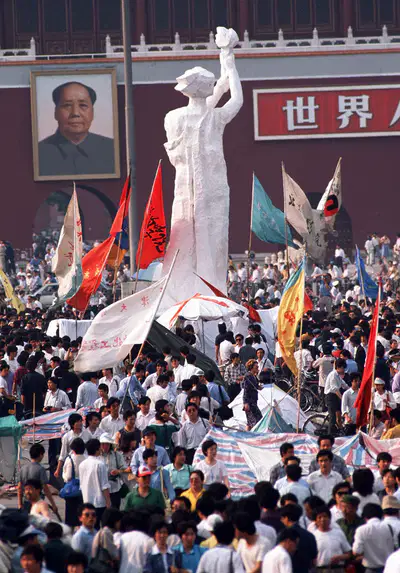
Mao Zedong opposed economic reformists, leading a Cultural Revolution in the 1960s which led to millions of deaths
Deng Xiaoping implemented economic reforms, but also violently cracked down on pro-democratic protests, such as the student protest in Tiananmen Square in 1989
China: Reforms and Reactions
9
Multiple Select
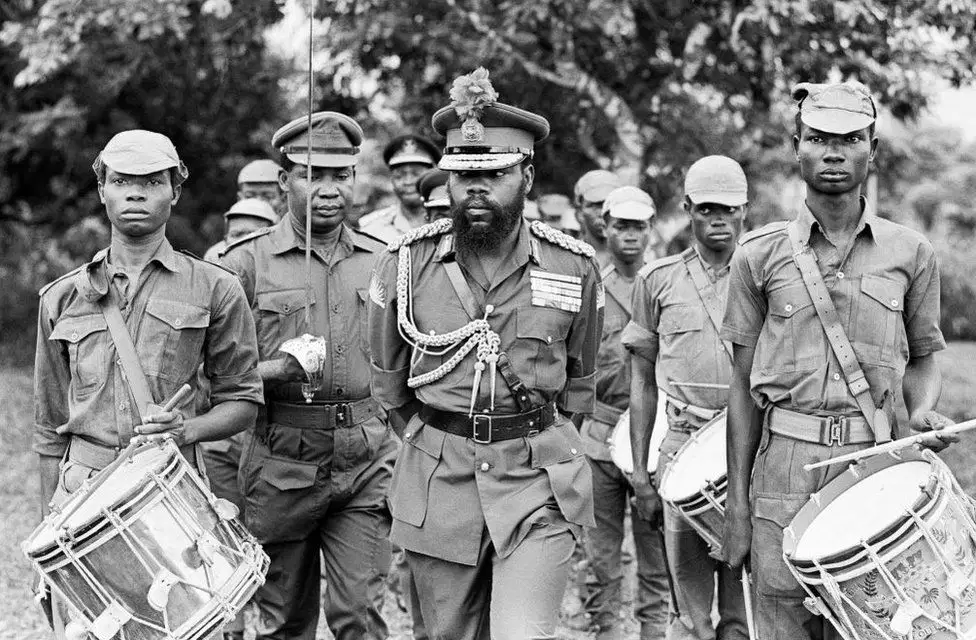
What were three obstacles to democracy that post-colonial Nigeria experienced after gaining independence?
(Choose 3 correct answers)
Civil war waged between ethnic groups
Modernization of the oil economy
Military coups which overthrew elected officials
Critics of the military government were jailed for their speech
Military leaders giving back power to civilian leaders
10
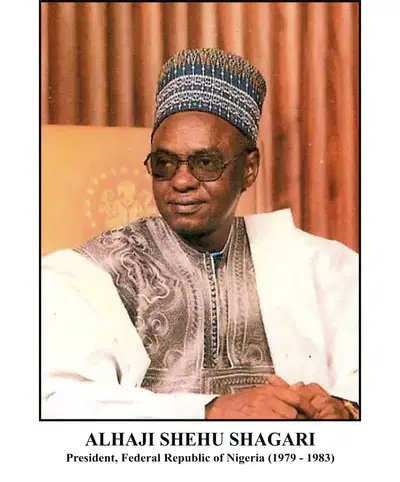
A civil war in the 1960s between the government and the Igbo ethnic group led to millions of deaths
The Nigerian military overthrew civilian governments in 1983 and 1993
Military governments arrested critics and framed them for crimes they did not commit
Nigeria After Colonialism
11
Practice Short Answer
Choose one of the following regions:
South Africa, Central or Eastern Europe, China or Nigeria
Then, answer the following question:
Did your region of choice face obstacles in transitioning to democracy? If so, what is one example of an obstacle it faced?
12
Break it down!
Choose one of the following regions:
South Africa, Central or Eastern Europe, China or Nigeria
Then, answer the following question:
(1) Did your region of choice face obstacles in transitioning to democracy?
(2) If so, what is one example of an obstacle it faced?
13
How to start your response?
"(Region) (faced/did not face) obstacles in transitioning to democracy.
For example, one obstacle (Region) faced was ______________"
14
Open Ended
Choose one of the following regions: South Africa, Central or Eastern Europe, China or Nigeria
Then, answer the following question:
Did your region of choice face obstacles in transitioning to democracy? If so, what is one example of an obstacle it faced?
Sentence Starters:
"(Region) (faced/did not face) obstacles in transitioning to democracy.
For example, one obstacle (Region) faced was _______________________________"
15
"Nigeria faced obstacles in transitioning to democracy.
For example, one obstacle Nigeria faced was the intervention of military governments. Military governments in Nigeria staged coups to overthrow elected civilian leaders and imprisoned people who criticized their actions."
Sample Response
16
Of the following regions, which do you believe faced the most significant challenges in transitioning to democracy during the late 20th century?
(Explain your answer in 5-6 sentences, incorporating at least 2-3 specific examples or pieces of evidence to support your claim.)
Post-Apartheid South Africa
Central and Eastern Europe after the collapse of the Soviet Union
China during its era of reform and reaction
African nations grappling with colonial legacies
Unit 6 Test
Short Answer Prompt
17
Possible Sentence Starters
"I believe that (region) faced the most significant challenges in transitioning to democracy during the late 20th century.
One example of a challenge (region) faced was ______________. Additionally, ___________________.
Furthermore, ___________________."
Unit 6 Short Answer Review
Show answer
Auto Play
Slide 1 / 17
SLIDE
Similar Resources on Wayground

10 questions
Using Democratic Tools to Pursue Freedom
Presentation
•
9th Grade
13 questions
Miners and Ranchers of the West
Presentation
•
10th Grade
11 questions
WHII 08: Napoleon and Nationalism SOL Prep
Presentation
•
10th Grade
15 questions
The French Revolution Recap
Presentation
•
10th Grade
13 questions
Unit 6-2 Lesson (Hoover)
Presentation
•
11th Grade
12 questions
SS.912.A.5.1 Post-World War I Demobilization
Presentation
•
11th Grade
15 questions
Narrative Elements of a Quest
Presentation
•
10th Grade
11 questions
7.1 Shifting Power After 1900
Presentation
•
9th Grade
Popular Resources on Wayground
10 questions
GPA Lesson
Presentation
•
9th - 12th Grade
7 questions
Albert Einstein

Quiz
•
3rd Grade
31 questions
Bridge A Review
Quiz
•
3rd Grade
6 questions
Blue Sue and Red Ruth
Quiz
•
3rd Grade
8 questions
(Day12 HW) Inverse Trig Ratios
Quiz
•
9th Grade
20 questions
Summer Geometry QUIZ (Week3)
Quiz
•
9th Grade
16 questions
Theme Practice
Quiz
•
7th Grade
20 questions
Taxes
Quiz
•
9th - 12th Grade
Discover more resources for History
10 questions
GPA Lesson
Presentation
•
9th - 12th Grade
20 questions
Taxes
Quiz
•
9th - 12th Grade
16 questions
Translations and Reflections
Quiz
•
9th - 10th Grade
17 questions
High School Survival Guide
Presentation
•
9th - 12th Grade
20 questions
Banking
Quiz
•
9th - 12th Grade
20 questions
Budgeting
Quiz
•
9th - 12th Grade