Search Header Logo
Gr 11 Weather in Review

Gr 11 Weather in Review

Assessment

Presentation

Geography

9th - 12th Grade

Medium

Created by

Brian Daley

Used 1+ times

FREE Resource

5 Slides • 72 Questions

1

Weather in Review

By Brian Daley

2

Elements of Weather and Their Instruments

  • When we talk about the weather we usually talk about the following things.

  1. Temperature

  2. Precipitation (rain etc)

  3. Sunshine

  4. Wind speed

  5. Wind direction

  6. Atmospheric pressure

  7. Humidity


All of these different aspects of the weather can be measured. There are different weather instruments to measure each thing. These instruments are usually in a weather station.


3

Multiple Choice

What is visibility in meteorology?

1

The amount of rain in the atmosphere

2

The maximum distance at which objects can be clearly discerned

3

The speed of wind in a particular area

4

The temperature of the air

4

Multiple Choice

Which instrument is commonly used to measure visibility?

1

Anemometer

2

Thermometer

3

Barometer

4

Visibility meter

5

Multiple Choice

How do clouds form?

1

By the evaporation of water from the ground

2

By the accumulation of dust in the atmosphere

3

By the condensation of water vapor in the air

4

By the melting of ice crystals in the sky

6

Multiple Choice

What type of cloud is associated with thunderstorms and heavy rain?

1

Cumulus

2

Cumulonimbus

3

Cirrus

4

Stratus

7

Multiple Choice

What is sunshine duration?

1

The total number of hours when it's snowing

2

The total number of hours when it's raining

3

The total number of hours when the sun is shining

4

The total number of hours when the moon is shining

8

Multiple Choice

Which instrument is commonly used to record sunshine duration?

1

Campbell-Stokes recorder

2

Thermometer

3

Barometer

4

Hygrometer

9

Multiple Choice

What type of climate does The Bahamas generally experience in terms of sunshine duration?

1

Low sunshine duration

2

Moderate sunshine duration

3

No sunshine duration

4

High sunshine duration

10

Multiple Choice

1. What is sunshine duration?

a. The total number of hours when the sun is shining and obscured by clouds.
b. The total number of hours when the sun is shining and not obscured by clouds.
c. The total number of hours when the sun is not shining.
d. The total number of hours when the sun is obscured by clouds.

1

A

2

B

3

C

4

D

11

Multiple Choice

Which instrument is commonly used to measure sunshine duration?

a. The Campbell-Stokes recorder.
b. The Hygrometer.
c. The Barometer.
d. The Anemometer.

1

A

2

B

3

C

4

D

12

Multiple Choice

How does the Campbell-Stokes recorder work?

a. It uses a glass sphere to focus sunlight onto a card.
b. It uses a glass sphere to focus moonlight onto a card.
c. It uses a glass sphere to focus raindrops onto a card.
d. It uses a glass sphere to focus wind onto a card.

1

A

2

B

3

C

4

D

13

Multiple Choice

What does the length of the burn trace on the card indicate?

a. The temperature.
b. The wind speed.
c. The duration of sunshine.
d. The amount of rainfall.

1

A

2

B

3

C

4

D

14

Multiple Choice

What is the relevance of sunshine duration in the Bahamas?

a. It is crucial for tourism and agriculture.
b. It has no relevance in the Bahamas.
c. It is only important for climate studies.
d. It is only important for solar energy research.

1

A

2

B

3

C

4

D

15

Multiple Choice

What type of rain occurs when two air masses of different temperatures meet?

a. Orographic Rain
b. Frontal Rain
c. Convectional Rain
d. None of the above

1

A

2

B

3

C

4

D

16

Multiple Choice

What happens when warm, moist air is forced to rise over colder air?

a. It cools and condenses to form clouds and precipitation.
b. It evaporates and forms fog.
c. It disperses and forms clear skies.
d. None of the above.

1

A

2

B

3

C

4

D

17

Multiple Choice

Which type of rain is common in mid-latitude areas and is associated with weather fronts and cyclonic activity?

a. Convectional Rain
b. Frontal Rain
c. Orographic Rain
d. None of the above

1

A

2

B

3

C

4

D

18

Multiple Choice

What causes orographic rain?

a. The heating of the Earth's surface
b. The rising of warm, moist air
c. The convergence of air masses
d. The forcing of moist air to ascend due to terrain

1

A

2

B

3

C

4

D

19

The Atmosphere and Weather

Layers the Atmosphere
Radiation and the Impact on the Earth
Greenhouse Effect

20

Multiple Choice

Question image
What are the two most common greenhouse gases?
1
Water Vapor (H2O) and Methane (CH4)
2
Carbon Dioxide COand Methane (CH4)
3
Water Vapor (H2O) and Carbon Dioxide CO2
4
Water Vapor (H2O) and Nitrous oxide (N2O)

21

Multiple Choice

Which in the atmosphere protects us from harmful UV radiation?

1

Ozone

2

Water Vapor

3

Methane

4

Sulfur Dioxide

5

Carbon Dioxide

22

Multiple Choice

What type of waves get trapped inside the greenhouse?
1
Sunlight
2
Ultraviolet
3
Microwaves
4
Infrared

23

Multiple Choice

What results from livestock and other agricultural practices and by the decay of organic waste in municipal solid waste landfills?

1

Carbon Dioxide

2

Methane

3

Water Vapor

4

Fluorinated Gases

5

Nitrous Oxide

24

Multiple Choice

______ is emitted to the atmosphere during the production, processing, storage, transmission, and distribution of natural gas.

1

Water Vapor

2

Fluorinated Gases

3

Nitrous Oxide

4

Carbon Dioxide

5

Methane

25

Multiple Choice

The primary source of CH4 emissions is _______.

1

Industry

2

Agriculture

3

Carbon Sinks

4

Fossil Fuels

5

Electricity

26

Multiple Choice

_______ is removed from the atmosphere when it is absorbed by certain types of bacteria or destroyed by ultraviolet radiation or chemical reactions.

1

Fluorinated Gases

2

Water Vapor

3

Carbon Dioxide

4

Nitrous Oxide

5

Methane

27

Multiple Choice

1.  In the past, refrigerators, aerosol spray propellants and cleaning solvents were all sources of a greenhouse gas known as
1
carbon dioxide
2
methane
3
chlorofluorocarbon (CFC)
4
nitrous oxide

28

Multiple Choice

1.  Why is the Ozone important to life on Earth?
1
A.   The Ozone reflects all the Ultra Violet radiation
2
A.  The Ozone absorbs all the heat that come up from the Earth.
3
The Ozone provides all the oxygen to Earth.
4
The Ozone protects the Earth’ s atmosphere and the life on Earth from harmful radiant energy emitted by the sun   

29

Multiple Choice

One thing people in the United States could do to reduce air pollution is
1
drive their cars more.
2
burn more fossil fuels.
3
use more public transportation. (Which would mean less vehicles on road)           
4
build more factories.

30

Multiple Choice

In the winter, the Northern Hemisphere is tilted away from the Sun, and receives the smallest amount of solar energy than any other time of the year. What can be expected in the Northern Hemisphere during this season?

1

warmer temperatures and decreased daylight

2

cooler temperatures and increased daylight

3

warmer temperatures and increased daylight

4

D)cooler temperatures and decreased daylight

31

Multiple Choice

What is primarily responsible for the creation of seasons on the earth?

1

the tilt of the sun

2

the distance from the sun

3

the axial tilt of the earth

4

the reflection of the sun's rays from the earth

32

Multiple Choice

If you wanted to make all days on Earth the same length, what would you have to do?

1

Keep the Earth from tilting on its axis.

2

Increase the speed of the Earth’s rotation.

3

Tilt the Northern Hemisphere all the way toward the Sun.

4

Tilt the Southern Hemisphere all the way toward the Sun.

33

Multiple Choice

Question image

Check out the image of Earth. The Northern Hemisphere is found above the equator (Points A and B) and the Southern Hemisphere is located below the equator (Points C and D). Here it is warmer in summer (C) than in winter (A), because in summer

1

the days are longer.

2

the Earth is closer to the Sun.

3

Point C gets more direct sunlight.

4

the Southern Hemisphere is tilted away from the Sun.

34

Multiple Choice

78% of the Earth's atmosphere is ___________ and 21% of the Earth's atmosphere is _____________.

1

Oxygen, Nitrogen

2

Nitrogen, Oxygen

3

Nitrogen, Carbon Dioxide

4

Oxygen, Carbon Dioxide

35

Multiple Choice

In what layer of the atmosphere do all weather events occur?

1

Stratosphere

2

Exosphere

3

Mesosphere

4

Troposphere

36

Multiple Choice

In the troposphere, the temperature _____ as altitude increases.

1

Increases

2

Decreases

3

Stays the same

4

Goes up and down

37

Multiple Choice

In which layer of the atmosphere do meteors burn up?

1

Troposphere

2

Mesosphere

3

Thermosphere

4

Exosphere

38

Multiple Choice

This layer is the hottest layer of the atmosphere?

1

Troposphere

2

Stratosphere

3

Mesosphere

4

Thermosphere

39

Multiple Choice

This layer is the outermost layer of the atmosphere. Satellites orbit the atmosphere in this layer.

1

Exosphere

2

Mesosphere

3

Thermosphere

4

Ozone Layer

40

Elements of Weather and on the Earth

41

Multiple Choice

What causes wind?
1
movement of high pressure to low pressure
2
movement of low pressure to high pressure

42

Multiple Choice

Question image
What causes wind?
1
convection currents
2
conduction currents
3
radiation currents
4
tropical currents

43

Multiple Choice

Which of these MOST likely causes winds to blow on Earth?
1
Earth spins quickly, causing air to blow around.
2
The gravity of Earth and the Moon push and pull the air.
3
Warm air rises and cool air falls toward Earth's surface.
4
Ocean waves push air onto the shore and across Earth's surface.

44

Multiple Choice

I am a fast-moving ribbon of AIR that moves from west to east in the Northern Hemisphere around the Earth.
1
California Current
2
Gulf Stream
3
Jet Stream
4
Atlantic Ocean

45

Multiple Choice

What type of winds blow constantly, predictably, and over long distances?
1
land breezes
2
mountain breezes
3
global winds
4
land breezes

46

Multiple Choice

The tropical winds running from 0 to 30 degrees latitude are called:
1
subtropical westerlies
2
polar westerlies
3
trade winds
4
polar winds

47

Multiple Choice

Question image

Which stage of the water cycle is being shown in the graphic?

1

Condensation

2

Evaporation

3

Precipitation

4

Elimination

48

Multiple Choice

Question image

Students created a model of the water cycle. What part of their model represents precipitation in the atmosphere?

1

Droplets forming on the pan

2

Water drops falling from the pan

3

Water vapor rising from the beaker

4

Water heating inside the beaker

49

Multiple Choice

Question image
Number 3 represents which stage of the water cycle? 
1
Precipitation falls from the clouds as water, freezing rain, or snow
2
Water vapor rises and changes from a gas to a liquid and forms clouds. 
3
Groundwater forms from water that does not evaporate   
4
Heat energy causes liquid water to evaporate

50

Multiple Choice

Which clouds are white, puffy, and tall?

1

Cumulus

2

Cumulunimbus

3

Cirrus

4

Stratus

51

Multiple Choice

Which clouds are tall, puffy, and gray?

1

Cumulus

2

Cirrus

3

Stratus

4

Cumulonimbus

52

Multiple Choice

Which clouds are light, wispy, and can't hold a lot of water vapor?

1

Cumulus

2

Cumulonimbus

3

Cirrus

4

Stratus

53

Multiple Choice

Which clouds are low, flat, and gray. They can also mean rain is coming.

1

Cumulus

2

Cumulonimbus

3

Cirrus

4

Stratus

54

Multiple Choice

A front is
1
where warm air is cooling at earth's surface
2
a line where hot and cold air are separating
3
a line where two different air masses meet
4
where cold air is rising and forming rain clouds

55

Multiple Choice

Question image
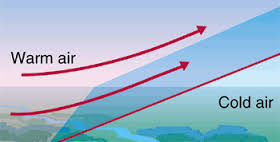
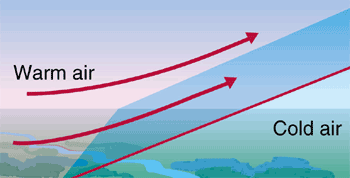
Which type of front is pictured?
1
Cold front
2
Warm front
3
Occluded front
4
Stationary front

56

Multiple Choice

Question image
What symbol is this?
1
warm front
2
cold front
3
stationary front
4
occluded front

57

Multiple Choice

How are fronts formed?
1
When two air masses meet
2
when two winds meet
3
when two clouds meet

58

Multiple Choice

Question image

What type of front is shown?

1

Warm Front

2

Cold Front

3

Occluded Front

4

Stationary Front

59

Multiple Choice

When a cold front or a warm front stays in place for several days without invading another front, it is called a ______. 
1
stationary front 
2
 cold front 
3
occluded front
4
warm front 

60

Multiple Choice

Question image
This is the symbol for which type of front?
1
cold front
2
warm front
3
stationary front
4
occluded front

61

Multiple Choice

Question image

This is the symbol for a _____________ weather front.

1

Cold

2

Warm

3

Stationary

4

Occluded

62

Multiple Choice

Question image

A _____________ weather front occurs when a cold air mass moves forward, pushing the warm air mass up.

1

Cold

2

Warm

3

Stationary

4

Occluded

63

Multiple Choice

Question image

A _____________ weather front occurs two cold air masses meet and push/force the warm air in the middle upwards.

1

Cold

2

Warm

3

Stationary

4

Occluded

64

Multiple Choice

Question image

Why does warm air rise above cold air?

1

Warm air is less dense

2

Warm air is more dense

3

Cold air is stronger than warm air

65

Multiple Choice

Question image

Which type of weather front can produce foggy weather that can last for several days?

1

Cold

2

Warm

3

Stationary

4

Occluded

66

Multiple Choice

Question image

Which type of weather front can produce precipitation (rain or snow)?

1

Cold

2

Warm

3

Stationary

4

Occluded

5

All of the above

67

Hurricanes

68

Multiple Choice

Hurricanes are...

1

storms of dust

2

dangerous storms of wind and rain

3

found in oceans near the North Pole

4

landforms

69

Multiple Choice

Which one of these is a step to take BEFORE a hurricane hits.

1

Go outside.

2

Check on your neighbor to see if they are hurt.

3

Board up the windows.

4

Take your dog outside.

70

Multiple Choice

What can make the electrical power go out during a hurricane?

1

a first aid kit

2

watching the news

3

batteries and flashlights

4

high winds and falling trees

71

Multiple Choice

True or False? Hurricanes can cause flooding.

1

True

2

False

72

Multiple Choice

True or False? Hurricanes cannot reach the land.

1

True

2

False

73

Multiple Choice

What months do hurricanes usually develop?

1

January, February, March

2

November, December

3

August, September, October

4

April, May, June

74

Multiple Choice

True or False? A hurricane is caused by warm, moist air rising from the ocean surface to mix with cool air while causing wind.

1

True

2

False

75

Multiple Choice

The calmest part of a hurricane is called the...

1

eye

2

nose

3

mouth

4

spiral

76

Multiple Choice

True or False? Hurricanes form over dry windy lands.

1

True

2

False

77

Multiple Choice

How are hurricanes different than tornadoes?

1

They both are windy.

2

Hurricanes have strong winds and tornadoes don't.

3

Hurricanes form over the ocean and tornadoes form over the land.

4

They are the same thing.

Weather in Review

By Brian Daley

Show answer

Auto Play

Slide 1 / 77

SLIDE