

Magnetic Force Reference Lessons

Presentation
•
Physics
•
7th Grade
•
Practice Problem
•
Hard

Sanidhya Singh
FREE Resource
15 Slides • 16 Questions
1

Magnetic Force
2
Learning Objectives
Define magnetism, magnetic forces, and magnetic poles.
Explain permanent magnets, temporary magnets, and electromagnets.
Describe magnetic fields and model their field lines.
Discover Earth's magnetic field and its vital roles.
3
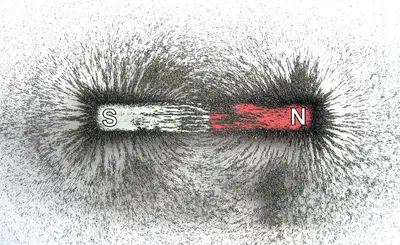
Magnets create magnetic fields, attracting iron, nickel, or cobalt.
Magnetism is an invisible force of attraction or repulsion.
Magnets turn magnetic items magnetic! They ignore wood or plastic.
Some magnets are permanent, some temporary. Earth is a giant magnet!
What are Magnets and Magnetism?

4
Multiple Choice
Which of the following materials would a magnet most likely attract?
A wooden block
A copper penny
A steel paperclip
A plastic toy
5
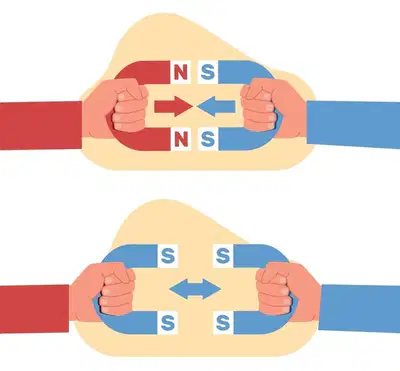
Magnets have North (N) & South (S) poles where force is strongest.
Magnetic force is a push or pull acting at a distance.
Like poles repel (push away); opposite poles attract (pull together).
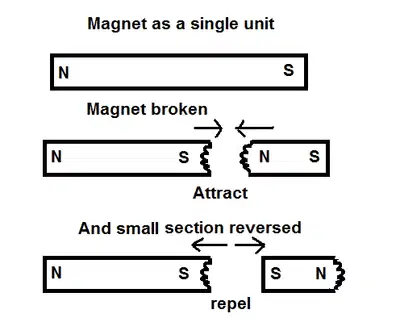
Break a magnet? You get two new magnets, each with N/S poles!
Magnetic Poles and Force
6
Multiple Choice
What happens when the south pole of one magnet is brought near the south pole of another magnet?
They attract each other strongly
They repel each other
Nothing happens, poles only affect magnetic materials
One magnet loses its magnetism
7
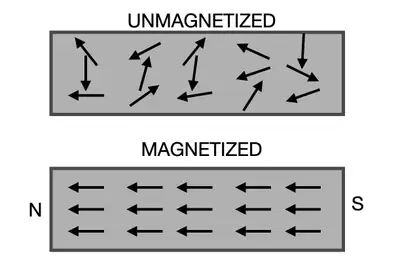
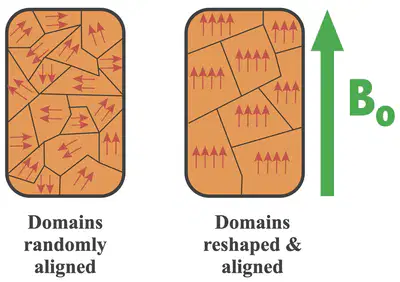
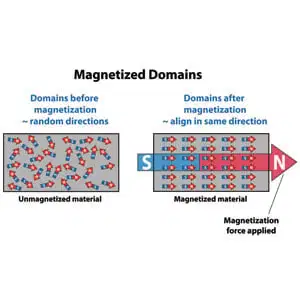
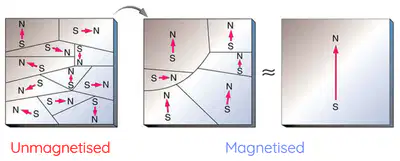
Magnetic domains: tiny zones of aligned atomic magnets.
Non-magnetic items: domains are random, effects cancel out.
Iron's jumbled domains can align near a strong magnet.
Permanent magnets: many domains permanently aligned one way.
Magnetic Domains: Tiny Magnet Powerhouses!
8
Multiple Choice
What are magnetic domains?
The poles of a magnet
Tiny regions within magnetic materials where groups of atoms have their magnetic fields aligned
Imaginary lines showing magnetic field direction
Particles that carry magnetic force
9
Permanent Magnets: Always Magnetic!
Easy to magnetize using another magnet.
Magnetic domains align only for a short time.
Lose magnetism when magnet is taken away.
Temporary Magnets: Magnetic for a Moment!
Types of Magnets: Permanent and Temporary
Made from materials like iron or nickel.
Their magnetic domains stay aligned for long.
Can lose magnetism if heated or dropped.
10
Multiple Choice
Which of these materials are commonly used to make permanent magnets (ferromagnets)?
Copper, aluminum, and gold
Iron, nickel, and cobalt
Plastic, wood, and glass
Lead, tin, and zinc
11
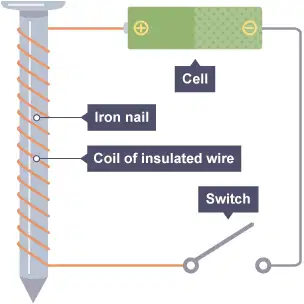
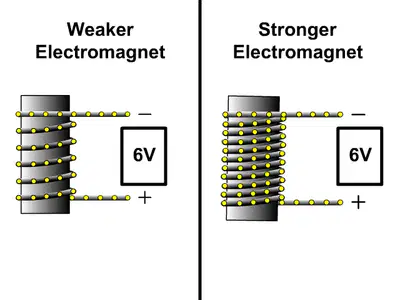
Electromagnets are temporary magnets made with electric current in a coiled wire.
Their magnetic field only exists when current flows; it stops with the current.
Stronger with: an iron core, more current, or more wire coils.
Useful as they are controllable; used in motors, speakers, and cranes.
Special Temporary Magnets: Electromagnets
12
Multiple Choice
How can the strength of an electromagnet be increased?
By using a wooden core
By decreasing the electric current
By increasing the number of wire coils around the core
By removing the core material
13
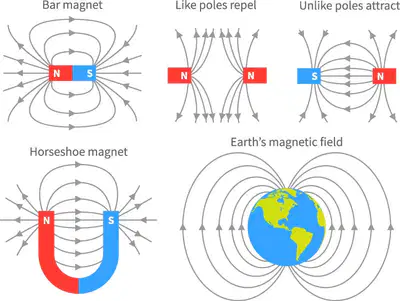
A magnetic field is an invisible force area around magnets.
It lets magnets attract or repel without touching (action at a distance).
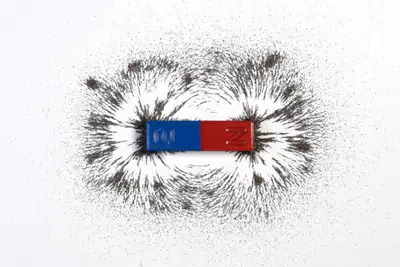
Fields are strongest at poles and weaken with distance.
We can see field patterns with iron filings or a compass.
What are Magnetic Fields?
14
Multiple Choice
Where is the magnetic field around a bar magnet typically the strongest?
In the exact middle of the magnet, furthest from the poles
Equally strong everywhere around the magnet
At its North and South poles
Only on the surface of the magnet
15
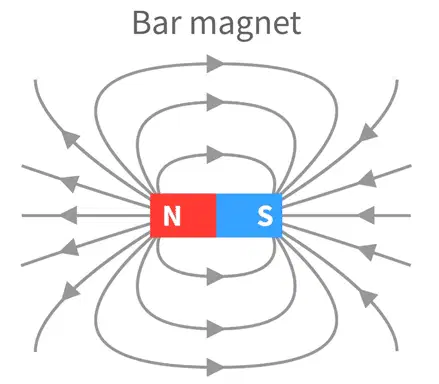
Visualizing Fields: Single Magnet Field Lines
16
Multiple Choice
Which statement accurately describes magnetic field lines of a single bar magnet?
They start at the south pole and end at the north pole, going through the magnet
They often cross each other where the field is particularly strong to show intensity
They form complete loops, emerging from the north pole and entering the south pole externally
They are always evenly spaced, indicating uniform field strength everywhere
17
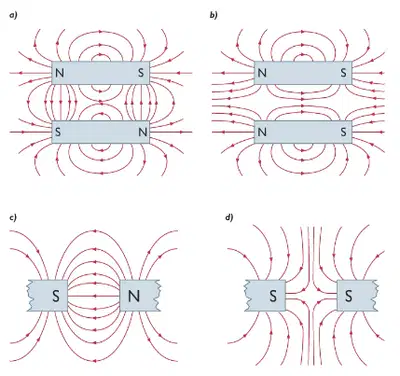
Close magnets? Their magnetic fields mix and merge.
Like poles (N-N, S-S)? Fields push apart, repelling!
Opposite poles (N-S)? Fields connect, becoming stronger there!
Cool fact: Magnetic field lines never, ever cross!
Magnetic Field Mashup: How They Combine!
18
Multiple Choice
What happens to the magnetic field lines when the south pole of one magnet is placed near the north pole of another magnet?
The field lines push away from each other, showing repulsion
The field lines disappear completely between the two magnets
The field lines from the two magnets connect, showing attraction between the poles
The field lines cross over each other multiple times in the space between
19
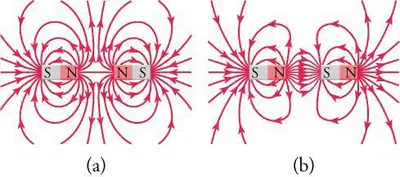
Magnets store potential energy based on their place and forces.
Pull N and S poles apart? You're boosting their potential energy!
Push N and N poles together? That also boosts potential energy!
Let magnets move? Potential energy becomes kinetic energy (motion)!
Magnets and Potential Energy

20
Multiple Choice
When does the potential energy of a system of two magnets increase?
When opposite poles are allowed to move closer together naturally
When like poles (e.g., two North poles) are pushed closer together against their repulsive force
When the magnets are very far apart and not interacting
When one of the magnets is broken in half
21
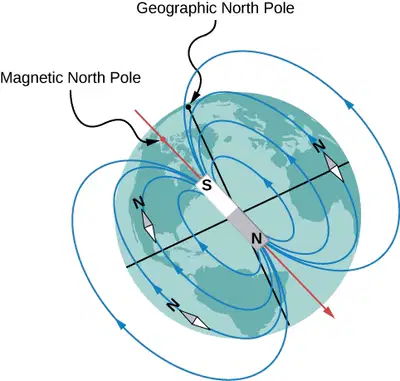
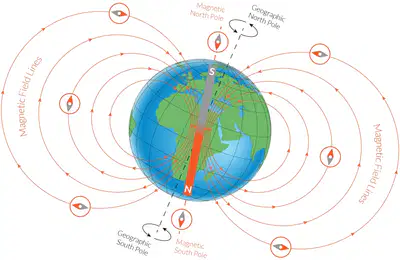
Earth acts like a giant magnet from molten iron.
It has magnetic North/South poles near geographic poles.
Its magnetic field, the magnetosphere, is strongest at poles.
Compasses point to magnetic North (a South-type pole!).
Earth: The Giant Magnet
22
Multiple Choice
How does Earth's magnetic field assist with navigation?
It creates ocean currents that guide ships
It allows a compass needle to align with the field lines, pointing towards the magnetic north pole
It makes certain stars brighter to follow at night
It generates radio waves that GPS devices use directly
23
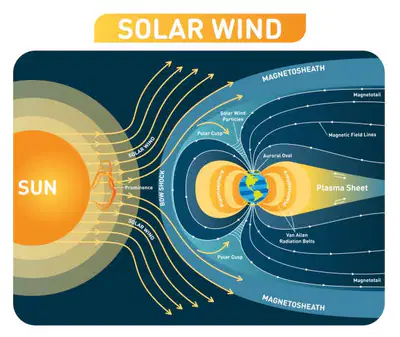
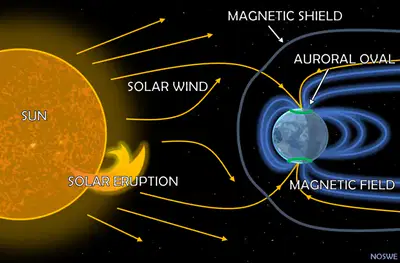
The Sun zaps out solar wind – a stream of super tiny charged particles!
Earth's magnetic field (magnetosphere!) acts like a giant shield, protecting us.
Some particles get guided to the poles, crashing into gases (like oxygen/nitrogen) way up high.
Gases glow as auroras: Northern Lights (Aurora Borealis) and Southern Lights (Aurora Australis).
Earth's Magnetic Shield and Auroras
24
Multiple Choice
What primarily causes the auroras (Northern and Southern Lights)?
Reflection of city lights off the atmosphere
Charged particles from the solar wind interacting with gases in Earth's upper atmosphere near the poles
Sunlight passing through ice crystals high in the atmosphere
Volcanic eruptions releasing luminous gases
25
Correction
Not all metals! Only some, like iron, are strongly magnetic.
Nope! Magnetic force acts from a distance through invisible fields.
Surprise! Breaking a magnet makes two new, smaller magnets, each with N and S poles.
Earth's geographic North Pole is near its magnetic south-seeking pole. This guides compasses north.
Misconception
Common Misconceptions
All metals are magnetic.
Magnetic force needs direct contact.
Breaking a magnet gives one N and one S pole.
Earth's geographic North Pole is its magnetic North pole.
26
Summary
Magnets exert forces, strongest at poles; like poles repel, opposites attract.
Materials become magnetic when tiny domains inside them align.
Electromagnets are temporary magnets made using electric current in a wire.
Earth acts like a giant magnet, guiding compasses and protecting us.
27
Open Ended
What are the two types of poles every magnet has, and how do they interact with opposite poles?
28
Open Ended
Briefly explain what makes an electromagnet different from a permanent magnet.
29
Poll
Earth's magnetic field creates the auroras by interacting with:
Cosmic rays
Solar wind particles
Moonlight
Radio waves
30
Poll
On a scale of 1 (not at all) to 4 (very well), how well do you feel you understand why some materials are magnetic (hint: domains)?
1
2
3
4
31
Open Ended
What is one concept from today's review on magnetism that you would like to explore further or found most interesting?
Magnetic Force
Show answer
Auto Play
Slide 1 / 31
SLIDE
Similar Resources on Wayground

24 questions
Climate Regions Review
Presentation
•
6th - 8th Grade
22 questions
Ocean Currents
Presentation
•
6th Grade
24 questions
Scaling with Proportions
Presentation
•
7th Grade
25 questions
Local Winds
Presentation
•
7th Grade
23 questions
Global Winds Part 1
Presentation
•
7th Grade
23 questions
Pangea and. Continental Drift
Presentation
•
7th Grade
28 questions
Contact and Non-contact Forces
Presentation
•
6th - 8th Grade
20 questions
Newton's Laws and Collisions
Presentation
•
6th - 8th Grade
Popular Resources on Wayground
6 questions
Secondary Safety Quiz
Presentation
•
9th - 12th Grade
10 questions
Afterschool Activities & Sports

Quiz
•
6th - 8th Grade
19 questions
ROAR Week 2026
Quiz
•
9th - 12th Grade
20 questions
Lab Safety Quiz
Quiz
•
6th Grade
15 questions
Cool Tool:Chromebook
Quiz
•
6th - 8th Grade
22 questions
would you rather
Quiz
•
3rd - 11th Grade
21 questions
Continents and Oceans
Quiz
•
6th Grade
20 questions
Parts of Speech
Quiz
•
5th Grade
Discover more resources for Physics
10 questions
Afterschool Activities & Sports
Quiz
•
6th - 8th Grade
15 questions
Cool Tool:Chromebook
Quiz
•
6th - 8th Grade
22 questions
would you rather
Quiz
•
3rd - 11th Grade
10 questions
Panther Principles Success Quiz
Quiz
•
6th - 8th Grade
8 questions
Lancers 2.0
Quiz
•
7th Grade
10 questions
Fact Check Ice Breaker: Two truths and a lie
Quiz
•
5th - 12th Grade
20 questions
💯4. Quiz: Safety in the Science Lab
Quiz
•
7th Grade
20 questions
Lab Safety
Quiz
•
5th - 8th Grade