

Water Pollution

Presentation
•
Science
•
7th Grade
•
Practice Problem
•
Medium
+4
Standards-aligned

Barbara White
Used 104+ times
FREE Resource
12 Slides • 19 Questions
1
Middle School

2
Analyze how population growth and consumption limit fresh water availability.
Differentiate between point and nonpoint source pollution with examples.
Describe the main sources and effects of freshwater and ocean pollution.
Evaluate how solutions can lessen the negative impacts of humans on water systems.


3
Key Vocabulary
Water Scarcity
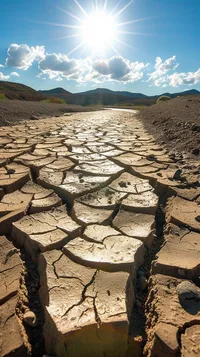
Water scarcity is the lack of sufficient fresh water resources to meet the demands of a region.
Point Source Pollution
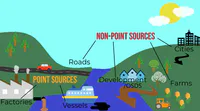
Point source pollution is contamination that comes from a single, identifiable source, like a factory pipe.
Nonpoint Source Pollution
This is pollution that comes from many different sources, such as runoff from farms and cities.
Per-capita Consumption
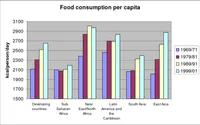
Per-capita consumption refers to the average amount of a resource that is used by one person.
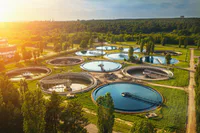
Engineered Solution
An engineered solution is a technology or process specifically designed by humans to solve a particular problem.

Human Population
Human population refers to the total number of people living in a specific area or region.
4
Key Vocabulary

Sewage
Sewage is the wastewater and human waste that is disposed of through our sewer systems.
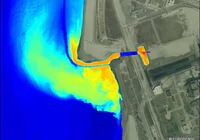
Thermal Pollution
Thermal pollution is the harm caused to water bodies by the discharge of heated liquid.
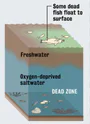
Ocean Dead Zone
An ocean dead zone is a specific area in the ocean that completely lacks any oxygen.

Aquaculture
Aquaculture is the specific practice of farming fish, shellfish, and other various aquatic organisms.
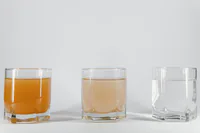
Sediment
Sediment consists of small particles of rock, sand, and other minerals that are found in water.
5
Water: A Limited Resource
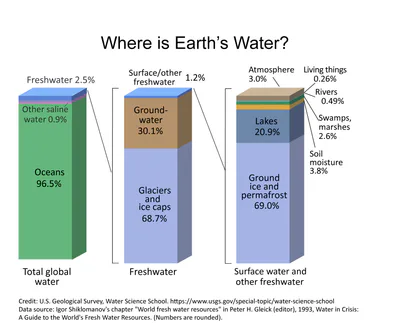
Water is essential for life, but it is a limited renewable resource.
About 97% of Earth's water is saltwater, leaving only 3% as freshwater.
Most freshwater is frozen, leaving less than 1% accessible for our use.
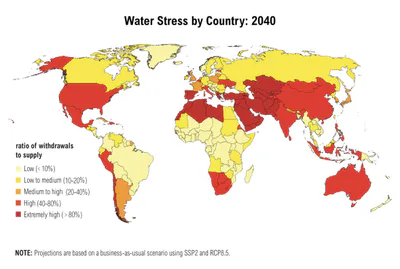
Water scarcity results from high demand, population growth, and unequal resource distribution.
6
Multiple Choice
Which statement best describes Earth's water supply?
It is a limited resource, with a small fraction available for human use.
It is an unlimited resource that is easy to access.
Most of the water on Earth is freshwater.
Saltwater and freshwater are equally useful for human needs.
7
Multiple Choice
According to the data, why is such a small percentage of Earth's freshwater available for human use?
Most of the freshwater is frozen in glaciers and ice caps.
Most of the freshwater is located deep underground.
All freshwater is contaminated by saltwater.
Human technology cannot process freshwater.
8
Multiple Choice
If a country's population grows significantly while its water supply remains the same, what is the most probable consequence?
Water scarcity in the region will likely increase due to higher demand.
The total amount of freshwater on Earth will decrease.
The distribution of water across the region will become more equal.
The percentage of saltwater on Earth will increase.
9
Population, Consumption, and Environmental Impact
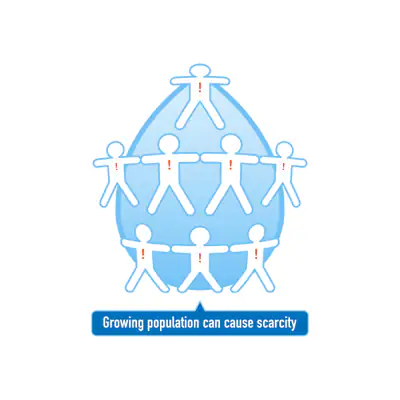
Human population growth increases the demand for natural resources like water.
Per-capita consumption is the amount of resources that each person uses.
The total impact depends on population size and resource use per person.
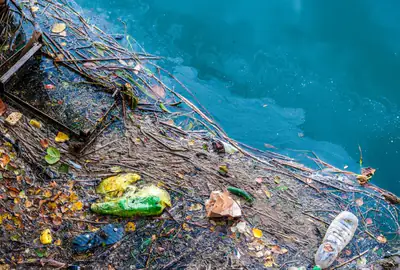
This can cause negative impacts like pollution and resource depletion without engineered solutions.
10
Multiple Choice
What are the two main factors that determine the total environmental impact of a human population?
Population size and resource use per person
The amount of available water and land
The level of pollution and resource depletion
The number of engineered solutions available
11
Multiple Choice
What is the relationship between human population growth and the demand for natural resources?
It increases the demand for resources because more people need them.
It decreases the demand for resources because people share more.
It has no effect on the demand for resources.
It only increases the demand for engineered solutions.
12
Multiple Choice
If a country's population is growing rapidly and its per-capita consumption is also rising, what is the most likely outcome if no engineered solutions are introduced?
An increase in pollution and resource depletion
A decrease in the total demand for natural resources
A reduction in the per-capita consumption of resources
No significant change in the overall environmental impact
13
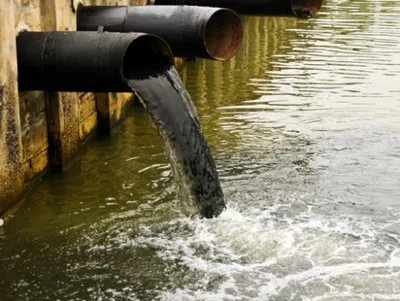
Point Source Pollution
Pollution that originates from a single, identifiable source like a pipe.
It is often discharged directly into a body of water.
Examples include a leaking landfill or an output pipe from a factory.
Nonpoint Source Pollution
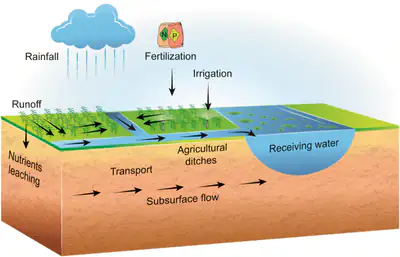
Pollution that comes from many different, widespread sources, not a single spot.
It is typically carried into various waterways by rain or snowmelt runoff.
This includes pesticides from farms, animal wastes, or salts from roads.
14
Multiple Choice
What is the main difference between point source and nonpoint source pollution?
Whether the pollution comes from a single source or many widespread sources.
Whether the pollution affects rivers or lakes.
Whether the pollution is caused by chemicals or trash.
Whether the pollution is visible to the naked eye.
15
Multiple Choice
How does nonpoint source pollution typically enter bodies of water?
It is carried into waterways by rain or snowmelt runoff.
It is intentionally discharged from a specific pipe.
It is created by chemical reactions within the water.
It is buried in underground storage containers.
16
Multiple Choice
After a major storm, a river becomes polluted with runoff containing pesticides from farms, animal wastes from fields, and salt from roads. Which of these best explains the type of pollution that occurred?
Point source pollution, because the factory is a single location.
Point source pollution, because the waste is being discharged directly into the river.
Nonpoint source pollution, because the waste comes from many different places across a large area.
Nonpoint source pollution, because it includes animal waste.
17
Types of Water Pollutants
Fertilizers from farms and sewage from homes can contaminate water sources.
Industries can release toxic chemicals, and sediment can block sunlight in the water.
Hot water from factories and leaked oil and gasoline also pollute water bodies.
18
Multiple Choice
What are the primary sources of water pollutants such as fertilizers, sewage, and toxic chemicals?
Farms, homes, and industries
Oceans, glaciers, and rivers
Rainfall, clouds, and groundwater
Natural erosion and plant decay
19
Multiple Choice
How does the release of sediment into a river impact the aquatic environment?
It can prevent sunlight from reaching underwater plants.
It adds beneficial nutrients for fish to consume.
It significantly increases the water's temperature.
It helps to neutralize toxic chemicals in the water.
20
Multiple Choice
A new factory is built along a river, and soon after, the local fish population declines. Based on the potential pollutants from industrial sources, what is the most likely explanation for this change?
The river's temperature increased and it became contaminated with toxic chemicals.
The water became polluted with excess fertilizers and leaked gasoline.
The amount of sediment decreased and the water became clearer.
The sewage levels increased and the amount of sunlight was blocked.
21
Sources of Ocean Pollution
Most ocean pollution is a result of human activities.
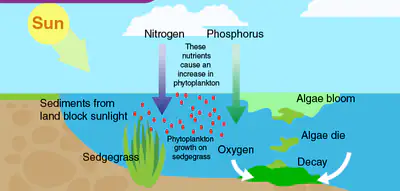
Runoff with fertilizers can create ocean dead zones with insufficient oxygen.
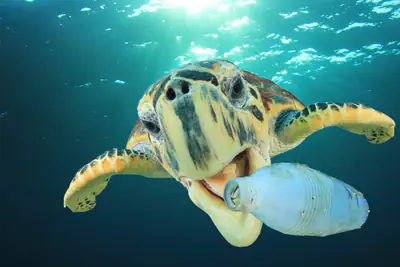
Plastic trash and oil spills harm and poison marine wildlife.
Poorly managed aquaculture can destroy habitats and spread diseases to wild fish.
22
Multiple Choice
What is the main source of most ocean pollution?
They are primarily the result of human activities.
They are mostly caused by natural geological processes.
They are a natural part of the ocean's lifecycle.
They are mainly the result of animal behaviors.
23
Multiple Choice
How does runoff containing fertilizers harm the ocean environment?
It reduces the oxygen available for marine life.
It provides extra nutrients that help all fish grow.
It causes plastic trash to accumulate in the water.
It raises the temperature of the ocean.
24
Multiple Choice
If a coastal area experiences both a major oil spill and an increase in poorly managed aquaculture, what is the most likely combined outcome for the environment?
The local wildlife populations would likely be harmed and decline.
The spread of diseases among wild fish would stop.
The ocean habitats would become healthier and more stable.
The fish would adapt by learning to live in polluted water.
25
Reducing Water Pollution
Prevention is the best way to reduce water pollution at its source.
Engineered solutions like modern farming and factory recycling help reduce pollution.
Special technologies are used to clean up existing pollution like oil spills.
26
Multiple Choice
What is described as the most effective strategy for reducing water pollution?
Preventing pollution from happening in the first place.
Cleaning up pollution after it has already occurred.
Moving polluted water to a different location.
Allowing natural processes to slowly remove pollutants.
27
Multiple Choice
What is the relationship between modern farming techniques, factory recycling, and water quality?
They are methods designed to stop pollution at its source.
They are technologies used for cleaning existing oil spills.
They are systems for measuring the amount of pollution in water.
They are ways to add clean water to polluted rivers.
28
Multiple Choice
Which of the following actions best applies the principle of preventing water pollution at its source?
A city builds a new water treatment plant to purify river water for drinking.
A coastal community develops a rapid-response team to clean up oil spills.
An oil tanker company invests in stronger hulls and better navigation to avoid accidents.
A government agency fines ships that are caught leaking oil into the ocean.
29
Misconception | Correction |
|---|---|
The ocean is so large that pollution just dilutes and disappears. | Many pollutants accumulate in the food chain, harming marine ecosystems for a long time. |
Since water is a renewable resource, we will never run out of it. | The amount of clean, fresh water is limited and can be depleted quickly. |
Only large factories and oil spills cause major water pollution. | Pollution from many individuals combined is also a major source of water pollution. |
30
Population growth increases the demand for water and the amount of pollution generated.
Less than 1% of Earth's water is accessible fresh water, a limited resource.
Pollution comes from single point sources or widespread nonpoint sources.
Preventing pollution is crucial, as cleanup is difficult and requires special technology.
31
Poll
On a scale of 1-4, how confident are you in your ability to explain how human population affects water resources?
1
2
3
4
Middle School
Show answer
Auto Play
Slide 1 / 31
SLIDE
Similar Resources on Wayground

24 questions
Interpreting Distance Time Graphs
Presentation
•
7th Grade
25 questions
7.12DE Cell Organelles
Presentation
•
7th Grade
25 questions
Global Warming
Presentation
•
7th Grade
25 questions
Ecosystem Relationships
Presentation
•
7th Grade
23 questions
Earthquakes
Presentation
•
7th Grade
23 questions
Thermal Energy and Heat
Presentation
•
7th Grade
26 questions
Levels of Organization
Presentation
•
7th Grade
23 questions
Evidence of Evolution
Presentation
•
7th Grade
Popular Resources on Wayground
10 questions
How much do you know about our Portrait of an Eagle?

Quiz
•
10th Grade
10 questions
Fast Food Slogans
Quiz
•
6th - 8th Grade
21 questions
Continents and Oceans
Quiz
•
6th Grade
20 questions
Parts of Speech
Quiz
•
5th Grade
16 questions
Subject & Predicate
Quiz
•
5th Grade
25 questions
Multiplication Facts
Quiz
•
5th Grade
12 questions
Map Skills
Quiz
•
3rd Grade
22 questions
Continents and Oceans
Quiz
•
5th Grade
Discover more resources for Science
17 questions
7.6D Aqueous Solutions
Quiz
•
7th Grade
20 questions
Claim, Evidence and Reasoning (CER)
Quiz
•
6th - 8th Grade
18 questions
Counting Atoms
Quiz
•
7th - 8th Grade
10 questions
Exploring Chemical and Physical Changes

Interactive video
•
6th - 10th Grade
20 questions
Food Chains & Food Webs
Quiz
•
5th - 7th Grade
10 questions
Decoding the Periodic Table of Elements
Interactive video
•
6th - 10th Grade
16 questions
Photosynthesis and Cellular Respiration Review
Quiz
•
7th Grade
10 questions
Exploring the Periodic Table
Interactive video
•
6th - 10th Grade