

Insects

Presentation
•
Science
•
6th - 8th Grade
•
Practice Problem
•
Medium
+2
Standards-aligned

Barbara White
Used 11+ times
FREE Resource
11 Slides • 13 Questions
1

Middle School

2
Describe how insect behaviors and structures help them survive and reproduce.
Explain how pheromones and symbiosis affect an insect's survival and mating.
Analyze how insect pollination affects the reproduction of plants.
Use evidence to argue how a behavior affects an insect's reproductive success.


3
Key Vocabulary
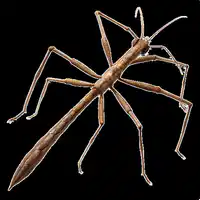
Adaptation
An adaptation is a special trait or characteristic that helps an organism survive in its environment.
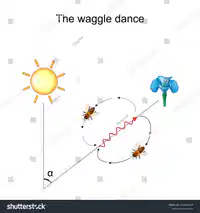
Animal Behavior
Animal behavior refers to the various actions and responses of an organism that affect its survival.
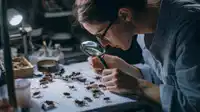
Entomologist
An entomologist is a specialized scientist who dedicates their studies to understanding insects and their behaviors.

Foragers
Foragers are animals, such as certain types of insects, that actively search for and gather food.

Honeydew
Honeydew is a sweet, sugary liquid waste product that is excreted by small insects like aphids.

Pheromone
A pheromone is a specific chemical substance that an animal produces to communicate with others.
4
Key Vocabulary
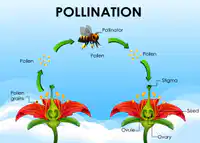
Pollination
The transfer of pollen, often by insects or wind, which helps plants to make seeds.
Probability
A measure of how likely it is that a specific event will happen or not happen.

Reproduction
The biological process by which new individual organisms or “offspring” are produced from their parents.
Social Insects
These are insect species that live together in large, organized colonies, like ants or bees.
Specialized Structure
A specific body part that has a unique function, helping an organism to survive well.
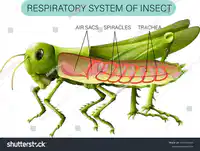
Spiracles
Small openings on the surface of an insect’s body through which they breathe air.
5
Key Vocabulary

Symbiosis
Symbiosis is a close and long-term interaction between two different biological species in an ecosystem.
6
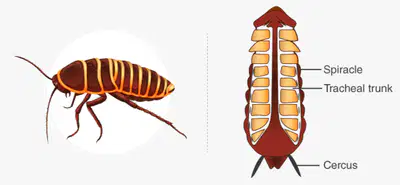
Hissing Cockroach
This insect hisses by forcing air out of openings on its abdomen called spiracles.
The hissing sound helps to ward off predators and is also used for social interactions.
Males hiss to establish territory and attract females, increasing their chances of successful reproduction.
Little Drummer Wasp
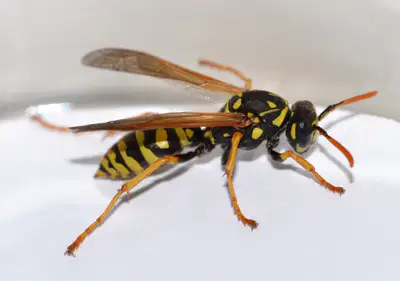
The female wasp drums on wheat kernels with her antennae to find a weevil larva.
A kernel with a larva inside sounds different, allowing her to precisely locate a host.
This increases the probability that her larva will have a food source and survive.
7
Multiple Choice
What is the primary purpose of the behaviors of the Hissing Cockroach and the Little Drummer Wasp?
To increase their chances of survival and reproduction.
To communicate with other insect species.
To help them build their homes and nests.
To find sources of water in their environment.
8
Multiple Choice
How does the purpose of the cockroach's hissing differ from the wasp's drumming?
The cockroach hisses to find food, while the wasp drums to attract mates.
The cockroach hisses to defend itself, while the wasp drums to find food for its young.
The cockroach hisses to build a nest, while the wasp drums to scare predators.
The cockroach hisses to locate water, while the wasp drums to establish territory.
9
Multiple Choice
If a Little Drummer Wasp's antennae were damaged, what would be the most likely result?
It would be unable to force air from its spiracles.
It would be unable to defend itself from predators.
It would struggle to find a suitable location to lay its egg.
It would have to find a new territory to attract a mate.
10
Aphid Reproduction
Aphids reproduce asexually by giving birth to live young without a mate.
This rapid process allows their populations to grow at an extremely fast rate.
Asexual reproduction increases their overall reproductive success, ensuring the continuation of their species.
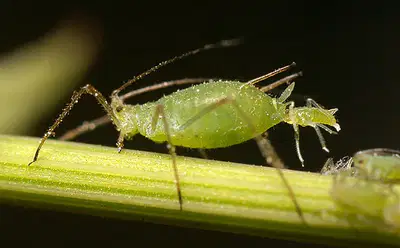
Ant & Aphid Symbiosis

Ants protect aphids from natural predators like ladybugs, increasing the aphids' survival rate.
In return, ants consume a sugary waste product from aphids called honeydew.
This relationship increases the survival probability for both species, supporting their ability to reproduce.
11
Multiple Choice
According to the information provided, what is the primary advantage of asexual reproduction for aphids?
It allows their populations to grow at an extremely fast rate.
It requires them to find a mate before reproducing.
It decreases their overall reproductive success.
It provides them with protection from predators.
12
Multiple Choice
How does the symbiotic relationship between ants and aphids benefit both species?
The ants gain food by consuming honeydew, and the aphids gain protection from predators.
The aphids consume honeydew from the ants, and the ants gain a clean living space.
The ants and aphids compete with each other for the same food and resources.
The aphids protect the ants from ladybugs, and the ants help the aphids find mates.
13
Multiple Choice
If the ant population in an ecosystem were to disappear, what is the most likely consequence for the aphid population?
The aphid population would likely decrease because their protection from predators is gone.
The aphid population would grow faster because they no longer need to produce honeydew for ants.
The aphids would need to switch from asexual to sexual reproduction to survive.
The aphids would be forced to compete with ladybugs for the same food source.
14
Foraging Ants
Pheromones are chemical messages that animals of the same species use to communicate with one another.
When a foraging ant discovers a food source, it leaves a trail of these pheromones behind.
Other ants from the colony can then easily follow this invisible chemical trail to the food.

Moth Mating

A female moth releases a powerful pheromone into the air to signal she is ready to mate.
A male moth can detect this chemical scent from kilometers away using its feathery antennae.
By following the airborne trail, the male moth can locate the female for successful reproduction.
15
Multiple Choice
What is the primary function of pheromones?
To communicate with other members of the same species
To locate and identify new sources of food
To defend themselves against predators
To build shelters and protect their young
16
Multiple Choice
How does the use of pheromones by foraging ants differ from their use by mating moths?
One pheromone is a trail on the ground, while the other is a scent in the air.
Ants use pheromones for finding food, while moths use them for navigation.
Only one of the animals uses pheromones to attract a mate.
Ants can follow pheromone trails, but moths cannot.
17
Multiple Choice
A male moth's feathery antennae are essential for detecting a female's pheromones from far away. What would be the most likely outcome if a male moth's antennae were damaged?
It would not be able to find the female moth.
It would not be able to release its own pheromones.
It would get lost on its way to the food source.
It would not be able to fly properly.
18
How Animals Help Plants Reproduce
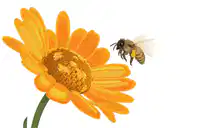
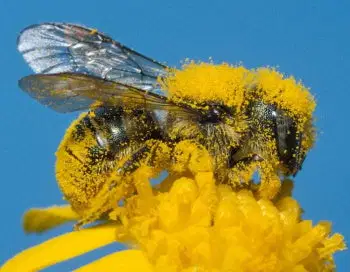
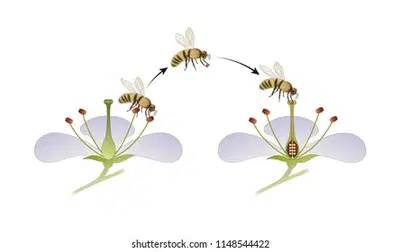
Many plants rely on animals to transfer pollen, which helps them reproduce.
Plants attract pollinators with brightly colored petals, sweet nectar, or strong smells.
An insect's search for food causes pollen to be transferred between flowers.
19
Multiple Choice
What is the main way animals help many plants reproduce?
By transferring pollen between flowers
By eating the plant's leaves
By building nests in their branches
By scaring away other animals
20
Multiple Choice
What is the function of brightly colored petals and sweet nectar on a flower?
To attract animals that will transfer pollen
To provide food for the plant itself
To protect the plant from the sun
To make the plant grow taller
21
Multiple Choice
A plant species with brightly colored flowers relies on insects to reproduce. What would be the most likely consequence if the population of these insects suddenly disappeared?
The plant species would have difficulty reproducing.
The plant's flowers would become less colorful.
The plant would start producing its own food differently.
The plant would grow taller to find more sunlight.
22
Misconception | Correction |
|---|---|
Animal behavior guarantees successful reproduction. | Behaviors only increase the probability of success, not guarantee it. |
All insects make sounds with their mouths. | Most insects make sounds by rubbing body parts together. |
All insects are pests. | Many insects are beneficial, such as bees that pollinate plants. |
Every insect is a solitary creature. | Many insects, such as ants, are social and live together. |
23
Insects have many adaptations and behaviors to help them survive and reproduce.
Specialized behaviors like hissing or drumming increase their chances of survival and mating.
Insect behaviors, like pollination, are essential for the reproduction of many plants.
Insects use chemical signals and live in complex social colonies.
24
Poll
On a scale of 1-4, how confident are you about the concepts covered in today's review?
1
2
3
4
Middle School
Show answer
Auto Play
Slide 1 / 24
SLIDE
Similar Resources on Wayground

18 questions
Reproduction
Presentation
•
6th - 8th Grade
17 questions
Wave Equation quick notes, clip and questions
Presentation
•
6th - 8th Grade
19 questions
Rock Cycle
Presentation
•
6th - 8th Grade
20 questions
ELECTRICITY AND CIRCUITS
Presentation
•
6th - 8th Grade
20 questions
Circulatory System Review
Presentation
•
6th - 8th Grade
20 questions
Speed, Velocity & Acceleration
Presentation
•
6th - 8th Grade
18 questions
Energy Transformations (Basic)
Presentation
•
6th - 8th Grade
20 questions
Newton's Laws and Collisions
Presentation
•
6th - 8th Grade
Popular Resources on Wayground
10 questions
How much do you know about our Portrait of an Eagle?

Quiz
•
10th Grade
10 questions
Fast Food Slogans
Quiz
•
6th - 8th Grade
21 questions
Continents and Oceans
Quiz
•
6th Grade
20 questions
Parts of Speech
Quiz
•
5th Grade
16 questions
Subject & Predicate
Quiz
•
5th Grade
25 questions
Multiplication Facts
Quiz
•
5th Grade
12 questions
Map Skills
Quiz
•
3rd Grade
22 questions
Continents and Oceans
Quiz
•
5th Grade
Discover more resources for Science
17 questions
7.6D Aqueous Solutions
Quiz
•
7th Grade
20 questions
Scientific Method and Variables
Quiz
•
8th Grade
20 questions
Scientific method and variables
Quiz
•
8th Grade
27 questions
Counting Atoms - Subscripts
Quiz
•
8th Grade
10 questions
6.6D - Relative Density Review
Quiz
•
6th Grade
20 questions
Claim, Evidence and Reasoning (CER)
Quiz
•
6th - 8th Grade
18 questions
Counting Atoms
Quiz
•
7th - 8th Grade
20 questions
Density
Quiz
•
6th Grade