

Systems Connections

Presentation
•
Science
•
6th - 8th Grade
•
Practice Problem
•
Medium
+4
Standards-aligned

Barbara White
Used 25+ times
FREE Resource
15 Slides • 28 Questions
1

Middle School

2
Describe the body as a system of interacting subsystems to support life functions.
Explain the organizational hierarchy where cells form tissues, and tissues form organs.
Identify the components and functions of the major human organ systems.
Use evidence to explain how different organ systems interact to support our bodies.


3
Key Vocabulary
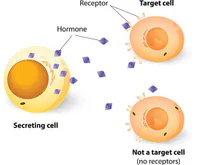
Hormone
A hormone is a chemical messenger that travels through the body to regulate various functions.

Neuron
A neuron is a specialized nerve cell responsible for transmitting electrical and chemical signals in the body.

Capillary
A capillary is a very tiny blood vessel that facilitates the exchange of substances with cells.

Alveoli
Alveoli are the tiny, delicate air sacs found within the lungs where gas exchange occurs.

Peristalsis
Peristalsis involves wave-like muscle contractions that move food through the digestive tract.

Homeostasis
Homeostasis is the essential ability of the body to maintain a stable and balanced internal state.
4
Key Vocabulary

Bone Marrow
Bone marrow is the spongy tissue found inside of bones that is responsible for producing blood cells.

Enzyme
An enzyme is a special type of protein that significantly speeds up the chemical reactions within the body.

Gland
A gland is a specialized organ in the body that is responsible for producing and releasing specific substances.

Hemoglobin
Hemoglobin is the essential protein found in red blood cells that transports oxygen from the lungs to tissues.

Tissue
Tissues are made up of groups of similar cells that come together to perform a specific, shared function.

Organ
An organ is a complex structure composed of different types of tissues that work together for a function.
5
The Body's Organization
The body is a system of many interacting subsystems working together.
Specialized cells that perform a similar function group together to form tissues.
Different kinds of tissues combine to form specialized organs, like the heart.
Organs work together in organ systems to carry out complex functions.


6
Multiple Choice
What is formed when specialized cells that perform a similar function group together?
A single cell
A tissue
An organ
An organ system
7
Multiple Choice
Which statement correctly describes the levels of organization in the body?
Tissues combine to form organs, which work together in organ systems.
Organs combine to form tissues, which work together in cells.
Organ systems are made of tissues, which combine to form organs.
Cells combine to form organs, which work together in tissues.
8
Multiple Choice
The heart is an organ made of muscle tissue. The heart works with other organs, like blood vessels, to form the circulatory system, which carries out a complex function. What broad conclusion does this example support?
The body is a complex system built from different levels of organization working together.
The heart is the only organ that works with other organs.
Tissues are more complex than organ systems.
Each subsystem in the body works independently of the others.
9
The Circulatory System
The circulatory system is the body's transport network, including the heart and blood vessels.
It carries oxygen, nutrients, and hormones to cells and removes carbon dioxide waste.
The heart is an organ made of muscle, connective, and epithelial tissues.
This system also helps regulate body temperature and fight diseases with white blood cells.


10
Multiple Choice
What is the main purpose of the circulatory system?
To transport substances like oxygen and waste
To provide the body with structure and support
To break down food into usable energy
To send electrical signals throughout the body
11
Multiple Choice
Which statement best describes the composition and other functions of the circulatory system?
It is an organ made of multiple tissues, and it uses white blood cells to fight disease.
It carries hormones to cells and also creates new hormones.
It removes carbon dioxide and also breaks it down for energy.
It regulates body temperature by creating its own heat.
12
Multiple Choice
If the heart muscle was damaged and could not pump effectively, what would be the most direct consequence for the body's cells?
Cells would not receive the oxygen and nutrients needed to function.
The body would lose its ability to regulate its temperature.
White blood cells would no longer be able to fight diseases.
Hormones would become trapped inside the heart's tissues.
13
The Digestive System
The digestive system breaks down food and absorbs essential nutrients.
It includes the mouth, stomach, intestines, liver, and pancreas.
Organs like the stomach use smooth muscle tissue for peristalsis.
Epithelial tissue helps secrete enzymes and absorb all the nutrients.


14
Multiple Choice
What is the primary function of the digestive system?
To break down food and absorb essential nutrients.
To pump blood to all parts of the body.
To exchange oxygen and carbon dioxide.
To send signals between the brain and the body.
15
Multiple Choice
How do smooth muscle and epithelial tissues work together in the digestive system?
Smooth muscle tissue moves food, while epithelial tissue helps absorb nutrients.
Smooth muscle tissue absorbs nutrients, while epithelial tissue moves food.
Both tissues are used to secrete enzymes and move food.
Both tissues are only found in the liver and pancreas.
16
Multiple Choice
A disease prevents epithelial tissue from working correctly throughout the digestive system. What is the most likely consequence?
Food would not be moved through the stomach by peristalsis.
The liver and pancreas would stop being part of the digestive system.
Nutrients from food could not be properly absorbed by the body.
The mouth would be unable to break down food mechanically.
17
The Endocrine System
The endocrine system is a chemical messaging system of glands.
Glands produce and release hormones into the bloodstream to send signals.
It regulates key functions like growth, metabolism, and stress responses.
Hormones affect specific 'target' cells that have the correct receptors.

18
Multiple Choice
What is the primary role of the endocrine system?
To act as a chemical messaging system in the body.
To provide the body with structural support.
To break down food and absorb nutrients.
To carry oxygen to all the body's cells.
19
Multiple Choice
What is the relationship between glands, hormones, and body functions like growth?
Glands release hormones that travel through the bloodstream to control functions.
Hormones create glands that are needed for the body to grow.
Body functions like growth cause the creation of new hormones.
Glands and hormones only control the body's response to stress.
20
Multiple Choice
A hormone that controls growth is released into the bloodstream and travels throughout the body. Why does this hormone only cause growth in certain parts of the body?
Because only specific target cells have the right receptors for the hormone.
Because the bloodstream only delivers the hormone to certain cells.
Because the hormone is too large to enter most types of cells.
Because all cells receive the hormone, but only some need to grow.
21
The Excretory System
The excretory system removes waste through the kidneys, liver, lungs, and skin.
Its primary function is to filter waste from the blood to produce urine.
This system is critical for homeostasis, the body’s water and salt balance.
It works with the endocrine system to help maintain this important balance.


22
Multiple Choice
What is the primary function of the excretory system?
To filter waste from the blood to produce urine.
To help the body absorb nutrients from food.
To pump blood to the lungs, skin, and liver.
To control the body's growth and development.
23
Multiple Choice
How does the excretory system's function contribute to homeostasis?
By maintaining the body's water and salt balance.
By removing waste only through the skin and lungs.
By working with the digestive system to break down food.
By producing hormones that are sent to the kidneys.
24
Multiple Choice
What would be the most likely outcome if the excretory system did not properly work with the endocrine system?
The body's water and salt balance would be disrupted.
The liver would no longer be able to filter blood.
Waste products would no longer be removed by the skin.
The lungs would stop working with the excretory system.
25
The Muscular System

Skeletal Muscle
This is voluntary muscle that you can consciously control.
It is attached to your bones by strong tissues called tendons.
It helps you make movements like walking, running, and lifting things.

Smooth Muscle
This is involuntary muscle that works without you thinking about it.
It is found in the walls of organs like the stomach.
It helps with processes like digestion and regulating your blood pressure.

Cardiac Muscle
This is a special involuntary muscle that is found only here.
It makes up the walls of your heart, working nonstop every day.
Its main job is to pump blood to all parts of your body.
26
Multiple Choice
What is the main job of the cardiac muscle?
To pump blood to all parts of your body.
To help you lift heavy things.
To help with the digestion of food.
To connect your bones together at the joints.
27
Multiple Choice
What is the most important difference between how skeletal muscle and smooth muscle work?
Skeletal muscle is voluntary, while smooth muscle is involuntary.
Skeletal muscle is found in the heart, while smooth muscle is in the stomach.
Skeletal muscle helps with digestion, while smooth muscle helps with running.
Skeletal muscle works without thinking, while smooth muscle is consciously controlled.
28
Multiple Choice
If you decide to kick a ball, which statement best describes what happens in your muscular system?
Voluntary skeletal muscles pull on tendons to move the bones in your leg.
Involuntary smooth muscles in your leg bones begin to contract automatically.
Involuntary cardiac muscle sends a signal to your leg to start moving.
Tendons in your leg decide to contract and pull on the smooth muscles.
29
Central Nervous System
The central nervous system acts as the body's main control and processing center.
It is composed of two primary structures: the brain and the spinal cord.
The brain interprets information, while the spinal cord relays messages to and from it.

Peripheral Nervous System

This system includes all nerves found outside of the brain and spinal cord.
It connects the central nervous system to the rest of the entire body.
It sends sensory information to the brain and carries out motor commands.
30
Multiple Choice
What is the primary role of the central nervous system?
To act as the body's main control and processing center.
To connect all nerves found outside the brain and spinal cord.
To send sensory information from the body to the brain.
To carry out motor commands from the brain to the body.
31
Multiple Choice
What is the relationship between the peripheral nervous system and the central nervous system?
The peripheral nervous system connects the central nervous system to the rest of the body.
The central nervous system relays messages to the peripheral nervous system for interpretation.
The peripheral nervous system acts as the main processing center for the central nervous system.
The two systems operate independently and do not interact with each other.
32
Multiple Choice
If a person touches a hot object, but the peripheral nerves in their arm are damaged, what would be the most likely outcome?
The brain would not receive information that the object is hot.
The spinal cord would interpret the information instead of the brain.
The brain would send a motor command to the hand to move away.
The central nervous system would create new nerves to fix the connection.
33
The Respiratory System
The respiratory system includes the airway, lungs, and diaphragm for gas exchange.
Its main function is to take in oxygen and remove carbon dioxide.
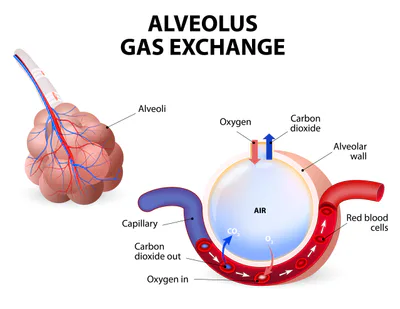
This exchange happens in tiny air sacs in the lungs called alveoli.
Capillaries around alveoli move oxygen from the lungs into your bloodstream.

34
Multiple Choice
What is the primary function of the respiratory system?
To pump blood throughout the body.
To break down food and absorb nutrients.
To take in oxygen and remove carbon dioxide.
To provide structural support for the body.
35
Multiple Choice
Which statement best describes the relationship between the parts of the respiratory system during gas exchange?
The diaphragm pumps blood to the lungs.
Gas exchange occurs between the alveoli and capillaries.
Oxygen is converted into carbon dioxide in the airway.
The lungs directly absorb carbon dioxide from the blood.
36
Multiple Choice
If the tiny capillaries surrounding the alveoli were damaged, what would be the most likely consequence?
The diaphragm would stop moving.
The body would start taking in carbon dioxide instead of oxygen.
Oxygen would not be effectively transported from the lungs to the bloodstream.
The airway would become blocked.
37
The Skeletal System
The skeletal system is the body's framework of bones, cartilage, and joints.
Its main functions are to support and protect the body's internal organs.
The system allows for movement by providing attachment points for the body's muscles.
Bone marrow, found inside bones, is where new blood cells are made.


38
Multiple Choice
What is the main purpose of the skeletal system?
To provide a framework that supports and protects the body.
To create new blood cells for circulation.
To connect the body's muscles to the nervous system.
To break down cartilage and create new joints.
39
Multiple Choice
How does the skeletal system work with the muscular system to allow the body to move?
It provides attachment points for muscles, which pull on bones to cause movement.
It generates the energy that muscles need to contract.
It sends signals to the muscles telling them when to move.
It protects the muscles from outside impact during movement.
40
Multiple Choice
A patient has difficulty moving and is also not producing enough new blood cells. Which part of the skeletal system is most likely the source of BOTH problems, and why?
The joints, because they are responsible for both flexibility and protecting the organs.
The cartilage, because it cushions the bones and produces all the body's blood.
The bones, because they provide muscle attachment points for movement and contain the marrow where blood cells are made.
The muscles, because they control the bones and filter the body's blood.
41
Misconception | Correction |
|---|---|
Organs are made of only one type of cell. | Organs are made of multiple types of tissues working together. |
Your stomach does most of the digestion. | The small intestine is where most chemical digestion happens. |
Veins carry blue blood. | Blood is always red, but veins look blue through your skin. |
Breathing is driven by the need for oxygen. | The main trigger to breathe is the buildup of carbon dioxide (CO2). |
42
The body is organized into cells, tissues, organs, and organ systems.
Digestive, respiratory, and circulatory systems provide energy, while the excretory system removes waste.
Skeletal and muscular systems provide movement; nervous and endocrine systems control functions.
All body systems must constantly interact with each other to support life.
43
Poll
On a scale of 1-4, how confident are you about how organ systems interact as subsystems of the body?
1
2
3
4
Middle School
Show answer
Auto Play
Slide 1 / 43
SLIDE
Similar Resources on Wayground

39 questions
Energy and Collisions
Presentation
•
6th - 8th Grade
38 questions
Los Saludos ***
Presentation
•
6th - 8th Grade
37 questions
Domains and Kingdoms
Presentation
•
6th - 8th Grade
35 questions
The Cell
Presentation
•
6th - 8th Grade
35 questions
Earth, Sun, and Moon System
Presentation
•
6th - 8th Grade
39 questions
Light Waves
Presentation
•
6th - 8th Grade
42 questions
Spheres of the Earth
Presentation
•
6th - 8th Grade
39 questions
Food web and food chains
Presentation
•
7th Grade
Popular Resources on Wayground
10 questions
How much do you know about our Portrait of an Eagle?

Quiz
•
10th Grade
10 questions
Fast Food Slogans
Quiz
•
6th - 8th Grade
21 questions
Continents and Oceans
Quiz
•
6th Grade
20 questions
Parts of Speech
Quiz
•
5th Grade
16 questions
Subject & Predicate
Quiz
•
5th Grade
25 questions
Multiplication Facts
Quiz
•
5th Grade
12 questions
Map Skills
Quiz
•
3rd Grade
22 questions
Continents and Oceans
Quiz
•
5th Grade
Discover more resources for Science
17 questions
7.6D Aqueous Solutions
Quiz
•
7th Grade
20 questions
Scientific Method and Variables
Quiz
•
8th Grade
20 questions
Scientific method and variables
Quiz
•
8th Grade
27 questions
Counting Atoms - Subscripts
Quiz
•
8th Grade
10 questions
6.6D - Relative Density Review
Quiz
•
6th Grade
20 questions
Claim, Evidence and Reasoning (CER)
Quiz
•
6th - 8th Grade
18 questions
Counting Atoms
Quiz
•
7th - 8th Grade
20 questions
Density
Quiz
•
6th Grade