

Ecosystems and Biomes

Presentation
•
Science
•
6th - 8th Grade
•
Medium
+4
Standards-aligned

Barbara White
Used 99+ times
FREE Resource
14 Slides • 25 Questions
1

Middle School

2
Define and explain the difference between ecosystems and biomes.
Describe the roles of producers, consumers, and decomposers in an ecosystem.
Explain how species interact, such as through competition and symbiosis.
Compare the key characteristics of major aquatic and terrestrial biomes.


3
Key Vocabulary

Ecosystem
All the living and non-living things that are interacting with each other within a specific environment.
Biome
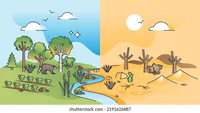
A large community of plants and animals that have a similar climate, such as a desert or forest.

Abiotic Factors
The non-living parts of an ecosystem, such as the sun, water, soil, and temperature.
Biotic Factors
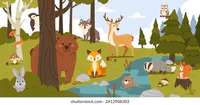
The living organisms within an ecosystem, which includes all of the animals, plants, and bacteria.

Producer
An organism, like a plant, that is capable of creating its own food, usually through photosynthesis.

Consumer
An organism that gets its energy by feeding on other organisms because it cannot make its own food.
4
Key Vocabulary

Decomposer
An organism that breaks down dead organic material, returning essential nutrients back into the ecosystem.

Symbiosis
A close and long-term interaction between two different biological species from which at least one benefits.
Mutualism
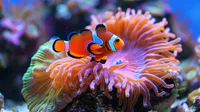
A type of symbiotic relationship in which both of the species involved benefit from the interaction.

Commensalism
A symbiotic relationship where one organism benefits and the other organism is not affected in any way.

Parasitism
A symbiotic relationship where one organism, the parasite, benefits at the expense of the other, the host.
5
Ecosystem
An ecosystem includes all the living and non-living things interacting in an area.
Living parts, called biotic factors, include plants, animals, and even tiny bacteria.
Non-living parts, or abiotic factors, are things like sunlight, water, soil, and rocks.

Biome

A biome is a very large geographical area with a specific climate.
It is made up of several different ecosystems that have similar types of organisms.
For example, a large desert biome can contain many smaller, individual ecosystems inside it.
6
Multiple Choice
What is the definition of an ecosystem?
All the living and non-living things interacting in an area.
Only the living parts of an environment, like plants and animals.
A large geographical area with a specific climate.
Only the non-living parts of an environment, like sunlight and water.
7
Multiple Choice
What is the relationship between biomes and ecosystems?
An ecosystem includes only living things, while a biome includes only non-living things.
Biomes and ecosystems are the same size but have different organisms.
A biome is a smaller part of a single, larger ecosystem.
A biome is a large area that is made up of many similar ecosystems.
8
Multiple Choice
A scientist studies a forest, including its trees, deer, soil, and rainfall. This forest is one of many similar forests in a vast region with a consistent climate. Which statement best describes this situation?
The forest is a biome, and the region is an ecosystem.
The forest is an ecosystem, and the large region is a biome.
The soil and rainfall are biotic factors in the forest biome.
The deer and trees are the only parts that make up the ecosystem.
9
Roles in an Ecosystem

Herbivores
Herbivores are consumers that eat only producers, like plants, for energy.
They are also known as primary consumers in most food chains.
A rabbit eating grass and other plants is a great example.

Carnivores
Carnivores are consumers that get their energy by eating other animals.
They can hunt live prey or eat animals they have found.
An example is a lion that hunts other animals for its food.

Omnivores
Omnivores are consumers that eat a diet of both plants and animals.
Their diverse diet helps them adapt to many different types of environments.
A bear that eats fish as well as berries is an omnivore.
10
Multiple Choice
What is an animal called that gets its energy by eating only producers, like plants?
Decomposer
Omnivore
Carnivore
Herbivore
11
Multiple Choice
What is the primary difference in the diets of carnivores and omnivores?
Carnivores eat dead animals, while omnivores hunt live prey.
Carnivores eat other animals, while omnivores eat both plants and animals.
Carnivores eat producers, while omnivores eat consumers.
Carnivores eat only plants, while omnivores eat only animals.
12
Multiple Choice
If a sudden environmental change caused most of the plant life in an ecosystem to disappear, which type of animal would be most likely to survive?
A consumer that eats only producers.
A bear that eats fish and berries.
A rabbit that eats grass and other plants.
A primary consumer that relies on producers.
13
Decomposers & Scavengers
Decomposers, like bacteria and fungi, break down dead organisms and waste materials.
This process returns essential nutrients to the ecosystem for producers to use.
Scavengers are animals, such as vultures, that consume organisms that are already dead.

Predator-Prey & Competition

A predator-prey relationship is where one animal hunts and eats another animal.
Competition happens when species try to use the same limited resources, like food.
Intense competition can force one species to move, adapt, or even die out.
14
Multiple Choice
What is the primary role of decomposers in an ecosystem?
To hunt and consume other living animals for energy.
To consume animals that have already been killed by other means.
To compete with other species for limited resources like food and water.
To break down dead organisms and waste, returning nutrients to the ecosystem.
15
Multiple Choice
How does the interaction of competition affect species within an ecosystem?
It helps return essential nutrients to the ecosystem for producers to use.
It can force a species to move, adapt, or die out when resources are limited.
It causes one animal to hunt and eat another animal.
It describes the process of animals consuming organisms that are already dead.
16
Multiple Choice
A forest ecosystem has a stable population of foxes (predators) and rabbits (prey). If a disease suddenly eliminates most of the decomposers like bacteria and fungi, what is a likely long-term consequence?
The rabbits will start hunting the foxes in a new predator-prey relationship.
The available nutrients in the soil will decrease, leading to fewer plants for rabbits to eat.
The fox population will increase because there are more rabbits to eat.
The foxes will become scavengers and consume only dead organisms.
17
Types of Symbiotic Relationships

Mutualism
In this type of relationship, both of the species will benefit.
A pollinator gets food from a flower, which is a clear benefit.
The plant’s pollen is spread to other flowers helping it reproduce.

Commensalism
One organism benefits, and the other is not harmed or helped.
Barnacles attach to a whale for transportation to new food sources.
This gives them access to new food, while the whale is unaffected.

Parasitism
This relationship benefits one species, which is known as the parasite.
The other species, which is known as the host, is harmed.
A mite on an insect is an example of this type of relationship.
18
Multiple Choice
Which type of symbiotic relationship is defined by both species benefiting from the interaction?
Commensalism
Competition
Parasitism
Mutualism
19
Multiple Choice
How does the outcome for the organisms in a commensal relationship differ from the outcome in a parasitic relationship?
In commensalism both benefit, while in parasitism one is unaffected.
In commensalism one is harmed, while in parasitism both are harmed.
In commensalism both are harmed, while in parasitism both benefit.
In commensalism one is unaffected, while in parasitism one is harmed.
20
Multiple Choice
A species of fungus is discovered growing on a tree. The fungus gains nutrients by breaking down the tree's dead outer bark, and the tree is not affected by the fungus's presence. Which of the following best describes this relationship?
Commensalism, because the fungus benefits and the tree is unaffected.
Mutualism, because both the fungus and the tree are living things.
Parasitism, because the fungus is taking nutrients from the tree.
Parasitism, because the fungus is living on the tree.
21
Aquatic Biomes

Oceans
These are vast bodies of saltwater, covering about 71% of Earth.
They are the largest biome and are also called marine ecosystems.
Organisms from tiny zooplankton to large whales live in the ocean.

Lakes & Ponds
These inland ecosystems are made up of still or slow-moving freshwater.
Plants like cattails and waterlilies are commonly found growing here.
Animals like turtles, ducks, and frogs live in these habitats.

Estuaries
These form where freshwater rivers flow into the saltwater of the ocean.
This mixing of waters creates a unique habitat with brackish water.
Organisms like shrimp, crabs, and mangroves are adapted to live here.
22
Multiple Choice
Which statement accurately describes one of the aquatic biomes?
Oceans are habitats where freshwater rivers flow into saltwater.
Oceans are vast marine ecosystems that cover about 71% of Earth with saltwater.
Estuaries are inland ecosystems made of still or slow-moving freshwater.
Lakes and ponds are the largest biome and are made of saltwater.
23
Multiple Choice
What is the key difference in the water composition between an estuary and a lake?
Estuaries contain a mix of fresh and saltwater, while lakes contain freshwater.
Estuaries contain freshwater, while lakes contain saltwater.
Estuaries contain saltwater, while lakes contain brackish water.
Both estuaries and lakes contain only still, slow-moving freshwater.
24
Multiple Choice
A scientist observes that a population of shrimp and mangroves in an estuary is declining. Based on the information about aquatic biomes, what is the most likely cause?
The balance of fresh and saltwater has changed, affecting the organisms adapted to brackish water.
The estuary has become too much like the open ocean, which is better for whales.
The water has become too much like a freshwater pond, which is better for turtles and frogs.
The water has become still and slow-moving, which is not ideal for shrimp.
25
Tropical Rainforest
Found near the equator, these are hot and moist year-round with high rainfall.
Rapid decomposition by bacteria leads to thin, nutrient-poor soil.
Plants grow in layers with shallow roots to compete for sunlight and nutrients.
Animal adaptations include camouflage and specializing in a specific diet or habitat.


26
Multiple Choice
What are the typical climate conditions of a tropical rainforest?
Cold and dry with heavy snowfall
Warm summers and cold winters with moderate rain
Hot and dry with very little rainfall
Hot and moist with high rainfall year-round
27
Multiple Choice
What is the primary reason for the thin, nutrient-poor soil in tropical rainforests?
There are not enough plants to add organic matter to the soil.
The heavy rainfall washes all the nutrients out of the soil.
The soil is too sandy to hold onto any nutrients.
Rapid decomposition by bacteria prevents a thick layer of nutrients from forming.
28
Multiple Choice
Based on the intense competition for resources, what is the most likely reason some rainforest animals have highly specialized diets?
To avoid eating poisonous plants that are common in the rainforest.
Because a specialized diet helps them find mates more easily.
Because there are very few types of food available to eat.
To reduce competition by eating a food source that other animals do not.
29
Terrestrial Biome: Temperate Deciduous Forest
This biome is found in the temperate zone and has four distinct seasons.
The soil is rich in nutrients from decomposing leaves, with rain and snow.
Trees lose their leaves in fall and go dormant to survive the cold winter.
Animals may hibernate, migrate, or grow thicker fur to adapt to changing seasons.


30
Multiple Choice
Which of the following best describes a temperate deciduous forest?
A biome characterized by four distinct seasons and trees that lose their leaves in the fall.
A biome with hot, dry conditions year-round and plants that store water.
A cold, treeless biome where the ground is permanently frozen.
A hot, humid biome with the greatest variety of plants and animals.
31
Multiple Choice
How does the annual loss of leaves from trees impact the soil in a temperate deciduous forest?
The decomposing leaves add rich nutrients to the soil.
It allows more sunlight to warm the soil during the winter.
It causes the soil to become dry and sandy.
It prevents rain and snow from reaching the soil.
32
Multiple Choice
A deer living in a temperate deciduous forest grows a thicker coat of fur in the fall. What is the most likely reason for this adaptation?
To make it easier to move through the increased rain and snow.
To prepare for survival during the cold winter season when food is less available.
To store extra nutrients from the rich soil for the winter.
To blend in with the colorful autumn leaves and hide from predators.
33
The Taiga Biome
The Taiga is in the Northern Hemisphere with long, cold winters.
Its soil is acidic and poor in nutrients, with snow as precipitation.
Coniferous trees have needles and a cone shape to survive the snow.
Animals adapt with thick fur, hibernation, or by migrating to warmer areas.


34
Multiple Choice
Which of the following best describes the Taiga biome?
A dry, hot area with very little precipitation
A warm region with nutrient-rich soil
A biome with long, cold winters in the Northern Hemisphere
A forest of trees that lose their leaves in the fall
35
Multiple Choice
Why do coniferous trees in the Taiga have needles and a cone shape?
To help them survive heavy snowfall during cold winters
To attract more sunlight during the short summer
To absorb more nutrients from the acidic soil
To provide shelter for animals with thick fur
36
Multiple Choice
If a new animal species were introduced to the Taiga, which trait would give it the best chance of survival through the winter?
A diet that depends on nutrient-rich plants
A body that is adapted for hot, dry weather
Thin skin that allows for quick cooling
The ability to hibernate or having thick fur
37
Misconception | Correction |
|---|---|
Decomposers and scavengers are the same. | Scavengers eat large dead organisms; decomposers break down matter at a microscopic level. |
Parasites always kill their hosts. | Parasites benefit from keeping their host alive for food and shelter. |
All forests have rich, fertile soil. | Tropical rainforests have poor soil, while temperate forests have nutrient-rich soil. |
38
Ecosystems include interacting living (biotic) and non-living (abiotic) components.
Producers make food, consumers eat, and decomposers recycle nutrients in an ecosystem.
Species can interact through competition, predation, or symbiosis.
Biomes like forests and oceans have unique climates and adapted organisms.
39
Poll
On a scale of 1-4, how confident are you about the concepts covered in today's review?
1
2
3
4
Middle School
Show answer
Auto Play
Slide 1 / 39
SLIDE
Similar Resources on Wayground

32 questions
Natural Resources
Presentation
•
6th - 8th Grade
37 questions
Domains and Kingdoms
Presentation
•
6th - 8th Grade
34 questions
Classification Review
Presentation
•
6th - 9th Grade
33 questions
Food Chains and Food Webs
Presentation
•
5th - 8th Grade
32 questions
Intro to Evolution Notes
Presentation
•
6th - 8th Grade
35 questions
AJH PARTS OF THE EYE
Presentation
•
6th - 8th Grade
35 questions
The Cell
Presentation
•
6th - 8th Grade
35 questions
Earth, Sun, and Moon System
Presentation
•
6th - 8th Grade
Popular Resources on Wayground
21 questions
Continents and Oceans

Quiz
•
6th Grade
20 questions
Parts of Speech
Quiz
•
5th Grade
16 questions
Subject & Predicate
Quiz
•
5th Grade
25 questions
Multiplication Facts
Quiz
•
5th Grade
12 questions
Map Skills
Quiz
•
3rd Grade
22 questions
Continents and Oceans
Quiz
•
5th Grade
15 questions
Rounding Decimals
Quiz
•
5th Grade
20 questions
Brand Labels
Quiz
•
5th - 12th Grade
Discover more resources for Science
20 questions
Newton's Laws of Motion
Quiz
•
8th Grade
20 questions
Elements, compounds, and mixtures
Quiz
•
6th Grade
17 questions
7.6D Aqueous Solutions
Quiz
•
7th Grade
20 questions
Scientific Method and Variables
Quiz
•
8th Grade
20 questions
Scientific method and variables
Quiz
•
8th Grade
10 questions
6.6D - Relative Density Review
Quiz
•
6th Grade
20 questions
Claim, Evidence and Reasoning (CER)
Quiz
•
6th - 8th Grade
21 questions
Newton's Laws of Motion
Quiz
•
8th Grade